Bondi Icebergs Pool: The Ocean Baths That Define Bondi
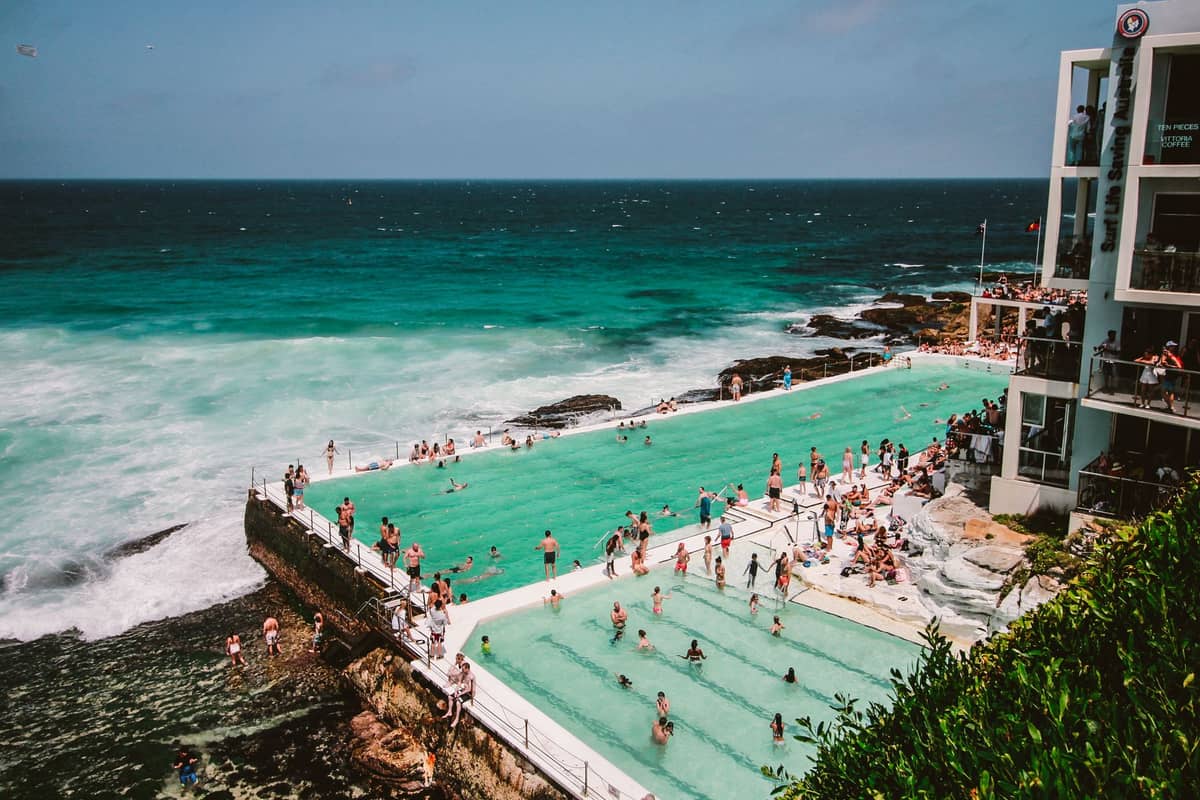
Perched at the southern tip of Bondi Beach, the Bondi Icebergs Pool is a 50-metre saltwater lap pool carved into the sandstone headland. The Bondi Icebergs Winter Swimming Club was established in 1929, it offers one of the most photographed swim experiences in Australia, with waves crashing over the pool walls and the full sweep of Bondi Beach stretching to the north.
Quick Facts
- Location
- 1 Notts Avenue, Bondi Beach NSW 2026 — southern end of Bondi Beach
- Getting There
- Train to Bondi Junction, then bus to Bondi Beach, then a short walk south to the pool
- Time Needed
- 1 to 2 hours for a swim; longer if you plan to linger on the viewing terrace
- Cost
- Adults A$10 / Children A$7 / Family A$30Adults A$10 / Children A$7 / Family A$30
- Best for
- Lap swimmers, photographers, early risers, and anyone wanting a genuine Sydney experience
- Official website
- icebergs.com.au
What Bondi Icebergs Pool Actually Is
The Bondi Icebergs Pool is a saltwater swimming complex built into the rocks at the southern end of Bondi Beach. The Bondi Icebergs Winter Swimming Club was founded in 1929, and the site includes a full 50-metre lap pool and a smaller children's pool, both replenished by the ocean. Salt, cold water, and the constant sound of Pacific swells crashing over the seawall are what you get here, not a heated indoor pool with lane ropes and a vending machine.
The club was formed at the end of the Roaring Twenties by a group of Bondi lifesavers who wanted to keep fit through winter. The name reflects the cold-water philosophy: members swim through the coldest months, when ocean temperatures drop and most Sydneysiders stay far from the water. Nearly a century later, the tradition holds, and the pool is open to the public daily for a modest entry fee.
⚠️ What to skip
The pool is generally closed on Thursdays for cleaning. In summer, when the tides permit, the pool may open on Thursdays. Check the Pool Conditions page at icebergs.com.au before you travel, as access also depends on tides and scheduled swim meets.
The Experience: What You See, Hear, and Feel
Walking down from Campbell Parade through the Bondi Beach car park and along Notts Avenue, the pool comes into view before you reach it. The blue rectangle of water sits perhaps three metres above the ocean, with a seawall that does almost nothing to stop bigger swells from spilling in. On a moderate swell day, curtains of white water cascade over the far edge of the pool mid-lap. It is startling the first time, then immediately appealing.
The pool surface smells strongly of salt and, depending on the day, faintly of the kelp and sea foam that wash in with the waves. The deck tiles are worn smooth from decades of bare feet. The water is cold: the Pacific around Bondi sits roughly between 17°C in winter and 23°C in summer, and the pool does not moderate that. If you are sensitive to cold water, a summer visit will be far more comfortable than a June morning when the wind comes from the south.
The view from the pool looking north is the photograph you have seen thousands of times: the full arc of Bondi Beach, the promenade, the bright Norfolk pines, and the suburb climbing the hillside behind the sand. From inside the water, with your face at surface level, it reads differently. The beach disappears, and you are swimming between rocks and open ocean.
Tickets & tours
Live prices and dates from our booking partner. If you book, we may earn a commission at no extra cost to you.
Beginner surf lesson at Bondi Beach
From 79 €Instant confirmationFree cancellationThe Rocks historic walking tour
From 20 €Instant confirmationFree cancellationSydney whale-watching cruise with breakfast or lunch
From 62 €Instant confirmationFree cancellationBlue Mountains Waterfalls Full-Day Tour with Lunch and Dinner
From 171 €Instant confirmationFree cancellation
Morning vs. Midday vs. Afternoon: When to Go
Early morning is the pool's best hour by a significant margin. Lap swimmers arrive at or shortly after opening (6:00 am weekdays, 6:30 am weekends), the light is low and golden over the water, and the crowds that fill the deck by mid-morning have not arrived. The photography from the viewing terrace at this hour is exceptional, particularly in the warmer months when the sun rises over the ocean to the east and hits the pool directly.
By 9:00 am on weekends between October and April, the pool deck fills quickly. Families with children occupy the shallow end and the kids' pool. Lanes in the main pool become harder to share, and finding a space on the surrounding terrace to set down your bag requires some patience. The experience is still worthwhile, but it is a social one rather than a meditative one.
Weekday afternoons are a reasonable middle ground: quieter than weekend mornings, warmer than the first hour after opening. The light shifts around mid-afternoon and hits the pool from a lower angle, which makes the water colour more photogenic but creates glare if you are swimming and breathing to the west. Closing time is 6:30 pm daily, so a late swim is possible but you will need to exit promptly.
💡 Local tip
Photography tip: The pool photographs best from the public footpath above the complex on Notts Avenue, looking down toward the pool with the beach in the background. No entry fee is required for this view. The best light is within the first hour after sunrise.
Hours and Admission
The pool is open Monday to Friday from 6:00 am to 6:30 pm, and Saturday to Sunday from 6:30 am to 6:30 pm. As noted above, Thursdays are generally a cleaning day, which may mean late or no opening. Tides and organised swim meets can also affect access on any given day.
Entry for a single adult visit costs A$10, a child's ticket costs A$7, and a family pass is A$30. These figures were verified on the official site in April 2025; confirm current prices at icebergs.com.au before you go, as fees can be updated. Multi-entry passes are also available, which makes sense if you are staying in the area for several days and plan to swim more than once.
Bondi Icebergs Pool is a natural complement to Bondi to Coogee coastal walkBondi to Coogee coastal walk, which begins at the southern end of Bondi Beach, directly past the pool. Many walkers stop here first for a swim, then continue south along the cliff path to Tamarama, Bronte, and Coogee.
Getting There and Practicalities
The most reliable way to reach the pool without a car is to take a Sydney Trains service to Bondi Junction station, then a bus from the interchange directly to Bondi Beach. From the bus stop on Campbell Parade, the walk south along the beach promenade and then along Notts Avenue to the pool takes around ten minutes. The address is 1 Notts Avenue, Bondi Beach NSW 2026.
Parking near the pool is limited and fills early on weekends. If you are driving, arriving before 8:00 am on weekends will give you the best chance of finding a spot in the Bondi Beach car park nearby. Public transport is genuinely more practical for this destination.
Bring your own towel and a swim cap if you prefer one, as the pool does not hire equipment. Lockers and change rooms are available on site. Footwear that you do not mind getting wet is useful around the deck, where water from the waves and swimmers makes surfaces slippery.
The NSW Government states the venue welcomes visitors with access needs and advises contacting Bondi Icebergs directly to discuss specific requirements before visiting. If you are planning a day across the wider eastern beaches, Sydney’s eastern beachesBondi and Eastern Beaches area has a range of options within easy reach.
Context: Why This Pool Matters
Ocean pools are a distinctly Australian coastal form. Dozens of them line the New South Wales coastline, built from roughly the 1880s onward in a period when organised sea bathing was socially acceptable but open ocean swimming was considered dangerous. They were built so that men, women, and children could swim in seawater without the risk of surf and rips. The Bondi Icebergs Winter Swimming Club was established in 1929, is among the most well-preserved and well-frequented of these structures.
The pool was substantially redeveloped in the early 2000s. The complex now includes the pool area, a gym, a sauna, and the upstairs Icebergs Dining Room and Bar, which is a separate operation from the swimming pool and has its own pricing. Some visitors come specifically for the restaurant's view and do not swim at all, which is entirely possible without paying the pool entry fee.
For a broader understanding of Sydney's coastal culture and the range of ocean swim spots along the eastern suburbs, the Sydney coastal walks guide covers the landscape from Bondi south to Coogee and beyond.
Who Should Skip This
Bondi Icebergs Pool is not the place to go if you want a quiet, uncrowded beach swim in warm water. On busy summer weekends, the deck is packed and lane sharing in the main pool can be chaotic. The water is cold year-round relative to a heated pool, and the entry fee, while modest, adds up for a large family if they plan only a brief visit.
Visitorsthe harbourwho are primarily interested in Bondi Beach itself, rather than the pool, do not need to pay entry here. The beach is free, immediately to the north, and significantly warmer on summer days. If your goal is a safer ocean swim without the surf, Nielsen Park's Shark Beach in the harbour offers flat, sheltered water with no entry cost.
If the pool is your main reason for visiting Bondi and you are travelling in winter, check the water temperature forecast before committing. Sydney's ocean water sits around 17°C to 18°C in June and July. That is cold enough to make a full lap session uncomfortable for unacclimatised swimmers.
Insider Tips
- Check the Pool Conditions page at icebergs.com.au the morning of your visit. It lists tide information, cleaning closures, and race schedules that can affect public access.
- The best free view of the pool requires no entry fee at all: walk along Notts Avenue above the complex and look down. This is where most of the famous photographs are taken, and it costs nothing.
- Weekday mornings between 7:00 am and 8:30 am are the least crowded swim windows. Serious lap swimmers tend to be in and out by 8:00 am, leaving the pool noticeably quieter for the half hour that follows.
- Bring a warm layer for after your swim. The exposed headland location catches the sea breeze, and even on warm Sydney days the wind chill on a wet body can be sharp. In winter, a changing robe or a thick towel is not an overreaction.
- The Icebergs Dining Room and Bar upstairs is a separate operation. If you want the view without the swim, you can book a table there without paying pool entry. Reservations are advisable, particularly for weekend lunch.
Who Is Bondi Icebergs Pool For?
- Early-morning lap swimmers who want ocean water in a contained, manageable pool
- Photographers chasing the classic Bondi headland shot, especially at sunrise
- Families with children who find open surf daunting but want a seawater swim
- Visitors combining a swim with the Bondi to Coogee coastal walk
- Travellers who want to engage with a specific slice of Sydney's coastal history rather than just its scenery
Nearby Attractions
Other things to see while in Bondi & the Eastern Beaches:
- Bondi Beach
Bondi Beach is a 1-kilometre arc of white sand in Sydney's eastern suburbs, free to enter and open year-round. It draws everyone from serious surfers to Sunday café-goers, and its promenade connects to one of the city's great coastal walks. Here is what to know before you go.
- Bondi to Coogee Coastal Walk
The Bondi to Coogee Coastal Walk is a free 6-kilometre clifftop route connecting two of Sydney's most famous beaches. It takes in ocean pools, sandstone headlands, cemetery views, and a string of smaller beaches that most visitors never reach. Allow 2 to 3 hours at a relaxed pace.
- Bronte Beach
Tucked between Bondi and Coogee, Bronte Beach offers a more relaxed pace than its famous neighbours. With a free ocean pool, a grassy reserve backed by sandstone cliffs, and direct access to the coastal walk, it rewards visitors who venture a little further south.
- Camp Cove
Camp Cove is a small, sheltered harbour beach at Watsons Bay, just inside the Sydney Heads. Protected from ocean swell, it offers calm swimming water, a historic foreshore, and easy ferry access from Circular Quay. It rewards visitors who arrive early on weekday mornings and those who appreciate a quieter, less commercial alternative to the eastern ocean beaches.
Planning a trip? Discover personalized activities with the Nomado app.