Bondi Beach: Sydney's Most Famous Stretch of Sand
Bondi Beach is a 1-kilometre arc of white sand in Sydney's eastern suburbs, free to enter and open year-round. It draws everyone from serious surfers to Sunday café-goers, and its promenade connects to one of the city's great coastal walks. Here is what to know before you go.
Quick Facts
- Location
- Campbell Parade, Bondi Beach NSW 2026
- Getting There
- Train to Bondi Junction, then bus 333 or 380 to the beach (no direct train to Bondi Beach)
- Time Needed
- 2–4 hours for beach and promenade; half a day if you add the coastal walk
- Cost
- Free entry (AUD)
- Best for
- Swimming, surfing, people-watching, coastal walking
- Official website
- www.waverley.nsw.gov.au/recreation/beaches_and_coast/our_beaches
What Bondi Actually Is
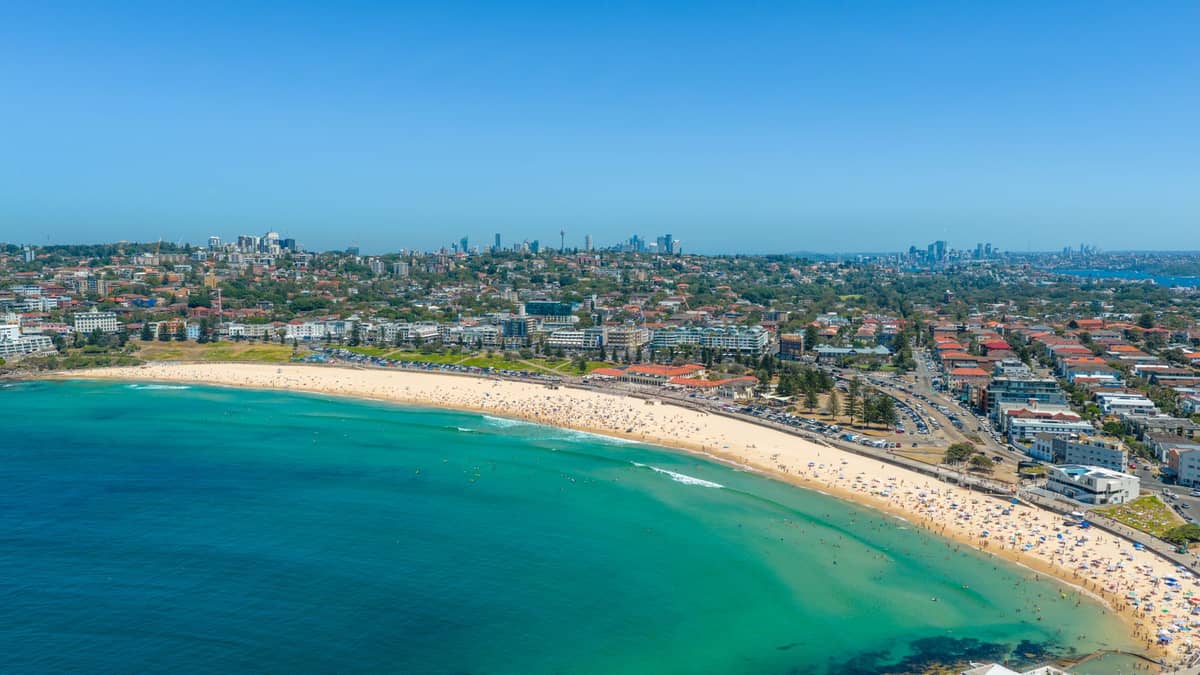
Bondi Beach is a public ocean beach managed by Waverley Council, approximately 8 kilometres east of the Sydney CBD. The beach runs roughly 1 kilometre from the sandstone headland at Ben Buckler in the north to Mackenzies Point in the south, and at its widest point the sand extends more than 100 metres toward the water. It sits at the base of a shallow valley, so the surrounding streets funnel almost every visitor down Campbell Parade before they reach the sand. That single approach point is part of why the beach feels so concentrated and, on peak summer weekends, so crowded.
Entry is free and the beach has no gates or barriers. The foreshore is a public reserve. Lifeguard patrols operate year-round, though patrol hours extend considerably in summer. The promenade running along the back of the beach is paved and level, and a dedicated beach-access ramp sits at the northern end near Wally Weekes Pool, with beach wheelchairs available for hire through Waverley Council.
ℹ️ Good to know
Bondi Beach has no train station. Take a T4 train to Bondi Junction, then board a 333 or 380 bus to the beach; the 333 also runs directly from the City. Verify current timetables and fares with Transport for NSW before you travel, as both can change.
The Experience by Time of Day
Early morning, before 8 am, is when Bondi makes most sense. The light is flat and cool, the sand is freshly raked at the northern end, and the people you share it with are mostly locals: swimmers doing laps between the flags, runners completing the coastal track, and a handful of surfers reading the break from the promenade wall. The smell of salt and wet sand is sharp and clean in a way it simply is not by midday, when sunscreen and food from the kiosk blend into the air.
By 10 am in summer the crowds arrive quickly. Families claim the central sand near the flags, where the water is safest. The northern end, near Ben Buckler, attracts more experienced surfers and tends to be less crowded for sunbathers. The southern end toward Icebergs is often the quietest patch of sand and gives you a strong view back along the whole bay. By noon on a 30-degree December day, finding space to lay a towel in the middle section requires patience.
Winter mornings tell a different story. The water temperature drops to around 17–18°C, the crowds thin dramatically, and the low winter sun gives the whole bay a pale, washed-out quality that photographers often prefer. Winter is when you see the locals reclaim the beach: ocean swimmers in wetsuits, surfers in the better swells that the cooler months bring, and the hardy regulars of the Bondi Icebergs ocean pool completing their Sunday laps. If you dislike crowds and are not set on swimming, autumn and late winter are arguably the better visits.
⚠️ What to skip
Always swim between the red and yellow flags. The flags mark the area actively patrolled by lifeguards and are repositioned daily based on current and rip conditions. Bondi has strong rip currents, particularly at the southern end and near the rocks.
Tickets & tours
Live prices and dates from our booking partner. If you book, we may earn a commission at no extra cost to you.
Beginner surf lesson at Bondi Beach
From 79 €Instant confirmationFree cancellationThe Rocks historic walking tour
From 20 €Instant confirmationFree cancellationSydney whale-watching cruise with breakfast or lunch
From 62 €Instant confirmationFree cancellationBlue Mountains Waterfalls Full-Day Tour with Lunch and Dinner
From 171 €Instant confirmationFree cancellation
History and Cultural Weight
Australia's first recognised surf lifesaving club was founded at Bondi Beach in 1907, which gives the beach a specific and documentable place in the country's social history. The volunteer lifesaving movement that now operates across Australian beaches began here, shaped partly by a period when Sunday bathing in daylight hours was illegal in New South Wales. The banning of daylight bathing was defied publicly at Bondi, and the subsequent regulation of ocean swimming eventually formalised the patrol system still visible on the beach today.
The land in this area is part of the Country of the Gadigal and Bidjigal peoples of the Eora Nation. The word 'Bondi' is understood to derive from an Aboriginal word, though the precise language group and meaning are subjects of ongoing research and should not be stated with false certainty. For deeper context on Sydney's Aboriginal cultural heritage,
the Sydney Aboriginal culture guide covers the history and living culture across the city's landscapes in more detail.
Bondi's reputation in the 20th century oscillated between working-class beach suburb and fashionable address. The Campbell Parade strip still carries traces of both, with mid-century flat blocks sitting beside newer boutiques and the kind of cafés that charge accordingly for the view. The Ben Buckler headland at the northern end has some of the most expensive real estate in Australia. The beach itself remains free, which is the quiet democratic fact at Bondi's core.
What to Do Beyond Swimming
The promenade along the back of the beach is the social spine of any Bondi visit. It is wide, relatively flat, and connects the lifeguard tower, kiosk, and various entry points in a single continuous walkway. On weekends it fills with a genuine cross-section of Sydney life: parents with prams, skaters, tourists photographing the water, and the kind of regular who has been walking this strip every Sunday for thirty years.
The Bondi to Coogee coastal walk begins at the southern end of the promenade and runs 6 kilometres along the clifftops to Coogee Beach, passing Tamarama, Bronte, and Clovelly along the way. This is one of the better coastal walks in any Australian city. Flat sections on the promenade alternate with steeper cliff-edge paths, and at several points the track narrows to single-file width above the ocean. Allow about two hours for the walk, more if you plan to stop at the beaches en route.
At the southern end of the beach, the Bondi Icebergs Pool sits on a shelf of rock directly above the breaking waves. This is one of Sydney's most photographed spots, and the pool itself is an ocean rock pool kept filled by wave wash. The Icebergs swimming club has operated on this site since 1929. There is an entry fee for the pool and facilities; verify current prices before visiting.
Surfing lessons operate from the beach, primarily through schools based on Campbell Parade. Bondi is a reasonable beginner break in smaller swell conditions, with the wave shape generally more forgiving at the northern end. The central section is often too crowded with swimmers for beginners to be comfortable in the water.
Photography and Practical Details
The classic Bondi photograph, the full arc of the bay from the southern headland near Icebergs, requires walking up the path past the pool to the low cliff above it. From there you look north and get the whole beach in frame with Ben Buckler behind. Morning light from the east hits the water first, making it cleaner and brighter before midday. By afternoon, the sun is behind the western buildings and the beach falls into flat, diffuse light.
The promenade itself is best photographed at the edges of the day, when the crowd thins and the texture of the worn concrete and the surf club's old buildings reads more clearly. The brutalist surf lifesaving club building at the centre of the beach is a recurring subject for architectural photographers and was built in stages across the mid-20th century.
💡 Local tip
Bring reef-safe sunscreen, a reusable water bottle, and coins or a card for the outdoor showers at each end of the beach. In summer, the bins fill quickly on weekends, so pack out your rubbish. Paid parking on Campbell Parade and surrounding streets is limited and fills by 9 am on summer weekends — the bus is reliably faster.
The beach has public toilets and change rooms at the surf club building at the centre of the beach, and at the northern end near Wally Weekes Pool. Both are in regular use and maintained by Waverley Council. Outdoor cold showers for rinsing off are located at each end of the promenade.
Who Will Not Enjoy Bondi — and When to Avoid It
Bondi is one of the most photographed beaches in the world, and on a hot summer Saturday that reputation becomes its main liability. The central beach between 11 am and 3 pm from December to February is genuinely dense with people. If you are easily put off by crowd noise, the smell of sunscreen in close quarters, or difficulty finding a parking spot or table at a café, the experience will frustrate rather than impress.
The water can also be rough. Bondi is an ocean beach with real surf and real rip currents. It is not a calm harbour beach. Visitors who want sheltered, flat water for swimming with young children would do better at Nielsen Park or Camp Cove in the harbour.
Travellers with a limited time in Sydney who want to understand the coastline beyond the famous postcard view might find the full Sydney coastal walks guide useful for planning a broader itinerary that includes quieter sections of the eastern beaches.
For context on how Bondi compares to other eastern beaches like Bronte and Coogee, the best beaches in Sydney guide covers each one honestly, including which crowds they attract and what the water conditions are typically like.
Insider Tips
- The 333 bus from the CBD runs directly to Bondi Beach via Bondi Junction, so you do not need to change buses there. Check Transport for NSW's trip planner for current options based on your starting point.
- The northern end of the beach near Ben Buckler tends to be less crowded than the central section, and the rocks at Ben Buckler are a good place to watch the surf without being in the thick of the crowd.
- Bronte Beach, about 20 minutes' walk south along the coastal path, is significantly quieter than Bondi on most weekends and has a grassy park directly behind the sand, which is better for families with picnic gear.
- During the annual Sculpture by the Sea exhibition, usually held in late October or early November, the coastal walk from Bondi to Tamarama is lined with large-scale artworks. It transforms the walk entirely and is free to view from the path, though the crowds are substantial.
- The Icebergs pool is closed on Wednesdays for maintenance. If a pool swim is part of your plan, check the pool's own website for current hours and any seasonal closures before making the trip.
Who Is Bondi Beach For?
- First-time visitors to Sydney who want to see the beach without a complicated journey
- Surfers and ocean swimmers looking for year-round access to an ocean break with lifeguard patrols
- Walkers who want to use the beach as the starting point for the Bondi to Coogee coastal track
- Photographers drawn to the arc of the bay, the clifftop views, and the ocean pool at Icebergs
- Travellers who want to understand Sydney's beach culture through a single location that concentrates it
Nearby Attractions
Other things to see while in Bondi & the Eastern Beaches:
- Bondi Icebergs Pool
Perched at the southern tip of Bondi Beach, the Bondi Icebergs Pool is a 50-metre saltwater lap pool carved into the sandstone headland. The Bondi Icebergs Winter Swimming Club was established in 1929, it offers one of the most photographed swim experiences in Australia, with waves crashing over the pool walls and the full sweep of Bondi Beach stretching to the north.
- Bondi to Coogee Coastal Walk
The Bondi to Coogee Coastal Walk is a free 6-kilometre clifftop route connecting two of Sydney's most famous beaches. It takes in ocean pools, sandstone headlands, cemetery views, and a string of smaller beaches that most visitors never reach. Allow 2 to 3 hours at a relaxed pace.
- Bronte Beach
Tucked between Bondi and Coogee, Bronte Beach offers a more relaxed pace than its famous neighbours. With a free ocean pool, a grassy reserve backed by sandstone cliffs, and direct access to the coastal walk, it rewards visitors who venture a little further south.
- Camp Cove
Camp Cove is a small, sheltered harbour beach at Watsons Bay, just inside the Sydney Heads. Protected from ocean swell, it offers calm swimming water, a historic foreshore, and easy ferry access from Circular Quay. It rewards visitors who arrive early on weekday mornings and those who appreciate a quieter, less commercial alternative to the eastern ocean beaches.
Planning a trip? Discover personalized activities with the Nomado app.