Camp Cove, Watsons Bay: Sydney's Most Civilised Harbour Beach
Camp Cove is a small, sheltered harbour beach at Watsons Bay, just inside the Sydney Heads. Protected from ocean swell, it offers calm swimming water, a historic foreshore, and easy ferry access from Circular Quay. It rewards visitors who arrive early on weekday mornings and those who appreciate a quieter, less commercial alternative to the eastern ocean beaches.
Quick Facts
- Location
- Victoria Street, Watsons Bay NSW 2030
- Getting There
- Ferry from Circular Quay to Watsons Bay Wharf, then a short walk via Cliff and Pacific Streets. Bus 324 also runs from the city.
- Time Needed
- 1 to 2.5 hours, depending on whether you walk the Green Point foreshore or swim
- Cost
- Free entry; no ticket required
- Best for
- Calm-water swimming, toddlers and young children, ferry-day itineraries, photography near Sydney Heads
What Is Camp Cove?
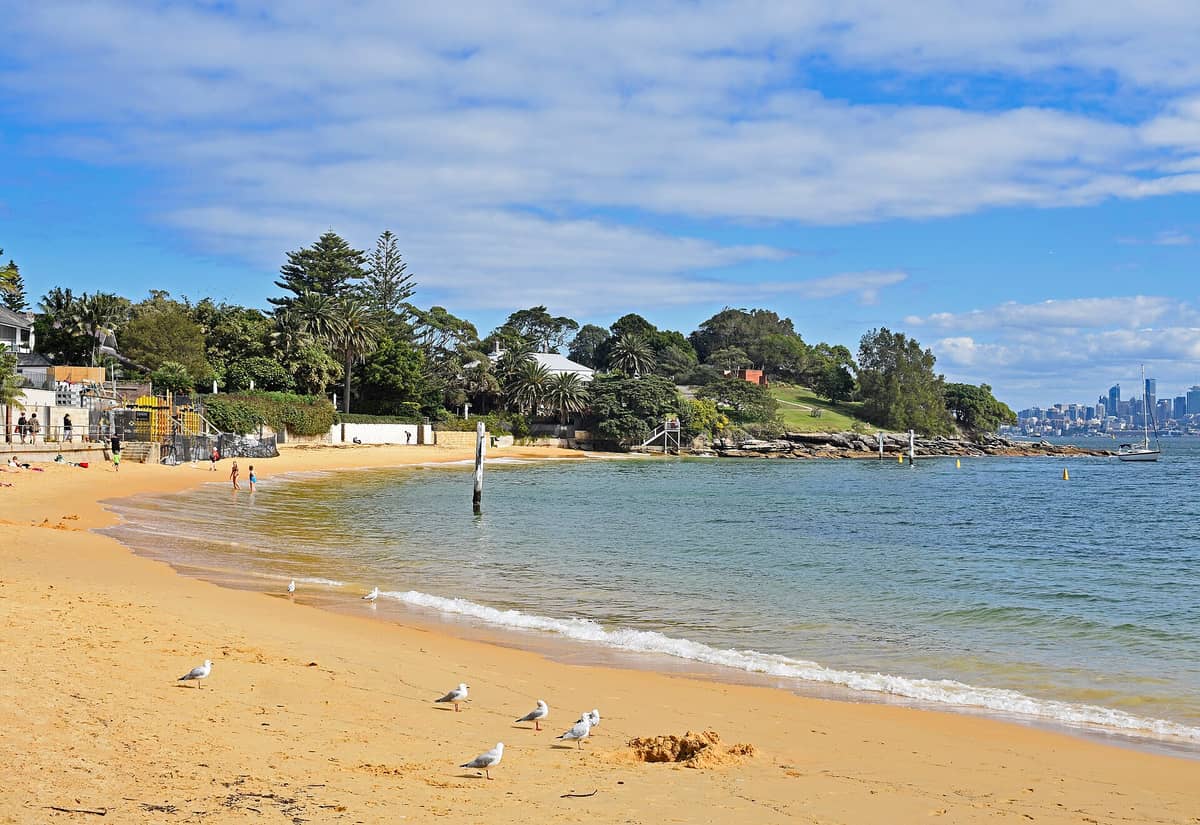
Camp Cove is a compact crescent of harbour beach sitting just inside South Head, at the mouth of Sydney Harbour. It faces north across the water toward North Head, rather than out to the open Pacific, which gives it a character quite different from the ocean beaches further south. The water here is almost always calm, the sand is pale and fine, and the surrounding foreshore is a mix of sandstone outcrops, Norfolk Island pines, and low coastal scrub.
The beach itself is modest in scale. At low tide it extends perhaps 150 metres across the cove, but the shallow, protected water and the views across the harbour mouth make it feel like considerably more. On a clear day, the sandstone cliffs of North Head are close enough to photograph without a telephoto lens.
ℹ️ Good to know
Camp Cove beach and park are open to the public daily. Entry is free. No booking is required.
The History Behind the Cove
The name Camp Cove is associated with January 1788, when Arthur Phillip and the First Fleet rested here for a night before landing at Sydney Cove. That context gives the place a specific weight in Australian colonial history. This small, sheltered bay was an overnight resting place for the fleet that would become Sydney.
The significance of the foreshore extends into the scientific record as well. In 1881, a Marine Biological Station was built at Camp Cove for Russian scientist Nikolai Miklouho-Maclay, a naturalist and ethnologist known for his work across the Pacific. The station received Commonwealth Heritage listing in 2004 and is now managed by the Harbour Trust. The modest heritage building is visible from the foreshore path, though it is not generally open for public tours. Walking past it, you get a sense of how this exposed corner of the harbour has attracted scientific and strategic attention for well over a century.
The broader South Head peninsula where Camp Cove sits has layers of military history, including fortifications at Watsons Bay and along the clifftops. North Head Sanctuary, visible across the harbour entrance, carried similar defensive installations. For those interested in this aspect of Sydney's past, the foreshore here rewards slow walking more than a quick dip.
Tickets & tours
Live prices and dates from our booking partner. If you book, we may earn a commission at no extra cost to you.
Drink & Discover Secret Bar Crawl in Sydney
From 31 €Instant confirmationFree cancellationSydney Harbour discovery lunch cruise
From 42 €Instant confirmationFree cancellationThe Rocks historic walking tour
From 20 €Instant confirmationFree cancellationBeginner surf lesson at Bondi Beach
From 79 €Instant confirmationFree cancellation
How the Beach Changes Through the Day
Early morning at Camp Cove is when the place is at its best. Before 9am on a weekday, you are likely to share the beach with a small number of locals walking dogs along the sand, the occasional open-water swimmer heading out toward the harbour, and perhaps one or two people sitting on the low sandstone ledges with coffee. The light at this hour hits the water at a low angle, and the sound is mostly wind and seabirds. The smell is salt, sunscreen residue on the sandstone from the previous day, and damp coastal vegetation.
By mid-morning on a weekend in summer, the beach fills quickly. Families with young children dominate by late morning, drawn by the calm, shallow water that makes Camp Cove one of the more child-appropriate harbour beaches in Sydney. The grassy area above the beach gets covered in towels and picnic setups. A small kiosk operates nearby during the warmer months, and the surrounding paths can feel congested between about 11am and 2pm. If you arrive at this hour expecting solitude, adjust your expectations accordingly.
Late afternoon offers a quieter window. The lunchtime crowd thins out, and the light becomes warmer and more photogenic, particularly on the water and the sandstone cliffs to the south. Sunset is not directly visible from the beach itself, since Camp Cove faces north and east, but the sky behind North Head turns a strong orange from the reflected light, and the harbour surface picks up colour well.
💡 Local tip
Visit on a weekday morning if you want the beach to yourself. Summer weekends between 11am and 2pm are the most crowded period. The water temperature remains swimmable year-round, though winter mornings drop noticeably.
Swimming and the Water Itself
The protected position of Camp Cove means the water rarely has meaningful surf or chop. This makes it suitable for children learning to swim in open water, non-confident adults, and anyone who simply wants to float and look at sandstone cliffs rather than fight ocean waves. The sandy bottom shelves gently, and the water clarity on a calm day is good enough to see the bottom at depth.
Jellyfish appear occasionally in the harbour, particularly in late summer. They are not reliably present and not consistently dangerous, but swimmers who are sensitive to them should check conditions with locals or at the kiosk before entering. Jellyfish appear occasionally in the harbour, particularly in late summer. They are not reliably present and not consistently dangerous, but swimmers who are sensitive to them should check conditions with locals or at the kiosk before entering. Seasonal lifeguard services operate at Camp Cove, though they are not present at all times, which is worth knowing if you are bringing young children.
If strong swimming and ocean conditions appeal more than calm harbour water, Bondi Beach is about 20 minutes by road to the south, with patrolled surf, a broader beach, and considerably more infrastructure.
Getting There and Getting Around the Area
The most enjoyable way to reach Camp Cove is by ferry. The Eastern Suburbs Ferry runs from Circular Quay to Watsons Bay Wharf, and the crossing itself is worth taking slowly. From the wharf, it is about a 10-minute walk along Cliff Street and Pacific Street to reach the beach. The route passes through the residential streets of Watsons Bay, which are quiet and lined with weatherboard cottages and established gardens.
Bus 324 also connects the city to Watsons Bay, though journey times depend on traffic. For practical guidance on Sydney's ferry network, including timetables and Opal card use, the Sydney ferry guide covers the main routes in detail.
Driving to Camp Cove is possible, with limited parking available in the surrounding streets and at the Camp Cove car park. Parking can fill early on summer weekends. Arriving by ferry eliminates this problem entirely and adds a harbour crossing to the day, which is worth considering when planning.
⚠️ What to skip
Accessibility is limited. The NSW Government notes that Camp Cove does not cater fully for people with access needs. The Harbour Trust notes that some surfaces are uneven or steep, and stairs connect Green Point Reserve to the beach; Woollahra Council also provides a beach mat during summer. Confirm current conditions with the Harbour Trust before visiting if access is a specific concern.
The Foreshore Walk to Lady Bay and South Head
Camp Cove connects to a longer coastal walk that heads south along the inner harbour face of South Head. The path climbs from the southern end of the beach, passes Lady Bay (a clothing-optional beach in a sheltered cove below the cliffs), and continues to the military heritage area and lighthouse at South Head. The full walk to the lighthouse and back from Camp Cove takes around an hour at a steady pace.
The cliff sections of this walk have unobstructed views across the harbour entrance. On days when large container ships or cruise vessels are moving in or out of Sydney, the scale of the gap between North Head and South Head becomes much clearer from up here than it does from the beach. The sandstone on these cliffs is layered and coloured in bands of ochre and cream, and the vegetation on the exposed headland is low scrub that smells faintly of salt and dry earth.
Sydney's coastline offers a range of walks like this one, from gentle foreshore paths to full-day coastal routes. The Sydney coastal walks guide provides an overview of options across the eastern suburbs and beyond.
Photography Notes
Camp Cove photographs well in two distinct conditions: early morning with soft, directional light across the water, and late afternoon when the harbour surface reflects warm colour from the western sky. Midday light is flat and tends to wash out the sandstone detail that makes the cove distinctive.
The view north from the southern end of the beach, with the harbour mouth framed between the two headlands, is the most compressed and compositionally useful angle. A standard lens covers it well. The heritage building of the former Marine Biological Station, seen from the foreshore path, makes a coherent subject when combined with the harbour behind it. Wide-angle lenses from the beach looking toward North Head tend to flatten distance and make the crossing seem wider than it feels.
For Sydney's most photographed water views, including comparisons with other vantage points around the harbour, the best views in Sydney guide covers the main options in context.
Honesty: What Camp Cove Is Not
Camp Cove is a small beach. It does not have the visual drama of the ocean-facing cliffs further south, the size and social energy of Bondi, or the facilities of more developed harbour beaches like Manly Cove. There is no surf. The kiosk, when open, is limited. On a crowded summer weekend, the beach can feel cramped, and the surrounding streets fill with day visitors.
Visitors who are primarily interested in surf, lively beach scenes, or extensive beachside dining should look elsewhere. Camp Cove suits people who value calm water, a sense of historical place, and a beach that still has the character of a local destination rather than a tourist product.
If you are building a broader itinerary around Sydney's eastern beaches and harbour, the best beaches in Sydney guide provides a useful comparison across ocean and harbour options.
Insider Tips
- The foreshore path south of the beach leads to Lady Bay within about five minutes on foot. It is a much quieter cove and largely unknown to first-time visitors who stop at Camp Cove and turn back.
- The former Marine Biological Station building is worth pausing at on the path between the beach and Green Point Reserve. Its 1881 construction and Commonwealth Heritage listing are rarely noted on standard signage, and most visitors walk past it without stopping.
- Arrive by ferry rather than car. Beyond the parking difficulty, the Watsons Bay ferry crossing offers a different perspective of the harbour than any road route. Check Transport for NSW timetables in advance, particularly on weekday mornings when services are less frequent.
- Bring water and snacks if visiting outside peak summer months. The kiosk does not operate year-round, and the walk to Watsons Bay's cafes and restaurants adds 10 to 15 minutes each way.
- The beach faces north, meaning it gets full sun for most of the day in summer. Shade on the beach itself is minimal. The grassy area above the sand has some tree cover, but it fills early on busy days. Bring adequate sun protection.
Who Is Camp Cove For?
- Families with young children who want calm, shallow harbour water without ocean surf
- Ferry-day itineraries combining Watsons Bay lunch with a harbour crossing from Circular Quay
- Photographers working in early morning or late afternoon light with views across the harbour mouth
- History-curious visitors interested in early colonial settlement and late 19th-century scientific heritage
- Swimmers wanting a quieter alternative to the patrolled ocean beaches, especially on weekday mornings
Nearby Attractions
Other things to see while in Bondi & the Eastern Beaches:
- Bondi Beach
Bondi Beach is a 1-kilometre arc of white sand in Sydney's eastern suburbs, free to enter and open year-round. It draws everyone from serious surfers to Sunday café-goers, and its promenade connects to one of the city's great coastal walks. Here is what to know before you go.
- Bondi Icebergs Pool
Perched at the southern tip of Bondi Beach, the Bondi Icebergs Pool is a 50-metre saltwater lap pool carved into the sandstone headland. The Bondi Icebergs Winter Swimming Club was established in 1929, it offers one of the most photographed swim experiences in Australia, with waves crashing over the pool walls and the full sweep of Bondi Beach stretching to the north.
- Bondi to Coogee Coastal Walk
The Bondi to Coogee Coastal Walk is a free 6-kilometre clifftop route connecting two of Sydney's most famous beaches. It takes in ocean pools, sandstone headlands, cemetery views, and a string of smaller beaches that most visitors never reach. Allow 2 to 3 hours at a relaxed pace.
- Bronte Beach
Tucked between Bondi and Coogee, Bronte Beach offers a more relaxed pace than its famous neighbours. With a free ocean pool, a grassy reserve backed by sandstone cliffs, and direct access to the coastal walk, it rewards visitors who venture a little further south.
Planning a trip? Discover personalized activities with the Nomado app.