Best Shopping in Sydney: Neighbourhoods, Markets, Arcades and More
Sydney's shopping scene runs deeper than most visitors expect. This guide breaks down the best shopping in Sydney by precinct and purpose, covering everything from grand Victorian arcades in the CBD to independent boutiques in Newtown and Saturday markets in Paddington.
Tickets & tours
Live prices and dates from our booking partner. If you book, we may earn a commission at no extra cost to you.
TL;DR
- The CBD's Pitt Street Mall corridor, including Westfield Sydney and the Queen Victoria Building, covers most major retail brands in one walkable strip.
- For independent Australian designers and weekend atmosphere, Paddington and Newtown beat any shopping centre.
- Sydney's best market shopping is at Paddington Markets (Saturdays) and Glebe Markets (Saturdays), both worth planning around.
- Shopping centre hours are not the same as individual store hours, particularly on public holidays and Sundays. Always verify with the specific retailer.
- Opal card daily caps (around $19.30 weekdays, $9.65 weekends as of writing) make it cheap to hop between shopping precincts. See the getting around Sydney guide for current fare details.
The CBD: Where Sydney's Major Retail Concentrates
The best shopping in Sydney begins on and around Pitt Street Mall, a pedestrianised strip in the heart of the CBD. Westfield Sydney sits at the corner of Pitt Street Mall and Market Street and is the anchor for mainstream retail. It holds a mix of international fast fashion, Australian mid-range brands, a well-stocked cosmetics floor, and a food court that is better than most. Published centre hours are Monday, Tuesday, Wednesday and Friday 9:30am to 7pm, Thursday until 9pm, and Sunday 10am to 7pm. Individual stores can keep shorter hours, particularly on Sundays, so if you have a specific retailer in mind, check directly before making the trip.
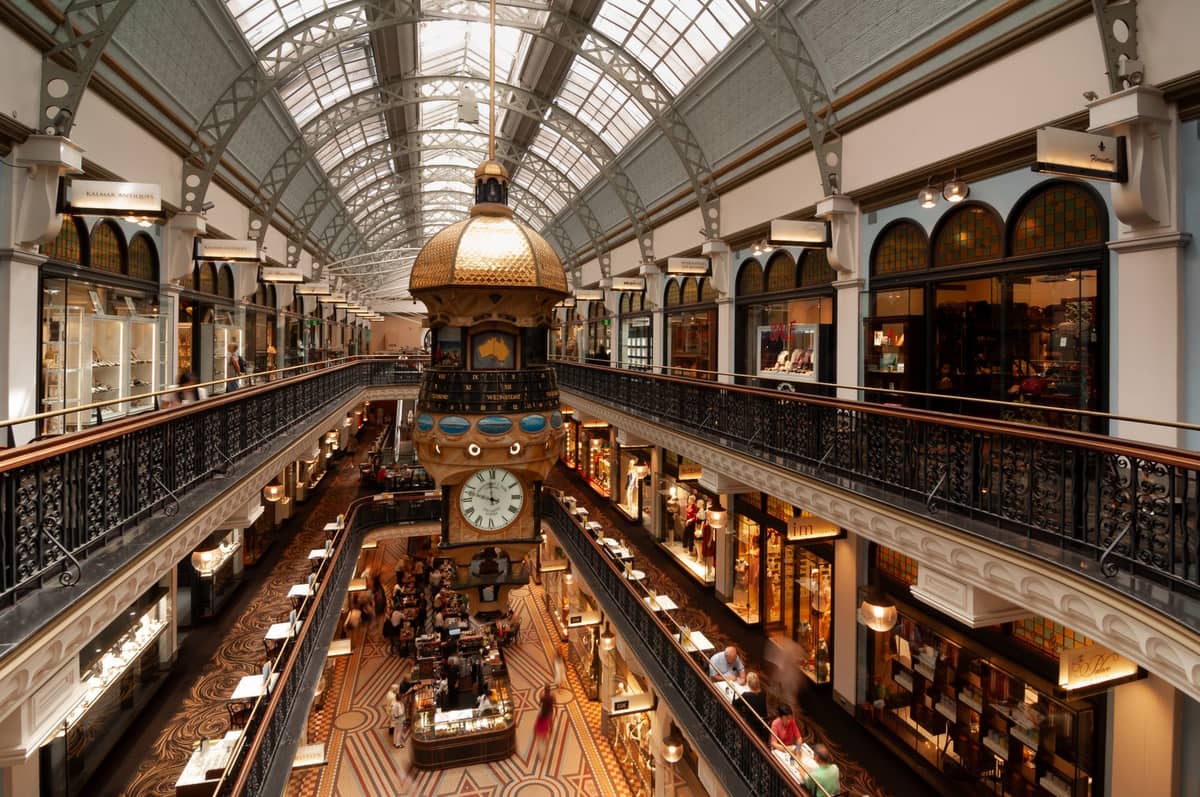
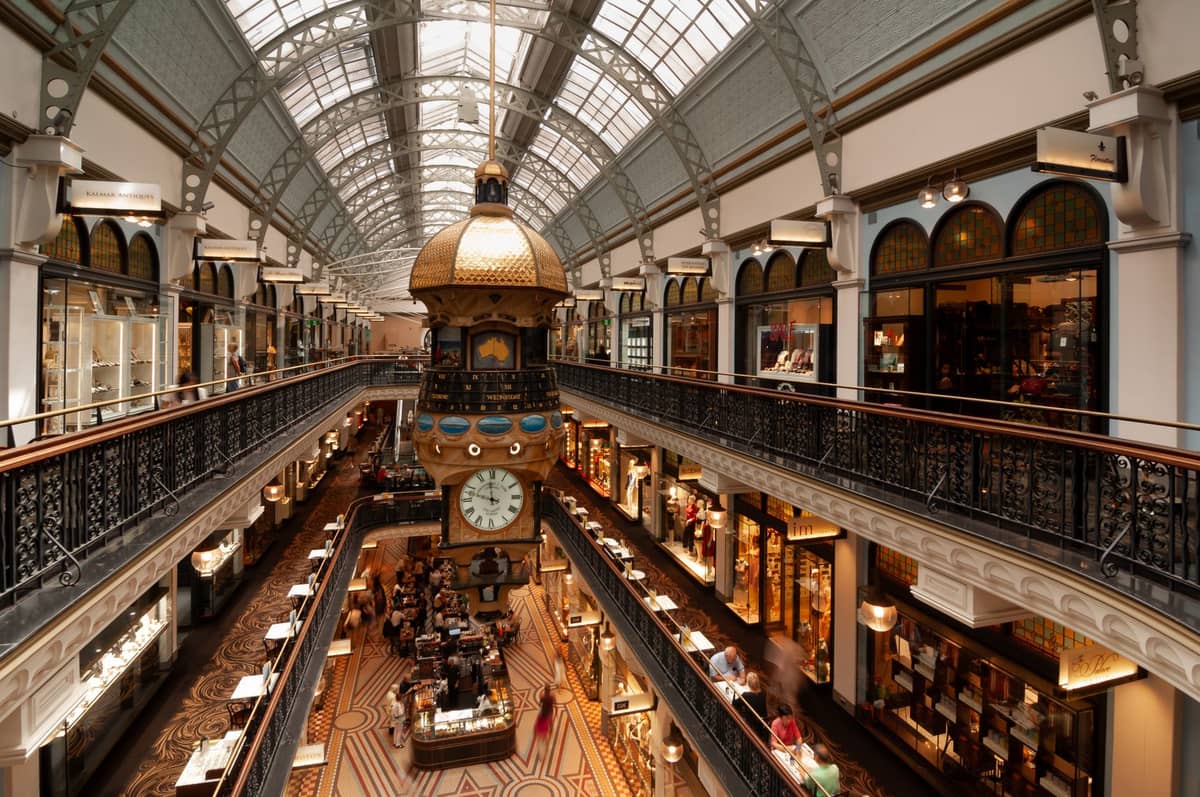
Across the street stands the Queen Victoria Building at 455 George Street. The QVB is one of the most architecturally significant shopping centres in Australia, a Romanesque Revival building completed in 1898 with a restored stained-glass dome, mosaic floors, and a mechanical Royal Clock that draws visitors on its own merits. The retail mix skews toward jewellery, accessories, and premium Australian brands. Thursday is the late-trading night. It is worth visiting even if you are not buying anything, but serious shoppers should note that many of its boutiques are smaller independents with their own operating hours.
A short walk south along George Street, The Strand Arcade runs between George Street and Pitt Street Mall through three levels of Victorian cast-iron galleries. Built in 1892, it is the older and smaller sibling to the QVB but arguably more charming. The Strand is where you will find several of Sydney's better-known Australian fashion labels, custom tailors, specialist tea shops, and artisan jewellers. It has fewer tourist-trap tenants than the QVB and a more local clientele.
💡 Local tip
If you are shopping across multiple Sydney precincts in one day, load an Opal card or use contactless payment on public transport. The daily cap on Monday through Thursday is around $19.30, and on Fridays through Sundays and public holidays it drops to around $9.65. Fares can change, so verify current rates at transportnsw.info before travelling.
Neighbourhood Shopping: Where Locals Actually Browse
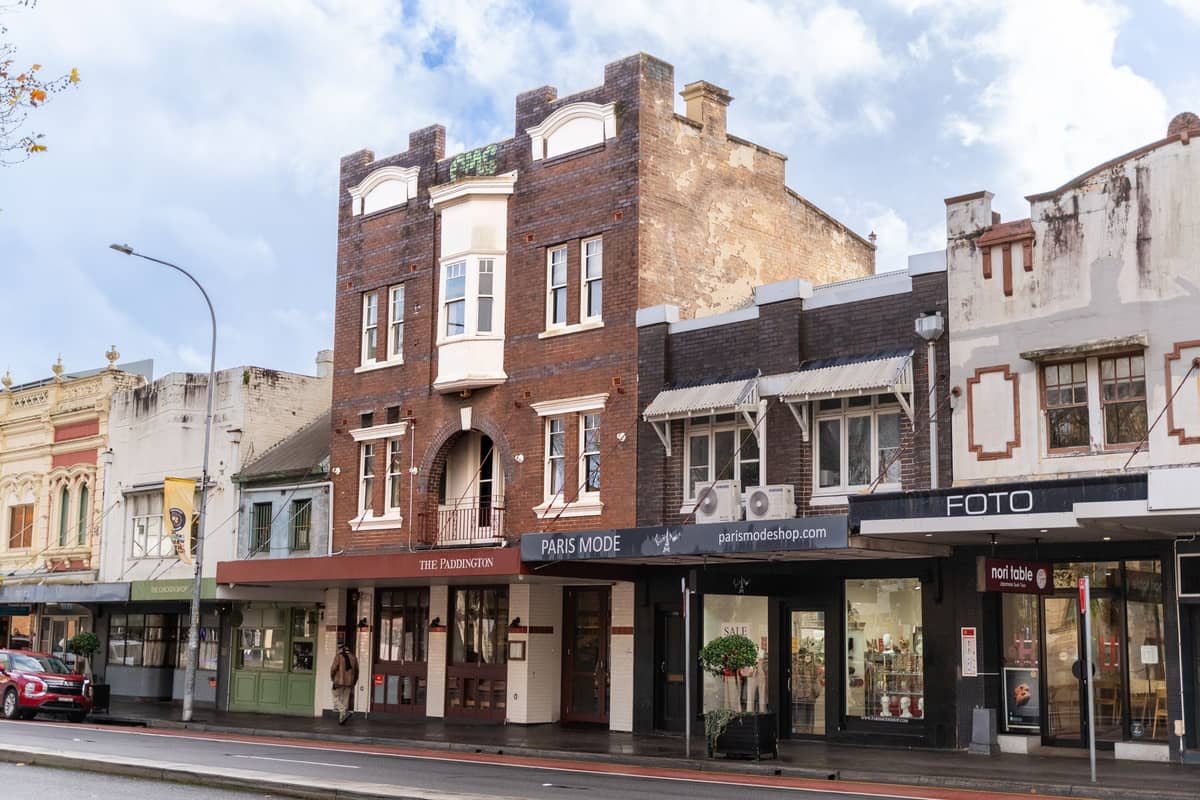
Paddington is the strongest single neighbourhood for independent fashion and homewares in Sydney. Oxford Street from Taylor Square through to Five Ways is lined with Australian designer boutiques, vintage stores, and concept shops. The area suits shoppers who want to find labels they have not seen elsewhere. On Saturdays, Paddington Markets run inside the grounds of Paddington Uniting Church on Oxford Street and are one of the better places to find handmade jewellery, art prints, ceramics, and small-batch fashion from emerging local designers.
Newtown, centred on King Street in the inner west, runs cooler and more eclectic than Paddington. It is the go-to strip for second-hand bookshops (Gould's Book Arcade being the most notorious), vintage clothing, independent record stores, and niche homewares. The shopping here is less curated and more chaotic, which is part of the appeal. If you want something genuinely different from what you'd find at a department store, King Street rewards slow browsing. The Newtown and Inner West precinct also has a concentration of specialty food shops that are useful if self-catering.
Surry Hills sits between the CBD and Paddington and has a denser restaurant-to-shop ratio, but Crown Street and its side streets still hold some worthwhile independent retailers, particularly in homewares and Australian fashion. It overlaps somewhat with Darlinghurst, where smaller gallery-adjacent concept stores and vintage dealers are scattered through the residential grid.
- Paddington Best for Australian designer fashion, boutique homewares, and the Saturday Paddington Markets. Oxford Street is the main spine.
- Newtown (King Street) Best for second-hand books, vinyl, vintage clothing, and independent specialty food. More unpredictable, lower price points.
- Surry Hills / Darlinghurst A secondary option for independent fashion and concept stores, better known for cafes. Worth combining with a meal rather than a dedicated shopping trip.
- Bondi Beach (Hall Street and Campbell Parade) Surf brands, beachwear, and lifestyle retailers. Prices run higher than their beach-casual aesthetic suggests.
- Glebe Glebe Markets on Saturday mornings (at Glebe Primary School) are a compact and genuinely local alternative to Paddington Markets.
Markets: The Best in Sydney and How to Plan Around Them
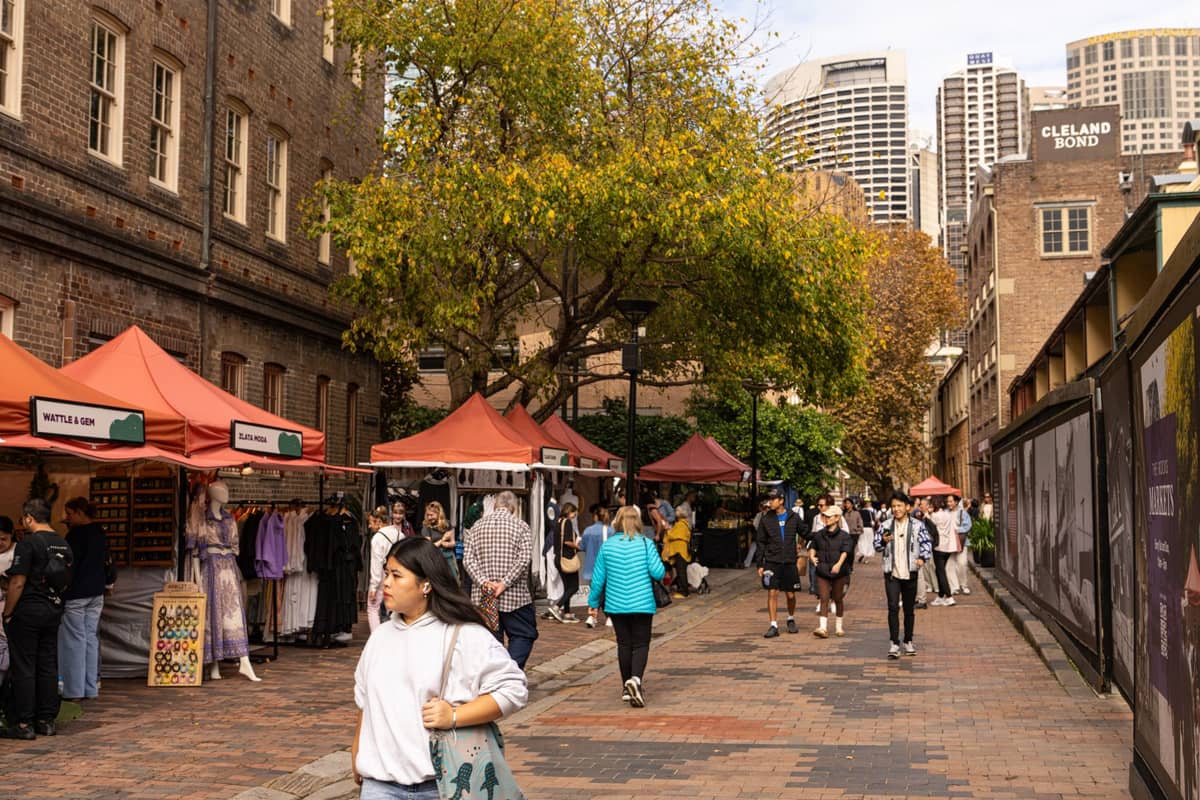
Sydney's market culture is strongest on Saturday mornings. Glebe Markets run most Saturdays at Glebe Public School on Derby Place and have the feel of a genuine community market rather than a tourist attraction. You will find vintage clothing, bric-a-brac, records, handmade goods, and street food. It is one of the more honest markets in the inner city.
For the widest range of goods and the most consistent quality in handmade Australian products, Paddington Markets is the most reliable Saturday option. The Sydney Fish Market at Pyrmont is technically a retail market and one of the largest in the Southern Hemisphere by seafood volume. It opens early (around 7am) and is worth visiting if you want to buy fresh seafood to cook, though it is not primarily a tourist market. Paddy's Markets in Haymarket is the city's most central and largest market, open Wednesday through Sunday. It sells produce, discount clothing, souvenirs, and electronics at lower price points. If you want cheap produce or are looking for basic souvenirs, Paddy's is practical; if you want craft or design, look elsewhere.
⚠️ What to skip
The Rocks Markets (held on weekends near Circular Quay) have a picturesque setting but are almost entirely tourist-oriented. Prices are high relative to quality, and the product range skews heavily toward generic Australian souvenirs. Fine for a browse, but not where you would do serious shopping.
Australian Products Worth Buying: What to Look For
Sydney is a logical place to buy Australian-made products, though you need to be selective. A lot of what is sold as 'Australian' in tourist shops is manufactured offshore. Some categories are genuinely strong locally.
- Merino wool and knitwear Australian merino is world-class. Brands like Icebreaker (New Zealand, widely sold here), Woolmark-certified labels, and specialist retailers carry quality pieces. Expect to pay AUD $100-400+ for a quality garment.
- Skincare and native botanicals Products using native Australian ingredients such as kakadu plum, tea tree, macadamia, and wattleseed are widely available. Aesop (though now owned globally) originated in Melbourne and is stocked across Sydney. Look also for smaller brands at markets and independent pharmacies.
- Opal jewellery Australia produces the majority of the world's opals. Dedicated opal retailers operate in the CBD, but quality and price vary enormously. If spending significantly, buy from a retailer who provides a certificate of origin and gem grading information.
- Aboriginal and Torres Strait Islander art and products Genuine Indigenous art requires careful sourcing. The Australian Indigenous Art Trade Association provides guidance on ethical purchasing. Avoid mass-produced items that imitate Indigenous designs without authorisation. For context on culture and heritage, the Sydney Aboriginal culture guide is worth reading before you shop.
- Wine from surrounding regions Bottle shops (liquor stores) in Sydney stock wines from the Hunter Valley and other NSW regions. If you are visiting the region, buying direct from the cellar door is more interesting and sometimes better value.
✨ Pro tip
Australia operates a Tourist Refund Scheme (TRS) that allows eligible visitors to claim back the GST (10%) on purchases of AUD $300 or more from a single retailer, made within 60 days of departure. Claim at the airport before you check in your bags. For full eligibility rules and procedures, check the Australian Border Force TRS page before travelling.
Shopping Precincts Outside the CBD: Worth the Trip?
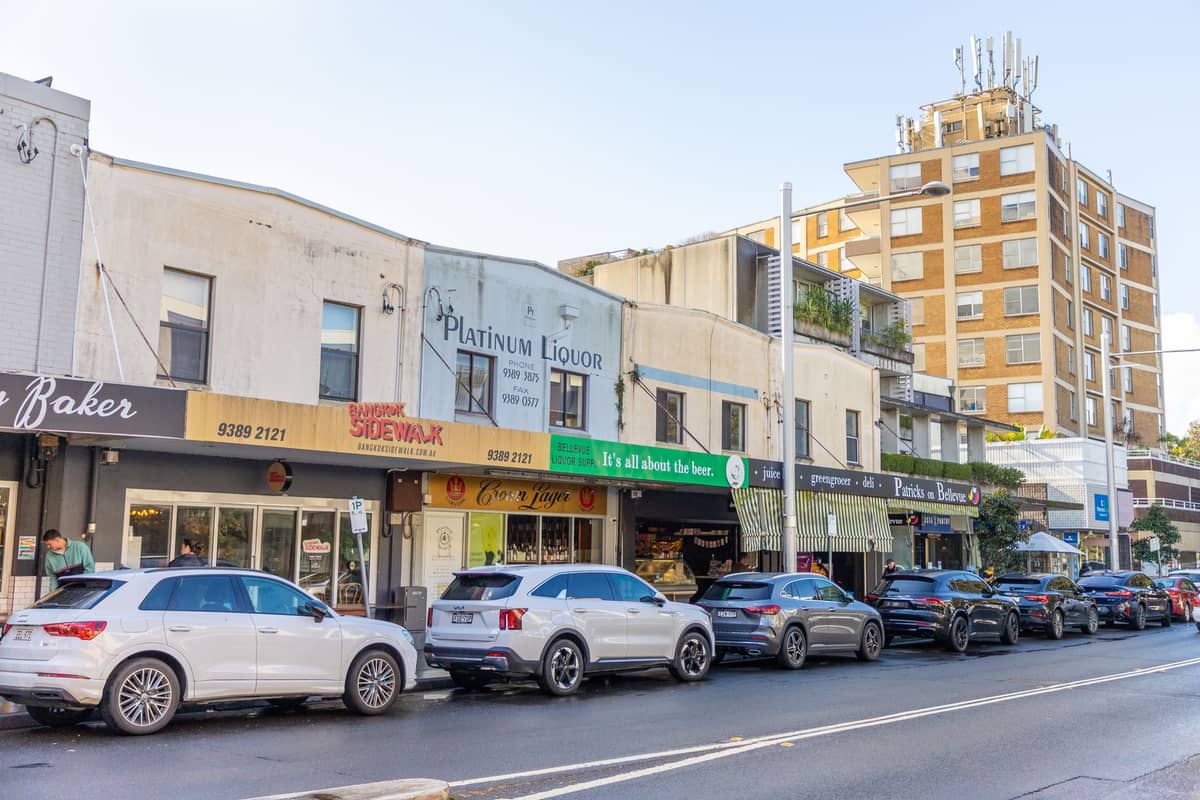
Mosman, on the lower North Shore, has a well-maintained village strip with quality independent fashion retailers and homewares shops. It is a short ferry ride from Circular Quay followed by a bus, or accessible directly by bus. The demographic skews affluent, and the retail reflects that. It is genuinely pleasant to browse without the CBD crowds, and pairs well with a visit to Taronga Zoo nearby.
Manly's shopping is more functional than destination-worthy, centred on The Corso between the ferry wharf and the ocean beach. You will find the standard surf and beach brand retailers alongside a handful of independent cafes and gift shops. It is perfectly fine if you are already visiting Manly for the beach or the Manly Scenic Walkway, but not worth a dedicated trip purely for shopping.
Parramatta in western Sydney has a major Westfield and serves the local population well, but it does not offer anything significantly different from the CBD Westfield and is a long trip from central accommodation. Unless you are already in the area, the Parramatta shopping scene is not worth the commute for visitors staying in the inner city.
Practical Details: Hours, Payments, and Planning
Shopping hours in Sydney are more consistent than in some other major cities, but they are not uniform. Most CBD retailers open between 9am and 10am on weekdays, with late-night trading on Thursdays (usually until 9pm). Sunday hours vary by retailer and centre, typically around 10am to 7pm. Markets generally run Saturday mornings from around 8am to 2pm or 3pm, with some operating Sunday hours as well.
Credit and debit cards are accepted almost universally in Sydney retail, including contactless payments via phone or watch. Carrying cash is rarely necessary, though some smaller market stalls and independent traders operate cash-only. ATMs are widely available in shopping centres and on high streets.
All prices in Sydney are in Australian dollars (AUD). The GST of 10% is already included in displayed prices, so there are no surprise additions at the register. For visitors planning significant purchases, the Tourist Refund Scheme described above is worth understanding before you shop. For a broader picture of how to budget your time in Sydney, the Sydney on a budget guide covers how to get the most from the city without overspending.
ℹ️ Good to know
Public holiday trading restrictions have largely been relaxed in NSW, but some smaller independent retailers and markets do not operate on public holidays. If your visit falls around a NSW public holiday, check ahead with specific retailers. Major shopping centres generally open, though sometimes with reduced hours.
FAQ
What are the best shopping areas in Sydney?
For mainstream retail, the Pitt Street Mall corridor in the CBD is the most concentrated, anchored by Westfield Sydney, the Queen Victoria Building, and The Strand Arcade. For independent Australian fashion and design, Paddington's Oxford Street is the strongest neighbourhood. Newtown suits vintage and second-hand shoppers. For weekend market shopping, Paddington Markets (Saturday) and Glebe Markets (Saturday) are the most reliable options.
Is shopping expensive in Sydney compared to other cities?
Sydney is not a budget shopping destination. Prices for clothing, homewares, and electronics are broadly comparable to or slightly higher than major European or North American cities, partly because import costs and retail rents are high. Australian-made products like merino wool, native skincare, and opal jewellery can represent good value for quality. Visitors from countries with stronger currencies relative to the AUD may find overall pricing reasonable.
Can I get a tax refund on shopping in Sydney?
Yes, through Australia's Tourist Refund Scheme (TRS). You can claim back the 10% GST on purchases of AUD $300 or more from the same retailer, bought within 60 days of your departure date. You must claim at the airport TRS facility before clearing customs. The process is straightforward but requires your receipts and the goods to be available for inspection. Check the Australian Border Force website for current rules before travelling.
What time do shops close in Sydney?
Most CBD retailers close between 5pm and 7pm Monday through Wednesday and Friday, with extended Thursday trading until around 9pm. Sunday hours vary, with many shops closing between 5pm and 7pm. Shopping centre published hours do not always match individual store hours, so verify with the specific retailer if timing matters. Markets are generally morning affairs, running from around 8am to 2pm or 3pm on Saturdays.
What souvenirs from Sydney are actually worth buying?
The most worthwhile purchases are things that are genuinely made in or sourced from Australia: merino wool garments, native botanical skincare products, locally produced honey (Leatherwood honey from Tasmania is widely available), Australian wine from regions like the Hunter Valley, and responsibly sourced opal jewellery. If purchasing anything described as Indigenous art or craft, buy from verified retailers who can confirm ethical sourcing and direct artist benefit. Generic 'Australia' branded items sold in tourist shops are almost universally imported.
Tickets & tours
Live prices and dates from our booking partner. If you book, we may earn a commission at no extra cost to you.
Planning a trip? Discover personalized activities with the Nomado app.