Glebe Markets: Sydney's Favourite Saturday Secondhand Scene
Every Saturday from 10am to 4pm, the grounds of Glebe Public School fill with stalls selling vintage clothing, handmade jewellery, records, books, and street food. Free to enter and genuinely eclectic, Glebe Markets is one of Sydney's most enduring weekly rituals.
Quick Facts
- Location
- 46–56 Glebe Point Road, Glebe NSW 2037 (main gate at Derby Place)
- Getting There
- Bus routes along Glebe Point Road; check Transport for NSW trip planner for current services
- Time Needed
- 1.5–2.5 hours
- Cost
- Free entry
- Best for
- Vintage hunters, Sunday browsers (it's Saturday), local craft lovers
- Official website
- glebemarkets.com.au
What Glebe Markets Actually Is
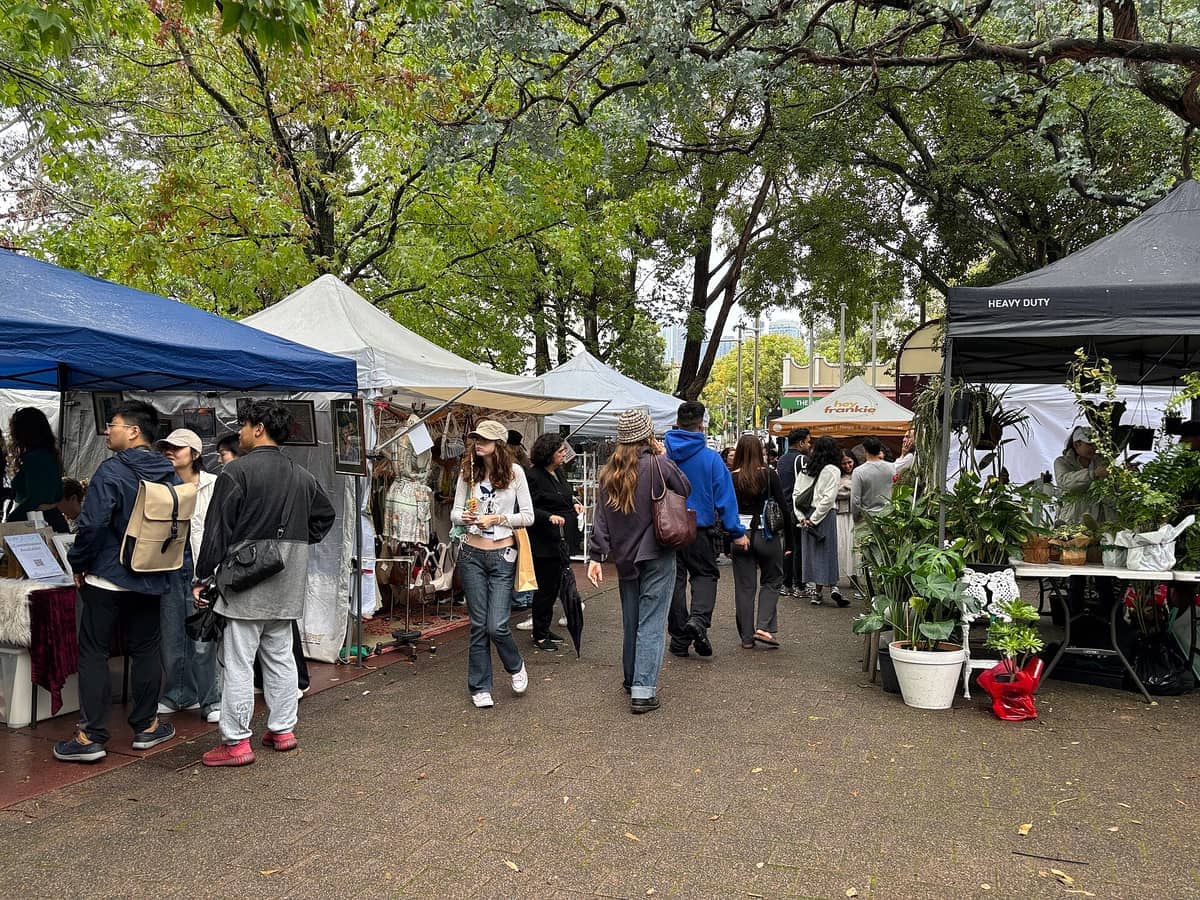
Glebe Markets runs every Saturday at Glebe Public School on Glebe Point Road. The market hosts stalls spread across the school's shaded playground and courtyard areas. The mix leans heavily toward secondhand and vintage, with a solid contingent of independent makers selling new handcrafted goods alongside the pre-loved furniture, vinyl records, clothing racks, and stacks of paperbacks.
This is not a curated artisan pop-up with matching signage and cold-brew coffee on every corner. The stalls are set up by individuals, small dealers, and regulars who have been coming for years. What you find changes week to week, which is part of the appeal, and part of the frustration if you arrive with a specific shopping list.
💡 Local tip
The main entrance is at Derby Place, off Glebe Point Road, not the school's main front gate. First-timers often walk past it. Look for the market signage on the side street.
The Stall Mix: What You'll Actually Find
Vintage clothing dominates the fashion end: denim jackets, leather goods, 1990s sportswear, deadstock band tees, and the occasional rack of formalwear that looks like it came straight from a 1970s department store. Prices vary widely depending on the seller. Some are dealers who know their stock's market value; others are clearing out a garage. Knowing the difference before you negotiate saves time.
Beyond clothing, expect a reasonable selection of small furniture, ceramics, jewellery (both vintage and handmade), art prints, crystals, candles, and an entire ecosystem of bric-a-brac that resists easy categorisation. A stall selling hand-turned wooden bowls will sit next to someone offloading a collection of 1980s Star Wars figures. That adjacency is part of what makes the market feel genuinely exploratory rather than predictable.
Food stalls run along one section, offering the standard inner-west mix of wood-fired pastries, banh mi, bubble tea, and South Asian street food. The quality is generally solid. Seating is limited and informal, so most people eat standing or perched on the school steps.
Tickets & tours
Live prices and dates from our booking partner. If you book, we may earn a commission at no extra cost to you.
The Rocks historic walking tour
From 20 €Instant confirmationFree cancellationBeginner surf lesson at Bondi Beach
From 79 €Instant confirmationFree cancellationSydney whale-watching cruise with breakfast or lunch
From 62 €Instant confirmationFree cancellationBlue Mountains Waterfalls Full-Day Tour with Lunch and Dinner
From 171 €Instant confirmationFree cancellation
When to Arrive and What to Expect by Time of Day
The market opens at 10am and runs until 4pm every Saturday. Serious vintage buyers tend to arrive close to opening, when stalls are freshest and the crowds are thinner. By mid-morning, especially on a clear autumn or spring Saturday, the school grounds become noticeably busier. Families with prams fill the food area; groups of friends move slowly through the clothing racks.
By early afternoon the market peaks. The atmosphere is good-natured and unhurried, but navigating between stalls in the tighter sections requires patience. The noise level rises: music from a couple of stalls, the sound of vendors chatting with regulars, children at the food tables. The sensory texture is earthy and close, especially in the sections under the old fig trees, where the smell of woodsmoke from the food stalls drifts through.
Late afternoon, from around 2:30pm onward, the crowd thins and some stalls begin packing up early. Prices occasionally soften near closing time, particularly for heavier items like furniture or ceramics, where vendors prefer not to pack them back into a van. If you are not after first pick of the day's best finds, arriving after 2pm means fewer people and sometimes more flexibility on price.
⚠️ What to skip
Glebe Markets runs every Saturday regardless of weather, but heavy rain significantly changes the experience. Many stalls are outdoors or under basic shade structures. Bring a compact umbrella on uncertain days, and check the forecast before making a special trip.
Getting There: Transit and Practical Access
Glebe Point Road is served by several bus routes connecting the area to Central Station and the CBD. Use the Transport for NSW trip planner at transportnsw.info to find the most current routes and stops before you travel, as services can change. The ride from Central takes around 10 minutes by bus, depending on traffic. Glebe is also served by the L1 Dulwich Hill Line, so both bus and light rail are public transport options from the city.
If you're spending the broader day in the inner west, Glebe Markets pairs well with a walk along Glebe Point Road itself, which has good independent cafes and bookshops, or with a visit to nearby Newtown, a short bus or taxi ride away. Parramatta Road also links Glebe to the broader inner-west corridor for those exploring further afield.
Street parking in Glebe on Saturdays is competitive. If you're driving, allow extra time to find a spot several blocks from the market entrance. The walk is flat and manageable. The site itself is accessible for wheelchair users, with the school grounds providing reasonable flat-surface navigation between stalls, though some sections are tighter than others.
Glebe Markets in the Context of Sydney's Market Scene
Sydney has a reasonably active weekend market calendar, and it's worth understanding where Glebe sits in that landscape before you plan your visit. Paddington Markets skews more toward curated artisan goods and fashion labels at higher price points. Paddy's Markets in Haymarket operates at much larger scale with a heavily wholesale and tourist-souvenir character. Glebe occupies the middle territory: genuinely secondhand and independent, without being either aggressively budget or aggressively premium.
For travellers interested in Sydney's broader independent market and shopping culture, the Sydney markets guide provides a useful comparison of which markets suit which types of buyers. Glebe consistently performs well for vintage clothing, records, and handmade jewellery specifically.
Glebe Markets has built a genuine community of regular vendors and repeat visitors. That longevity shows in the way the market feels: less like a commercial event and more like a weekly gathering with a commercial dimension. Regulars greet familiar stallholders by name. The rhythm is slower than a shopping centre, and deliberately so.
Photography, Atmosphere, and Who This Is For
The market photographs well in the earlier hours, when light filters through the old trees and the stalls are still being arranged. The visual density of objects, textures, and people makes for interesting street photography. Vendors are generally relaxed about cameras pointed at their stalls, though asking first for portraits is standard courtesy.
For travellers on a tight schedule focused on major Sydney landmarks, Glebe Markets probably does not make the cut. There are no views, no historical monuments, and no single centerpiece attraction. What the market offers is local texture: the particular Saturday energy of an inner-west Sydney neighbourhood gathering around its weekly market. That has real value for some visitors and almost none for others.
Travellers who most consistently get something out of Glebe Markets are those interested in Sydney beyond the postcard itinerary: the same traveler who might enjoy wandering King Street in Newtown or exploring the city's less-obvious corners. If your Saturday afternoon is otherwise unscheduled and you happen to be staying in or near the inner west, it is an easy, low-cost way to spend two hours.
ℹ️ Good to know
Cash is useful at Glebe Markets. Many individual stallholders accept card payments, but smaller vendors or occasional sellers may prefer cash. An ATM on Glebe Point Road is within walking distance of the market entrance.
Insider Tips
- Enter via Derby Place off Glebe Point Road, not the main school gate. The official signage points you here, but first-time visitors frequently miss it and walk around the block.
- Arrive within the first 30–45 minutes of opening if you are specifically hunting vintage clothing in good condition. The best pieces in popular sizes move quickly, particularly women's 1980s and 1990s clothing and men's leather jackets.
- Bargaining is accepted but not expected. A polite ask of 'is that your best price?' works better than opening with a counteroffer. Vendors who are regulars have typically already priced their stock with some flexibility in mind.
- The food stalls at the eastern side of the school grounds are usually less crowded than the central section. If you want to eat without queuing long, head there first and then loop back through the clothing and homewares stalls.
- On hot Sydney summer Saturdays, the sections under the school's fig trees provide the only meaningful shade. Plan your browsing path through those areas during the hottest part of the day, roughly 12pm to 2pm.
Who Is Glebe Markets For?
- Vintage clothing and accessories collectors
- Record and book browsers
- Travellers exploring inner-west Sydney beyond the tourist circuit
- Families with older children looking for a relaxed Saturday outing
- Budget-conscious visitors wanting a free, low-key Sydney experience
Nearby Attractions
Other things to see while in Newtown & the Inner West:
- Carriageworks
Carriageworks occupies a vast former railway workshop in Eveleigh, running contemporary art exhibitions, live performances, and one of Sydney's best weekly farmers markets. It is free to enter on most days, and the industrial architecture alone justifies the trip.
- Chau Chak Wing Museum
The Chau Chak Wing Museum brings together the University of Sydney's Nicholson, Macleay, and University Art collections in a single, purpose-built space on the Camperdown campus. Entry is free, the breadth of objects is genuinely surprising, and the experience sits well outside the usual tourist trail.
- White Rabbit Gallery
White Rabbit Gallery in Chippendale houses one of the world's most significant private collections of 21st-century Chinese contemporary art, and admission is entirely free. Spread across multiple floors of a converted building, each exhibition draws from a collection that spans painting, sculpture, textile, video, and installation work made after the year 2000.
Planning a trip? Discover personalized activities with the Nomado app.