Chau Chak Wing Museum: Sydney's Most Underrated Free Cultural Institution
The Chau Chak Wing Museum brings together the University of Sydney's Nicholson, Macleay, and University Art collections in a single, purpose-built space on the Camperdown campus. Entry is free, the breadth of objects is genuinely surprising, and the experience sits well outside the usual tourist trail.
Quick Facts
- Location
- University Place, Camperdown NSW 2050 (University of Sydney campus)
- Getting There
- Bus 412, 413, 436–440, 461, 480 or 483 to Parramatta Rd (Footbridge); 5-min bus or 20-min walk from Central Station
- Time Needed
- 1.5–3 hours depending on depth of interest
- Cost
- Free — no ticket required
- Best for
- History lovers, archaeology enthusiasts, art collectors, curious travellers off the tourist circuit
- Official website
- www.sydney.edu.au/museum
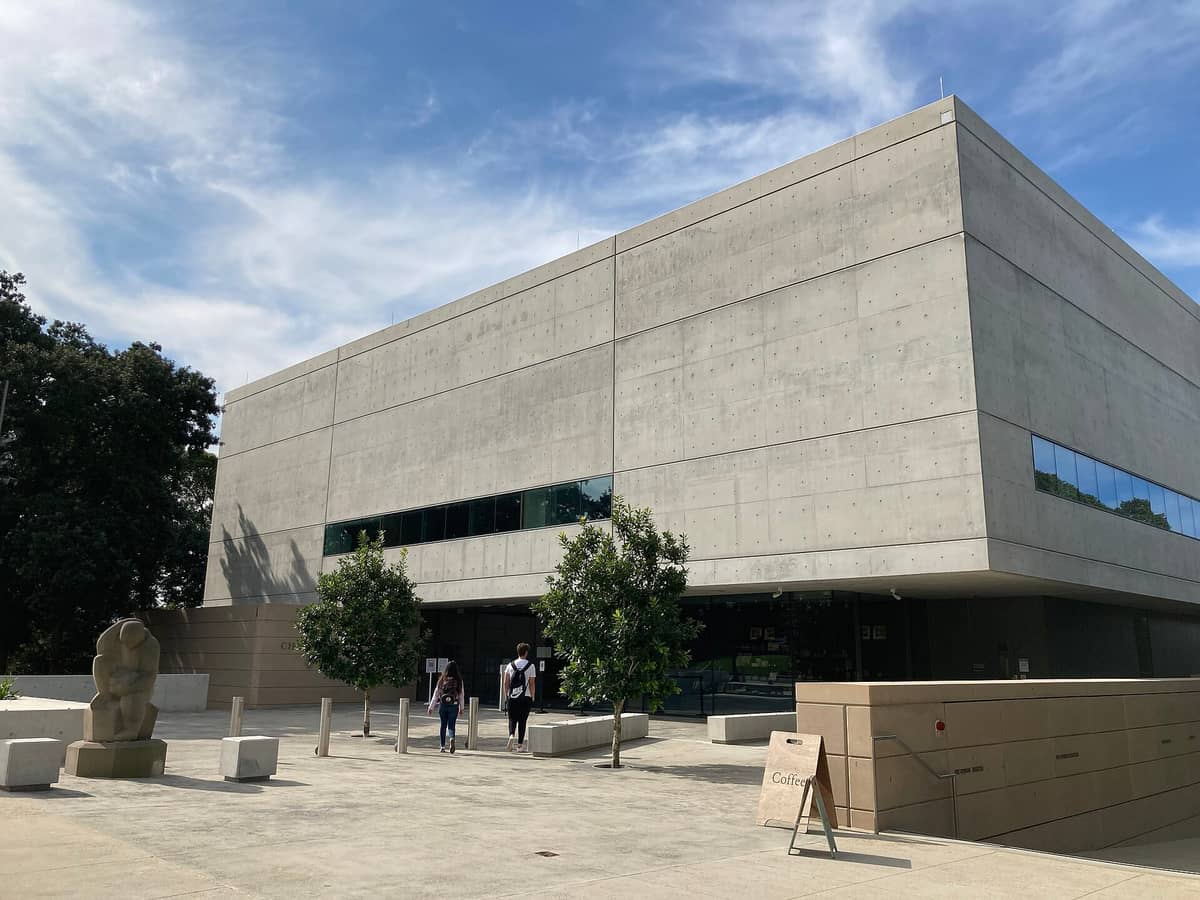
What the Chau Chak Wing Museum Actually Is
Opened on 18 November 2020, the Chau Chak Wing Museum is a public museum, consolidating three historically separate collections — the Nicholson Collection of antiquities, the Macleay Collection of natural history, and the University Art Collection — into one purpose-built building on the Camperdown campus. That consolidation is significant. Each collection has its own multi-century biography; together, they form one of the most intellectually diverse free museums in New South Wales.
The Nicholson Collection began in 1860, with a large donation of ancient and medieval artefacts from Sir Charles Nicholson. Its holdings include ancient Egyptian, Greek, Roman, and Near Eastern objects. The Macleay Collections, named after the naturalist and politician Alexander Macleay, include natural history specimens, cultural and scientific objects, and historic photography. The University Art Collection spans several centuries and includes paintings, works on paper, photographs, and sculpture. No single day does all of it justice.
ℹ️ Good to know
Opening hours: Monday to Friday, 10 am–5 pm; Saturday and Sunday, 12 pm–4 pm. The museum closes on NSW public holidays and during the University's two-week December/January shutdown. Always confirm specific closure dates at sydney.edu.au/museum before visiting.
Arriving on Campus: First Impressions and Orientation
The University of Sydney's Camperdown campus is one of Sydney's most architecturally striking environments, dominated by Victorian-era sandstone quadrangles and tree-lined avenues. Arriving by bus along Parramatta Road, you enter a precinct that operates at a distinctly different pace from the city centre, roughly 4 kilometres to the east. Students move between lectures; the campus grounds absorb foot traffic quietly. The museum building itself sits on University Place and is identifiable by its contemporary facade, which contrasts with the heritage stonework elsewhere on campus.
The entrance on University Place is accessible via ramp or three stairs. A wheelchair is available to borrow from the front desk, and a hearing loop is installed for visitors who need it. Accessible parking and a drop-off bay are available nearby. These provisions are genuine rather than token: the front desk staff are prompt about directing visitors to specific facilities.
The museum sits in the broader Inner West corridor. If you're combining the visit with time in the neighbourhood, Newtown and the Inner West has a concentration of independent bookshops, record stores, and cafes along King Street, roughly 15 minutes on foot from the campus entrance.
Tickets & tours
Live prices and dates from our booking partner. If you book, we may earn a commission at no extra cost to you.
The Rocks historic walking tour
From 20 €Instant confirmationFree cancellationBeginner surf lesson at Bondi Beach
From 79 €Instant confirmationFree cancellationSydney whale-watching cruise with breakfast or lunch
From 62 €Instant confirmationFree cancellationBlue Mountains Waterfalls Full-Day Tour with Lunch and Dinner
From 171 €Instant confirmationFree cancellation
Inside the Collections: What to Prioritise
The Nicholson Collection is typically where first-time visitors spend the most time, and for good reason. Egyptian mummies, Roman portrait busts, Greek ceramics, and Near Eastern cylinder seals are displayed with contextual interpretation that goes beyond typical caption text. The scale of individual objects is often unexpected: a coffin lid or a limestone relief carries a physical weight, literally and otherwise, that photographs don't convey. Stand close to the painted wooden sarcophagi and the pigment detail becomes apparent — ochres, blacks, and faded blues applied roughly 2,000 to 3,000 years ago.
The Macleay Collection occupies a different register entirely. It operates at the intersection of natural history, colonial science, and ethnography — a combination that requires careful reading of the interpretive material provided. Drawers and cases of pinned insects, shells arranged taxonomically, and ethnographic objects from Pacific and Australian collections reflect 19th-century collecting practices that the museum addresses directly in its labelling. The Macleay Collection includes natural history specimens, cultural and scientific objects, and historic photography. Drawers and cases of insects, shells, and ethnographic objects reflect collecting histories that the museum addresses in its interpretation. Much of the collection is not on permanent public display.
The University Art Collection is distributed across the building rather than concentrated in a single gallery wing. Rotating exhibitions draw from the permanent holdings as well as loans, so the specific works visible on any given visit shift. Australian modernist painting is well-represented across the permanent works, alongside photography and works by living artists commissioned or acquired more recently.
💡 Local tip
If time is limited, decide in advance whether you're prioritising antiquities, natural history, or art. The museum is large enough that trying to cover everything in under two hours produces a superficial impression of each collection.
How the Experience Changes by Time of Day
Weekday mornings, particularly from 10 am to noon, attract the smallest crowds: a mix of academic researchers, school groups on pre-booked visits, and individual visitors. The lighting in the antiquities galleries is kept low and consistent, which means the atmosphere in the Egyptian section carries a certain stillness that suits the material. By early afternoon, foot traffic increases as university staff and students move through on breaks. The café on the ground floor becomes occupied; the ambient noise level rises but never reaches the kind of density that affects the experience in the galleries themselves.
Weekend visits, especially Saturday afternoons, bring families and casual visitors who may be pairing the museum with a walk through the campus grounds. Sunday hours are shorter (noon to 4 pm), which compresses the visiting window considerably. If you're a slower reader of object labels or want to spend extended time with the antiquities, a weekday morning is the more comfortable option.
Cultural and Historical Context Worth Knowing
The museum sits on the traditional Country of the Gadigal people. The University of Sydney acknowledges this on campus signage and in institutional communications. Some objects in the Macleay Collection have complex provenance histories relating to Aboriginal and Torres Strait Islander communities; the museum's interpretive approach to these holdings has evolved in response to ongoing dialogue with source communities. Visitors engaging with ethnographic material in particular will find the labelling more candid about collection history than is typical in older institutions.
For broader context on Sydney's Aboriginal cultural heritage and its representation across the city's institutions, the Sydney Aboriginal culture guide provides useful background before visiting any major collection.
The Nicholson Collection's age as an institution — dating to the colonial period — means that some of its acquisition history also carries complexity. The museum does not obscure this. Labels reference the circumstances of acquisition where they are known, and the interpretive tone across the building reads as considered rather than promotional.
Photography, Practical Notes, and Who Should Skip This
Photography for personal, non-commercial use is generally permitted in the permanent galleries, though specific temporary exhibitions may have restrictions indicated by signage. The lighting conditions in the antiquities galleries are deliberately low, which makes handheld photography challenging without adjusting ISO settings. The natural history section, with its drawer-based displays and specimen cases, offers more even lighting.
The museum is genuinely free, with no suggested donation requested at entry. There is no audio guide available for general visitors as a standard offering, which means the experience depends heavily on reading the interpretive panels. Visitors who prefer more guided, narrative-driven museum experiences may find the self-directed format less engaging. The museum brings together the University’s antiquities, natural history, cultural, photographic, and art collections across four floors.
Visitors wanting a broader survey of Sydney's major museum offerings can compare options using the best museums in Sydney guide, which covers the full range from natural history to contemporary art.
⚠️ What to skip
The museum closes during the University of Sydney's December/January shutdown and on NSW public holidays. This is not always prominently advertised. Check the official visit page at sydney.edu.au/museum before making a dedicated trip, particularly during the summer holiday period.
Getting Here and Nearby Options
The most practical route from the CBD is to take any of the listed bus services — 412, 413, 436, 438, 439, 440, 461, 480, 483, or M10 — to the Parramatta Road stop at the Footbridge. The journey from Central Station takes roughly five minutes by bus. On foot from Central, the walk is approximately 20 minutes through Chippendale, which is an interesting route in itself but not one most visitors would choose in summer heat.
Redfern Station, on the T8 Airport and South line, is the closest train station, at about 20 minutes on foot across the campus. Neither option is difficult, but the bus from Central is the most efficient choice for visitors without prior knowledge of the campus layout.
After the museum, King Street in Newtown is worth exploring. It runs from the western edge of the campus precinct through a stretch of independent retail, food, and cultural venues. The free things to do in Sydney guide includes other no-cost cultural options that pair well with a visit to the Chau Chak Wing Museum.
Insider Tips
- Weekday mornings before noon are the quietest visiting window. School group bookings occasionally fill the antiquities galleries mid-morning; if you arrive at 10 am you're likely ahead of them.
- The campus grounds themselves are worth time before or after the museum. The main sandstone quadrangle, a short walk from the museum entrance, is one of the more photographically striking spaces in Sydney and is freely accessible.
- Check the museum's current exhibition listings before visiting. The temporary exhibition program changes several times a year and sometimes includes loan material from major international collections that significantly adds to what's on view.
- The Macleay Collection insect drawers are not always prominently signposted. Ask at the front desk if you want to locate the entomological displays specifically — they're easy to miss on a self-guided walk.
- If you're visiting with children, the Egyptian section with its mummies and painted coffins tends to hold attention well. The natural history drawers, with their taxonomic insect arrangements, also work for curious young visitors — though the interpretive text is pitched at adult readers.
Who Is Chau Chak Wing Museum For?
- Travellers interested in ancient Egyptian, Greek, and Roman antiquities who want to avoid the crowds of larger institutions
- Natural history and science enthusiasts drawn to 19th-century specimen collections
- Art lovers seeking Australian and international works outside the major gallery circuit
- Budget-conscious visitors: free entry with no hidden costs
- Visitors combining a campus walk with an afternoon in the Inner West neighbourhood
Nearby Attractions
Other things to see while in Newtown & the Inner West:
- Carriageworks
Carriageworks occupies a vast former railway workshop in Eveleigh, running contemporary art exhibitions, live performances, and one of Sydney's best weekly farmers markets. It is free to enter on most days, and the industrial architecture alone justifies the trip.
- Glebe Markets
Every Saturday from 10am to 4pm, the grounds of Glebe Public School fill with stalls selling vintage clothing, handmade jewellery, records, books, and street food. Free to enter and genuinely eclectic, Glebe Markets is one of Sydney's most enduring weekly rituals.
- White Rabbit Gallery
White Rabbit Gallery in Chippendale houses one of the world's most significant private collections of 21st-century Chinese contemporary art, and admission is entirely free. Spread across multiple floors of a converted building, each exhibition draws from a collection that spans painting, sculpture, textile, video, and installation work made after the year 2000.
Planning a trip? Discover personalized activities with the Nomado app.