Queen Victoria Building (QVB): Sydney's Victorian Masterpiece Worth Slowing Down For
The Queen Victoria Building is a late 19th-century sandstone landmark sitting at the heart of Sydney's CBD. Free to enter, architecturally detailed, and genuinely impressive at human scale, the QVB rewards visitors who take time to look up, walk slowly, and resist the pull of its retail tenants long enough to appreciate what surrounds them.
Quick Facts
- Location
- 455 George Street, Sydney CBD NSW 2000 (between George and York Streets)
- Getting There
- Town Hall Station (trains) is nearby; multiple bus routes stop on George Street
- Time Needed
- 45 minutes to browse all five levels; 20–30 minutes for architecture alone
- Cost
- Free entry; individual shop and café prices vary
- Best for
- Architecture lovers, shoppers, rainy-day escapes, and anyone curious about Sydney's civic history
- Official website
- www.qvb.com.au
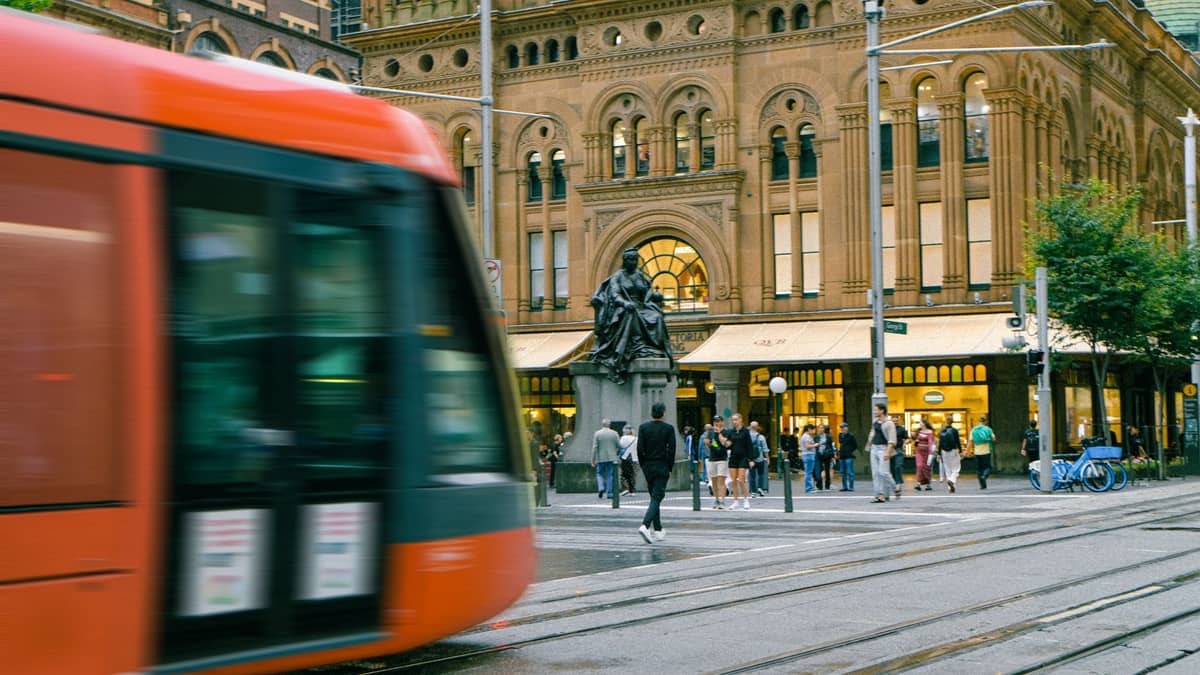
What the Queen Victoria Building Actually Is
The Queen Victoria Building is a five-storey Victorian Romanesque shopping centre occupying an entire city block on George Street in Sydney's CBD. It is not a ruin, not a museum, and not simply a mall. It is a functioning retail building that happens to be one of the most architecturally significant structures in New South Wales, and understanding that duality is key to getting the most from a visit.
Construction began in 1893, during a severe economic depression in New South Wales, partly as a public works project to provide employment. The building was designed by City Architect George McRae in the Romanesque Revival style, and it officially opened on 21 July 1898. Its original name was the Queen Victoria Markets Building. The central dome stretches roughly 19 metres in external diameter, and the cupola above it rises approximately 60 metres above street level. Those are not decorative gestures. At street level, looking up through the central atrium, the scale becomes viscerally clear.
ℹ️ Good to know
Entry to the QVB is free. You do not need a ticket or reservation to walk in and explore all five levels. Shopping hours for individual retailers vary, so check the QVB's Centre Information page before visiting if you have a specific store in mind.
The Architecture: What to Look For and Where to Stand
Most visitors enter through the George Street ground-floor entrance, walk a few metres inside, glance upward, and keep moving. That is the wrong approach. The building rewards stillness. Stand at the centre of the ground floor beneath the main dome and give yourself two or three minutes to simply look at the stained-glass windows, the tiled floors, the wrought-iron balustrades, and the layered gallery levels rising above you. The light shifts throughout the day as the sun moves across the dome's coloured glass.
The tiled mosaic floors are particularly striking and change in pattern across different sections of the building. The sandstone facade, visible from George Street, was restored in the 1980s after the building spent decades in disrepair and narrowly escaped demolition. The restoration involved craftspeople sourced internationally and is widely considered a benchmark for heritage commercial restoration in Australia.
Two large mechanical clocks are worth finding. The Royal Clock hangs from the ceiling of the upper gallery and contains animated figurines depicting scenes from British royal history. A second clock, located near the York Street entrance, features a model of a Scottish castle. Both operate on the hour and draw small clusters of onlookers. If you are there slightly before the hour, the show is worth timing your movement around.
💡 Local tip
For the best photographs of the central dome and atrium, position yourself on the upper levels rather than the ground floor. The upper galleries give a wider field of view across the full interior, and the coloured glass reads more clearly from that angle, especially on a sunny morning.
Tickets & tours
Live prices and dates from our booking partner. If you book, we may earn a commission at no extra cost to you.
The Rocks historic walking tour
From 20 €Instant confirmationFree cancellationBeginner surf lesson at Bondi Beach
From 79 €Instant confirmationFree cancellationSydney whale-watching cruise with breakfast or lunch
From 62 €Instant confirmationFree cancellationBlue Mountains Waterfalls Full-Day Tour with Lunch and Dinner
From 171 €Instant confirmationFree cancellation
How the Experience Changes by Time of Day
The QVB is at its quietest on weekday mornings before 10am. The building is largely empty of shoppers at that hour, the light through the stained glass is softer and more directional, and you can walk the length of any gallery without navigating crowds. The smell of fresh coffee drifts out from early-opening cafes on the lower level, and the sound of your own footsteps on the tiled floors is audible in a way that disappears by midday.
Midday on weekdays and any time on weekends brings a different atmosphere: lunch crowds from surrounding office buildings, groups of tourists, and the steady background noise of a busy retail centre. The building does not feel overcrowded in the way that outdoor markets or beaches can, but the sense of architectural calm is harder to find. Weekend afternoons in particular see queues at the ground-floor cafes and heavier foot traffic near the entrances.
Evening visits, after retail hours, are not generally possible since access depends on the shops being open. During the December holiday period, the QVB invests heavily in interior decorations and a large Christmas tree, which draws significant additional foot traffic but also makes the space genuinely festive rather than simply commercial.
How to Navigate the Building Practically
The QVB has entrances from George Street and York Street, with access also at the Druitt Street end. All entrances connect to the same internal space, so your entry point depends on where you are coming from rather than which entrance is best. If you arrive via Town Hall Station, follow the underground pedestrian links, which bring you directly into the lower ground floor of the QVB without surfacing to street level.
The lower ground level contains food options and more casual retail. Ground and first floors hold a mix of fashion, accessories, and homeware tenants. The upper levels carry fewer tenants and more gallery-style space, which makes them quieter and more suitable for appreciating the architecture without commercial distraction. Lifts and escalators connect all levels, and accessibility provisions are available, though visitors with specific access needs are advised to contact the venue directly before visiting.
The QVB sits within a dense cluster of CBD attractions and shopping precincts. The Strand Arcade is a short walk from the QVB's George Street entrance and offers a useful comparison: it is smaller and more intimate, but its Victorian timber joinery and ornate detail are equally worth seeing. Together, the two arcades make for a coherent architectural walk through Sydney's 19th-century retail heritage.
The Retail and Food Offer: Honest Assessment
The shops inside the QVB are predominantly mid-to-upper-range fashion, beauty, and lifestyle retailers. There are international brands alongside Australian independents. If you are specifically looking for Sydney-made or locally designed goods, the selection is limited, and you may find more interesting options in precincts like Paddington or Newtown.
The food and coffee offering on the lower ground floor is competent and varied enough for a lunch stop or a sit-down coffee, but it is not a destination in itself. For serious food exploration in the CBD and surrounding areas, the Sydney food guide covers significantly more ground. The QVB is a practical and atmospheric place to eat while in the area, not a reason to plan a meal around.
Cultural and Civic Context
The QVB's survival was not inevitable. By the mid-20th century The concert hall became the city library, and offices proliferated. Demolition was proposed and debated seriously in the 1950s and 1970s. The restoration that eventually followed in the 1980s, led by Malaysian property group Ipoh Garden, transformed the building back into a functioning retail space and is credited with reviving interest in Sydney's Victorian-era civic architecture.
The building is named after Queen Victoria, whose statue stands at the Druitt Street end. The statue, gifted from Ireland in 1987, depicts Victoria seated. Below it is a small plaque and, unusually, a statue of the queen's dog Islay. These are small details, easy to walk past, but they add a note of unexpectedly personal history to the otherwise monumental facade.
If the QVB's heritage context interests you, the nearby Museum of Sydney and The Rocks Discovery Museum explore colonial-era Sydney in considerably more depth, with artefacts and oral histories that put buildings like the QVB into broader social context.
Who Should Skip This, and Who Will Love It
If your interests run entirely toward beaches, national parks, or Sydney's outdoor life, the QVB will feel like a distraction rather than a destination. It is a covered shopping centre, however beautiful, and spending 90 minutes inside when Bondi or the Royal Botanic Garden are available requires a clear preference for architecture or retail. It is also not the right stop if you are specifically seeking Australian-made products or independent local designers.
For visitors building an itinerary around Sydney's CBD, however, the QVB is an efficient use of 30 to 45 minutes. It is directly adjacent to Town Hall Station, sits within walking distance of Hyde Park and the Australian Museum, and provides genuine shelter on a rainy afternoon without costing anything to enter. Those are practical virtues that matter when planning a Sydney day.
⚠️ What to skip
Opening hours for individual retailers within the QVB vary and may differ on public holidays. Confirm current hours at qvb.com.au before visiting if your trip depends on specific shops being open. The building structure itself may be accessible outside retail hours, but this is not guaranteed.
Insider Tips
- Visit on a weekday before 10am if the architecture is your primary reason for coming. The building is noticeably quieter, the light through the dome is cleaner, and the tiled floors and ironwork balustrades are easier to photograph without people in frame.
- Position yourself on Level 3 or Level 4 and look straight down into the central atrium for the most dramatic view of the interior. This angle is far more revealing than the ground-level view most visitors settle for.
- Time your visit to arrive a few minutes before the hour if you want to see the Royal Clock's animated figurine display. The mechanism runs on the hour and draws a brief crowd, but it is easy to miss if you do not know to look for it.
- The underground pedestrian link from Town Hall Station brings you directly into the QVB's lower ground floor. On a rainy day, this means you can walk from the train to the interior of the building without stepping outside at all.
- The York Street entrance is quieter than the George Street entrance and is a better point of entry if you want to access the upper levels quickly without navigating the busiest part of the ground floor.
Who Is Queen Victoria Building (QVB) For?
- Architecture and design enthusiasts who appreciate Victorian Romanesque detail at close range
- Travellers seeking a genuinely weather-proof stop in the CBD that costs nothing to enter
- Shoppers looking for a curated mix of mid-range fashion and homeware in a heritage setting
- Photographers interested in interior light, ornamental ironwork, and stained glass
- Visitors building a walkable CBD day that connects Town Hall, Hyde Park, and the Strand Arcade
Nearby Attractions
Other things to see while in Sydney CBD:
- ANZAC Memorial
Standing at the southern end of Hyde Park, the ANZAC Memorial is one of Sydney's most significant commemorative sites. Free to enter and open daily, it combines powerful Art Deco architecture with thoughtful exhibitions tracing Australia's wartime history from the First World War to recent conflicts.
- Art Gallery of New South Wales
The Art Gallery of New South Wales spans two architecturally distinct buildings on The Domain, offering free access to one of Australia's most significant art collections. From colonial-era Australian works to contemporary Pacific and Aboriginal art, the gallery rewards visitors who know where to look.
- Australian Museum
The Australian Museum is Sydney's oldest museum, founded in 1827, with free general admission and collections spanning science, culture, and nature. Located opposite Hyde Park in the CBD, it suits curious travellers with two to three hours to spend indoors.
- Sydney Chinatown
Sydney Chinatown occupies the Haymarket precinct around Dixon Street, a pedestrianised mall bookended by ornate gates and lined with restaurants, bakeries, and produce shops. Free to enter and accessible by train, it rewards visitors who know when to go and what to look for.
Planning a trip? Discover personalized activities with the Nomado app.