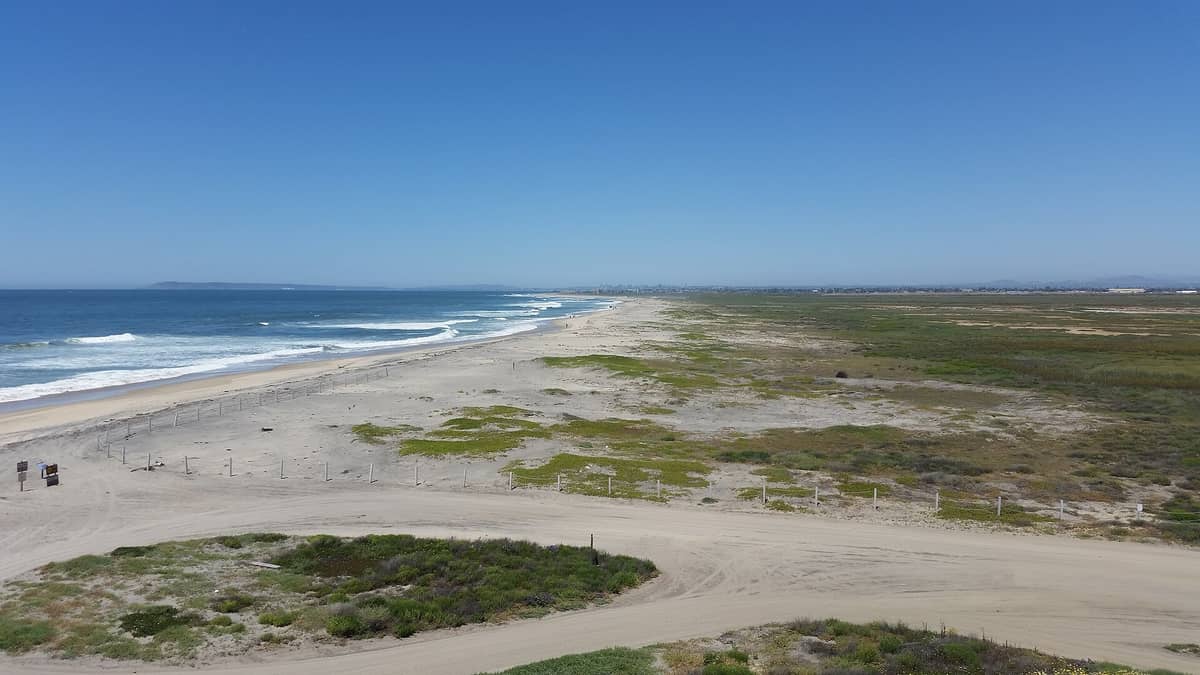
Coronado is a self-contained peninsula city across San Diego Bay, defined by wide sandy beaches, a walkable village center along Orange Avenue, and the landmark Hotel del Coronado. Connected to downtown San Diego by ferry or the Coronado Bridge, it offers a quieter, more resort-oriented counterpoint to the urban energy across the water.
Coronado sits across San Diego Bay from downtown, close enough to see the city skyline clearly but far enough to feel like a different world. The peninsula runs south along the Silver Strand, framing the bay on one side and the Pacific on the other, with a small-town village center that happens to include one of the most recognizable hotels in the American West.
Orientation
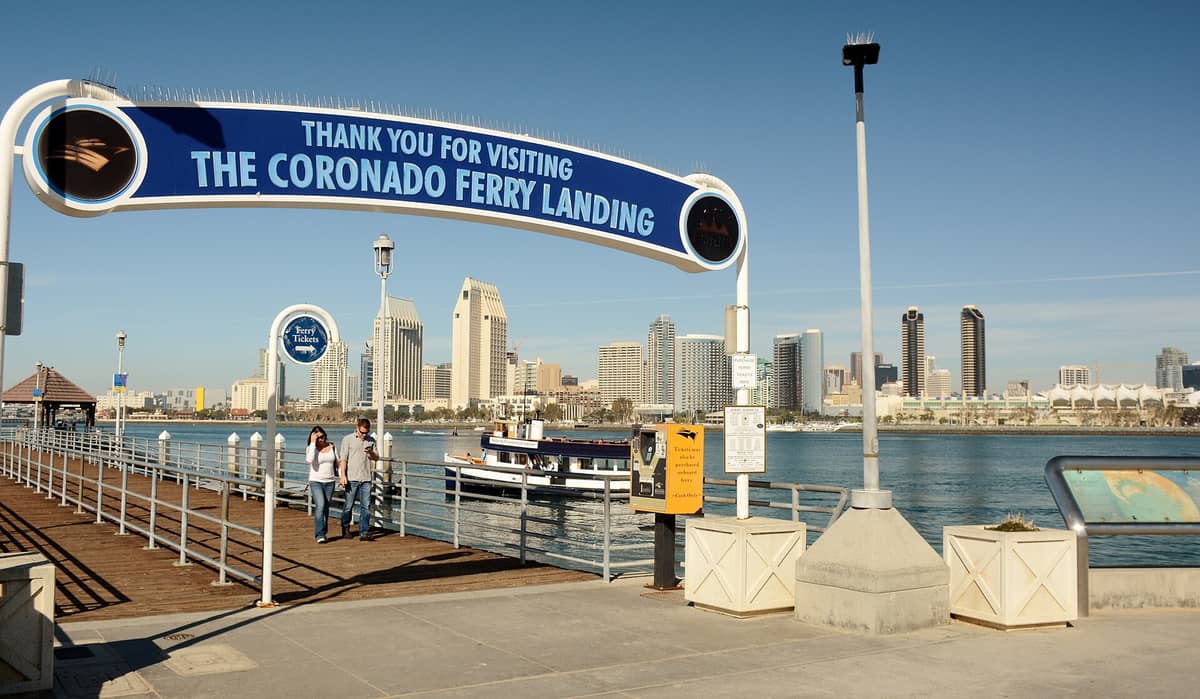
Coronado is a separate incorporated city, but for most visitors it functions as San Diego's most distinctive peninsula neighborhood. The landmass connects to the mainland south of the city via the Silver Strand, a narrow isthmus that runs toward Imperial Beach. From downtown San Diego, the two main access routes are the Coronado Bridge, arching 200 feet above the bay and entering the peninsula from the east near Glorietta Boulevard, and the Coronado Ferry, which docks at the Ferry Landing on the bay's western edge near First Street.
The peninsula's internal geography is straightforward. Orange Avenue is the main commercial spine, running roughly east-west through the Village center before curving toward the Hotel del Coronado at the ocean end. Glorietta Boulevard loops around the southern portion of the island near the golf course and bay. The northern third of the peninsula is dominated by Naval Air Station North Island, a major military installation that shapes the character of the area by limiting development and keeping residential density low. Silver Strand Boulevard extends south from the hotel area along the isthmus toward Silver Strand State Beach and eventually Imperial Beach.
Coronado sits roughly 2 miles across the bay from the Gaslamp Quarter and about 3 miles from the Embarcadero waterfront. The ferry crossing takes around 15 minutes, making the two areas feel genuinely connected despite the water between them.
Character and Atmosphere
The first thing most people notice about Coronado is the pace. The streets are wide, trees line the residential blocks, and there is almost none of the density or noise that defines San Diego's urban neighborhoods. The Village center along Orange Avenue has the feel of a prosperous small town: independent boutiques, cafes with sidewalk seating, a movie theater, and a post office that locals actually use. This is a place where people cycle to the beach in the morning and walk to dinner in the evening.
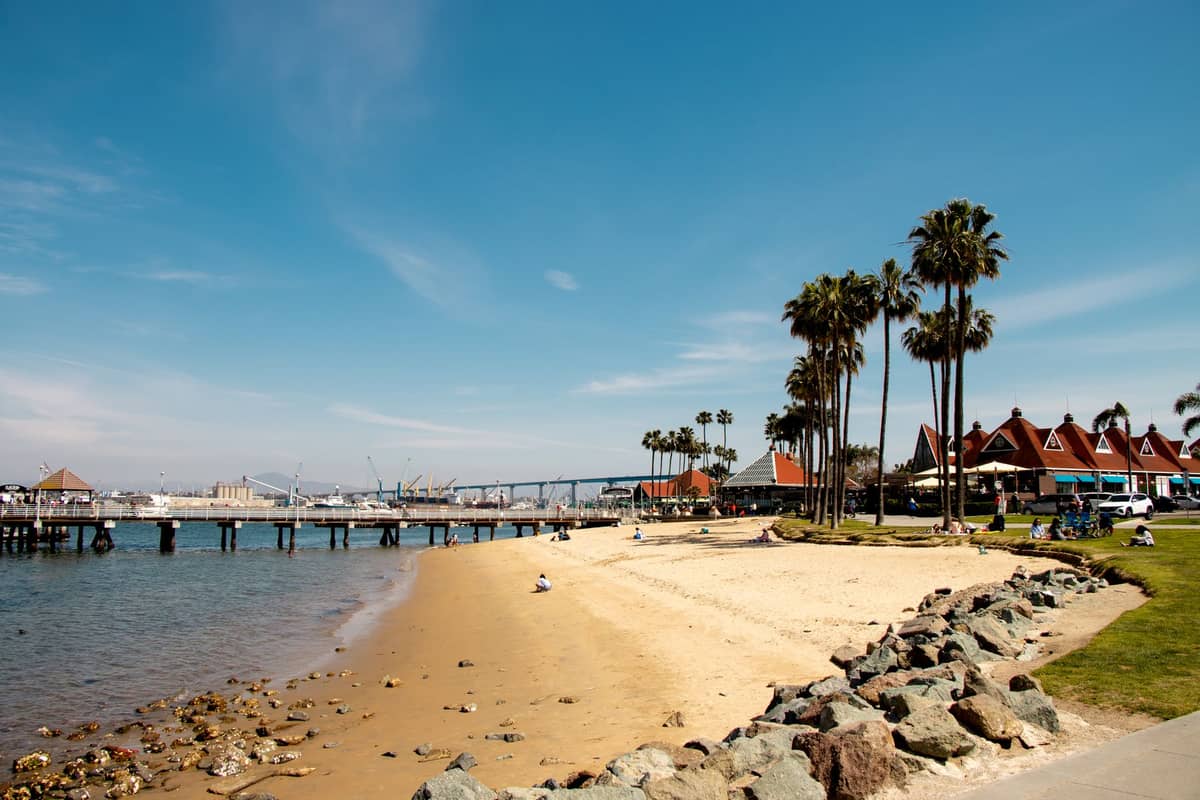
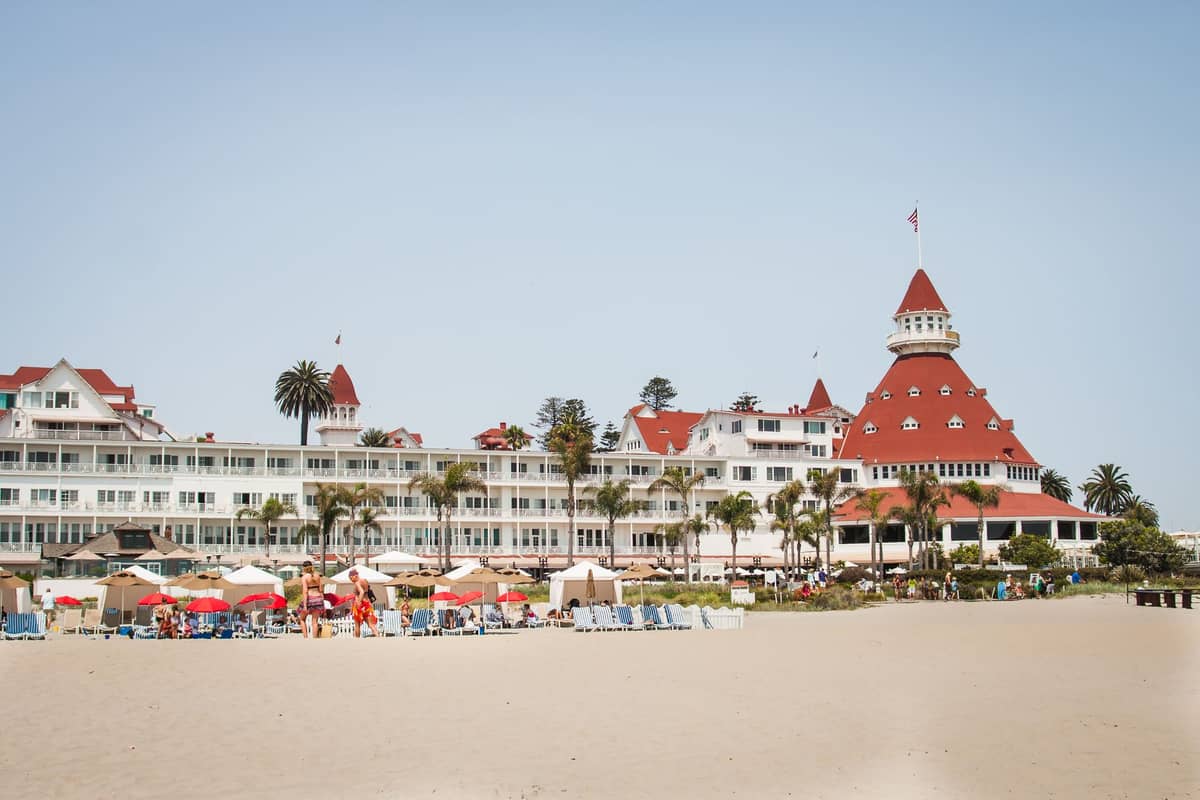
Early mornings on Coronado Beach are remarkable. The sand here is unusually wide, and at low tide the beach stretches far toward the water's edge with almost no one on it. The light comes in flat and golden from the east across the bay, catching the Victorian turrets of the Hotel del Coronado. Dog walkers, runners, and the occasional military jogger from NAS North Island tend to be the only company before 8am. By mid-morning the beach fills steadily, and by midday in summer it is genuinely crowded, particularly near the hotel.
Orange Avenue from around Fourth Street to Tenth Street shifts through the afternoon. Lunch crowds fill the outdoor tables, cyclists lock up outside the ice cream shops, and the sidewalks stay active until the dinner hour. After dark, Coronado is noticeably quieter than the mainland. The restaurant scene is solid but the bars are few, and the neighborhood generally winds down well before midnight. This is not the place for late-night urban energy. It is, however, excellent for anyone who wants to sleep well and wake up near the ocean.
ℹ️ Good to know
Coronado has a significant permanent military community from Naval Air Station North Island. This gives the town a certain stability and orderliness that distinguishes it from tourist-heavy beach neighborhoods elsewhere in San Diego.
What to See and Do
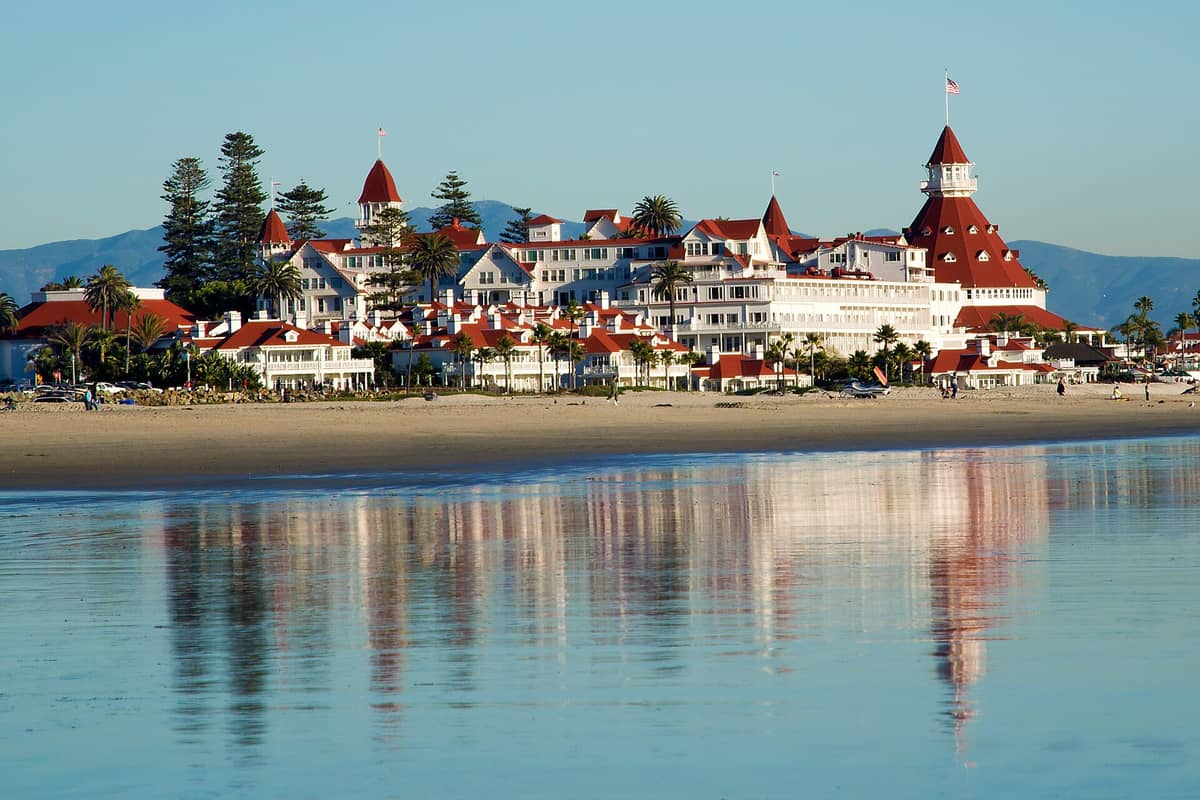
The Hotel del Coronado is the anchor of any visit, even for those not staying there. Built in 1888, it is one of the largest wooden structures in the United States and has been a National Historic Landmark since 1977. The grounds are open to walk through, the beachfront is public, and the shopping arcade and several of the restaurant and bar spaces are accessible without a room key. Even if the resort-within-a-resort commercial setup feels slightly managed, the architecture alone justifies an hour of wandering.
Coronado Beach stretches along the western edge of the peninsula and is consistently rated among the best beaches in Southern California. The sand is fine and pale, the water is open Pacific, and lifeguards staff the main sections through the summer months. For a longer walk, the beach connects south toward Silver Strand State Beach, which runs all the way down the isthmus. This is a genuine escape from the hotel zone, quieter and less developed.
The Coronado Ferry Landing is worth a visit beyond just catching the boat back to the mainland. The small waterfront development here has shops, restaurants, and one of the best open views of the downtown San Diego skyline available from anywhere in the bay. Arrive around sunset and the skyline turns gold across the water while the bay lights up with boat traffic.
Walk or cycle Ocean Boulevard along the Pacific-facing western shore of the peninsula for ocean views and a look at the grand Victorian and Craftsman houses that define Coronado's residential architecture
Rent a bike from one of the shops near Orange Avenue and ride the Silver Strand toward Imperial Beach on the dedicated bike path
Take the Coronado Ferry for the crossing itself: the 15-minute ride gives panoramic bay views that no bridge or car trip can match
Browse the Spanish Village-style shops along Orange Avenue between Fourth and Tenth Streets for local art, surf gear, and independent boutiques
Visit early morning or late afternoon when the Hotel del Coronado exterior is photographable without crowds obscuring the Victorian facade
Eating and Drinking
Orange Avenue is where most of the independent dining happens. The stretch between about Fourth and Tenth Streets has a good range: casual breakfast spots and cafes in the morning, sandwich counters and Mexican places through lunch, and proper sit-down restaurants for dinner. Prices are generally higher than equivalent spots on the mainland, a function of the real estate and the captive tourist audience, but the quality tends to match.
The Hotel del Coronado has several dining options across different price points, from the oceanfront patio bar where you can eat simply without much ceremony, to the more formal main dining rooms inside the historic building. The hotel's restaurants are priced at resort rates, but the outdoor bar setting at sunset, with the Pacific behind you and the Victorian tower above, is hard to replicate elsewhere.
For the full San Diego coastal food experience, Coronado's fish taco options along Orange Avenue and near the Ferry Landing are worth seeking out. The city's tradition of Baja-style fish tacos is well covered in the San Diego fish tacos guide. Coronado versions tend toward the tidier, sit-down end of the spectrum rather than the stripped-back street style you find in Ocean Beach or Pacific Beach.
Breakfast: sidewalk cafes along Orange Avenue open early and cater to beach-going crowds
Lunch: casual spots near the Ferry Landing have bay views and faster service
Dinner: mid-range to upscale options line Orange Avenue; book ahead on weekends in summer
Drinks: the Ferry Landing restaurants are the best spot for waterfront evening drinks; the Village has a few bars but nothing like downtown San Diego's nightlife density
💡 Local tip
If you are visiting for a day rather than staying overnight, eat at the Ferry Landing before or after the crossing. The bay-facing waterfront restaurants are less crowded than the hotel zone and the views back toward downtown are exceptional at any time of day.
Getting There and Around
The ferry is the most enjoyable way to reach Coronado from downtown San Diego. The Coronado Ferry departs from Broadway Pier on the Embarcadero and docks at the Coronado Ferry Landing, a trip of around 15 minutes. Services run regularly throughout the day and into the evening; check current schedules with the operator as times and frequency can vary by season. Fares are modest (around $9 one way for ages 4 and up) and bicycles can be brought on board, which opens up the Silver Strand cycling route as a realistic day itinerary.
Driving over the Coronado Bridge from downtown San Diego takes around 10 minutes in normal conditions, but traffic backs up significantly on weekend mornings and summer afternoons, both on the bridge approach and around the hotel zone. Parking in Coronado is easier than in most San Diego neighborhoods but not unlimited; street parking near the hotel fills by mid-morning on summer days and the hotel's own lots are expensive.
San Diego MTS Route 901 connects downtown San Diego with Coronado via the Coronado Bridge. The 904 Coronado Shuttle serves stops along Orange Avenue, Glorietta Boulevard, and Silver Strand Boulevard, including stops at the Ferry Landing, Coronado City Hall, the Marriott Resort, and Orange Avenue and Adella Avenue near the Hotel del Coronado. This shuttle makes it easy to move between the Village and the hotel area without a car.
Cycling is genuinely practical here. The Silver Strand bike path runs from the Hotel del Coronado south to Imperial Beach, and the streets through the residential Village are flat and quiet. For broader context on moving around San Diego, the getting around San Diego guide covers all transit options across the city.
⚠️ What to skip
If you drive to Coronado on a summer weekend, plan to arrive before 10am or after 3pm. The Coronado Bridge approach can back up significantly, and parking near the Hotel del Coronado becomes scarce well before midday. The ferry is genuinely the better option for a day trip.
Where to Stay
The Hotel del Coronado is the dominant accommodation option and one of the most famous resort hotels in the United States. Rooms in the original Victorian building are expensive and can feel small by modern standards, but the location, architecture, and beachfront access are genuinely exceptional. The newer tower buildings on the property offer more contemporary rooms at similar or slightly lower price points. This is not a budget stay under any circumstances.
Beyond the Hotel del Coronado, Coronado has a range of smaller boutique hotels, inns, and vacation rentals concentrated along and near Orange Avenue. These options are more affordable than the landmark resort and put guests closer to the Village's everyday rhythm: walking to the farmers market on Tuesday mornings, cycling to the beach, and eating at local spots rather than resort restaurants. For visitors who want the Coronado beach experience without the full resort price, the Village-area properties are worth prioritizing.
Coronado suits couples, families with young children, and anyone who values proximity to a great beach over urban convenience. It is not a good base for travelers who want easy walking access to downtown San Diego's museums, nightlife, or the Gaslamp Quarter. For a broader look at accommodation options across the city, the where to stay in San Diego guide helps compare neighborhood options based on travel style.
Practical Notes
Coronado's beach faces west, which means afternoon sun and excellent sunset conditions. The ocean here is Pacific-temperature water: even in summer, sea temperatures hover in the low-to-mid 60s Fahrenheit (around 17-18°C), which is cool enough to be uncomfortable for extended swimming for many visitors. Wetsuits are common among locals even in July and August.
San Diego's Mediterranean climate means that June often brings coastal morning fog, locally known as "June Gloom," which can keep Coronado overcast until midday or early afternoon. September and October are often the warmest, clearest months for beach days. The best time to visit San Diego guide covers seasonal patterns in detail.
Coronado Beach allows dogs in designated areas, and the coastal walk south toward the Silver Strand is dog-friendly. For dog-specific beach access across San Diego, Dog Beach in Ocean Beach is the city's most well-known off-leash area, though Coronado's own beach sections are popular with locals who have dogs.
TL;DR
Coronado is a peninsula city across San Diego Bay, best known for the landmark Hotel del Coronado, one of California's finest beaches, and a walkable Village center along Orange Avenue.
Reach it by ferry from the Embarcadero (15 minutes, the best option for day-trippers) or by car over the Coronado Bridge; the MTS 904 Shuttle moves easily around the peninsula.
Best suited to couples, families, and beach-focused travelers who want a quieter, resort-oriented experience rather than urban access to nightlife or museums.
Avoid driving on summer weekends unless arriving early: traffic on the bridge approach and parking near the hotel are genuine pain points.
The beach is exceptional, the architecture is historic, and the bay-facing Ferry Landing provides some of the best views of the downtown San Diego skyline available from anywhere in the region.
Three days is enough to hit San Diego's best neighborhoods, beaches, and cultural landmarks without feeling rushed. This itinerary is built around logical geography, real logistics, and practical notes on what's worth your time and money.
San Diego County's coastline stretches for roughly 70 miles, offering everything from calm family-friendly coves to dramatic cliff-backed surf breaks. This guide covers the best beaches by type, with practical details on what to expect at each one.
San Diego's Mediterranean climate means hiking is possible year-round, and the range of terrain is remarkable. Coastal bluffs, chaparral canyons, pine-forested ridges, and Sonoran Desert all sit within an hour or two of downtown. These are the trails worth lacing up for.
San Diego punches well above its weight as a museum city. Balboa Park alone holds more than a dozen institutions, while the Embarcadero and La Jolla add world-class maritime and ocean science destinations. This guide covers the top 18 museums worth your time and money.
San Diego's Mediterranean climate means it's genuinely good to visit any time of year, but the right season depends on what you want to do. This guide breaks down weather patterns, crowd levels, and key events for every month so you can pick the trip that actually fits your goals.
San Diego rewards those who look up, out, and across. From the windswept cliffs of Point Loma to La Jolla's hilltop memorial, these are the city's finest viewpoints, with panoramas spanning the Pacific, San Diego Bay, and the mountains beyond.
San Diego Comic-Con is one of the largest pop culture conventions in the world, drawing over 130,000 attendees to downtown San Diego each July. This guide covers badge access, hotel booking strategy, transportation logistics, and how to make the most of the event even without a badge.
San Diego has more craft breweries per capita than almost any other American city, with taprooms spread across North Park, Miramar, Little Italy, and beyond. This guide breaks down the best neighborhoods, standout breweries, guided tour options, and practical tips to help you drink well without wasting a trip.
San Diego sits at one of the most geographically rich crossroads in North America. Within a few hours you can reach a Mexican border city, a desert national park, a mountain apple-farming town, and downtown Los Angeles. This guide covers the best day trips from San Diego with real logistics and no filler.
San Diego's finest pleasures often cost nothing at all. This guide covers the best free beaches, parks, public art, viewpoints, and cultural experiences across the city, with practical tips on when to go and what to expect.
San Diego spans over 325 square miles of coastline, canyons, and urban neighborhoods, and getting around efficiently requires knowing which transport options actually work for visitors. This guide covers everything from airport arrivals and MTS trolley fares to driving realities, rideshare logistics, and neighborhood-by-neighborhood navigation.
San Diego offers a dense cluster of amusement park options for a coastal city in the U.S. This guide breaks down every major park, with real pricing, crowd patterns, and a clear take on who each park suits best.
The San Diego County Fair is one of California's largest annual events, drawing millions of visitors to the Del Mar Fairgrounds each summer. This guide covers 2026 dates, hours, parking, ticketing, crowd strategy, and what to actually eat and do once you're inside.
San Diego has a legitimate claim to the fish taco's North American popularization, and the scene in 2026 is more varied than ever. This guide breaks down where to eat, what to order, how much to pay, and which spots are actually worth the line.
San Diego's Mediterranean climate, dramatic coastline, and world-class dining make it one of California's top destinations for couples. This guide covers the most romantic experiences in the city, from free sunset walks to splurge-worthy dinner cruises, with practical notes on what's worth your time.
San Diego offers year-round golf across a wide range of public, municipal, and resort courses, headlined by the world-famous Torrey Pines. This guide covers the best courses by budget and skill level, 2026 green fee breakdowns, booking strategies, and seasonal advice to help you plan the right round.
San Diego rewards the curious. Beyond the zoo and the beaches, the city holds a swaying 1912 suspension bridge, a sea cave you reach by climbing down a hand-carved staircase, and a mural park that doubles as a National Historic Landmark. This guide covers the spots that most visitors never find.
Summer in San Diego means warm, dry coastal days, packed beaches, and a full calendar of events. But the season has quirks that catch visitors off guard. This guide covers the weather reality, top activities, crowd patterns, and logistics so you can make the most of your trip.
San Diego in winter is genuinely underrated. Daytime highs hover in the mid-60s°F, hotel rates drop significantly from summer peaks, and January kicks off some of the best whale watching on the West Coast. This guide covers the weather realities, best activities, and what to skip during the off-season.
San Diego's after-dark scene runs deeper than most visitors expect. This guide breaks down the best bars, nightclubs, rooftop lounges, live music venues, and neighborhood nightlife across the city, with practical details on hours, prices, and how to get around.
San Diego has a reputation as an expensive coastal city, but it rewards travelers who know where to look. From always-free beaches and rotating museum days to smart transit choices and shoulder-season savings, this guide covers every practical angle for keeping costs down without missing the best the city has to offer.
San Diego resorts range from iconic oceanfront landmarks to secluded inland spa estates. This guide breaks down the top properties by location and type, explains seasonal pricing, and warns you about resort fees and common booking misconceptions before you commit.
The San Diego to Las Vegas route is one of Southern California's most popular road trips, but driving isn't always the best choice. This guide breaks down every realistic option, from the 5-hour I-15 drive to sub-90-minute flights, with a clear take on cost, convenience, and when each mode makes sense.
The distance from San Diego to San Francisco is about 500 miles via I-5, and how you cover it makes a big difference to your trip. This guide breaks down every realistic option: nonstop flights under two hours, a full-day drive with serious scenic potential, and a leisurely Amtrak journey for those who want to watch California roll by.
San Diego rewards walkers like few other American cities. From Balboa Park's museum corridor to Old Town's adobe ruins and La Jolla's coastal bluffs, these self-guided walking tours cover the city's most compelling neighborhoods with practical route advice, timing tips, and a clear take on what's worth your time.
San Diego's 70 miles of coastline and year-round mild climate make it one of the best places in the country for water sports. This guide covers the best surf breaks, snorkeling spots, kayak launch points, and rental prices so you can get in the water without the guesswork.
Two days in San Diego can cover a surprising amount of ground — beaches, world-class museums, historic neighborhoods, and some of the best tacos in California. This itinerary cuts through the noise with specific timing, current prices, and honest takes on what's worth your time.
San Diego is one of the most family-friendly cities in the United States, with world-class zoos, beach-side parks, hands-on museums, and a climate that cooperates nearly year-round. This guide covers the best things to do in San Diego for kids, honest ticket prices, the smartest times to visit, and practical logistics to help you spend less time planning and more time enjoying it.
Two world-class wildlife parks, one city, and a decision that trips up thousands of visitors every year. This guide breaks down the real differences between the San Diego Zoo and the San Diego Zoo Safari Park — location, animals, experience, tickets, and which one is worth your time based on who you're traveling with.
Sesame Place San Diego is Southern California's only Sesame Street-themed park, combining rides and water attractions in Chula Vista. This guide covers pricing, seasonal schedules, crowd tips, and how it stacks up against other San Diego family attractions so you can decide whether it belongs on your itinerary.
San Diego's shopping scene spans polished coastal malls, historic waterfront villages, and eclectic neighborhood streets worth exploring on foot. This guide breaks down where to shop, what to expect, and what to skip — with parking details, seasonal hours, and neighborhood-by-neighborhood advice.
San Diego packs an extraordinary range of experiences into one city: world-class museums, wild coastline, historic neighborhoods, and a craft beer scene that rivals anywhere in the country. This guide cuts through the noise to tell you what's genuinely worth your time, what to avoid, and how to plan your visit season by season.
San Diego sits just 20 miles from one of the world's busiest international borders, making Tijuana an obvious day trip. This guide covers exactly how to get there, how long it takes, what to expect at the crossings, and how to make the most of your time on both sides of the border.
San Diego offers year-round whale watching with distinct seasons for gray and blue whales. This guide breaks down exactly when to go, which tours are worth the money, what sightings actually look like by month, and how to watch whales for free from shore.
San Diego's food identity runs deeper than tourists expect. Border-influenced Mexican cooking, Pacific seafood, a serious craft beer scene, and year-round farmers' markets combine into something genuinely distinctive. This guide covers the essential dishes, the best neighborhoods to eat in, and the practical details that help you eat well without wasting a meal.
San Diego spreads across a large coastal geography, and where you base yourself shapes your entire trip. This guide breaks down the best neighborhoods to stay in San Diego, with honest price ranges, transit access, and who each area actually suits.