Silver Strand State Beach: Coronado's Quieter Shore
Silver Strand State Beach stretches along a narrow isthmus between Coronado and Imperial Beach, offering two distinct water experiences: open Pacific surf on one side and the calm, shallow waters of San Diego Bay on the other. It's one of the few places in San Diego County where you can watch a sunrise over the bay and a sunset over the ocean from the same strip of land.
Quick Facts
- Location
- 5000 Highway 75, Coronado, CA 92118 — about 4.5 miles south of Coronado village on State Route 75
- Getting There
- Primarily by car via SR-75. No direct trolley stop; limited bus access via MTS Bus 901. Uber/Lyft available from Coronado.
- Time Needed
- 2–4 hours for a beach day; full day if combining ocean and bay sides
- Cost
- Vehicle day-use fee: $12–$20 (demand-based pricing; higher on peak weekends and holidays)
- Best for
- Families, swimmers, kayakers, birdwatchers, couples seeking a quieter beach
- Official website
- parks.ca.gov/?page_id=654
What Silver Strand State Beach Actually Is
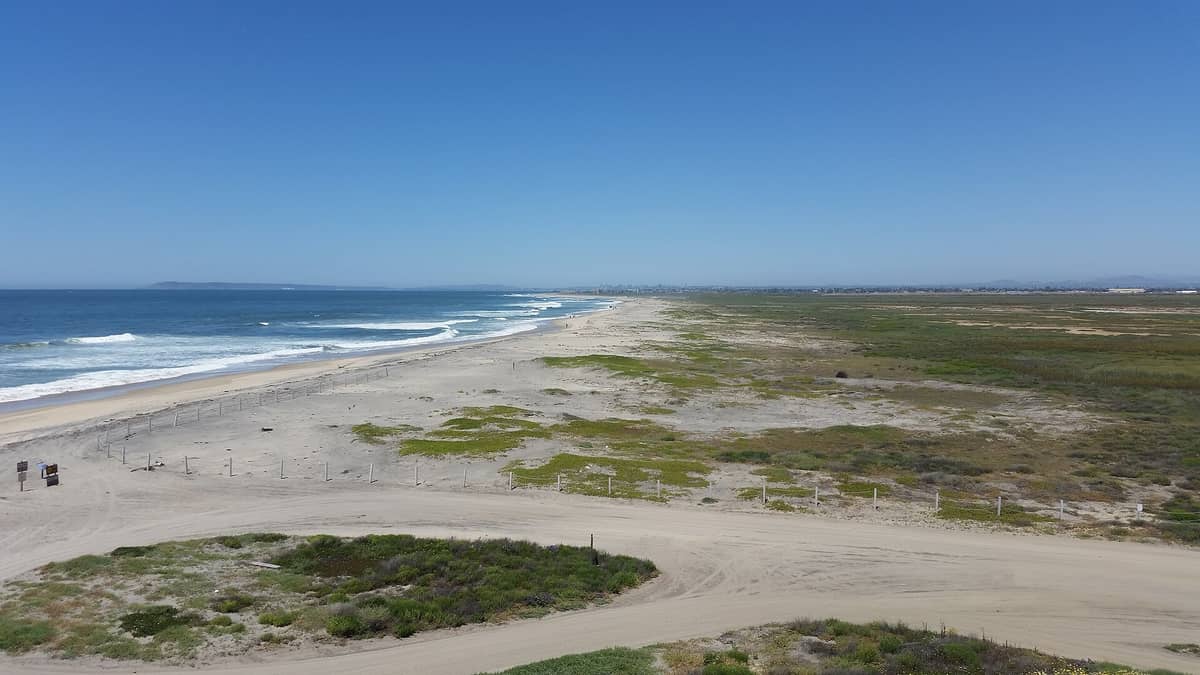
Silver Strand State Beach is a California State Parks property occupying a slender strip of land called the Silver Strand isthmus, connecting the city of Coronado to Imperial Beach at the southern end of San Diego Bay. The park's defining feature is simple but unusual: it has two beaches. On the west side, the Pacific Ocean delivers proper surf, cool water, and wide open sand. On the east side, San Diego Bay provides calm, shallow, warmer water that reads more like a lake than the sea. Most day visitors choose one or the other depending on what they're after.
The strand is narrow enough that you can walk between the two waterfronts in a few minutes, which makes it genuinely useful for families with mixed swimming abilities. Adults who want waves can set up on the ocean side while children who want flat, warm water can play on the bay side. That flexibility is something you don't find at most San Diego beaches.
ℹ️ Good to know
Gates open at 7:00 a.m. year-round. Closing times vary by season: 7 p.m. (Jan–Feb and Nov–Dec), 8 p.m. (Mar through the Thursday before Memorial Day and again after Labor Day through Oct), and 9 p.m. during summer (Memorial Day weekend through Labor Day). Plan your departure accordingly — vehicles left inside after closing can be locked in.
The Ocean Side: Pacific Surf and Wide Open Sand
The Pacific-facing beach at Silver Strand is long, flat, and rarely crowded by San Diego standards. The sand here is finer and lighter than at Mission Beach or Pacific Beach, and the strand runs for several miles with no boardwalk, no concession stands mid-beach, and no volleyball nets every 50 feet. What you get instead is space. On a weekday morning in September or October, it's not unusual to have a 200-yard stretch entirely to yourself.
The surf is consistent but not dramatic. Wave heights are moderate most of the year, making the beach accessible for beginning and intermediate swimmers. Lifeguards are typically on duty during summer months, but coverage varies by season — check the current schedule before assuming the beach is staffed. Water temperature peaks in late summer, hovering around the low 70s Fahrenheit, but even in winter it rarely drops low enough to deter a determined swimmer in a wetsuit.
Morning light here is worth noting. Because the beach faces west, early arrivals get soft, diffused light across the sand before the midday glare sets in. Photographers working with film or digital will find the hour after gate-open genuinely useful. By midday in summer, the marine layer has usually burned off and the beach fills with direct sun — good for sunbathers, harder on cameras.
The Bay Side: Calm Water and a Different Pace
Cross the highway underpass or use one of the pedestrian crossings and you reach the San Diego Bay side of the strand, which operates at an entirely different rhythm. The water is noticeably warmer than the ocean side — sometimes by 5 to 8 degrees Fahrenheit in late summer — and the absence of surf makes it the preferred choice for kayakers, paddleboarders, and anyone bringing young children. The bottom is sandy and the water depth increases gradually, so you can wade out a long way before it gets deep.
This side also attracts birdwatchers. The bay shoreline and adjacent wetland areas within the broader Coronado corridor support shorebirds, egrets, and seasonal migratory species. Bring binoculars if that's your interest — the viewing requires no special access and you'll often spot something interesting simply by walking the tideline at low tide.
The bay side is also a reasonable starting point for those exploring the area by water. If you're planning a day that combines kayaking, beachgoing, and exploration of the Coronado peninsula, the Coronado Ferry Landing to the north offers additional context for the geography of San Diego Bay.
How the Experience Changes Through the Day
Early morning arrivals, especially on weekdays, find the beach in its most stripped-down form: flat light, cool air, the smell of salt and low tide, and almost no other visitors. The parking lots fill noticeably after 10 a.m. on weekends from June through August, and the vehicle fee climbs toward its maximum during peak summer holidays. If your goal is a quiet morning walk or early swim, arriving close to the 7 a.m. gate opening makes the fee feel more proportional to what you get.
Midday in summer brings families, beach chairs, coolers, and the full resort-day energy. The beach is wide enough that it never feels truly packed the way Coronado Beach can feel on a busy Saturday, but don't expect solitude. Afternoons in summer often bring onshore winds that pick up after 1 or 2 p.m., which matters if you're trying to hold an umbrella or keep sand out of food.
Late afternoon and evening light on the ocean side produces the best conditions for sunset photography, since the beach faces almost due west. This is one of the better sunset vantage points along the Coronado coastline, and it's worth noting in the context of broader best views in San Diego. The gates close at 9 p.m. in summer, so you can stay through most of the light.
Getting There and Parking
The practical reality of Silver Strand State Beach is that a car makes it significantly easier to visit. The park entrance is at 5000 Highway 75, reached by driving south on State Route 75 from Coronado. The drive from downtown San Diego requires either the Coronado Bridge or the ferry to Coronado followed by a drive south — factor in roughly 20 to 30 minutes from central San Diego under normal traffic conditions.
Public transit options exist but are limited. San Diego MTS operates bus service in the Coronado corridor, but service frequency to the beach itself is low. Ride-share via Uber or Lyft from Coronado village is a practical alternative for those without a car, especially for a half-day visit. Confirm current routes and schedules with MTS before planning a transit-based trip, as coverage in this area changes.
💡 Local tip
The vehicle day-use fee uses demand-based pricing, meaning you'll pay more on peak summer weekends and holidays than on a Tuesday in November. If your schedule allows midweek visits, you'll pay the lower end of the $12–$20 range and encounter far fewer people. Arrive by 8 a.m. on busy summer weekends to secure a preferred parking spot.
Accessibility and Amenities
Silver Strand State Beach has a notably strong accessibility profile for a California state beach. Accessible parking spaces are available in the main lots, flat paved routes connect parking areas to the sand, and ADA-compliant restrooms and outdoor showers are on-site. Beach wheelchairs and beach mats — which provide a firmer surface across the sand — are available, though availability can vary. Call the park entry station in advance or ask when you arrive rather than assuming equipment is always on hand.
For families with children, the combination of accessible facilities, flat terrain, and the calm bay-side option makes this one of the more practical beach destinations in San Diego County. It pairs well with a broader San Diego itinerary for families with kids that includes nearby Coronado.
Context: Where Silver Strand Fits in Coronado
Most visitors to Coronado focus on Coronado Beach near the Hotel del Coronado — a legitimate draw, but one that sees considerably higher foot traffic. Silver Strand sits south of that main beach action and gets a different kind of visitor: more local, more deliberate, less likely to have arrived from a cruise ship or resort hotel. That distinction matters when you're deciding how to spend a beach day.
The isthmus itself has military significance — Naval Amphibious Base Coronado, where Navy SEALs train, is located along the Silver Strand. The base is not accessible to visitors, but its presence shapes the character of the area. You'll see military helicopter activity overhead on some mornings, and the base boundary runs adjacent to parts of the beach. This context, combined with the area's geography as a narrow land bridge, gives Silver Strand a more remote, boundary-of-the-map feeling than you'd expect from a beach within San Diego County. The broader Coronado peninsula has layers that most day-trippers never explore — Silver Strand is one of them.
⚠️ What to skip
There are no food vendors or concession stands along the main stretch of Silver Strand State Beach. Bring everything you need: water, snacks, sunscreen, and any beach equipment. The nearest services are back in Coronado village, about 4–5 miles north. Don't underestimate how exposed the beach is to sun — shade is minimal to nonexistent.
Insider Tips
- The bay side of the beach warms up faster in the morning than the ocean side — if you have young children who want to swim early in the day, start on the bay. By midday, the difference in water temperature between the two sides is at its most noticeable.
- September and October are arguably the best months to visit. Summer fog has cleared, water temperatures are near their annual peak, and weekday crowds drop significantly after Labor Day while the gates close at 8 p.m., giving you plenty of time.
- The beach mat paths toward the sand are easier to navigate with strollers, carts, and beach wheelchairs than at many San Diego beaches. The terrain between the parking lot and the waterline is notably flat, which matters more than people expect when you're hauling gear.
- If you want the broadest possible view of the strand and the bay, drive all the way to the southern end of the park rather than stopping at the first lot. Fewer visitors park at the far end, and the walking distance to the waterline remains short.
- The ocean-facing beach at Silver Strand is one of the few spots along the Coronado coast where you can watch the sun drop fully into the Pacific horizon without buildings or piers in the frame — useful knowledge for anyone serious about sunset photography.
Who Is Silver Strand State Beach For?
- Families with young children who want calm bay-side water alongside an ocean option
- Couples looking for a quieter beach day away from the busier Coronado strip
- Kayakers and paddleboarders who want sheltered bay access
- Birdwatchers and nature-focused visitors interested in bay shoreline wildlife
- Visitors who want a West Coast beach sunset without the crowds of more central beaches
Nearby Attractions
Other things to see while in Coronado:
- Coronado Beach
Coronado Municipal Beach combines wide, powdery sand with views of the historic Hotel del Coronado and the San Diego skyline across the bay. Free to enter, easy to reach by ferry or bridge, and calm enough for families, it ranks among the most photogenic and well-maintained beaches in Southern California.
- Coronado Ferry Landing
Coronado Ferry Landing sits at the edge of San Diego Bay with an unobstructed view of the downtown skyline that most visitors never find. Free to enter, open every day of the year, and connected to downtown by ferry, it combines a relaxed waterfront atmosphere with independent shops, restaurants, and one of the city's most photographed perspectives.
- Hotel del Coronado
Built in 1888 and still standing as California's largest wooden building, Hotel del Coronado is a National Historic Landmark on Coronado Beach. You don't need a room to experience the grand lobbies, ocean-facing terraces, and sun-drenched grounds that have drawn visitors for over a century.