Hotel del Coronado: The Victorian Icon You Can Explore Without Staying
Built in 1888 and still standing as California's largest wooden building, Hotel del Coronado is a National Historic Landmark on Coronado Beach. You don't need a room to experience the grand lobbies, ocean-facing terraces, and sun-drenched grounds that have drawn visitors for over a century.
Quick Facts
- Location
- 1500 Orange Avenue, Coronado, CA 92118 — on Coronado Island, ~20–25 min from San Diego International Airport
- Getting There
- Drive or rideshare via San Diego-Coronado Bridge; MTS buses serve Coronado from downtown San Diego (verify current routes at sdmts.com)
- Time Needed
- 1–3 hours for a self-guided walk and beach visit; full day if dining or spa
- Cost
- Free to enter public areas, lobby, and beach; costs apply to dining, parking, and rooms
- Best for
- Architecture lovers, history buffs, beach visitors, couples, and anyone curious about Southern California's grand resort heritage
- Official website
- www.hoteldel.com
What Hotel del Coronado Actually Is
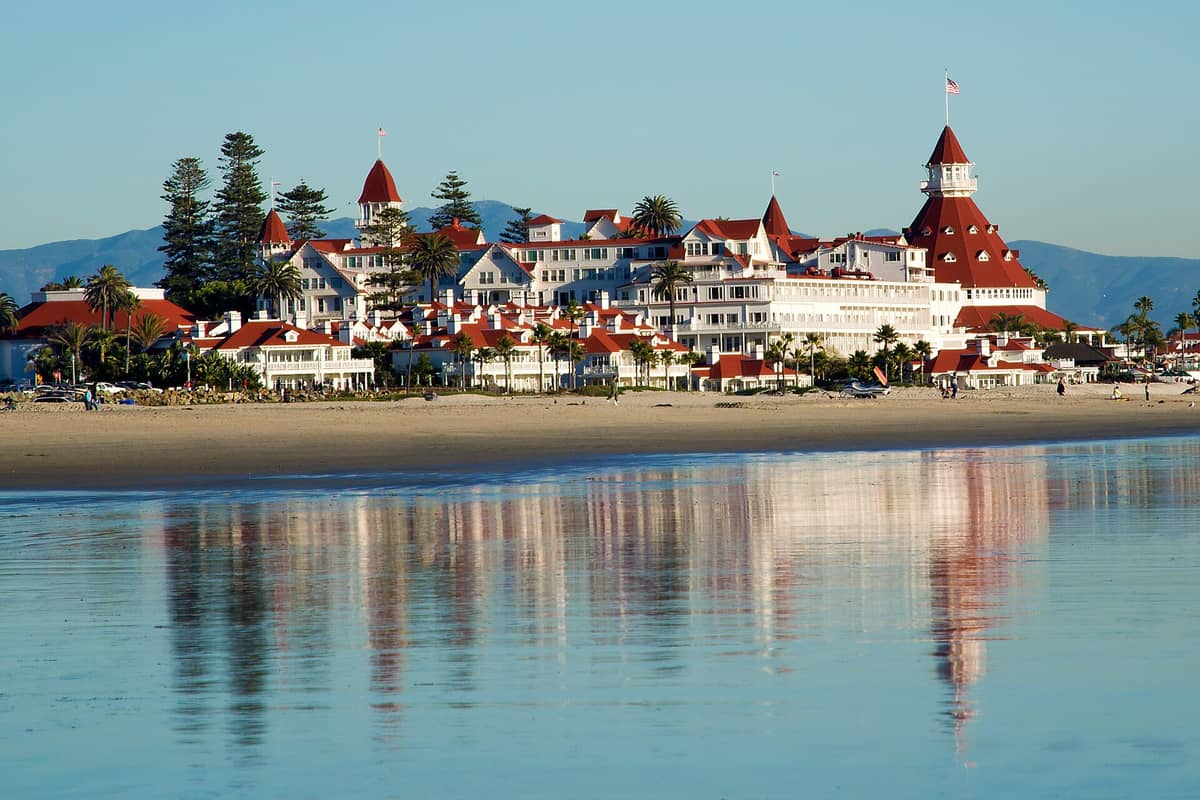
Hotel del Coronado is a full-service beachfront resort on Coronado Island, but calling it simply a hotel undersells what you're walking into. Opened in 1888, it is a National Historic Landmark, one of the largest wooden buildings in California, and one of the best-preserved examples of Queen Anne Victorian resort architecture in the United States. The red-conical turrets, whitewashed wood shingles, and sweeping verandas are not a renovation or reconstruction — this is the original structure, still functioning as a luxury hotel after more than 135 years.
Today it operates as Hotel del Coronado, Curio Collection by Hilton. The roughly 28-acre property spans the original Victorian main building, several modern accommodation wings added over the decades, multiple restaurants and bars, a spa, a pool complex, and direct access to a wide, south-facing stretch of Coronado Beach. Non-guests are free to walk the grounds, visit the lobby, and access the beach — there is no admission fee.
💡 Local tip
Parking at the hotel is paid and can be costly, especially on weekends. If you're visiting without staying, consider rideshare or parking in central Coronado and walking the remaining blocks along Orange Avenue.
The Architecture: What to Look For
The original main building, known as the Victorian Building, is the one worth examining carefully. Construction began in 1886 and the hotel welcomed its first guests in 1888 — a timeline that makes it all the more remarkable given its scale. At the time of opening, it was among the first large buildings in the United States to be wired for electric lighting throughout. The electrical system was installed by Mather Electric using Westinghouse equipment — a later popular claim that Thomas Edison personally supervised the wiring is a documented myth. The electrical system was considered so novel that the hotel became a talking point in engineering circles of the era.
The exterior reads like a textbook of late Victorian resort design: steeply pitched red roofs, a central rotunda, wraparound balconies, and wood cladding painted a crisp white that catches the coastal light with almost theatrical effect. Step through the main entrance and you're inside the Crown Room, the hotel's principal ballroom. The ceiling is made of sugar pine and assembled without a single nail or interior support column, an engineering achievement for its time. The room spans roughly 9,600 square feet and the ceiling height reaches about 33 feet at its peak.
The Victorian building's hallways reward slow exploration. The corridors are narrow and slightly uneven in the way old wood-frame structures often are, and the proportions feel genuinely 19th-century rather than reconstructed. Notice the room numbering, the transoms above doorways, and the original ironwork on the staircases. It's the kind of place where the details compound the longer you look.
The Experience by Time of Day
Morning is the most underrated time to visit. Before 9 a.m., the lobby and ground-floor corridors of the Victorian building are quiet enough that you can hear the wood creak underfoot. The ocean light comes in at a low angle through east-facing windows, and the beach is almost empty. The smell on the lower verandas in the morning is specific: salt air mixing with the wood and whatever cleaning products the staff use — cedar-adjacent, slightly institutional, not unpleasant.
By mid-morning on weekends, the energy shifts considerably. Tour groups move through the lobby, families spread across the pool deck, and the outdoor dining terraces fill up. The beach in front of the hotel is public and tends to draw a mix of hotel guests and Coronado day-trippers. South-facing and relatively sheltered from the northwest winds that push up the coast later in the day, it warms up reliably by 10 a.m. in the warmer months.
Sunset is the other peak moment. The hotel faces west toward the Pacific, and the sky behind the turrets from late afternoon into dusk is the kind of view that has ended up in more Instagram posts than any marketing campaign could manufacture. The outdoor bar areas along the oceanfront get genuinely crowded around this time on Friday and Saturday evenings. If you want the view without the wait for a table, arrive by 4:30 p.m. in summer.
ℹ️ Good to know
June and July bring San Diego's 'June Gloom' — a marine layer that typically clears by early afternoon. Morning arrivals at the hotel may find overcast skies, but the beach is usually sunny by noon most days from late June onward.
History and Cultural Footprint
Hotel del Coronado was listed on the National Register of Historic Places in 1971 and designated a National Historic Landmark in 1977. The distinction is earned: the property has hosted multiple U.S. presidents, was a regular gathering point for West Coast social elites in the late 19th and early 20th centuries, and became internationally recognized after the 1959 film 'Some Like It Hot' filmed significant portions on location here.
The hotel's history intersects with some genuinely strange moments. The most repeated is the story of Kate Morgan, a guest who died on the property in 1892 under circumstances that were never fully explained. The hotel has leaned into this over the years, and room 3327 (formerly 302) is regularly cited in ghost tour literature. Whether you find this charming or overwrought probably says something about your tolerance for hotel mythology, but it's woven deeply enough into the property's identity that you'll encounter references to it in the lobby gift shop.
The hotel sits within the broader Coronado neighborhood, an island-like peninsula connected to the mainland by the 2.1-mile San Diego-Coronado Bridge. The area around the hotel along Orange Avenue has the feel of an early 20th-century resort town that never quite surrendered to chain retail — mostly independent restaurants, boutiques, and a consistent architectural scale. The hotel anchors the western end of this strip and has shaped the character of the whole community for generations.
The Beach and Outdoor Areas
Coronado Beach stretching in front of the hotel is a public beach, and the sand itself is notably fine and pale — the result of offshore sand composition rather than management. The beach faces southwest, which means afternoon and evening light hits it directly and the views extend toward Point Loma and, on clear days, down the coast toward Mexico. It's a long, wide beach with room to spread out, though the sections closest to the hotel fill up on summer weekends.
For a more complete picture of the beach itself, see the dedicated page on Coronado Beach. The Hotel del Coronado section is the most photographed stretch, but walking north or south gets you more space and a better feel for the full length of sand.
The hotel's pool area is reserved for guests, but the beach access is not. You can walk directly from the public sidewalk alongside the hotel down to the sand, lay out a towel, and spend a full afternoon with the Victorian towers behind you and the Pacific in front. This combination — historic architecture framing a proper working beach — is what makes the setting genuinely unusual. Most historic resort buildings of this era ended up as museums or demolished; this one still gets sand in its carpets.
Practical Walkthrough for Non-Guests
If you're not staying at the hotel, the most straightforward approach is to enter through the main lobby on Orange Avenue, take a slow walk through the ground-floor common areas and the Crown Room when it's not set for a private event, and then work your way out to the ocean-side verandas. The whole circuit takes about 30 to 45 minutes at a relaxed pace. Pick up a self-guided history brochure from the lobby if available — the hotel has produced these intermittently.
Dining options for non-guests range from the casual outdoor beach bar (no reservation typically needed) to the main hotel restaurants, which benefit from advance booking on weekends. The hotel's restaurants and bars operate on individual schedules that change seasonally; check the hotel website before visiting if a specific venue is your goal.
Accessibility across the property is mixed. Modern wings are fully accessible; the Victorian building has been retrofitted with elevators and accessible routes, but the historic fabric of the building means some areas involve steps, narrow corridors, or uneven surfaces. Guests with specific accessibility requirements are advised to contact the hotel directly to confirm arrangements in advance.
⚠️ What to skip
Certain spaces inside the hotel, particularly the Crown Room and event spaces, are sometimes closed to non-guests during private functions or weddings. This happens with no advance notice on the door. Call ahead if you're specifically coming to see the ballroom.
Photography Notes
The most photogenic angle of the Victorian building is from the beach looking northeast: the red conical tower with the white wooden body framed by the open sky. This shot works best in early morning or late afternoon when the sun is low and the shadows add definition to the layered shingles and balconies. At midday, the white paint blows out in direct sun and the image flattens considerably.
If you're building a broader visual itinerary of the Coronado area, the ferry landing to the north offers a different perspective on the island's waterfront. See the Coronado Ferry Landing page for the view back toward downtown San Diego, which pairs well with a Hotel del Coronado visit in the same afternoon.
Insider Tips
- The hotel gift shop carries a well-curated selection of books specifically about the hotel's history, including photographic archives and accounts of notable guests. If you're interested in Victorian California resort culture, these are worth browsing even if you don't buy.
- Beach chairs and umbrellas set up in front of the hotel are reserved for hotel guests. If you bring your own gear and settle 50 meters down the beach in either direction, you'll have an identical view with no competition for space.
- The hotel's history exhibit is embedded into sections of the lower corridors and common areas — look for framed photographs and caption panels rather than expecting a dedicated museum room. The exhibit threads through the building without much signage pointing you toward it.
- Weekday mornings in September and October offer the best combination of conditions: summer warmth without the crowds, low marine layer burn-off by 10 a.m., and hotel facilities at their quietest. This is when the building genuinely resembles the grand resort it was in its early decades.
- The Coronado Bridge approach by car gives you a sight line across to the hotel's turrets from the upper span — a moment worth anticipating. If you're being dropped off by rideshare, ask to cross via the bridge rather than the ferry for this reason.
Who Is Hotel del Coronado For?
- Architecture and design enthusiasts who appreciate Victorian resort construction and historic preservation
- Couples looking for a photogenic, unhurried afternoon combining history and beach without needing a hotel reservation
- History-focused travelers interested in late 19th-century American resort culture and California landmark sites
- Families with older children who can engage with the building's history and enjoy the public beach access
- Day-trippers from downtown San Diego who want a self-contained half-day itinerary on Coronado Island
Nearby Attractions
Other things to see while in Coronado:
- Coronado Beach
Coronado Municipal Beach combines wide, powdery sand with views of the historic Hotel del Coronado and the San Diego skyline across the bay. Free to enter, easy to reach by ferry or bridge, and calm enough for families, it ranks among the most photogenic and well-maintained beaches in Southern California.
- Coronado Ferry Landing
Coronado Ferry Landing sits at the edge of San Diego Bay with an unobstructed view of the downtown skyline that most visitors never find. Free to enter, open every day of the year, and connected to downtown by ferry, it combines a relaxed waterfront atmosphere with independent shops, restaurants, and one of the city's most photographed perspectives.
- Silver Strand State Beach
Silver Strand State Beach stretches along a narrow isthmus between Coronado and Imperial Beach, offering two distinct water experiences: open Pacific surf on one side and the calm, shallow waters of San Diego Bay on the other. It's one of the few places in San Diego County where you can watch a sunrise over the bay and a sunset over the ocean from the same strip of land.