Chinatown Kuala Lumpur, centered on Petaling Street, is the city's oldest Chinese quarter: a compact, walkable neighborhood of clan temples, colonial shophouses, street markets, and some of the best hawker food in the city. It sits at the historic core of KL, where the city was effectively born in the 1850s, and still carries that founding energy today.
Chinatown Kuala Lumpur is where the city began. Compressed into a few blocks around Petaling Street and Jalan Sultan, it layers century-old clan houses, Hindu temples, and colonial-era shophouses beneath a canopy of red lanterns, all within walking distance of the rivers where tin miners first made camp in the 1850s.
Orientation
Chinatown occupies a tight grid of streets roughly bounded by the Klang River to the north, Jalan Maharajalela to the south, Jalan Tun Perak to the east, and Jalan Petaling to the west. The neighborhood is small enough to cross on foot in fifteen minutes, which is both its greatest strength and its occasional limitation. Most of the activity concentrates on Petaling Street itself, a pedestrianized stretch running north-south through the middle of the precinct, and on the parallel arteries of Jalan Sultan and Jalan Hang Lekir.
Masjid Jamek LRT station sits at the northern edge of the neighborhood, right at the confluence of the Klang and Gombak rivers, the spot where KL's founding miners first landed. This makes Chinatown one of the easiest neighborhoods in the city to reach by rail. Walking south from the station along Jalan Tun Perak and then turning right onto Jalan Cheng Lock drops you directly into the heart of the market district within about five minutes.
Chinatown connects naturally to several other historic precincts. The Merdeka Square area and the Sultan Abdul Samad Building are a ten-minute walk north. Brickfields and Little India lie roughly twenty minutes southwest on foot or a short KTM Komuter ride. Together, these precincts form the colonial and ethnic-enclave core of old KL.
Character & Atmosphere
Chinatown has a different texture depending on the hour. Early mornings belong to the neighborhood itself. By seven o'clock, the shuttered shophouses along Jalan Sultan start to open one by one, releasing the smell of fresh tofu and char siu into the still air. Old men settle into coffee shops with the Chinese-language press, ceiling fans turning overhead. The market stalls haven't set up yet, and you can see the architectural bones of the precinct clearly: the narrow five-footway walkways, the painted timber shutters, the ornate clan association facades.
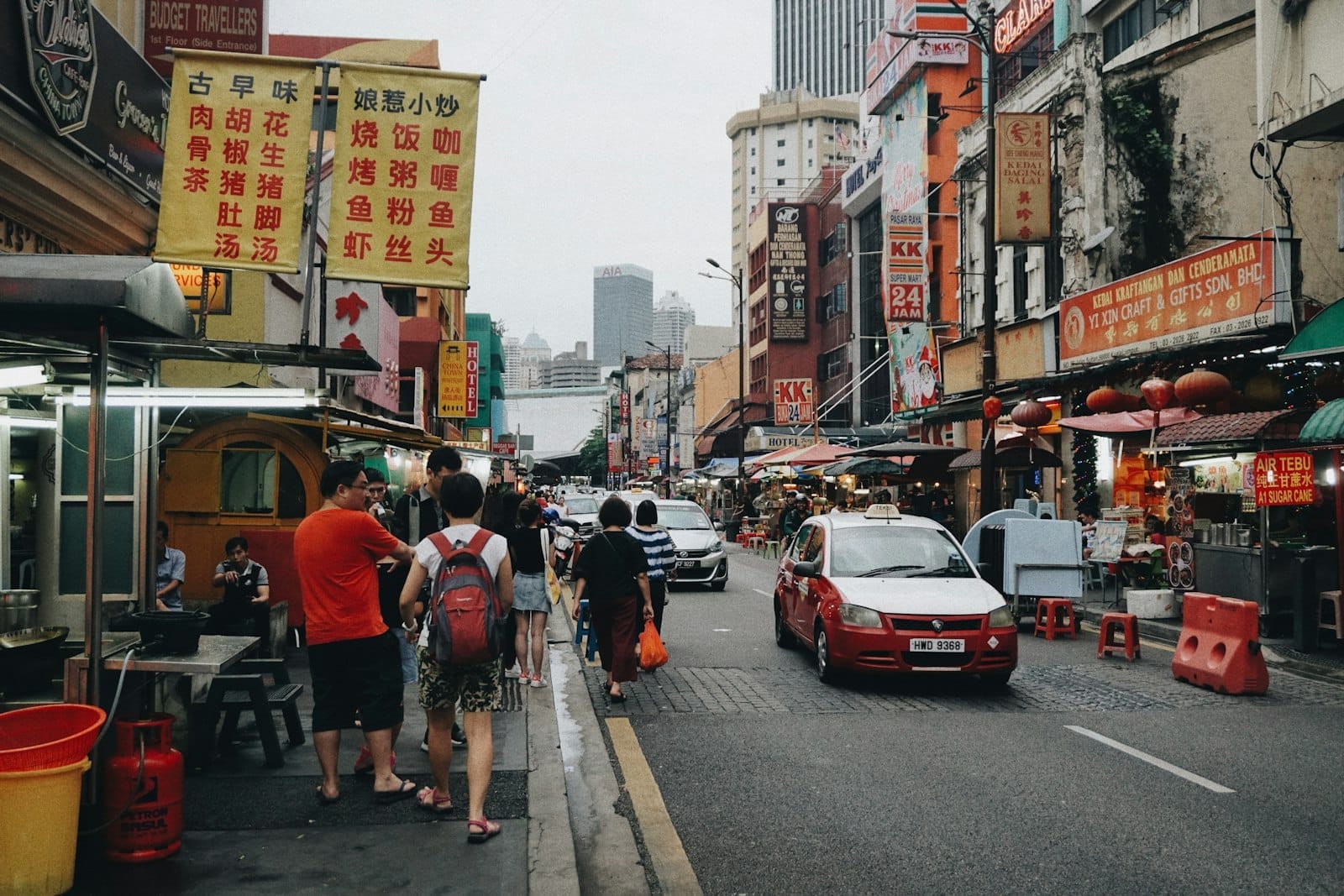
By mid-morning, the transformation is swift. Vendors wheel out racks of counterfeit goods, luggage, phone cases, and cheap streetwear along Petaling Street. The lantern canopy overhead diffuses the light into an amber glow, and the pedestrian street fills with a mix of tourists, local shoppers, and food deliverymen threading through on motorcycles. The market atmosphere peaks between roughly ten in the morning and three in the afternoon, when the noise and density are at their highest. This is when the negotiating happens, when the tour groups arrive, and when the smells from the hawker stalls compete with each other down every block.
Late afternoon brings a brief lull. The worst of the midday heat breaks, some vendors pack up, and the streets feel more navigable. Then, after dark, a second life begins. The hawker stalls shift into dinner mode, the string lights and red lanterns come on properly, and the crowd tilts younger and more local. The narrow alley of Kwai Chai Hong, just off Jalan Petaling, glows with neon and murals and draws a mixed crowd of locals and visitors who have graduated past the market strip and want something more atmospheric.
⚠️ What to skip
Counterfeit goods are openly sold on Petaling Street. Buying fakes carries a legal risk for visitors, and the quality of most items is low. The real value of Chinatown is its food, temples, and architecture, not the market stalls.
What to See & Do
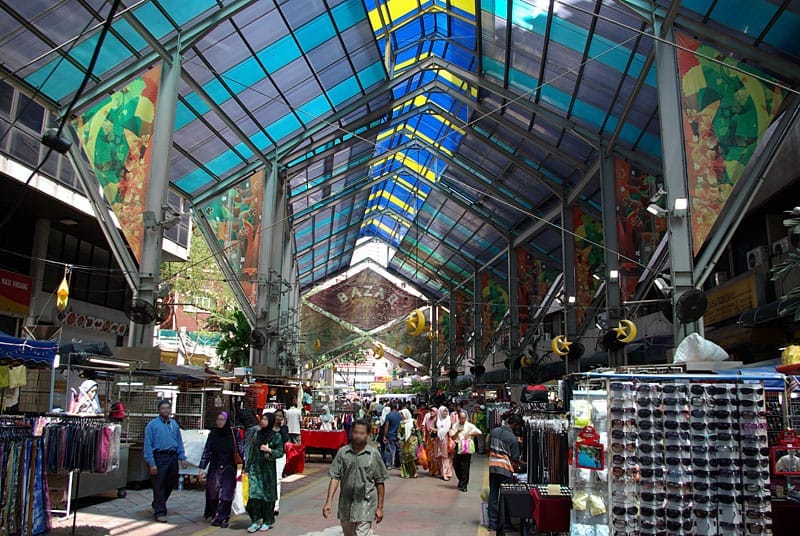
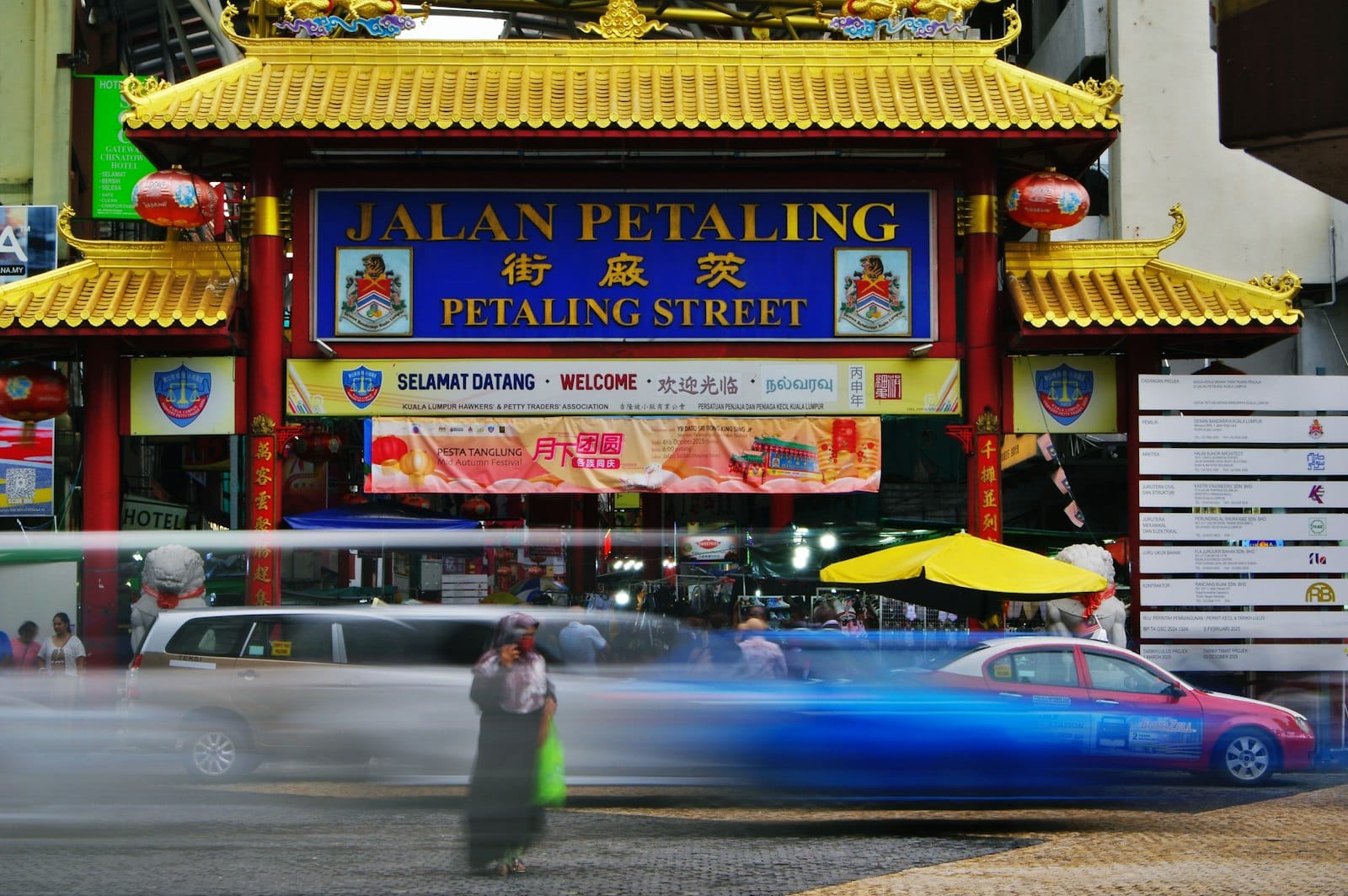
The most photographed landmark in the neighborhood is the Petaling Street Market, with its distinctive red-painted entrance arch and the lantern-strung canopy overhead. However, the market itself is largely aimed at tourists and souvenir shoppers. Spend fifteen minutes walking through it, then use it as a waypoint to explore the surrounding streets, which are considerably more interesting.
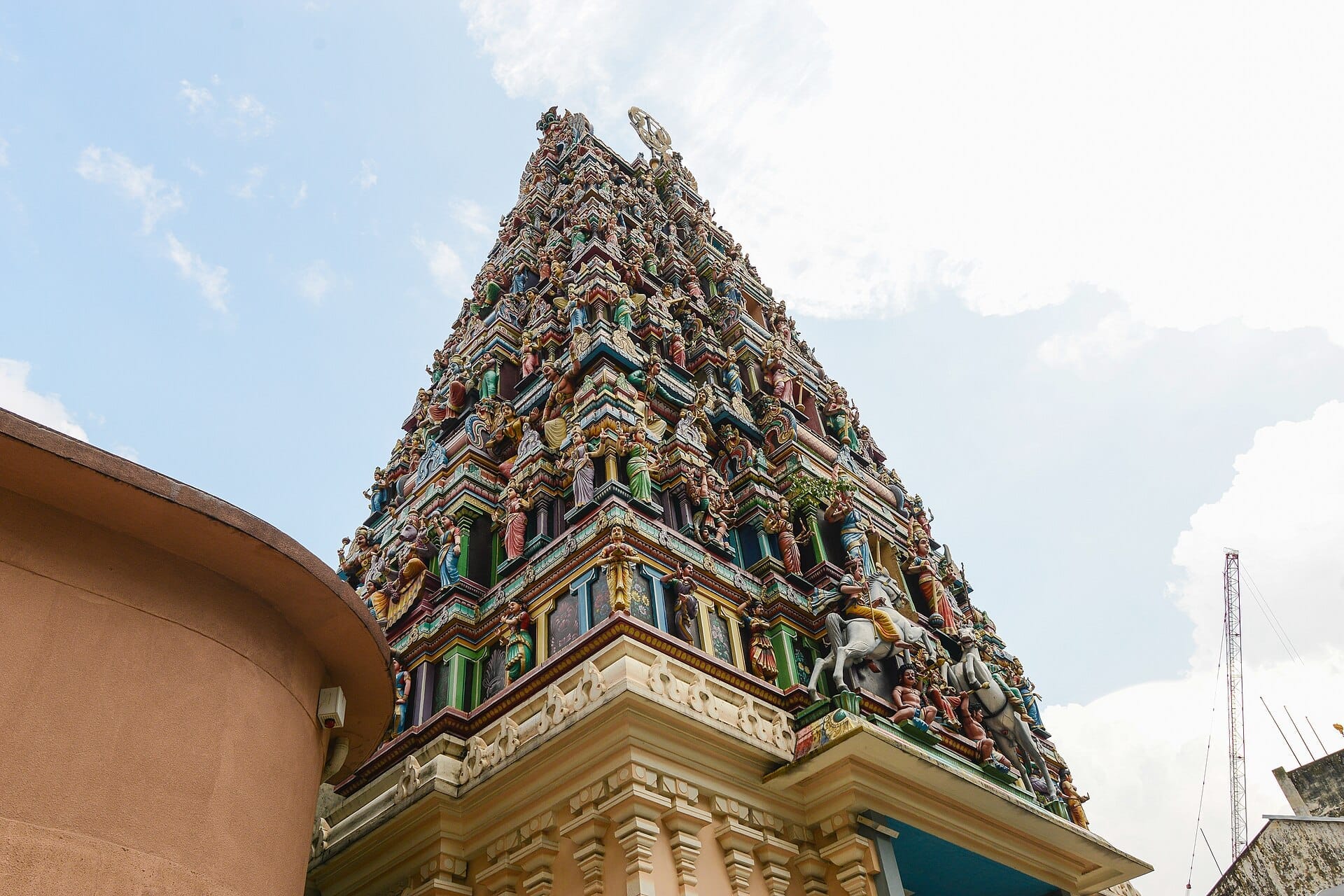
The Sri Mahamariamman Temple on Jalan Tun H.S. Lee (also known as High Street) is one of the most striking sights in the precinct, a Tamil Hindu temple built in 1873, making it one of the oldest in KL. Its gopuram tower, encrusted with painted deities, rises incongruously above the shophouses around it. This is not a tourist construction: it is an active place of worship, and the procession of devotees arriving with flower offerings throughout the day is a reminder that Chinatown has always been a multi-ethnic neighborhood despite its name. The temple is also the starting point of the annual Thaipusam procession to Batu Caves.
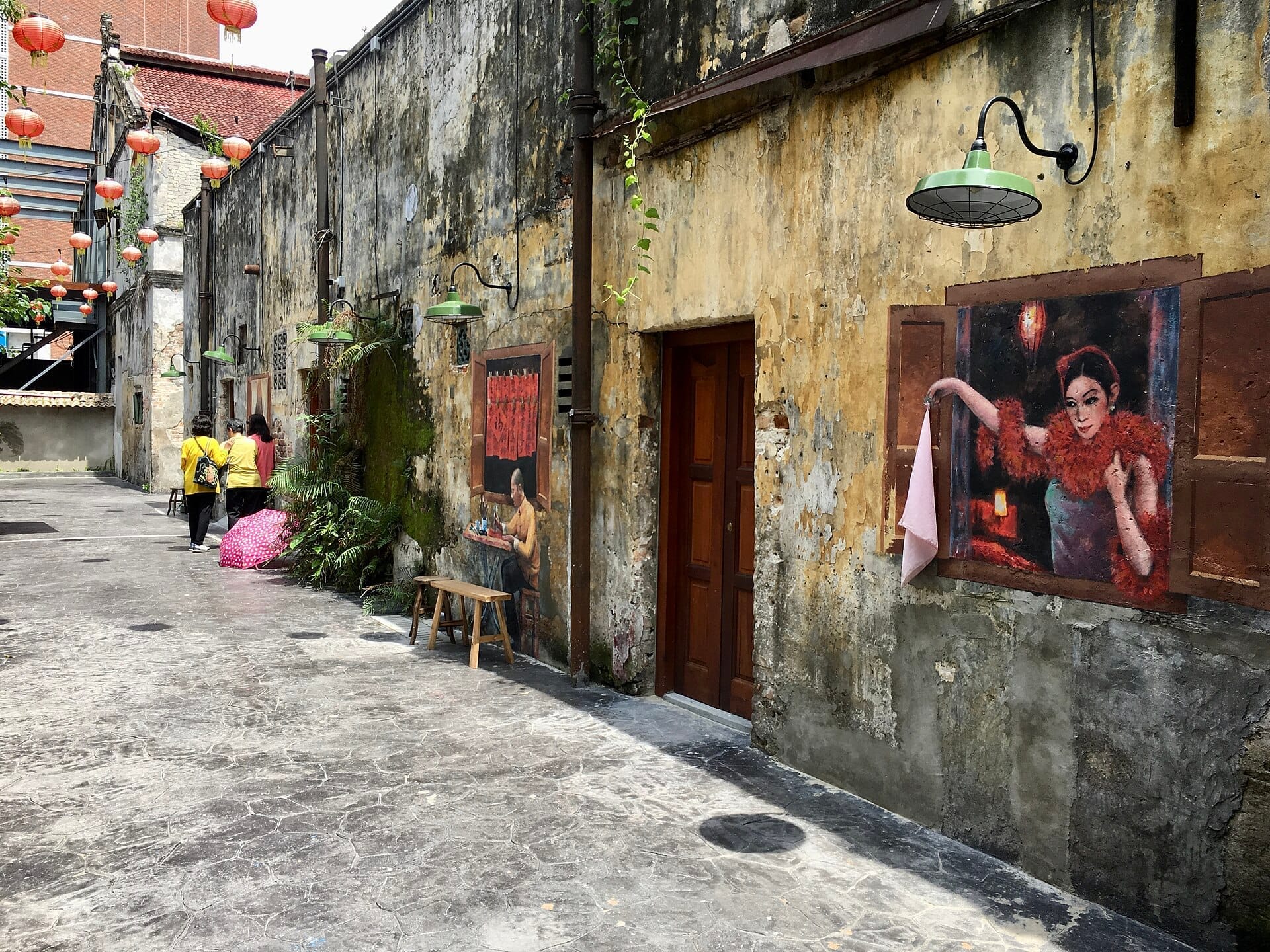
Just off Jalan Petaling, the lane known as Kwai Chai Hong is the neighborhood's most visually arresting modern addition. A collaboration between heritage conservationists and street artists, this back alley is lined with hand-painted murals depicting scenes from the Cantonese immigrant communities that settled this neighborhood in the nineteenth century. It works best in the late afternoon or evening when the light is low and the lane feels genuinely atmospheric rather than just photogenic.
Walking north from Petaling Street takes you past several ornate clan association buildings, including the Chan She Shu Yuen Clan Association, whose ceramic tile roof and painted facade date to 1906. Continue north and you reach the Masjid Jamek, the Moorish-style mosque built in 1907 at the river confluence, and the adjacent River of Life promenade, where the city's founding site has been redeveloped into a riverfront walkway.
Petaling Street Market: the market canopy and arch, best explored in the morning before the crowds thicken
Sri Mahamariamman Temple on Jalan Tun H.S. Lee: one of KL's oldest Hindu temples
Kwai Chai Hong heritage alley: murals and colonial-era lane architecture
Chan She Shu Yuen Clan Association: 1906 facade and architecture, free to view from the street
Masjid Jamek and River of Life promenade: ten minutes walk north at the river confluence
Jalan Sultan shophouses: the best-preserved row of colonial shophouse facades in the precinct
Eating & Drinking
The food in Chinatown is the single strongest reason to visit. The neighborhood concentrates a range of Cantonese and Hakka hawker dishes that have been cooked in this precinct for generations. Pork-based dishes dominate: braised pork trotters over rice, char siu hanging in the windows of roast meat stalls, wonton noodle soup served in small bowls with thin egg noodles. Claypot chicken rice, cooked over charcoal and scraped from the pot at the table, is a local specialty that a handful of stalls on Jalan Petaling still prepare the traditional way.
Old Town White Coffee shops and independently owned kopitiam are everywhere in Chinatown, serving strong local coffee in thick ceramic mugs with condensed milk. Breakfast at one of these places, with kaya toast and soft-boiled eggs, costs under ten ringgit and is one of the most reliable morning rituals in the city. The older kopitiams along Jalan Sultan and Jalan Tun H.S. Lee tend to be quieter and more characterful than those on Petaling Street itself.
For street food specifically, the alley stalls around Petaling Street come alive after dark, serving everything from pan mee to curry fish head to freshly pressed sugarcane juice. This overlaps in spirit with the Jalan Alor night food street in Bukit Bintang, though Chinatown's options skew more toward traditional Chinese hawker food rather than seafood-heavy tourist menus.
Drinks-wise, the neighborhood has a few craft beer bars and cocktail spots tucked into shophouse ground floors, particularly along Jalan Petaling and Jalan Sultan. These cater primarily to travelers and younger locals looking for somewhere cooler and less hectic than the main market strip. The atmosphere in these bars peaks on weekend evenings, when the surrounding streets are busy but not overwhelming.
💡 Local tip
Muslim visitors should note that pork is a staple in many Chinatown restaurants. Halal options exist but are less common in the core precinct. The streets just north of the neighborhood, around Masjid Jamek and Jalan Masjid India, have a much broader range of halal Malay and Indian Muslim food.
Getting There & Around
Masjid Jamek station, served by the LRT Kelana Jaya Line and LRT Sri Petaling Line, is the closest rail station to Chinatown and sits about a five-minute walk from the northern entrance of Petaling Street. Pasar Seni station on the same LRT lines is the other option, located on the western edge of the neighborhood near the Central Market, and is equally convenient for visitors arriving from KL Sentral.
From Bukit Bintang, the journey by LRT involves a change at Masjid Jamek or a short ride to Pasar Seni. Taxis and ride-hailing apps work well in the area, though Petaling Street itself is pedestrianized and vehicles cannot enter the market strip directly. The neighborhood is compact enough that a single pair of comfortable shoes will get you everywhere you need to go.
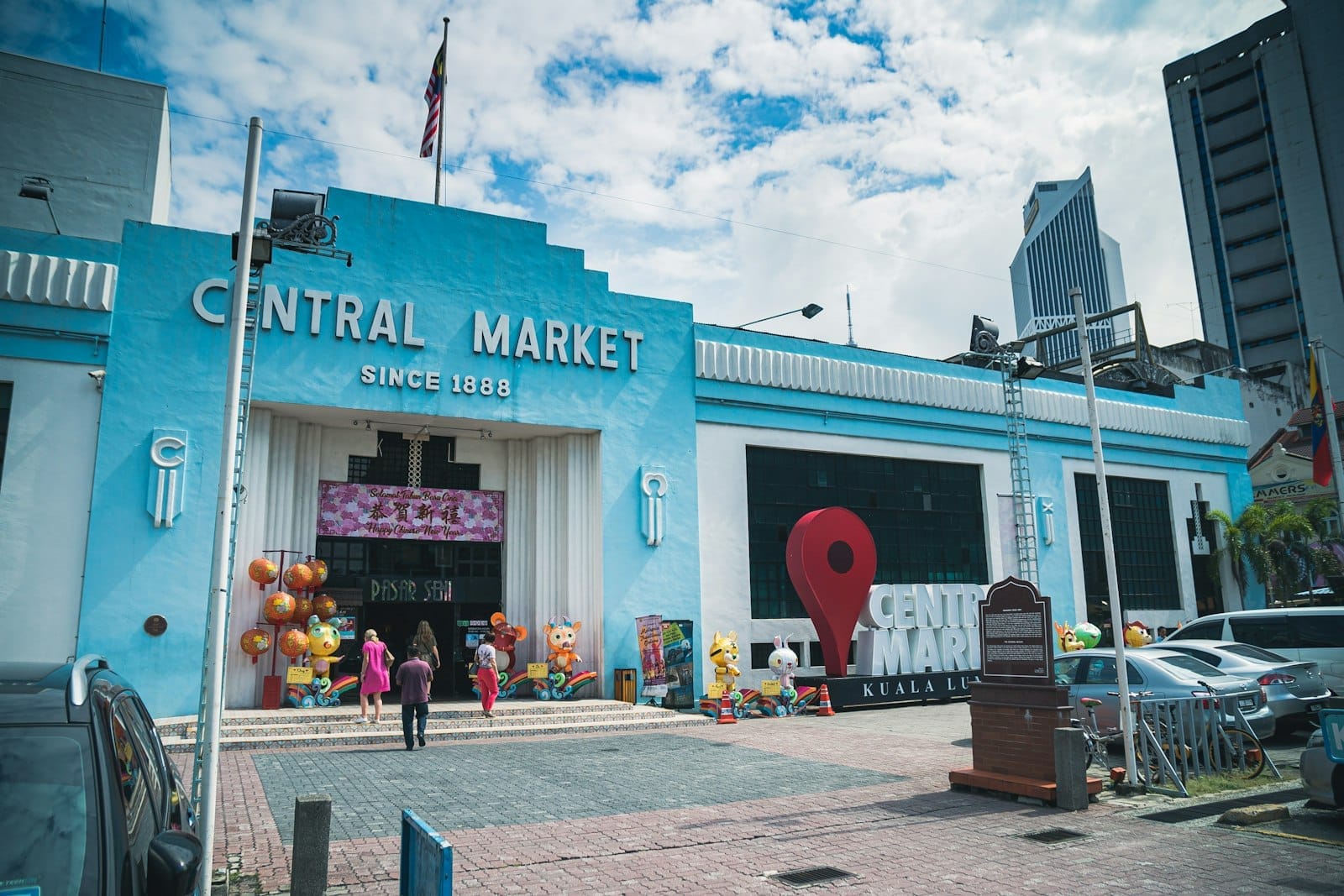
Chinatown is also walkable from Merdeka Square in about ten minutes heading south, and from the Central Market in about five minutes heading east. The Central Market building on Jalan Hang Kasturi, a 1930s Art Deco structure, functions as a craft and souvenir mall and makes a natural combined stop with Chinatown for visitors interested in Malaysian handicrafts alongside the market experience.
ℹ️ Good to know
Chinatown is best explored on foot. The streets are narrow, parking is difficult, and the most interesting parts of the neighborhood are in pedestrian lanes that vehicles cannot access. Plan to arrive by rail and walk throughout.
Where to Stay
Chinatown has a well-established backpacker accommodation scene concentrated in shophouse conversions along Jalan Petaling, Jalan Sultan, and the adjacent lanes. Most of these properties occupy two or three floors above ground-level shopfronts, with rooms that range from shared dormitories to simple private doubles. They are good value and well-located for anyone wanting to explore the historic core of KL on foot.
The main trade-off for staying in Chinatown is noise. The market runs until late in the evening, motorcycles use the side streets throughout the night, and the neighborhood does not go truly quiet until after midnight. Travelers who are light sleepers or who prefer polished surroundings will be better served by hotels in KLCC or Bukit Bintang, both of which offer a wider range of mid-range and luxury accommodation. Chinatown suits independent travelers, budget-conscious visitors, and anyone who prioritizes location in the historic core over room comfort.
For a broader look at accommodation options across the city, the where to stay in Kuala Lumpur guide breaks down every major neighborhood by traveler type and budget.
Practical Notes
Chinatown is generally safe for visitors during the day and early evening. The main Petaling Street strip sees enough foot traffic and commercial activity that it feels secure at all hours. As in any busy market district, be aware of bag-snatching in crowded conditions, particularly near the market entrance arches where density peaks. Keep valuables in a front-facing bag and avoid displaying expensive cameras or phones unnecessarily in the thickest parts of the crowd.
Dress modestly if you plan to enter the Sri Mahamariamman Temple: shoulders and knees should be covered, and shoes must be removed before entering. The same applies to Masjid Jamek if you walk north toward the river confluence. Sarongs are usually available at the entrance of both sites for visitors who arrive without appropriate clothing.
Chinatown is most rewarding when combined with the surrounding historic precincts rather than visited in isolation. A full day itinerary might start at Masjid Jamek and the river confluence, work south through the clan association buildings and Sri Mahamariamman Temple, spend midday in the market and hawker stalls, then finish at the Central Market or continue further south to the Thean Hou Temple on Robson Hill. That combination gives a genuinely layered picture of how KL's different communities built the city side by side.
TL;DR
Chinatown is KL's founding neighborhood, compact and walkable, with a genuine mix of historic temples, colonial shophouses, and hawker food that rewards exploration beyond the Petaling Street tourist strip.
Best visited in the early morning for atmosphere and local life, or after dark when the lanterns come on and the hawker stalls shift into dinner mode.
The Sri Mahamariamman Temple, Kwai Chai Hong alley, and the clan association buildings on Jalan Tun H.S. Lee are the architectural highlights; the food is the strongest reason to return.
Noise, crowds, and counterfeit-market saturation on the main strip are real drawbacks; travelers wanting peace and comfort should base themselves elsewhere and visit as a day trip.
Ideal for independent travelers, food-focused visitors, and anyone trying to understand how KL grew from a river-junction mining camp into one of Southeast Asia's major cities.
Kuala Lumpur sits just 3 degrees north of the equator, which means heat and rain are constants year-round. But timing still matters — for festivals, crowds, hotel prices, and how much you'll be caught in a downpour. This guide breaks down every season honestly so you can plan smarter.
Genting Highlands sits around 1,800 metres above sea level, about 58 km from Kuala Lumpur. This guide covers every transport option, what the resort complex actually offers, how long you need, and the honest trade-offs so you can decide if this trip suits your itinerary.
Kuala Lumpur has one of Southeast Asia's most developed urban transport networks, yet first-time visitors frequently end up confused, overcharged, or stranded. This guide breaks down every practical option for getting around KL, from rail passes to rideshare apps, with honest assessments of what works and what to avoid.
Kuala Lumpur is one of Southeast Asia's great shopping cities, with malls ranging from ultra-luxury flagships to bargain-packed street-level arcades. This guide breaks down the best shopping malls by area, what each does well, and exactly how to make the most of your time and money.
Kuala Lumpur packs an extraordinary range of experiences into a single city: world-famous landmarks, serious street food, dense rainforest parks, and some of Southeast Asia's best shopping. This guide breaks it all down by category so you can build a trip that actually fits your pace.
Choosing where to stay in Kuala Lumpur shapes your entire trip. This guide breaks down the city's key neighbourhoods by location, vibe, price range, and transport links so you can book with confidence.