River of Life Kuala Lumpur: The Historic Confluence That Built a City
The River of Life is Kuala Lumpur's ambitious waterfront revitalization project, centered on the point where the Klang and Gombak rivers meet near Masjid Jamek. Blue-lit at night and framed by colonial architecture, it tells the story of how this city began, though the experience is more reflective than spectacular.
Quick Facts
- Location
- Masjid Jamek area, Merdeka, Kuala Lumpur
- Getting There
- Masjid Jamek LRT Station (Kelana Jaya & Ampang lines)
- Time Needed
- 30–60 minutes
- Cost
- Free to walk and view
- Best for
- History lovers, evening walkers, architecture fans
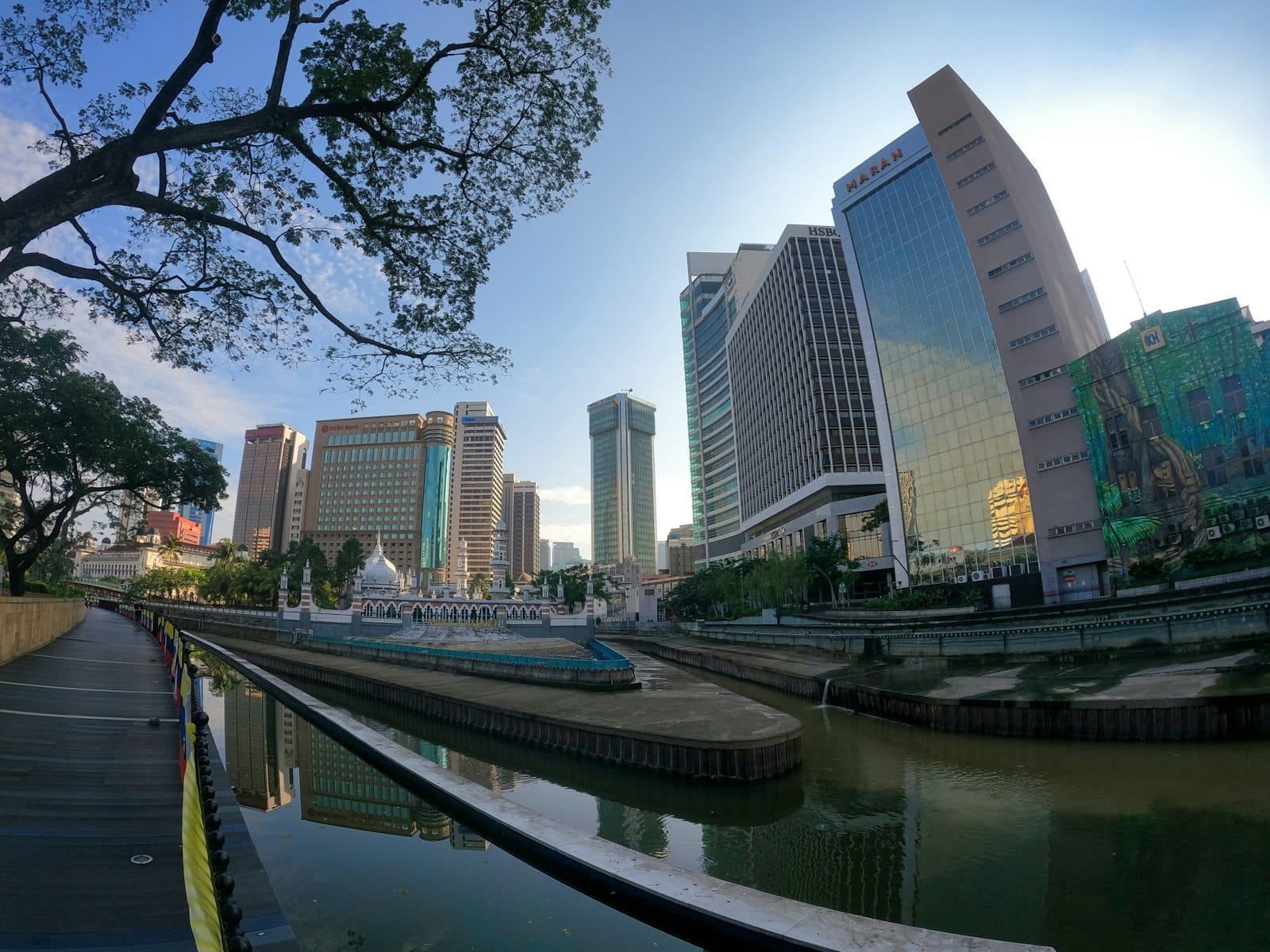
What Is the River of Life?
The River of Life is a large-scale urban regeneration initiative by the Malaysian government, focused on the stretch of riverfront where the Klang and Gombak rivers converge in the heart of Kuala Lumpur. This confluence is not just scenic: it is the precise spot where Chinese tin miners and traders established a trading post in the 1850s, giving birth to the settlement that would eventually become KL. The project aims to clean up the historically polluted rivers, add waterfront promenades, and illuminate the confluence with blue LED lighting after dark.
The centerpiece of the experience is the pedestrian promenade and viewing area near Masjid Jamek, where you can stand above the merging rivers and look across to the Sultan Abdul Samad Building and the colonial-era mosque. It is an outdoor public space, free to access at any hour, and one of the few places in KL where the city's founding story is physically present.
💡 Local tip
Visit after 7:30 PM to see the blue LED lighting along the river walk fully activated. The illuminated water reflection against the mosque backdrop is the version most people come for.
The History Underneath Your Feet
KL's name is often said to derive from 'Kuala Lumpur', Malay for 'muddy confluence', a reference to the murky meeting point of the Klang and Gombak rivers visible from this very promenade. In the 1850s, Raja Abdullah of Klang sent a group of Chinese miners upstream to find tin. Many perished en route, but those who survived established a camp at this junction. From that rough riverside settlement, the city grew.
The Masjid Jamek mosque, completed in 1909 and designed by British architect A.B. Hubbock in a Moorish style, stands directly on the riverbank and was itself built on land that was once the city's original burial ground. It anchors the entire visual composition of the River of Life promenade. For more on the area's colonial-era architecture, the nearby Sultan Abdul Samad Building is within easy walking distance and provides excellent context for the same era.
The confluence sits at the edge of what is now the Merdeka district, the most historically dense neighborhood in Kuala Lumpur. Walking north from here takes you toward Chow Kit; walking south leads to Chinatown and Merdeka Square. Almost every direction carries historical weight.
Tickets & tours
Hand-picked options from our booking partner. Prices are indicative; availability and final rates are confirmed when you complete your booking.
Petronas Twin Towers and Kuala Lumpur Tower observation deck tickets
From 34 €Private Taman Negara day trip from Kuala Lumpur with lunch
From 85 €Instant confirmationFree cancellationKuala Lumpur city and Batu Caves tour
From 41 €Instant confirmationFree cancellationKuala Lumpur city exploration private half-day tour
From 42 €Instant confirmationFree cancellation
What the Walk Actually Looks Like
The River of Life promenade runs along both banks for several hundred meters, with the primary viewing platform positioned above the confluence itself. The walkway is paved and level, with metal railings overlooking the water. At midday, the rivers run a murky brownish-green, the result of decades of upstream sediment and ongoing cleanup efforts. The water quality has improved considerably since the project's launch around 2012, but it is not the crystalline blue suggested by promotional imagery.
The promenade passes beneath heritage shophouses and alongside the side walls of Masjid Jamek. There are benches, some landscaping, and a few small food kiosks that operate during peak hours. The paving is designed with geometric patterns intended to evoke traditional Islamic tile work, though these details are easy to overlook in the daytime crowd.
One section of the walk connects to the Masjid Jamek LRT station via a covered walkway, making it genuinely easy to arrive and depart without navigating surface traffic. This link also means the area sees steady foot traffic from commuters passing through, particularly during morning and evening rush hours.
⚠️ What to skip
Do not expect pristine water. Despite significant cleanup investment, the rivers still carry urban runoff and the color is not photogenic in daylight. The evening lighting compensates for this considerably.
Morning vs. Evening: Two Very Different Experiences
Early morning, around 7 to 9 AM, the promenade is quiet. Commuters are moving through rather than stopping, and the air carries the faint damp smell of the river mixed with diesel from nearby roads. The light is soft and the Sultan Abdul Samad Building catches the eastern sun in a warm orange glow. This is the best time for photography of the colonial architecture without tourist crowds, though the river itself looks its least impressive in flat morning light.
By midday, the area heats up considerably. KL's equatorial sun turns the exposed promenade into a slow-burn experience, and most visitors move through quickly. The Masjid Jamek area draws worshippers for Friday prayers, and at those times the surrounding streets fill with vendors and activity that spills toward the river walk.
Evening is when the River of Life shows its best face. From around sunset, the blue LED uplighting activates along the riverbanks, casting the water in an electric-blue hue that photographs dramatically against the mosque's white and terracotta silhouette. Families and couples gather on the promenade, selfie sticks appear in numbers, and the ambient noise shifts from traffic to conversation. The heat drops to a manageable level and the whole area takes on a different atmosphere, more leisurely, more intentional.
Getting There and Moving Around
The easiest approach is via Masjid Jamek LRT Station, which sits directly adjacent to the promenade. Both the Kelana Jaya Line and the Ampang Line stop here. From the station, follow signs toward the river exit, and you will be on the promenade within two minutes of exiting the turnstiles. For guidance on navigating KL's transit network more broadly, the getting around Kuala Lumpur guide covers LRT, MRT, and bus options in detail.
If you are walking from Merdeka Square, the journey takes around 10 minutes heading north along Jalan Raja. From Chinatown (Petaling Street area), allow 15 minutes on foot heading northwest. The promenade connects well with both directions, making it a natural stopping point on any heritage walk through the old city center.
The walkway is flat and paved throughout, making it accessible for wheelchairs and strollers, though some sections near the stairs to street level have limited ramp access. Footwear with grip is recommended during or after rain, as the riverside paving can become slippery.
Photography and Practical Notes
For photography, the evening blue-light period offers the most striking images, particularly from the main confluence viewing platform looking south toward Masjid Jamek. A smartphone with a decent night mode handles this well. The reflection of the lit mosque facade in the water below makes for a reliable composition, and the framing is not difficult to achieve because the viewing platform is purpose-built for this angle.
During Ramadan, the atmosphere around Masjid Jamek becomes significantly more active in the evenings, with bazaar stalls and larger crowds gathering near the mosque. This can add color and energy to the visit but also means the promenade is noticeably busier than usual.
If you plan to combine the River of Life with a broader exploration of the Merdeka district, consider pairing it with Merdeka Square to the south and the heritage shophouses of Chinatown further along. A half-day loop connecting these areas is one of the most historically rewarding walks in KL. You can also read more in our guide to things to do in Kuala Lumpur for itinerary ideas that include this corridor.
Who Should Probably Skip This
Travelers primarily interested in shopping, nightlife, or tropical nature will find little here. The River of Life is a heritage and urban design experience, not an entertainment venue. If your KL itinerary is already tight and you are choosing between this and Merdeka Square, Merdeka Square offers more visual payoff with its open space and colonial architecture. The River of Life works best as an addition rather than a headline destination.
Visitors with mobility challenges should note that while the main promenade is accessible, the surrounding streets in this older part of the city have uneven footpaths and limited shade. Planning around the cooler evening hours makes a significant difference to comfort.
Insider Tips
- Time your visit for 7:30 to 9 PM on a weekday, when the blue lighting is active but the crowds from the LRT commute have thinned out. Weekends bring significantly more selfie traffic on the viewing platform.
- The view from the upper level of the Masjid Jamek LRT station exit offers a useful aerial perspective on the confluence before you descend to the promenade, giving you a sense of the rivers' layout.
- During Ramadan evenings, small food stalls set up near the mosque perimeter and the surrounding streets. This is one of the best windows into local religious and culinary culture in the city center.
- Pair this stop with a walk to Kwai Chai Hong (Dragon Boy Lane), a heritage lane with outdoor murals about 10 minutes away on foot into Chinatown. It adds texture to the historical theme without backtracking.
- The promenade connects undercover to the LRT station, so in a sudden downpour you can take shelter immediately rather than being stranded in the open.
Who Is River of Life For?
- History-curious travelers who want to stand at the literal founding point of Kuala Lumpur
- Evening walkers looking for a scenic, free outdoor experience after dinner
- Architecture and photography enthusiasts interested in colonial-era buildings at night
- First-time visitors doing a heritage loop through the old city center
- Families wanting a low-cost, accessible outdoor stop between LRT stations
Nearby Attractions
Other things to see while in Merdeka:
- Masjid Jamek
Standing at the junction of the Klang and Gombak rivers, Masjid Jamek is Kuala Lumpur's oldest surviving mosque, completed in 1909. Built in Mughal-inspired style, it marks the very spot where the city's founders first set foot, making it as historically significant as it is architecturally striking.
- Merdeka Square
Merdeka Square is the symbolic heart of Kuala Lumpur, a wide open field flanked by colonial-era buildings where Malaysia's independence was proclaimed in 1957. Today it draws visitors for its striking architecture, the towering national flagpole, and its position at the center of the city's most historically significant neighborhood.
- Sultan Abdul Samad Building
The Sultan Abdul Samad Building is Kuala Lumpur's most recognizable colonial-era landmark, rising above Merdeka Square with its copper-green domes and Moorish arches. Built in 1897, it defines the city's civic heart and rewards visitors who time their arrival for the golden hour.