Merdeka Square: The Birthplace of Malaysian Independence
Merdeka Square is the symbolic heart of Kuala Lumpur, a wide open field flanked by colonial-era buildings where Malaysia's independence was proclaimed in 1957. Today it draws visitors for its striking architecture, the towering national flagpole, and its position at the center of the city's most historically significant neighborhood.
Quick Facts
- Location
- Dataran Merdeka, Jalan Raja, 50480 Kuala Lumpur
- Getting There
- Masjid Jamek LRT station (5-10 minute walk)
- Time Needed
- 45–90 minutes
- Cost
- Free to enter the square
- Best for
- History lovers, architecture, photography, early morning walks
What Is Merdeka Square?
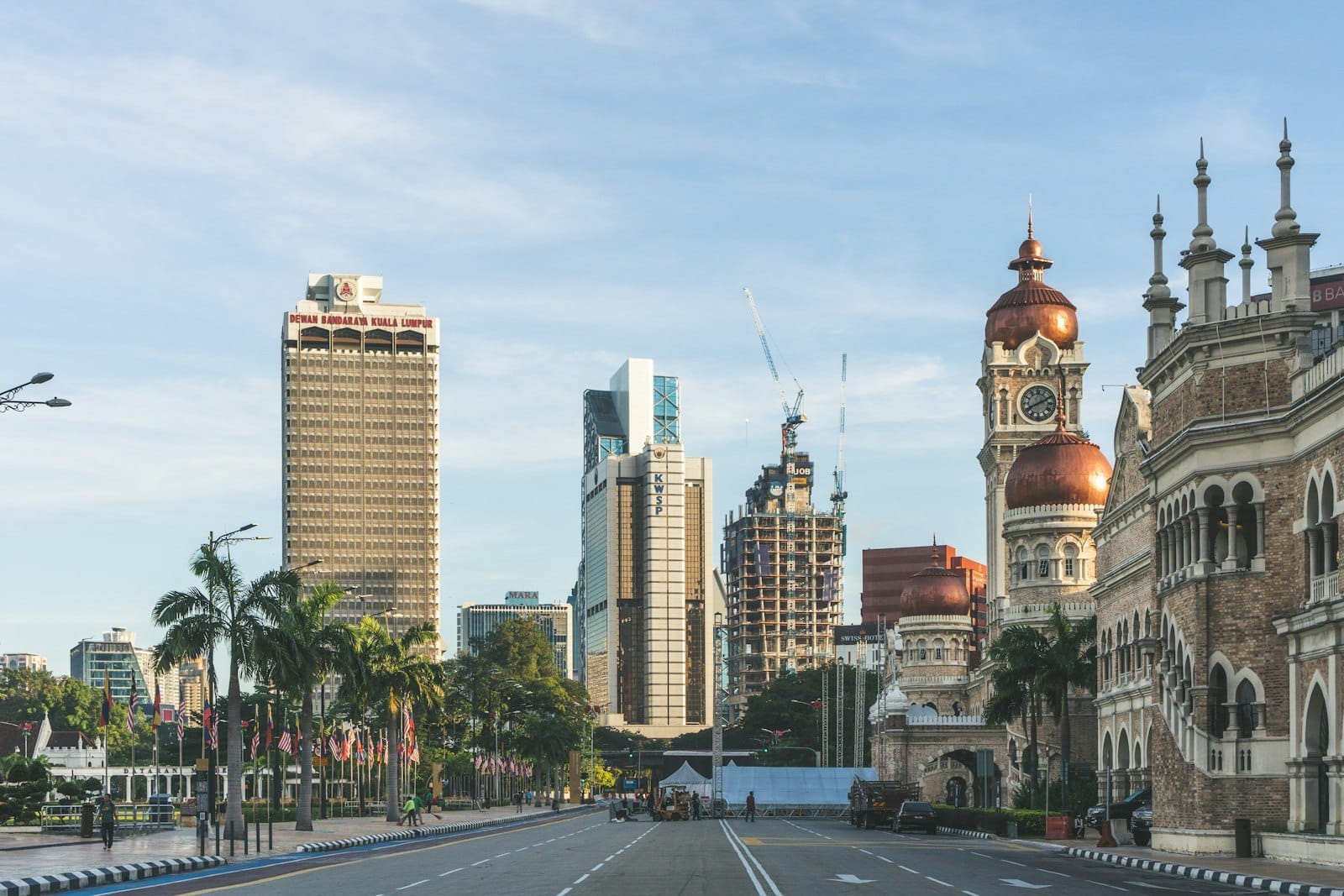
Merdeka Square, known in Malay as Dataran Merdeka, is a large rectangular field in the heart of Kuala Lumpur's colonial district. Its name translates simply as Independence Square, and the name is earned: it was here, at the stroke of midnight on August 31, 1957, that the Union Jack was lowered and the Malaysian flag was raised for the first time, marking the end of British colonial rule. That precise spot, where the flagpole now stands, is considered one of the most emotionally significant locations in the country.
The square sits alongside the Klang and Gombak rivers, flanked on its western edge by an unbroken row of colonial-era buildings in Moorish and Tudor Revival styles. On its eastern edge sits the Royal Selangor Club, a cream-and-red-tiled institution that has been a gathering point for Kuala Lumpur's elite since 1884. The combination of open green space, river proximity, and surrounding architecture makes Merdeka Square unlike any other public space in Southeast Asia.
💡 Local tip
Arrive before 8:00 AM for the best experience. The light is soft, the air is cooler, and you'll have the square largely to yourself. By mid-morning it fills with school groups and tour buses.
The Flagpole and the Architecture Around the Square
The centerpiece of the square is its flagpole, which stands approximately 95 meters tall and was, at the time of its installation, one of the tallest flagpoles in the world. The Malaysian flag flying at its top is enormous, and on clear days it can be spotted from several blocks away. The flagpole stands on a small raised platform that marks the exact location of the original independence ceremony.
Surrounding the square is a gallery of some of Kuala Lumpur's finest colonial architecture. The Sultan Abdul Samad Building, completed in 1897, defines the skyline on the northern side facing the square with its copper domes, Moorish arched colonnades, and a central clock tower. It was designed by A.C. Norman and originally served as the Selangor State Secretariat. Today it houses the Ministry of Information, Communication and Culture. The building is most dramatic in the late afternoon when the copper domes catch the low sun and turn a warm burnished gold.
The square's architecture tells the story of British colonial ambition filtered through Moorish aesthetics, a style sometimes called Mughal Gothic or Saracenic Revival. This same approach was applied across the district, giving the area around Sultan Abdul Samad Building and Masjid Jamek a visual consistency that sets it apart from the rest of the city.
Tickets & tours
Hand-picked options from our booking partner. Prices are indicative; availability and final rates are confirmed when you complete your booking.
Petronas Twin Towers and Kuala Lumpur Tower observation deck tickets
From 34 €Private Taman Negara day trip from Kuala Lumpur with lunch
From 85 €Instant confirmationFree cancellationKuala Lumpur city and Batu Caves tour
From 41 €Instant confirmationFree cancellationKuala Lumpur city exploration private half-day tour
From 42 €Instant confirmationFree cancellation
How the Square Changes Through the Day
The experience of Merdeka Square is strongly shaped by what time you show up. Early mornings bring joggers, civil servants cutting across the lawn on their way to work, and small groups of tourists who have figured out to beat the heat. The grass is dewy, the light is directional and flattering for photography, and the surrounding buildings are quiet. There is a stillness here before 8 AM that is hard to find in central Kuala Lumpur.
By late morning, tour groups arrive in numbers. The fountain at the center of the lawn becomes a focal point for group photos, and the paths around the square get noticeably more crowded. Midday heat is intense here because the square is essentially open ground with limited shade. If you're visiting between 11 AM and 3 PM, expect temperatures that feel well above 35°C on sunny days, and bring water.
Evenings offer a different atmosphere entirely. The buildings are lit up, the flagpole is illuminated, and the open space attracts local families and young people sitting on the grass. On national holidays, particularly National Day on August 31 and Malaysia Day on September 16, Merdeka Square becomes the focal point for large public celebrations, rehearsals, and ceremonies that can draw tens of thousands of people.
⚠️ What to skip
Avoid visiting on days leading up to National Day (August 31). The square may be partially closed for rehearsals and set-up for the official ceremony, and street access around the area can be severely restricted.
The Historical Weight of the Location
Before it was a public square, this patch of ground was a cricket pitch called the Padang, used by the Royal Selangor Club beginning in the late 19th century. Colonial Kuala Lumpur's social life revolved around the Padang, with match days drawing the British administrative class in numbers. The field's transformation from elite recreational ground to the site of national independence carries its own symbolic resonance.
The surrounding district of Merdeka holds layers of history that extend well beyond the square itself. The River of Life project has transformed the nearby confluence of the Klang and Gombak rivers into a landscaped walkway, connecting Merdeka Square to Masjid Jamek in a way that makes the historic district walkable and coherent for the first time in decades.
For those interested in the full depth of Malaysian history, the National Museum is accessible from here, though it requires a short taxi or ride-share trip. The square itself has limited interpretive signage, which is a notable shortcoming for a site of this importance. Most visitors will benefit from reading background material before arriving, or joining a walking tour that covers the colonial district.
Practical Walkthrough: Getting There and Around
The most convenient way to arrive is via the LRT to Masjid Jamek station, which puts you within a five-minute walk of the square. Exit toward the river and follow the riverside walkway north. This approach also gives you a view of the Masjid Jamek mosque at the river confluence before you reach the square, which is one of the better introductions to the district's character.
Merdeka Square is free to enter and open to the public at all hours, though organized events may restrict access to portions of the lawn. Nearby, the Central Market is a ten-minute walk south and makes a logical next stop, particularly if you want air conditioning and a browse through local crafts. Alternatively, walking north takes you into the Chinatown district, where the Petaling Street market and a cluster of temples are within easy reach.
Footwear matters here. The lawn itself is well-maintained grass, but the surrounding paths and streets are uneven in places. Comfortable walking shoes are appropriate. There are no food stalls immediately on the square, but a handful of cafes and hawker spots operate within a short walk on the surrounding streets.
ℹ️ Good to know
Photography is best from the northeastern corner of the square in the late afternoon, when the Sultan Abdul Samad Building is lit by the setting sun and the flagpole is silhouetted against a warm sky. Bring a wide-angle lens if you have one.
Who Should Skip This Attraction
Visitors looking for interactive experiences, shade, or food options nearby may find the square underwhelming as a standalone stop. There is no museum within the square, no interpretive center, and very limited seating. In the middle of a hot day, standing on an open field in central Kuala Lumpur is genuinely uncomfortable, and the surrounding sidewalks offer little relief.
Travelers who are primarily interested in food, shopping, or nightlife will find the square has nothing to offer on those fronts. It works best as part of a broader colonial district walk rather than as a destination in its own right. If you have limited time in Kuala Lumpur and are choosing between this and the Petronas Twin Towers, the Towers deliver a more complete visitor experience with more to do on-site.
Insider Tips
- The Kuala Lumpur City Gallery is located nearby at Plaza Dataran Merdeka, which includes underground parking, which has a large scale model of KL and historical exhibits worth seeing — especially useful for getting geographic context before exploring the city.
- If you walk to the far southern end of the square and look north, you get a clean framing of the Sultan Abdul Samad Building with the flagpole in the foreground — the best single photograph the square offers.
- The Royal Selangor Club building on the eastern edge of the square is not open to non-members, but standing near its entrance archway gives a clear sense of how colonial social geography worked in 19th-century KL.
- Early on weekday mornings, civil servants performing their morning walk circuit around the square are a fixture. Joining the circuit gives you a loop that covers all the main viewing angles without retracing your steps.
- The Merdeka Square area is one of the few parts of central KL where the buildings have been preserved at a relatively consistent low height, giving you unobstructed sky in your photographs — a rarity in this city.
Who Is Merdeka Square For?
- History and politics enthusiasts who want to understand Malaysia's path to independence
- Architecture lovers interested in Moorish Revival and British colonial design
- Photographers shooting early morning cityscape or golden-hour architecture
- Visitors doing a full colonial district walking tour through the Merdeka neighborhood
- Families looking for a free, open outdoor space in the city center
Nearby Attractions
Other things to see while in Merdeka:
- Masjid Jamek
Standing at the junction of the Klang and Gombak rivers, Masjid Jamek is Kuala Lumpur's oldest surviving mosque, completed in 1909. Built in Mughal-inspired style, it marks the very spot where the city's founders first set foot, making it as historically significant as it is architecturally striking.
- River of Life
The River of Life is Kuala Lumpur's ambitious waterfront revitalization project, centered on the point where the Klang and Gombak rivers meet near Masjid Jamek. Blue-lit at night and framed by colonial architecture, it tells the story of how this city began, though the experience is more reflective than spectacular.
- Sultan Abdul Samad Building
The Sultan Abdul Samad Building is Kuala Lumpur's most recognizable colonial-era landmark, rising above Merdeka Square with its copper-green domes and Moorish arches. Built in 1897, it defines the city's civic heart and rewards visitors who time their arrival for the golden hour.