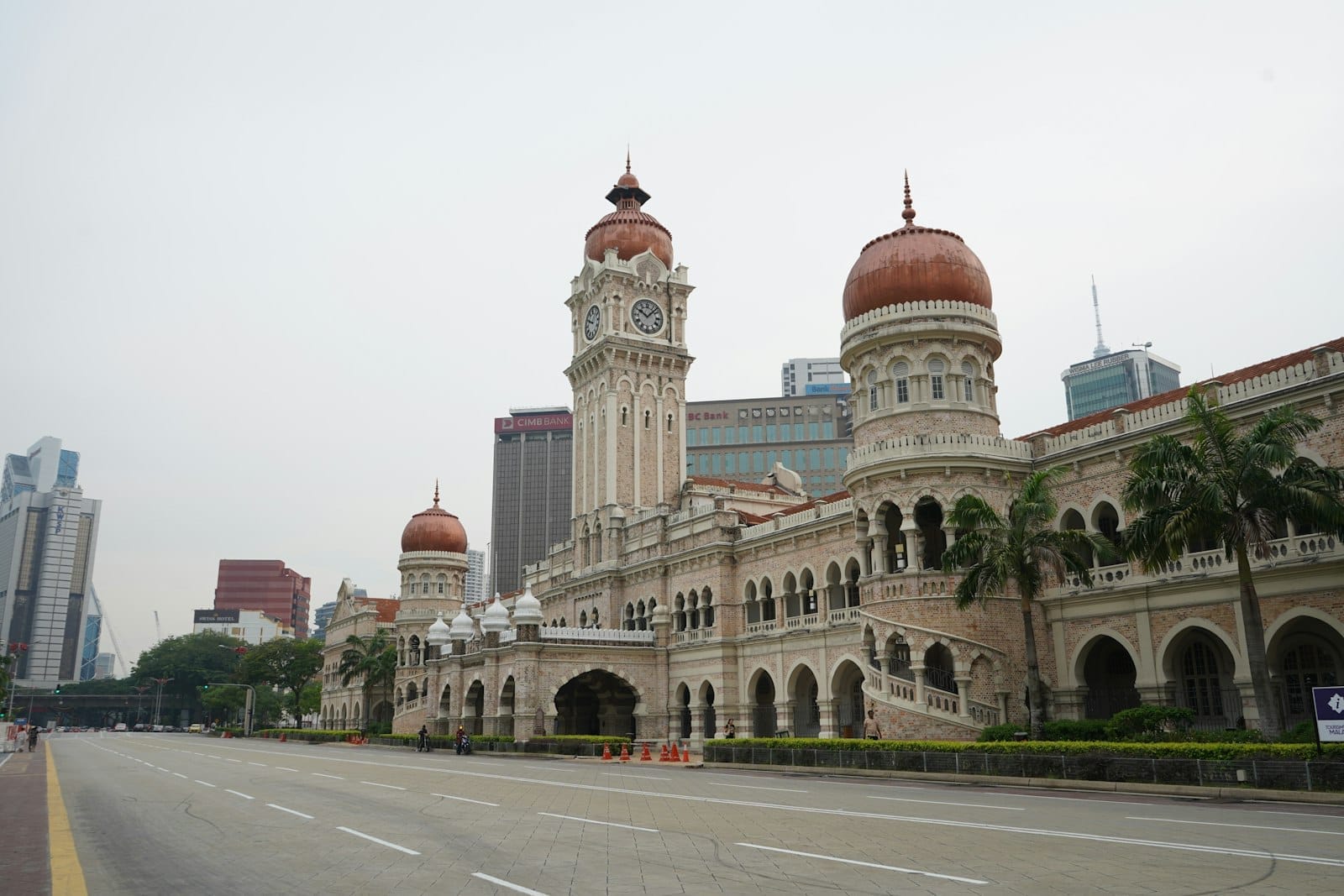
Merdeka Square is where Kuala Lumpur's founding story is written in stone, brick, and open sky. The district clusters around the grand ceremonial square where the Malaysian flag was first raised at midnight on 30-31 August 1957, surrounded by colonial-era buildings, a revived riverfront, and some of the city's most significant civic institutions.
The Merdeka district sits at the geographic and symbolic heart of Kuala Lumpur, straddling the confluence of the Klang and Gombak rivers at the city's founding point. The square itself — Dataran Merdeka — is the centrepiece, a vast open field flanked to the east by the Sultan Abdul Samad Building and to the west by the Royal Selangor Club. Jalan Raja runs along the square's eastern edge, while Jalan Parlimen marks the southern boundary toward the Lake Gardens.
To the north, the district bleeds into the older commercial streets around Masjid Jamek, where the two rivers meet beneath a colonial-era mosque. To the south and west, the ground rises gently toward Masjid Negara and the cultural precinct anchored by the National Museum and Islamic Arts Museum. Chinatown begins just a few minutes' walk southeast, across the river via the Klang River bridges, and the KLCC corridor is roughly three kilometres to the northeast.
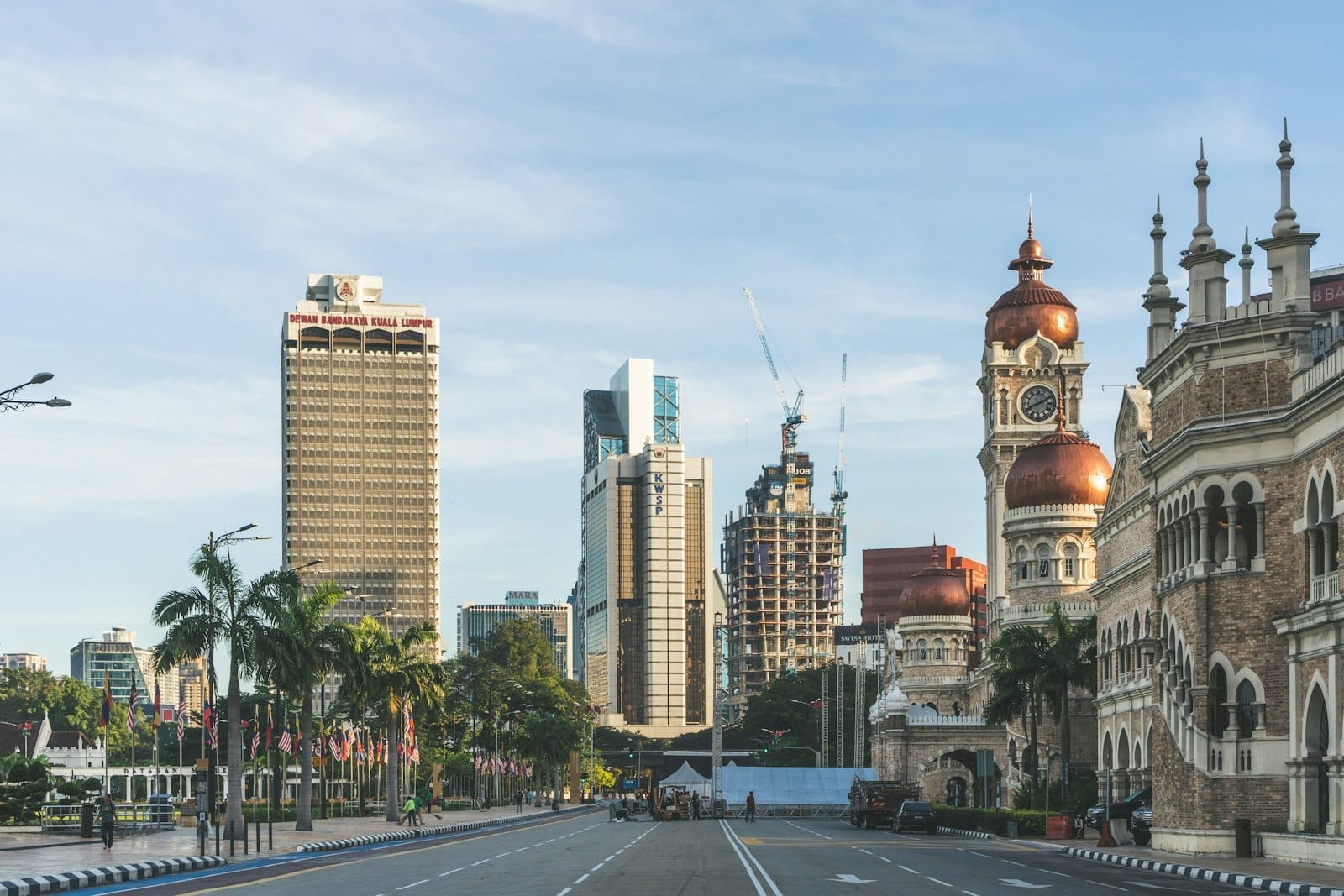
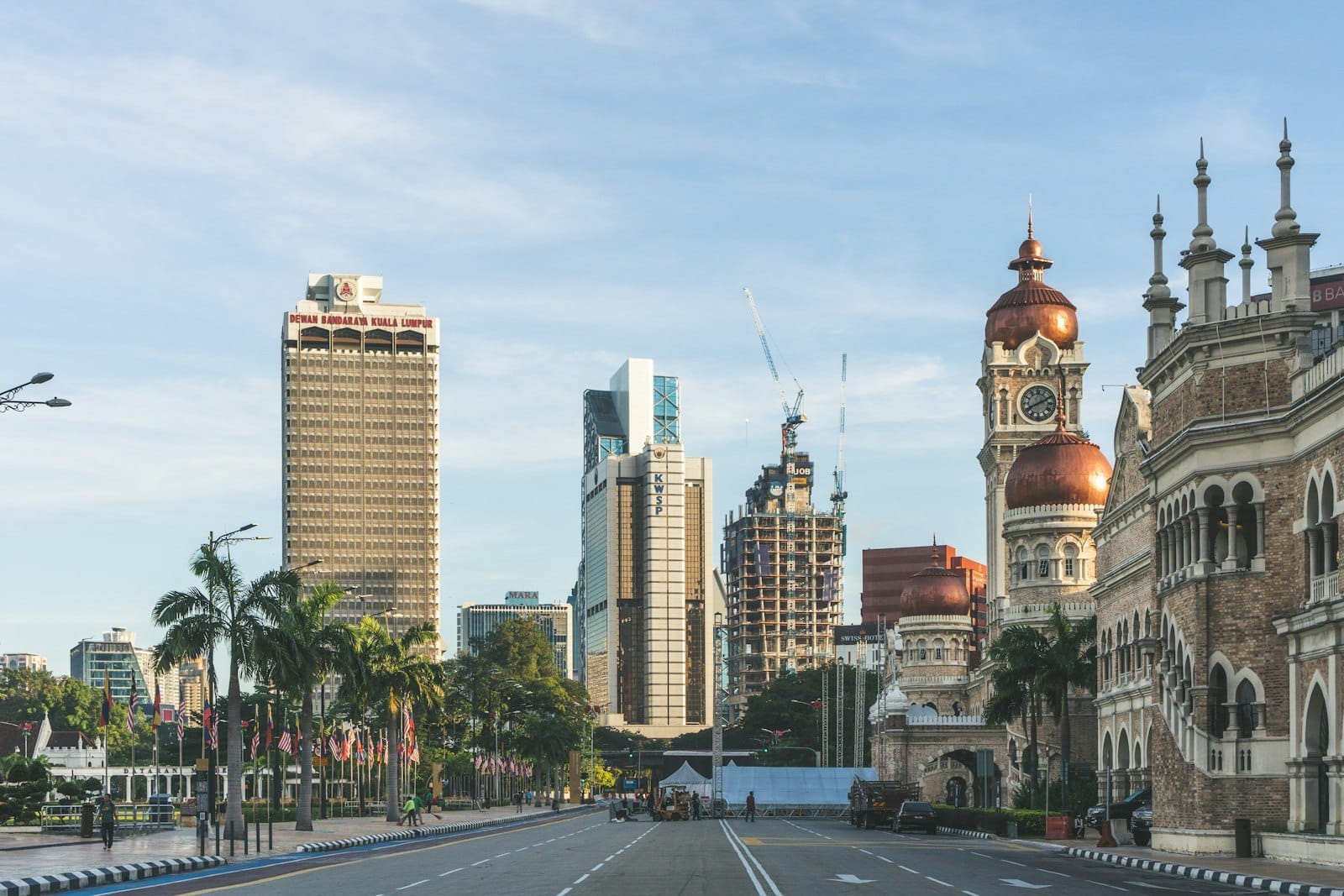
Getting your bearings is straightforward. Think of Dataran Merdeka as a long rectangular lawn running roughly north-south. The imposing terracotta-domed buildings to your east are the British-era government offices. The Masjid Jamek LRT station sits at the northern end of this axis. Walking south along Jalan Raja for about fifteen minutes, past the flag pole and the underground City Gallery, takes you toward the parliamentary precinct. This entire corridor connects directly to the broader things to do in Kuala Lumpur circuit that most visitors will follow.
Character & Atmosphere
Early morning is the best time to understand Merdeka. By seven o'clock, joggers are doing laps around the square's perimeter, the sky is pale gold over the Sultan Abdul Samad Building's copper domes, and street sweepers are clearing the footpaths before the heat arrives. There is a civic seriousness to this part of the city that does not exist in Bukit Bintang or Chinatown. The buildings are large, the spaces are formal, and the overall mood is one of deliberate national statement.
By mid-morning, school groups arrive in matching uniforms, tour buses park along Jalan Raja, and the square's perimeter fills with visitors photographing the 100-metre flag pole — reportedly the world's tallest freestanding flagpole — and the surrounding buildings. The heat by noon is intense and shade is limited on the open field, so the district's museums and covered heritage sites become welcome retreats. The underground KL City Gallery, built beneath the square itself, offers cool relief and a detailed scale model of the city.
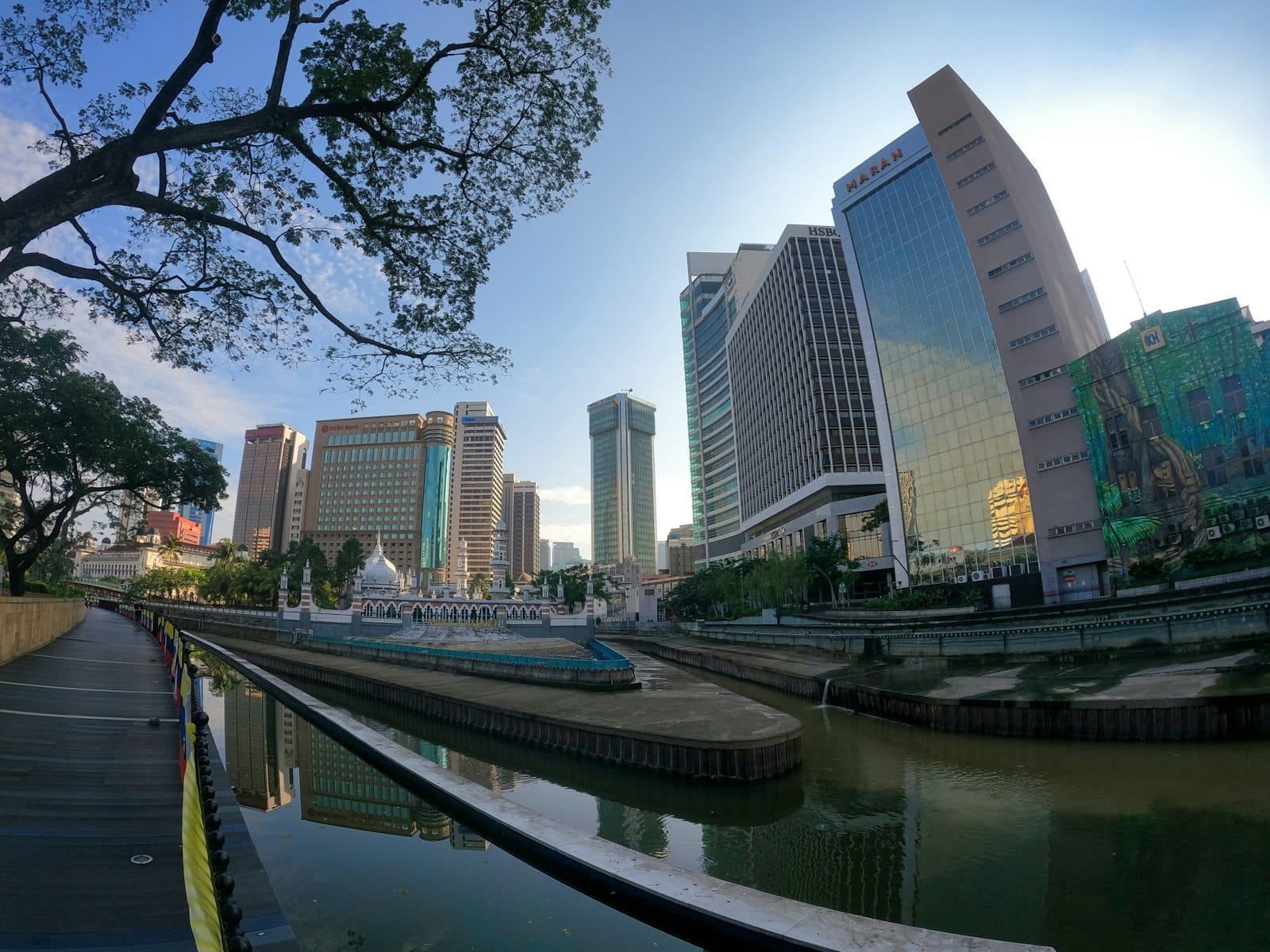
Late afternoon brings a different quality of light that photographers specifically seek out. The low sun catches the terracotta and white plasterwork of the Sultan Abdul Samad Building at a warm angle, and the Moorish-Gothic towers take on a depth they lack at midday. The River of Life waterfront project, which stretches along the Klang River from Masjid Jamek southward, is illuminated at dusk by coloured lights that reflect off the water and create an atmosphere far removed from the stern daylight formality of the square.
After dark, Dataran Merdeka itself is quiet and largely empty except during national events — Merdeka Day on 31 August draws enormous crowds for fireworks and parades. On ordinary evenings, the real activity shifts to the riverfront promenade and the surrounding streets. This is not a neighbourhood for bar-hopping; the draw after dark is the illuminated architecture and the chance to walk the colonial streetscape without the daytime crowds.
ℹ️ Good to know
Merdeka Day (31 August) and Malaysia Day (16 September) turn the square into a major public event space. Expect road closures and large crowds on these dates. The flag-raising ceremony at midnight on Merdeka Eve is a significant local occasion.
What to See & Do
The Sultan Abdul Samad Building is the neighbourhood's defining landmark: a 1897 British Raj building with Moorish arches, copper-topped domes, and a clock tower that has appeared on nearly every postcard of the city for over a century. It now houses the Court of Appeal and is not open for interior visits, but the exterior viewed from across the square is the primary draw. Walk around the building's flanks on Jalan Tuanku Abdul Halim to see the scale of the complex and the quieter courts buildings behind it.
The Merdeka Square itself is more than just a photo backdrop. The KL City Gallery beneath the square's northern end contains exhibits on the city's urban development and a large architectural model that helps visitors understand KL's spatial logic. Entry is free, and the gallery is particularly useful if you are early in your visit and trying to understand how the different districts relate to each other.
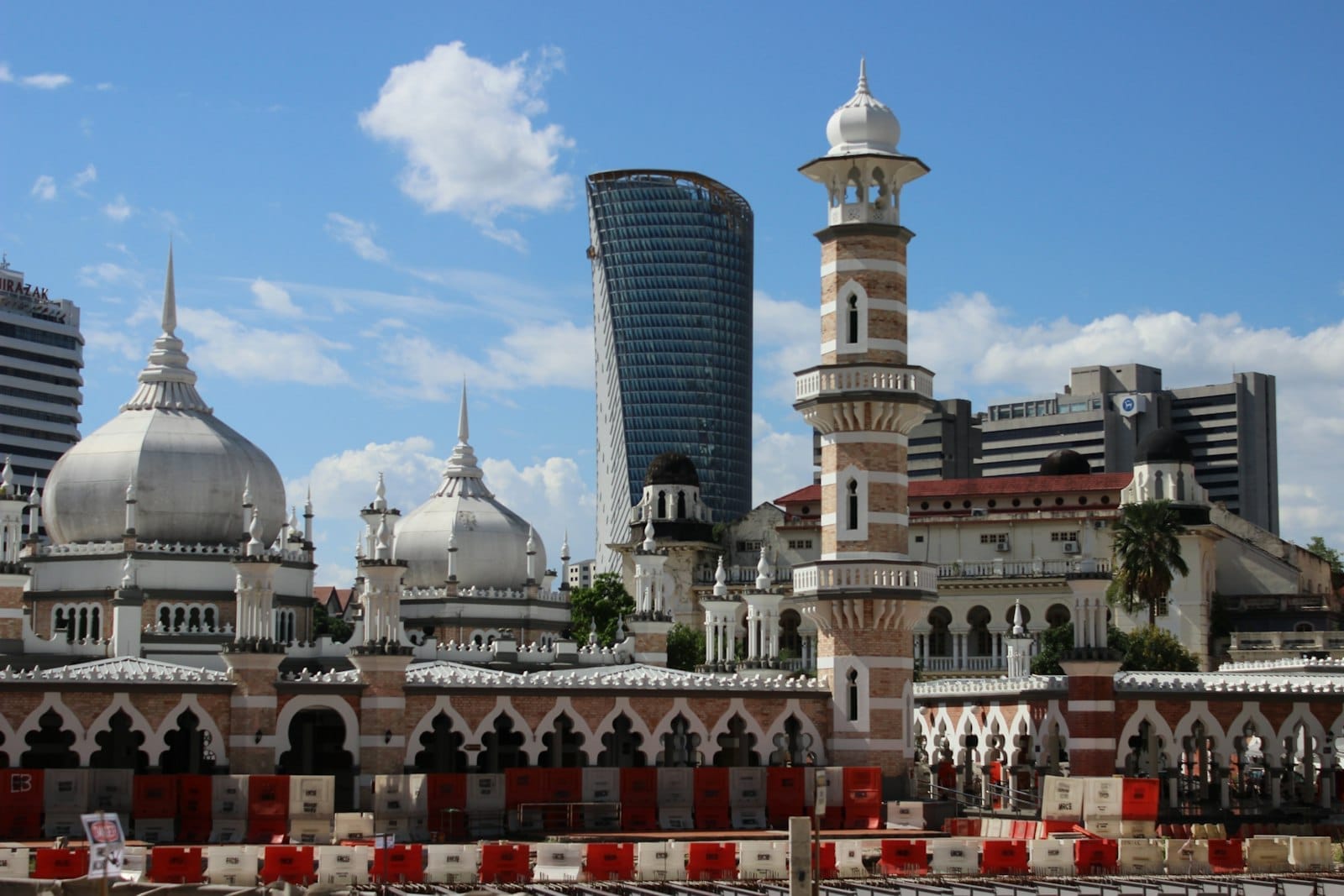
A short walk north brings you to Masjid Jamek, the oldest surviving mosque in Kuala Lumpur, completed in 1909 at the confluence of the two founding rivers. The mosque is open to non-Muslim visitors outside prayer times, with robes provided at the entrance. The setting alone — surrounded by river, framed by palms — makes it worth the detour, and the adjacent Masjid Jamek LRT station connects it efficiently to the rest of the city.
Walking south from the square along Jalan Raja for roughly 1.5 kilometres leads to Masjid Negara, Malaysia's national mosque, which accommodates up to 15,000 worshippers. The architecture is modernist, completed in 1965, and the contrast with Masjid Jamek's Mughal style illustrates how fast the country's self-image was changing in the decade after independence. Continue a few hundred metres further and you reach the Islamic Arts Museum Malaysia, one of Southeast Asia's finest specialist museums, housing textiles, manuscripts, jewellery, and a remarkable collection of architectural scale models of mosques from around the world.
The River of Life project stretches along the riverbanks linking Masjid Jamek with Chinatown and the broader historic core. The promenade is best walked in the late afternoon or early evening when the coloured light installations are active. The walk takes about twenty minutes end to end and connects the Merdeka precinct directly to the Chinatown / Petaling Street corridor — making it a natural route rather than a detour.
Sultan Abdul Samad Building: exterior photography, colonial architecture
Dataran Merdeka / KL City Gallery: free entry, city model, national history
Masjid Jamek: oldest mosque in KL, river confluence setting
Masjid Negara: national mosque, modernist architecture, open to visitors
Islamic Arts Museum Malaysia: world-class collection, excellent air conditioning
River of Life promenade: riverside walk connecting Merdeka to Chinatown
Merdeka 118: the world's tallest building, visible from the square
💡 Local tip
The Islamic Arts Museum charges a modest entry fee but is genuinely world-class and far less crowded than the Petronas Towers or KL Tower. Budget at least 90 minutes here if you have any interest in Islamic architecture or decorative arts.
Eating & Drinking
Merdeka Square itself is not a food neighbourhood in the way that Jalan Alor or Chow Kit are. The immediate surroundings are dominated by government buildings, embassies, and civic institutions, which means food options are thinner on the ground than in most KL districts. That said, eating here is far from impossible, and the area around Masjid Jamek has a concentration of Malay and Indian Muslim eateries that serve the local working population.
Along the riverfront promenade and in the streets between Masjid Jamek and the Central Market, you will find nasi kandar stalls, roti canai shops, and mamak (Indian Muslim) restaurants that are open from early morning through late at night. These are practical, inexpensive, and serve some of the most authentic food you will eat in the city centre. A full breakfast of roti canai, dhal, and teh tarik costs under 10 MYR per person.
For a more formal sit-down experience, the Central Market is a five-minute walk southeast and has a food court on its upper floor alongside the craft stalls and souvenir shops. The market building itself is a restored 1937 Art Deco structure and worth a look even if you are not eating. The surrounding Kasturi Walk is lined with hawker stalls that are busiest at lunch and in the early evening.
For coffee and a break from the heat, the older shophouse streets between Masjid Jamek and Chinatown have seen a number of heritage cafés open in recent years. These tend to occupy restored pre-war buildings with ceiling fans, marble-top tables, and menus that mix traditional kopi with lighter café fare. They are busier on weekends when local visitors come for the heritage architecture and slower pace.
Alcohol is not widely available in the immediate Merdeka precinct, given its proximity to major mosques and its largely Muslim clientele. The nearest reliable bar areas are in Chinatown, a ten-minute walk southeast, or in Bukit Bintang, a twenty-minute walk or one LRT stop to the south.
Getting There & Around
The Masjid Jamek station, served by both the Kelana Jaya (blue) and Ampang/Sri Petaling (green) LRT lines, is the main gateway to the Merdeka precinct. It sits directly at the northern end of Dataran Merdeka, less than two minutes' walk from the square. This is one of KL's original rail stations and connects to KL Sentral (eight minutes south) and to the KLCC corridor (change at Dang Wangi, four stops north). A second useful station is Pasar Seni, one stop south on the green line, which is the best option if you are arriving from the south or if your hotel is near the Central Market.
Walking is genuinely the best way to experience this district, provided you manage the heat. The entire corridor from Masjid Jamek to Masjid Negara is about two kilometres on flat ground. Wear comfortable shoes and carry water. The River of Life promenade is shaded in sections and provides a more pleasant surface-level alternative to the main roads. For a broader sense of how this area connects to the rest of KL, the getting around Kuala Lumpur guide covers the full rail network and bus options in detail.
Grab and Mycar ride-hailing services work reliably throughout the area but can be slow during peak hours due to the one-way road systems around the square. The KL Hop-On Hop-Off bus also stops at Dataran Merdeka, making it a useful connection if you are covering the city's main sightseeing circuit in a single day.
⚠️ What to skip
Road access around Merdeka Square is heavily restricted during national events and public holidays. If you are visiting by car or taxi around Merdeka Day (31 August) or Malaysia Day (16 September), allow significant extra time or use the LRT instead.
Where to Stay
Merdeka Square itself has very few hotels within its immediate boundaries. The district is primarily civic and institutional, and overnight accommodation options are limited compared to Bukit Bintang or KLCC. However, several established hotels are within a ten-to-fifteen minute walk, particularly along the Jalan Raja Chulan corridor and in the Central Market area.
Staying in or near the Merdeka district makes most sense for travellers with a specific interest in colonial heritage, KL history, or the Islamic arts precinct. It is a quiet area at night, which can be an advantage for light sleepers, but it means you will need to travel to find nightlife or an extensive restaurant scene. Those wanting a central base with easy access to the full city should consider whether where to stay in Kuala Lumpur might suggest a better-positioned alternative in Bukit Bintang or near KLCC.
Budget and mid-range options are more available in the adjacent Chinatown district, which is also more lively after dark. If you are prioritising access to the Merdeka sights specifically, a hotel in Chinatown along Jalan Petaling or Jalan Hang Kasturi puts you within a ten-minute walk of the square while giving you the food and atmosphere options that the Merdeka precinct itself lacks in the evenings.
Honest Assessment: Who This Neighbourhood Is For
Merdeka Square rewards visitors who are curious about history and architecture. The built environment here is genuinely impressive — the Sultan Abdul Samad Building is one of the most striking colonial structures in Southeast Asia, and the concentration of significant civic buildings within walking distance is exceptional. If you understand the events of 31 August 1957 and want to stand in the place where Malaysian independence was proclaimed, the square carries real weight.
If you are primarily interested in shopping, nightlife, or street food markets, this is not your base. The area can feel formal and under-activated compared to the energy of Bukit Bintang or the sensory intensity of Chow Kit. The Merdeka precinct is best experienced as a half-day excursion combined with the River of Life walk and onward into Chinatown, rather than as a multi-day residential base.
One development worth noting: the completed Merdeka 118 tower, the world's second-tallest building, now dominates the southern skyline from the square. Its observation deck and mixed-use development are drawing a new generation of visitors to the broader precinct, which may shift the area's energy in coming years.
TL;DR
Best for: history enthusiasts, architecture lovers, first-time visitors building context for KL's colonial and Islamic heritage
Key landmarks: Sultan Abdul Samad Building, Dataran Merdeka, Masjid Jamek, Masjid Negara, Islamic Arts Museum Malaysia, Merdeka 118
Transit: Masjid Jamek LRT station (Kelana Jaya and Ampang lines) places the square within easy reach of the entire city
Drawbacks: limited food and nightlife options in the precinct itself, intense midday heat with little shade on the main square
Best approach: half-day visit combined with a River of Life walk south into Chinatown; not an ideal standalone base for most travellers
Kuala Lumpur sits just 3 degrees north of the equator, which means heat and rain are constants year-round. But timing still matters — for festivals, crowds, hotel prices, and how much you'll be caught in a downpour. This guide breaks down every season honestly so you can plan smarter.
Genting Highlands sits around 1,800 metres above sea level, about 58 km from Kuala Lumpur. This guide covers every transport option, what the resort complex actually offers, how long you need, and the honest trade-offs so you can decide if this trip suits your itinerary.
Kuala Lumpur has one of Southeast Asia's most developed urban transport networks, yet first-time visitors frequently end up confused, overcharged, or stranded. This guide breaks down every practical option for getting around KL, from rail passes to rideshare apps, with honest assessments of what works and what to avoid.
Kuala Lumpur is one of Southeast Asia's great shopping cities, with malls ranging from ultra-luxury flagships to bargain-packed street-level arcades. This guide breaks down the best shopping malls by area, what each does well, and exactly how to make the most of your time and money.
Kuala Lumpur packs an extraordinary range of experiences into a single city: world-famous landmarks, serious street food, dense rainforest parks, and some of Southeast Asia's best shopping. This guide breaks it all down by category so you can build a trip that actually fits your pace.
Choosing where to stay in Kuala Lumpur shapes your entire trip. This guide breaks down the city's key neighbourhoods by location, vibe, price range, and transport links so you can book with confidence.