Islamic Arts Museum Malaysia: A World-Class Collection Worth the Detour
The Islamic Arts Museum Malaysia holds one of the largest collections of Islamic art and artifacts in Southeast Asia, spread across two levels of galleries beneath ornate Ottoman-inspired domes. Located near the Lake Gardens in Kuala Lumpur, it rewards visitors with genuine depth — from intricate Quranic manuscripts to architectural scale models of the world's great mosques.
Quick Facts
- Location
- Jalan Lembah Perdana, Lake Gardens, Kuala Lumpur
- Getting There
- KTM Kuala Lumpur station or Rapid KL Bus to Jalan Parlimen; short taxi or Grab ride from Masjid Jamek LRT
- Time Needed
- 2 to 3 hours for a thorough visit; 90 minutes if selective
- Cost
- Adults RM 14; Children RM 7 (approximate — confirm on official site before visiting)
- Best for
- History enthusiasts, architecture lovers, families seeking air-conditioned culture, and anyone wanting to understand Islamic art beyond the stereotypes
- Official website
- www.iamm.org.my
Why This Museum Stands Apart
The Islamic Arts Museum Malaysia is the kind of institution that surprises visitors who arrive with low expectations. Many people wander in between the nearby Masjid Negara and Perdana Botanical Gardens, expecting a modest regional collection. What they find instead is a seriously curated, architecturally striking museum with more than 10,000 artifacts spanning 1,400 years of Islamic civilization across the Middle East, Central Asia, South and Southeast Asia, and China.
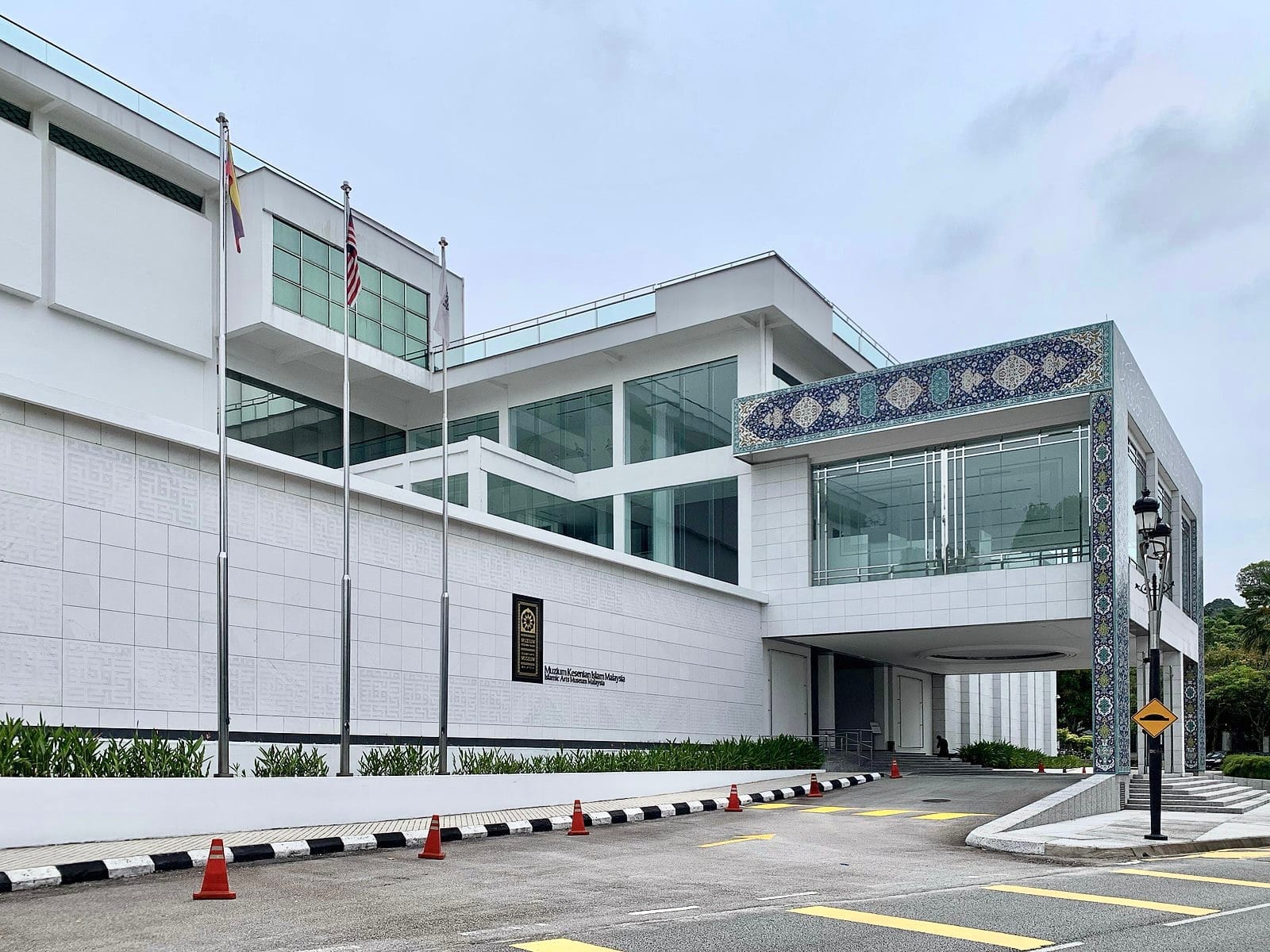
The building itself sets the tone. Designed with Ottoman-inspired domes tiled in deep cobalt blue, the exterior is photogenic enough to justify a visit on its own. But the interior is where the real work is done: vaulted ceilings decorated with intricate geometric patterns, cool marble corridors, and galleries arranged so the collection flows logically from one cultural sphere to another.
Unlike many museums in the region, this one does not feel like a warehouse for donations. The curation is deliberate. Each section connects material culture to the broader history of Islamic civilization, which makes it genuinely educational without being dry. If you are planning time in the Lake Gardens area, this museum should be your first stop, before your legs tire from the gardens.
💡 Local tip
Arrive early when the museum opens to have the galleries largely to yourself. School groups tend to arrive mid-morning and can fill the ground floor quickly. The upper floors stay quieter throughout the day.
What You Will Actually See Inside
The museum is organized across multiple floors and gallery wings, each focused on a distinct tradition or medium. The Architecture Gallery on the lower level is arguably the most impressive single room: it contains large-scale architectural models of famous mosques including the Masjid al-Haram in Mecca, the Prophet's Mosque in Medina, and the Dome of the Rock in Jerusalem. The models are detailed enough to hold attention for twenty minutes on their own, and the explanatory panels are unusually informative.
The Quran and Manuscript Gallery houses illuminated Qurans from Persia, Turkey, and the Malay world, some dating back several centuries. The calligraphy work here rewards slow looking: the scripts shift from the angular Kufic style of early Islam to the flowing Naskh and Thuluth scripts developed over subsequent centuries. Low lighting protects the manuscripts, which gives the gallery a contemplative, almost chapel-like atmosphere.
Other highlights include the Arms and Armour Gallery, where ornate swords, daggers, and shields reveal how craft and warfare intersected in Islamic courts; the Jewellery Gallery with pieces from the Ottoman, Mughal, and Malay traditions; and the Textiles section, which displays embroidered fabrics whose geometric precision mirrors the architectural ornament elsewhere in the building.
The China Gallery is easy to overlook but should not be. It documents the substantial tradition of Islamic art produced by Muslim communities in China, including blue-and-white porcelain with Arabic inscriptions and prayer mats woven in Chinese silk. It is a useful corrective to the assumption that Islamic art is a single, monolithic tradition.
Tickets & tours
Hand-picked options from our booking partner. Prices are indicative; availability and final rates are confirmed when you complete your booking.
Petronas Twin Towers and Kuala Lumpur Tower observation deck tickets
From 34 €Private Taman Negara day trip from Kuala Lumpur with lunch
From 85 €Instant confirmationFree cancellationKuala Lumpur city and Batu Caves tour
From 41 €Instant confirmationFree cancellationKuala Lumpur city exploration private half-day tour
From 42 €Instant confirmationFree cancellation
How the Experience Changes by Time of Day
Morning visits, particularly on weekdays, offer the most comfortable experience. The air conditioning is a genuine relief if you have been walking outside in the midday heat, and the galleries feel spacious when not crowded. The light through the domed skylights in the central atrium is soft in the morning, which makes the blue-tiled dome ceiling glow without harsh glare.
By early afternoon, tour groups and school visits can create bottlenecks in the Architecture Gallery and the Quran section. If you arrive around noon, head to the upper floors first and work your way down, reversing the standard flow. The top-floor galleries covering Indian and Southeast Asian Islamic art are quieter and often overlooked.
The museum's on-site restaurant, located in a domed room with tiled interiors, is worth considering for a late lunch even if you are not hungry enough for a full meal. The space itself is one of the more architecturally pleasing dining rooms in Kuala Lumpur's museum circuit.
ℹ️ Good to know
The museum is closed on certain public holidays. Check the official website at iamm.org.my before visiting, especially during Hari Raya Aidilfitri and other major Islamic holidays when hours may differ.
Historical and Cultural Context
The Islamic Arts Museum Malaysia opened in 1998, making it relatively young by museum standards. It was developed partly to position Malaysia as a significant voice in Islamic culture and scholarship, reflecting the country's ambition during the Mahathir era to assert a modern, cosmopolitan Islamic identity. The collection was built through acquisitions, commissions, and gifts from governments and private collectors across the Muslim world.
One of the museum's ongoing strengths is its coverage of Southeast Asian Islamic art, which tends to be underrepresented in collections based in the Middle East or Europe. Malay woodcarving, Javanese batik with Islamic motifs, and Philippine Muslim brass-casting all have space here, which gives the collection a geographic balance that more established institutions often lack.
The museum sits in a part of Kuala Lumpur with high symbolic weight. Within walking distance are Masjid Negara, Malaysia's national mosque, and the National Museum of Malaysia. Together, these three institutions form a loose civic corridor that documents Malaysian national identity through religion, history, and art.
Getting There and Getting Around Inside
The museum is not directly served by an LRT or MRT station. The most straightforward approach is to take the LRT to Masjid Jamek station, then take a Grab to the museum (typically five to ten minutes). Alternatively, if you are coming from the Merdeka Square area, the River of Life walking route passes close enough that a short detour is practical.
Those combining the visit with the Perdana Botanical Gardens or the KL Bird Park can walk between these attractions in ten to fifteen minutes on mostly flat paths. Wear comfortable shoes — the pavement between attractions is uneven in places and exposed to the sun.
Inside the museum, the layout is intuitive. Floor maps are available at the entrance desk and the signage is bilingual in Malay and English throughout. Elevators serve all floors, making the museum reasonably accessible for visitors using wheelchairs or strollers, though some older gallery sections have minor level changes.
💡 Local tip
Photography is permitted in most galleries without flash. The blue-tiled dome in the central atrium and the architectural models make for the most striking shots. Bring a wide-angle lens or use your phone's ultra-wide mode to capture the scale of the interior domes.
Honest Assessment: Who Will Love This and Who Will Not
For visitors with even a passing interest in history, design, or world religions, this museum delivers far more than its modest entrance fee suggests. The collection is genuinely significant, the building is beautiful, and two to three hours here leaves you with a much more textured understanding of Islamic civilization than most general travel itineraries provide.
However, visitors looking for interactive experiences or child-friendly activity stations may find the museum too text-heavy and static. Young children under ten will likely lose interest after the Architecture Gallery models unless they have a particular curiosity for objects behind glass. The museum is quiet and contemplative by design, which is its strength for the right visitor and a limitation for the wrong one.
If you are building a broader Kuala Lumpur itinerary and weighing your options, the Islamic Arts Museum pairs logically with Masjid Negara and the Lake Gardens in a single half-day. Add the National Museum and you have a full day of museum-going without needing to cross the city. For a broader look at things to do in Kuala Lumpur, this fits into a culture-first itinerary better than a nightlife or shopping-focused one.
Insider Tips
- The museum shop near the exit stocks genuinely good reproductions of geometric tilework, miniature paintings, and Arabic calligraphy prints at prices far below what you would pay in specialty art shops. It is one of the better souvenir options in the city.
- The restaurant inside the museum is in a domed room that is architecturally stunning and rarely photographed. Even if you only order tea, it is worth stepping in to see the interior.
- Skip the audio guide rental if you are short on time. The wall text in the galleries is detailed enough that a self-guided visit works well, especially in the Architecture and Quran galleries.
- If you visit on a Friday, check whether any of the galleries are reduced-access during Friday prayers. Staff typically manage this smoothly, but it can affect the flow of your visit around midday.
- Combine your visit with an early walk through the Perdana Botanical Gardens before the heat peaks. The museum's air conditioning then feels like a deliberate reward.
Who Is Islamic Arts Museum Malaysia For?
- History and culture travelers who want to understand Islamic civilization beyond headline monuments
- Architecture enthusiasts drawn to the Ottoman-influenced building and its detailed interior ornament
- Travelers seeking genuine air-conditioned respite with substance during the midday heat
- Couples or solo travelers who prefer quiet, contemplative museum environments
- Anyone combining a half-day in the Lake Gardens area with Masjid Negara and the Perdana Botanical Gardens
Nearby Attractions
Other things to see while in Lake Gardens:
- KL Bird Park
Spread across 20.9 acres in the Lake Gardens, KL Bird Park is home to more than 3,000 birds from over 200 species, most of them flying freely beneath a vast netted canopy. It rewards early visitors with active feeding, close encounters, and relative quiet before midday crowds arrive.
- KL Butterfly Park
The KL Butterfly Park in Lake Gardens is one of the largest enclosed butterfly parks in the world, housing over 5,000 butterflies from 120-plus species in a lush, landscaped garden. It is a rare urban space where nature takes over completely, and the experience shifts noticeably depending on the time of day you arrive.
- Masjid Negara
Masjid Negara, Malaysia's National Mosque, is one of Southeast Asia's most significant examples of modernist Islamic architecture. Open to non-Muslim visitors outside of prayer times, it offers a rare opportunity to step inside a working place of worship and understand the role of Islam in Malaysian public life.
- National Museum Malaysia
The National Museum Malaysia (Muzium Negara) is the country's foremost public history museum, tracing Malaysia's civilizations, colonial era, and path to independence. Housed in a landmark 1963 building near the Lake Gardens, it offers four permanent galleries that cover everything from early kingdoms to modern nationhood.