Perdana Botanical Gardens: Kuala Lumpur's Greenest Escape
Perdana Botanical Gardens is Kuala Lumpur's oldest and largest urban park, spreading across 91.6 hectares of landscaped grounds in the Lake Gardens district. It's where city residents come to breathe, and where travelers discover a quieter side of KL that the skyscraper postcards never show.
Quick Facts
- Location
- Jalan Kebun Bunga, Lake Gardens, Kuala Lumpur
- Getting There
- KTM Komuter – Kuala Lumpur station, then taxi or Grab (10–15 min); or Bus RapidKL T789
- Time Needed
- 2–4 hours for the gardens alone; full day if visiting all sub-attractions
- Cost
- Free to enter the main park and all sub-attractions; however, the Bird Park, Butterfly Park, and Deer Park operate independently with their own admission fees
- Best for
- Morning walkers, families, nature photographers, and anyone needing a break from KL's heat and noise
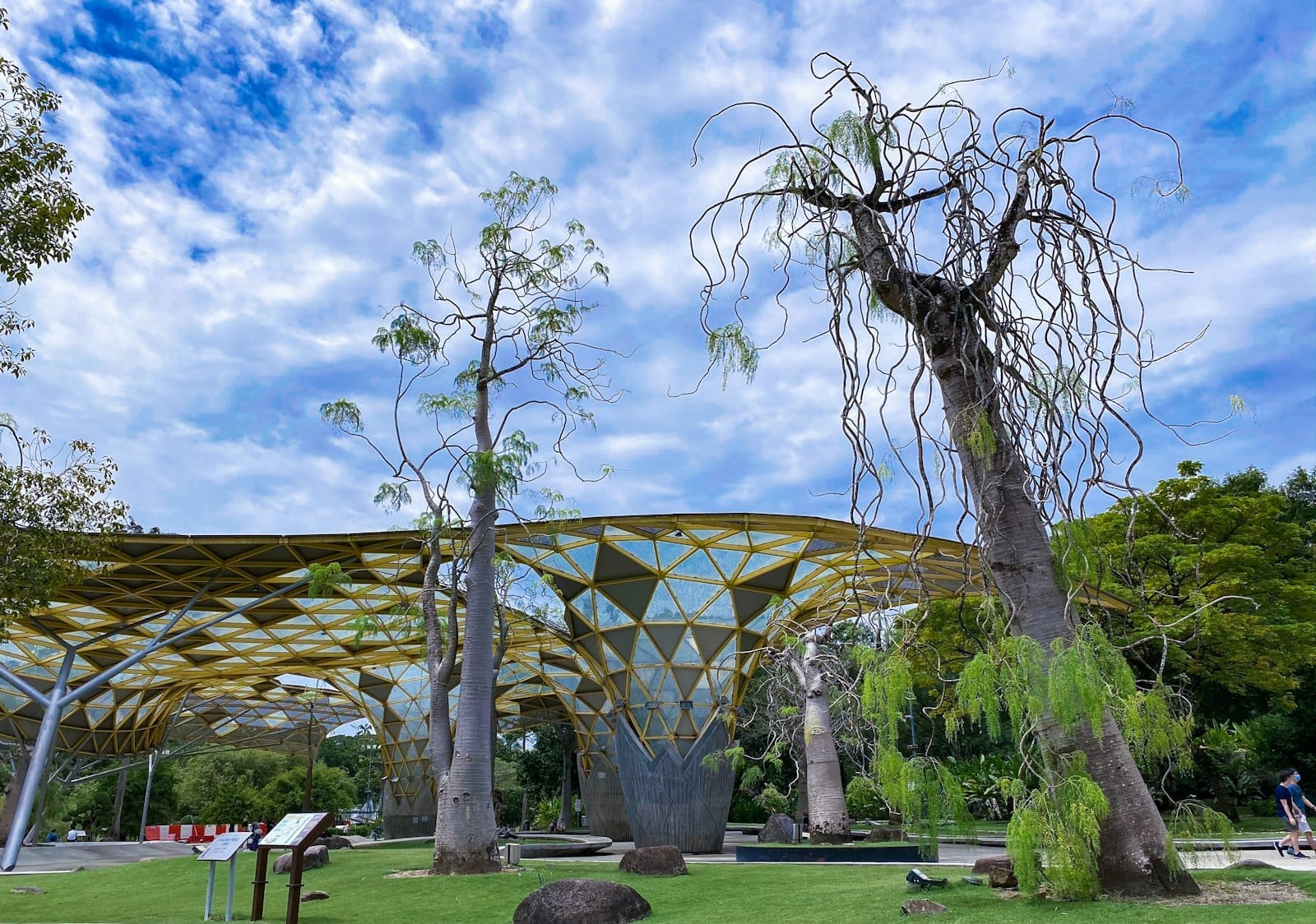
What Perdana Botanical Gardens Actually Is
Perdana Botanical Gardens, also known as the Taman Botani Perdana or simply the Lake Gardens, is a 91-hectare green corridor that has anchored Kuala Lumpur's civic identity since the British colonial era. Established in 1888 by Charles Cowie, a government officer who wanted to introduce recreational parkland to the capital, it remains the city's oldest and most expansive public garden. The park sits on undulating terrain above the KL city center, which gives it a slightly cooler microclimate than the streets below, and its canopy of mature rain trees, flame of the forest, and angsana provides the kind of shade that genuinely lowers the temperature by several degrees.
The gardens are not a single attraction but a loose collection of green spaces, themed gardens, lakes, and ticketed sub-attractions linked by pedestrian paths and a small hop-on, hop-off tram. The Perdana Lake (Tasik Perdana) is the central feature: a calm reservoir fringed with water lilies and feeding ground for egrets and kingfishers at dusk. Surrounding it are a hibiscus garden showcasing Malaysia's national flower in dozens of cultivars, an orchid garden with rare species under misting structures, a fern garden, a bamboo grove, and an open lawn area used for early morning tai chi and weekend family picnics.
💡 Local tip
Arrive before 8:30 AM if you want the gardens at their best (note: the park opens at 7:00 AM). The morning light through the tree canopy is exceptional, the air is cooler, and you'll share the paths mainly with joggers and bird-watchers rather than tour groups.
Moving Through the Park: A Practical Walkthrough
Most visitors enter from the main gate off Jalan Kebun Bunga, which deposits you near the Perdana Lake. From here, the path loops around the lake in about 25 minutes at a relaxed pace. The lakeside walkway is mostly flat and paved, making it the most accessible part of the park. Further inland, the terrain becomes hillier; the paths connecting to the Bird Park and the Hibiscus Garden involve steady inclines, so comfortable footwear matters more than most people expect.
The KL Bird Park occupies the northern edge of the grounds and operates under a separate admission fee. It is one of the largest free-flight aviaries in the world, covering 20.9 acres under a towering mesh canopy, and warrants at least two hours on its own. The KL Butterfly Park, smaller but meticulously maintained, sits near the southern perimeter and houses over 120 species of Malaysian butterfly. If you are traveling with children, both are high-value additions that transform a park visit into a full day out.
For a gentler experience, the KL Butterfly Park is walkable from the main lake path and takes about 45 minutes to explore properly. The park's staff feed the butterflies at specific times, which concentrates the activity and makes for much better photography. Ask at the entrance for the feeding schedule on the day you visit.
⚠️ What to skip
The park's internal tram service has had inconsistent operating hours. Do not plan your visit around it — walking remains the most reliable way to navigate the grounds, though the distances can be deceptive on a hot afternoon.
Tickets & tours
Hand-picked options from our booking partner. Prices are indicative; availability and final rates are confirmed when you complete your booking.
KL bird park, butterfly park and garden tour
From 59 €Instant confirmationFree cancellationPetronas Twin Towers and Kuala Lumpur Tower observation deck tickets
From 34 €Private Taman Negara day trip from Kuala Lumpur with lunch
From 85 €Instant confirmationFree cancellationKuala Lumpur city and Batu Caves tour
From 41 €Instant confirmationFree cancellation
How the Experience Changes Through the Day
The gardens operate 24 hours and are freely accessible at all times, but the experience shifts dramatically depending on when you arrive. Before 9 AM, the park belongs to locals: retirees doing laps around the lake, office workers cutting through on morning runs, and serious bird-watchers with long lenses stationed near the water's edge. The mist from overnight humidity still clings to the lower sections, and the sound environment is dominated by bird calls rather than traffic.
Between 10 AM and 2 PM, heat becomes the dominant factor. The open lawn areas near the picnic zones can feel punishing, and the orchid garden's misting systems suddenly feel less like decoration and more like survival infrastructure. This is the window most tour groups pass through, particularly on weekends, which means the Bird Park entrance and the hibiscus garden can get crowded. If you are visiting mid-morning, aim for the tree-covered lake path rather than open sections, and carry water.
Late afternoon, roughly from 4 PM onward, is a strong second choice for a visit. The light softens, the temperature drops noticeably, and local families begin arriving for evening walks. The lake attracts wading birds as the day cools. By 6 PM, the park has a genuinely relaxed character: couples on benches, children chasing pigeons across the lawns, and the occasional monitor lizard making its unhurried way toward the water's edge.
Ecology, Wildlife, and What You Might Spot
The gardens function as a genuine urban wildlife corridor in a city not known for making concessions to nature. The tree canopy supports a surprising range of birds including the white-throated kingfisher, the olive-backed sunbird, and several species of bulbul that are easy to identify even for casual observers. Long-tailed macaques are common throughout the park and are habituated to humans, which makes them entertaining to watch and problematic if you leave food unattended.
⚠️ What to skip
Do not feed the macaques. They can be aggressive toward children and will target open bags. Keep snacks sealed and avoid direct eye contact if they approach.
Monitor lizards (biawak) are a regular sighting near the lake banks, sometimes reaching two meters in length. They are harmless unless cornered and tend to ignore visitors entirely. Rare sightings of smooth-coated otters have been reported in the lake in recent years, though these are not guaranteed. The fern garden section supports a quieter ecosystem and is worth fifteen minutes even if you are not particularly interested in botany: the scale and variety of fern species gathered in one place is genuinely unusual.
The Wider Lake Gardens District
The botanical gardens sit at the heart of a broader green precinct that includes the KL Bird Park, the Islamic Arts Museum Malaysia, and the National Museum of Malaysia, all within comfortable walking distance or a short Grab ride. Spending a full day in the Lake Gardens district is one of the more rewarding ways to understand the city beyond its commercial corridors.
To the south, the Masjid Negara (National Mosque) is a ten-minute walk downhill from the main gate, and its architecture offers an interesting counterpoint to the organic landscape of the gardens. The mosque is open to non-Muslim visitors outside prayer times and provides a useful orientation point if you're navigating the area on foot.
The Lake Gardens area is covered in more detail in the Lake Gardens neighborhood guide, which maps out how to link these attractions into a coherent half-day or full-day itinerary without doubling back unnecessarily.
Practical Details and Getting There
The main park grounds are free and open around the clock. Individual ticketed attractions within the complex — including the Bird Park, Butterfly Park, and Deer Park — each have their own admission fees and operating hours, typically running from 9 AM to 5 PM or 6 PM. Confirm these on the day you visit, as hours can vary on public holidays.
The most reliable way to reach the gardens is by Grab from central KL, which takes 10 to 15 minutes from KLCC or Bukit Bintang and costs a modest fare. Public bus RapidKL T789 connects the area to KL Sentral. There is paid parking on-site, which fills quickly on weekend mornings. The park is not easily walkable from the nearest LRT or MRT stations, so most independent travelers find Grab the most practical option.
Accessibility is uneven. The lakeside path is paved and manageable for wheelchairs and strollers, but the hillier sections connecting the themed gardens are not. Restrooms are located near the main entrance, the picnic area, and within the ticketed sub-attractions. The facilities are functional but not particularly well-maintained in the outer areas of the park.
💡 Local tip
Wear light, breathable clothing and bring sunscreen even if you plan to walk only the shaded lake path. The open sections catch more sun than the tree canopy suggests, and the humidity amplifies any direct exposure significantly.
Is It Worth Your Time?
For travelers on short itineraries focused on food and shopping, Perdana Botanical Gardens will feel like a diversion rather than a destination. The park is not manicured to the standard of Singapore's Botanic Gardens, and without the ticketed sub-attractions, the main grounds can feel underwhelming in the middle of the day. The infrastructure, including signage, seating, and food options, is patchy at best.
But for travelers who want to understand how a city breathes, or who are spending more than two or three days in KL, the gardens provide something the skyscrapers and night markets cannot: genuine quiet, canopy shade, and an encounter with a slower, older version of the city. Combining a morning visit to the gardens with a stop at the Islamic Arts Museum nearby creates one of the most culturally and physically satisfying half-days the city offers.
Insider Tips
- The orchid garden is most photogenic in the late morning when the misting systems are running and the light diffuses through the moisture. Get there by 10 AM before the crowds arrive.
- If you spot a monitor lizard near the lake, hold still and watch rather than approaching. They often pause on the path or bank for several minutes, giving you extended observation time.
- The small café near the main entrance sells basic Malaysian snacks and drinks at reasonable prices. There are very few food options inside the park itself, so eat before you arrive or stock up here.
- The park's tram may or may not be operating on a given day. If the Bird Park is your priority, walk directly there on arrival rather than waiting for the tram, which can waste 20–30 minutes.
- Early Saturday mornings, local photography clubs sometimes set up near the lake for bird photography sessions. Tagging along at a respectful distance can point you toward the best bird-watching spots without any prior knowledge.
Who Is Perdana Botanical Gardens For?
- Nature and bird-watchers who want to spot urban wildlife in a relaxed, unhurried setting
- Families with young children combining the gardens with the Bird Park or Butterfly Park for a full day out
- Travelers on longer KL stays who want to balance the city's commercial intensity with green space
- Early risers who want to experience KL before the heat builds and the crowds gather
- Anyone building a cultural half-day by pairing the gardens with the Islamic Arts Museum or National Museum
Nearby Attractions
Other things to see while in Lake Gardens:
- Islamic Arts Museum Malaysia
The Islamic Arts Museum Malaysia holds one of the largest collections of Islamic art and artifacts in Southeast Asia, spread across two levels of galleries beneath ornate Ottoman-inspired domes. Located near the Lake Gardens in Kuala Lumpur, it rewards visitors with genuine depth — from intricate Quranic manuscripts to architectural scale models of the world's great mosques.
- KL Bird Park
Spread across 20.9 acres in the Lake Gardens, KL Bird Park is home to more than 3,000 birds from over 200 species, most of them flying freely beneath a vast netted canopy. It rewards early visitors with active feeding, close encounters, and relative quiet before midday crowds arrive.
- KL Butterfly Park
The KL Butterfly Park in Lake Gardens is one of the largest enclosed butterfly parks in the world, housing over 5,000 butterflies from 120-plus species in a lush, landscaped garden. It is a rare urban space where nature takes over completely, and the experience shifts noticeably depending on the time of day you arrive.
- Masjid Negara
Masjid Negara, Malaysia's National Mosque, is one of Southeast Asia's most significant examples of modernist Islamic architecture. Open to non-Muslim visitors outside of prayer times, it offers a rare opportunity to step inside a working place of worship and understand the role of Islam in Malaysian public life.