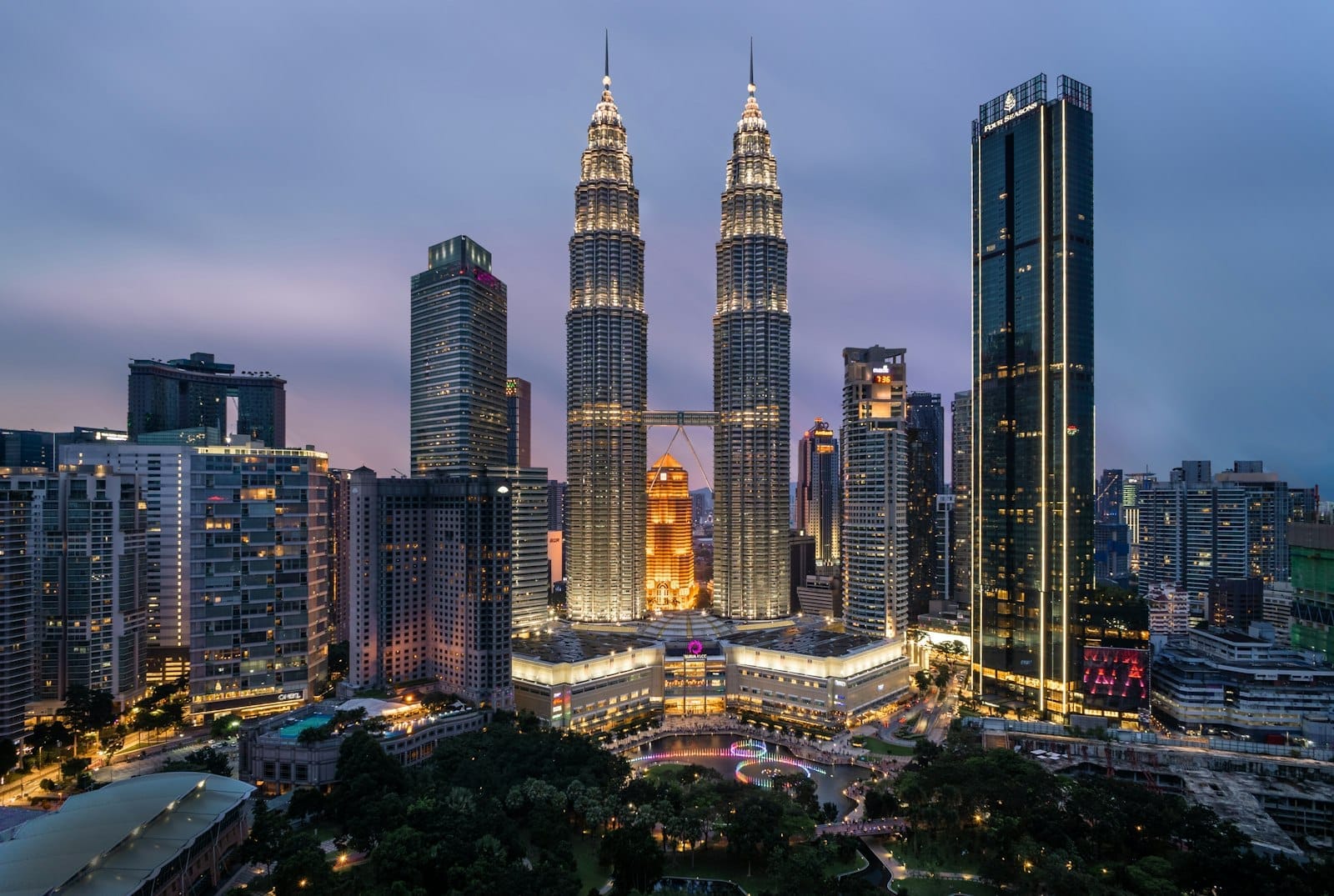
KLCC is the commercial and symbolic heart of modern Kuala Lumpur, built around the Petronas Twin Towers and anchored by upscale malls, international hotels, and a well-loved urban park. It's the district that first-time visitors picture when they think of KL, and it largely delivers on that expectation.
KLCC is where Kuala Lumpur puts its best face forward: gleaming towers, manicured green space, and one of Southeast Asia's most recognizable skylines. It's a district built for impressions, and while it skews toward the international and upscale, it rewards those who look past the obvious with genuine city life on its edges.
Orientation
KLCC stands for Kuala Lumpur City Centre, a name that started as the branding for the Petronas Twin Towers development in the 1990s and gradually became the informal name for the surrounding district. Geographically, it occupies a roughly oval zone northeast of the historic core, separated from the old city by the Klang and Gombak rivers and from Bukit Bintang by Jalan P. Ramlee and Jalan Binjai.
The district's spine runs along Jalan Ampang, one of KL's oldest thoroughfares, which heads northeast toward the embassy belt and affluent suburbs like Ampang Hilir. To the south and southwest, KLCC bleeds into the upmarket residential and dining strip around Jalan Stonor and Jalan Sultan Ismail, where luxury hotels cluster. The northern boundary is less defined, fading into the commercial corridor of Jalan Ampang and Jalan Tun Razak.
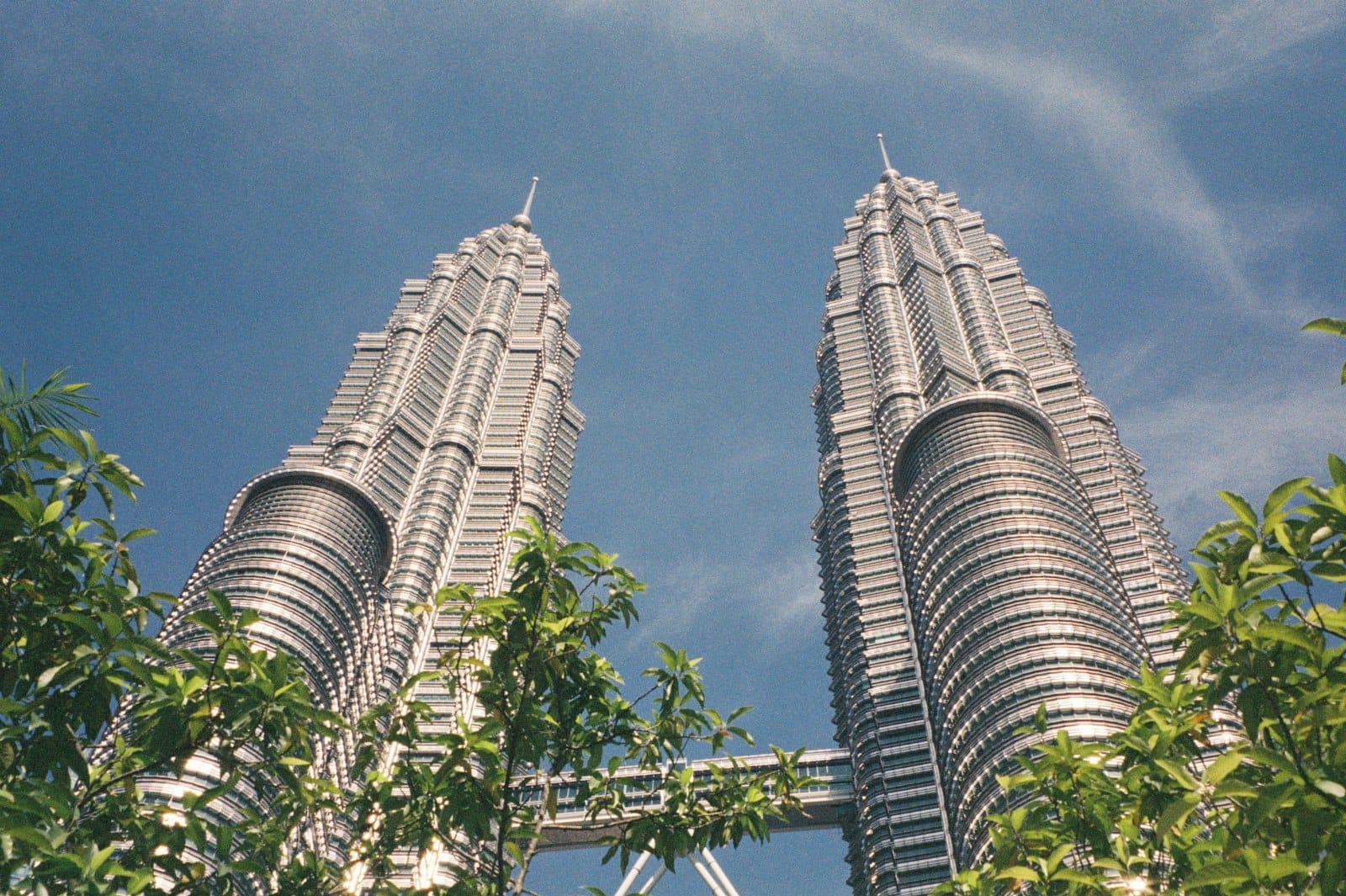
The anchor point of any mental map here is the Petronas Twin Towers, which are visible from much of the city and serve as an infallible compass. KLCC is roughly 3 km northeast of Merdeka Square and about 1.5 km north of Bukit Bintang, making it walkable between the two with effort, though the heat and traffic make transit a smarter choice most of the time.
Character & Atmosphere
KLCC is a district of deliberate grandeur. The streets around the towers are wide, the architecture is corporate and polished, and the dominant soundtrack during the day is the hum of air conditioning units and the rumble of construction somewhere in the distance. It doesn't have the organic chaos of Chinatown or the sensory overload of Chow Kit. What it has is ambition made physical.
Mornings around KLCC Park are genuinely pleasant. By 7am, joggers circle the 1.6-kilometre perimeter path, office workers cut through with coffee in hand, and the towers catch the early light in a way that justifies every photograph ever taken of them. The light is soft and directional at that hour, before the humidity starts to assert itself. Street-level on Jalan Ampang, hawker stalls near the bus stops do quick business with breakfast crowds heading into the towers.
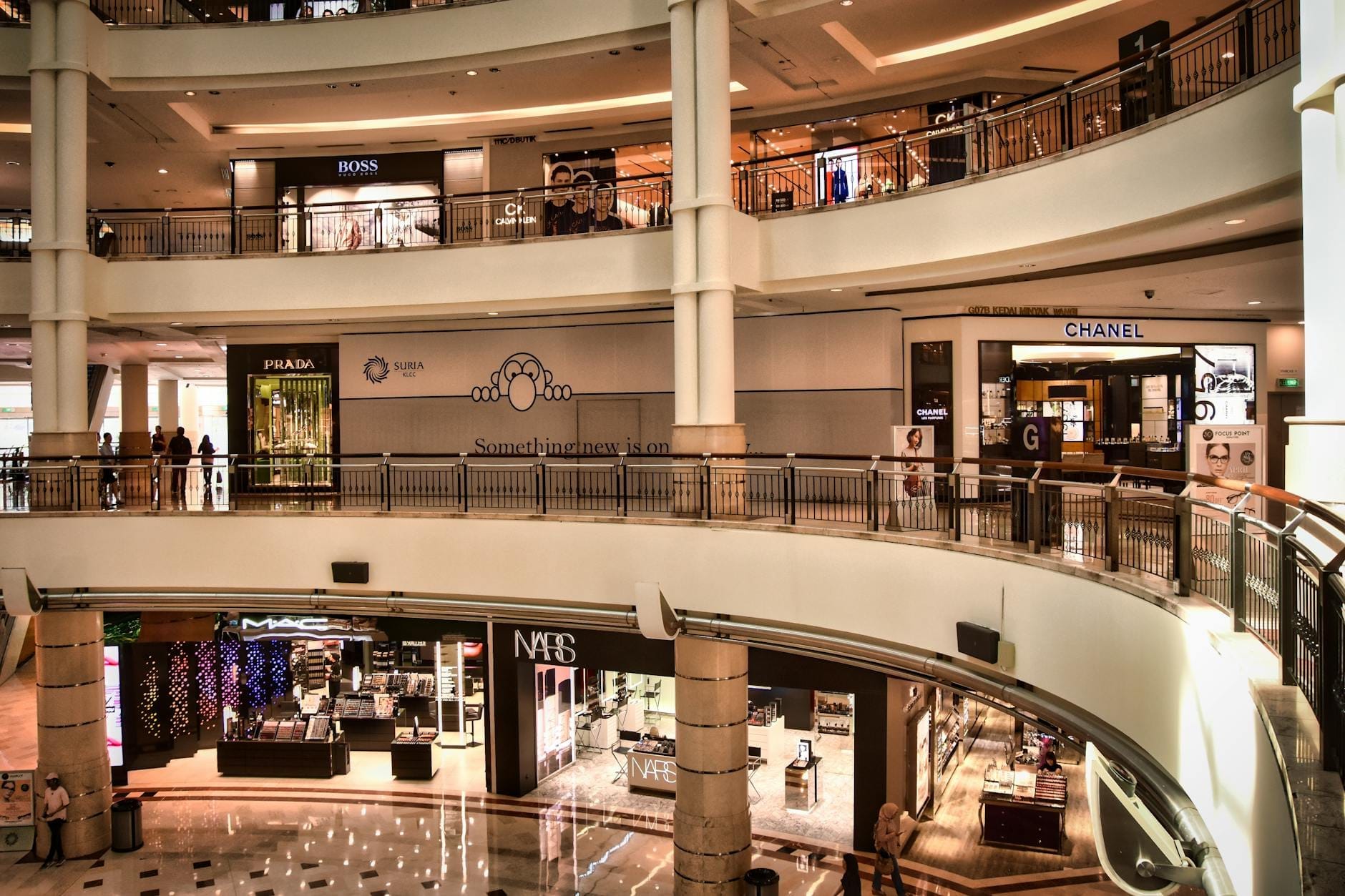
By midday the area belongs to the indoor economy. The heat pushes everyone into the Suria KLCC mall or the connected walkways between towers. The park empties out except for a few tourists on the winding paths. The Concourse level and the food court inside Suria fill with lunch crowds from the surrounding offices. This is when KLCC feels most like a self-contained city within the city: climate-controlled, efficient, international.
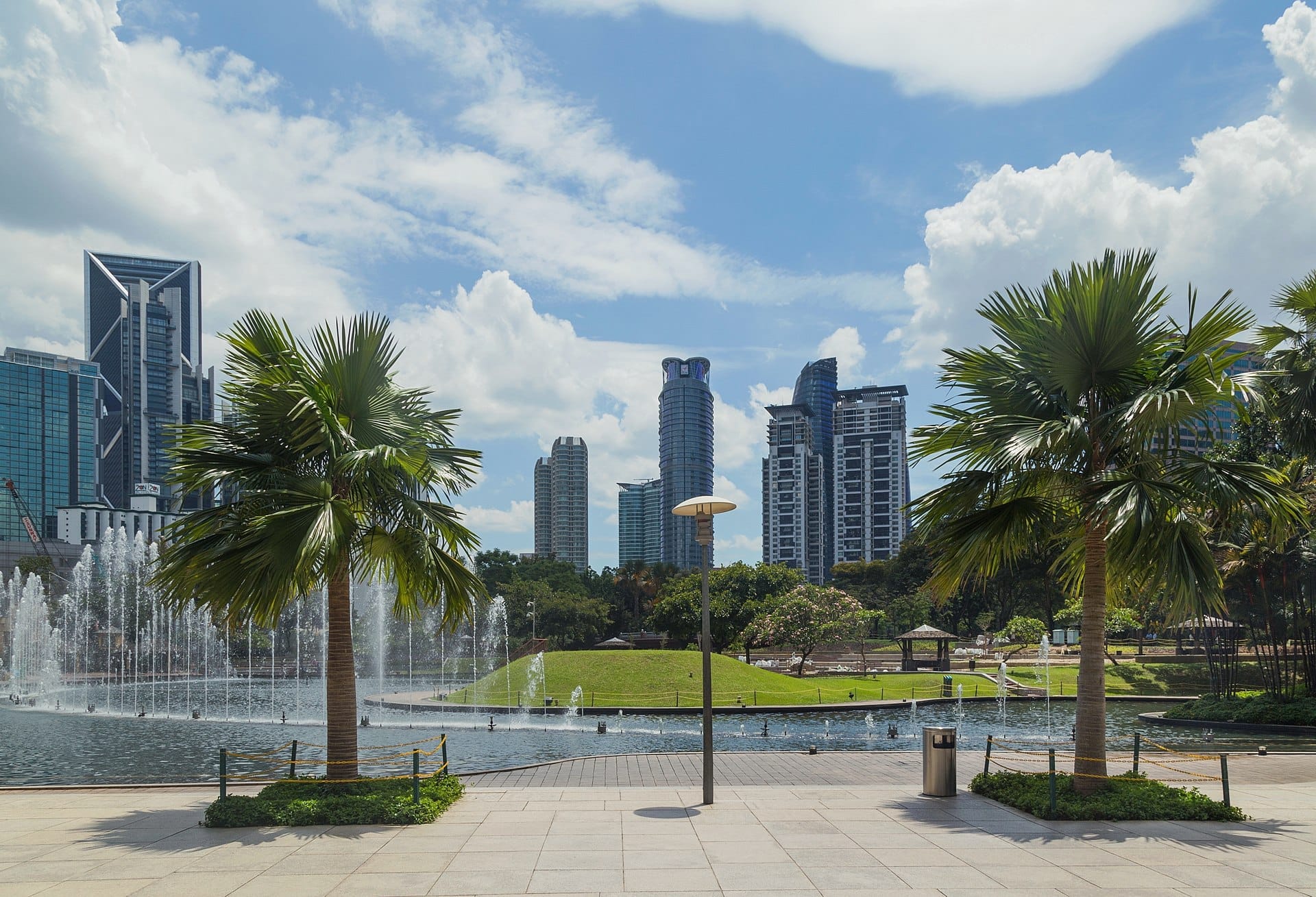
After dark, the Twin Towers light show and the fountain display in front of Suria KLCC draw large crowds. The park stays open until 10pm and is genuinely enjoyable in the cooler evening air. The restaurants along the lower floors of the towers and around Jalan Pinang do steady dinner business. This is one of the few KL districts where you can be out at 10pm and still feel entirely safe, with good foot traffic and well-lit public spaces throughout.
ℹ️ Good to know
The fountain and light show in front of Suria KLCC runs several times each evening, on a variable schedule posted daily at the park. It's free to watch from the park and draws a crowd, so arrive a few minutes early if you want a clear view from the lakeside.
What to See & Do
The obvious draw is the towers themselves. The Skybridge at Level 41 and the observation deck at Level 86 are ticketed attractions with timed entry, and selling out on weekends is common, especially during school holidays. Book online in advance. The view from Level 86 on a clear morning, before haze sets in, is worth every ringgit of the entry fee.
Below the towers, KLCC Park is one of the better urban parks in the city. Designed by Brazilian landscape architect Roberto Burle Marx, it has wading pools for children, a jogging circuit, mature rain trees, and that iconic lakeside view of the towers. It's free to enter and open daily. Spending an hour here costs nothing and offers one of KL's most recognizable vantage points.
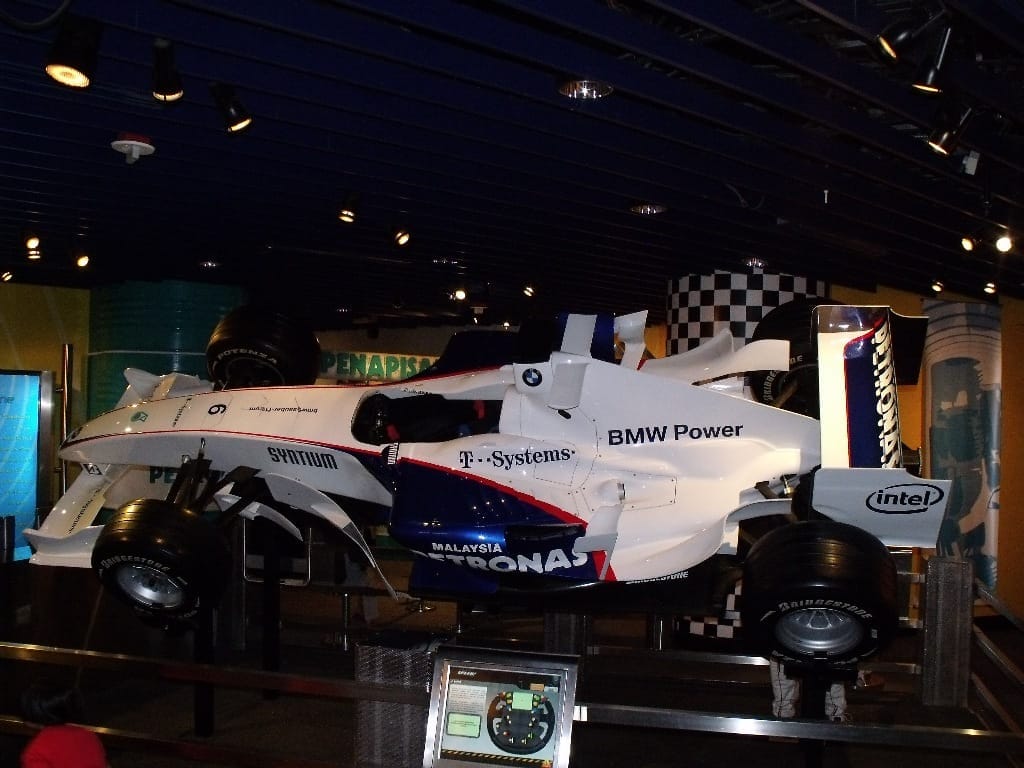
Inside the towers' retail podium, Suria KLCC is a full-scale upscale mall with six floors of retail, dining, and the excellent Petrosains Discovery Centre on Level 4, which is worth knowing about if you're traveling with children. The Petrosains Discovery Centre uses interactive exhibits to explain petrochemical science, but its broader appeal is as a hands-on science museum designed for curious minds of any age.
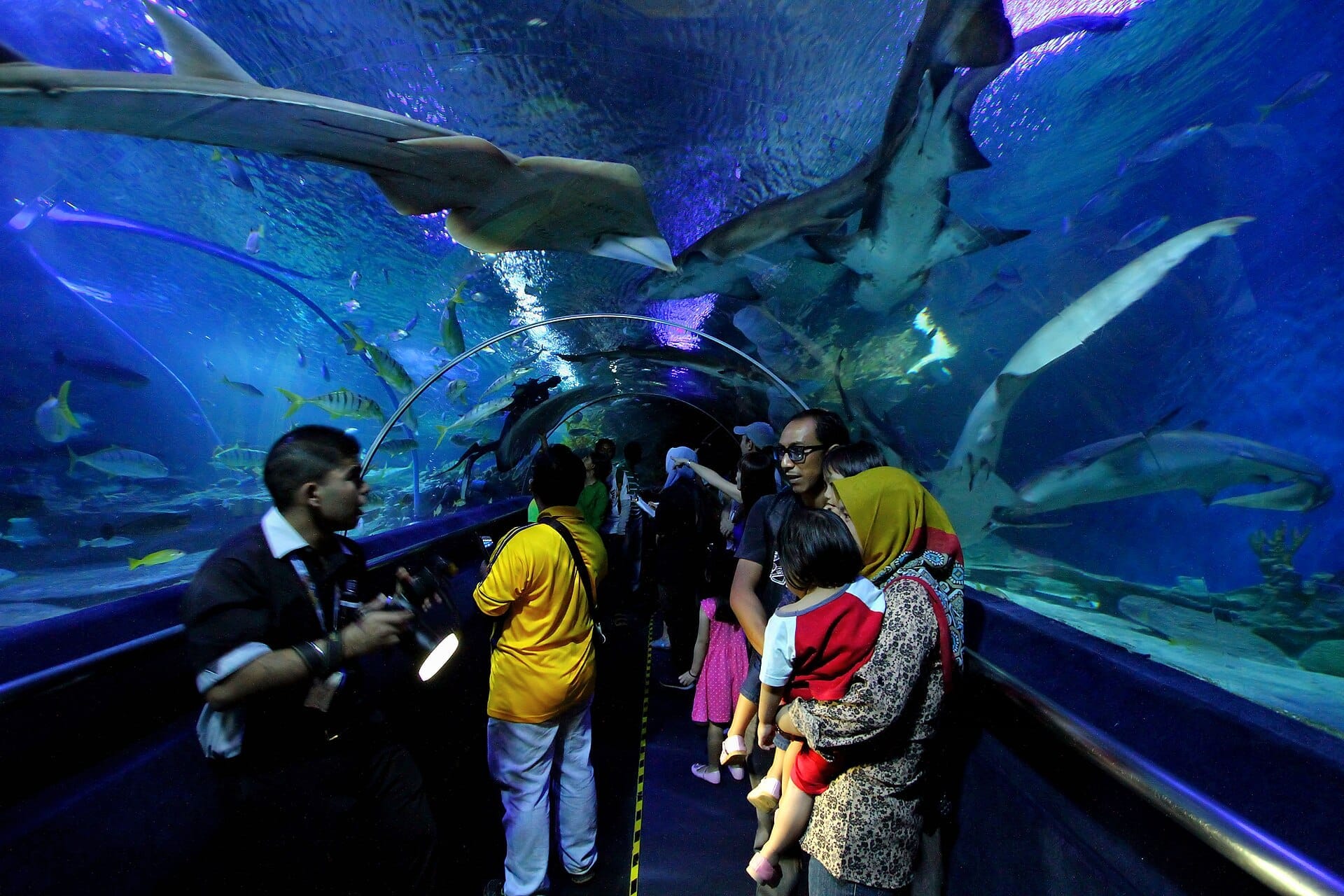
One block south of the park, the Aquaria KLCC sits in the basement of the KL Convention Centre complex. It's a well-maintained aquarium with a walkthrough tunnel and live feeding sessions, and is popular with families. The Menara Kuala Lumpur (KL Tower) is also visible from the KLCC area and a short drive or ride up the hill on Jalan Punchak, offering a rival elevated perspective that is actually less crowded than the Petronas observation deck.
Petronas Twin Towers Skybridge and observation deck (book ahead online)
Suria KLCC mall: retail, dining, cinema, and Petrosains
Aquaria KLCC: walkthrough aquarium in the Convention Centre basement
Saloma Link: the illuminated pedestrian bridge connecting KLCC to Kampung Baru
Gallery and public art throughout the Suria concourse levels
One underappreciated element is the Saloma Link, the striking arched pedestrian bridge at the northern edge of the KLCC precinct. It crosses the Klang River, connecting the KLCC area to the Kampung Baru district, and is genuinely beautiful at night when lit in shifting colors. Crossing it takes less than five minutes and drops you into a completely different KL.
Eating & Drinking
Food in KLCC proper skews international and expensive relative to the rest of KL. The restaurants on the Esplanade level outside Suria KLCC are priced for expense accounts and special occasions: Japanese, Italian, and contemporary Malaysian concepts with tower views built into the pricing. If you're after a landmark meal, this is where you'll find it. If you're watching your budget, you'll find better value one step removed.
The food courts inside Suria KLCC and the Ampang Park area nearby are more accessible for a quick meal without sacrificing quality. Nasi lemak, laksa, and economy rice stalls appear along Jalan Ampang and the surrounding back streets during office hours, catering to the workers who fill this district Monday to Friday. These stalls largely disappear on weekends, which is worth knowing if you're planning a budget breakfast on a Sunday.
The bar scene in KLCC concentrates along Jalan P. Ramlee and Jalan Sultan Ismail, which form the southwestern edge of the district before transitioning into Bukit Bintang territory. These are hotel bars, rooftop lounges, and upscale cocktail venues. Dress codes are loosely enforced but real: trainers and shorts will get you turned away at a few places. Prices here are high by Malaysian standards, though they're in line with comparable bars in Singapore or Bangkok.
💡 Local tip
For a genuinely local meal within walking distance of the towers, cross the Saloma Link into Kampung Baru, where traditional Malay restaurants and weekend night markets serve some of the best nasi lemak and satay in the city at a fraction of KLCC prices.
Getting There & Around
KLCC has its own dedicated LRT station: KLCC Station on the Kelana Jaya Line (the blue line). The station opens directly into the Suria KLCC mall basement, making it one of the most convenient arrival points in the city. From KL Sentral, the journey takes around 22 minutes on the direct Kelana Jaya Line without transfer. From Bukit Bintang, a single stop on the MRT to Pavilion and then a short walk covers the distance faster than the LRT in many cases.
The district is also connected to the broader system via the monorail at Bukit Nanas Station (a 10-15 minute walk southwest of the towers), and many visitors approach from Bukit Bintang on foot along Jalan P. Ramlee or via the KLCC-Bukit Bintang pedestrian walkway, which cuts through the Suria car park and takes roughly 15 minutes.
Within the KLCC precinct itself, walking is the only practical option. The towers, park, and Aquaria are all within a 10-minute walk of each other. Grab and ride-hailing apps work well for arriving and departing, though pickup can be congested around the Suria main entrance during peak hours. Designate a pickup point slightly away from the main entrance to avoid waiting in traffic.
For a broader understanding of how KLCC fits into the transit grid across the whole city, the getting around Kuala Lumpur guide is the most useful reference for planning multi-district days.
⚠️ What to skip
Parking around KLCC on weekends and public holidays is a serious bottleneck. If you're driving, expect long queues to enter the Suria car park and elevated rates. Taking the LRT eliminates this problem entirely.
Where to Stay
KLCC is one of KL's premier hotel districts, with a concentration of five-star and upper-upscale properties within a few minutes' walk of the towers. The major international chains are all represented along Jalan Ampang, Jalan Sultan Ismail, and Jalan Pinang. Staying here puts you directly on top of the city's flagship attractions, and the ease of the LRT connection means the rest of KL is accessible without needing a car.
The tradeoff is price. KLCC accommodation runs significantly higher than equivalent quality in Bukit Bintang or the Merdeka area, and even the mid-range options here tend to be at the top of their tier. Travelers who want to be central to the historic districts and the Chinatown area may find the KLCC location adds unnecessary transit time to their daily plans.
KLCC makes the most sense as a base for business travelers, honeymoon trips, or anyone whose primary goal is the towers and the upscale mall experience. For a broader picture of where to base yourself relative to other districts, the where to stay in Kuala Lumpur guide compares KLCC against Bukit Bintang, Chinatown, and other neighborhoods in detail.
Honest Assessment
KLCC is not the most textured or locally rooted part of Kuala Lumpur. Its dominant mode is corporate and international. On a Sunday afternoon, parts of Jalan Ampang feel almost quiet for a major city center, the kind of quiet that comes from a district built primarily for office use and convention tourism rather than organic street life.
That said, dismissing KLCC as merely a tourist zone misses what makes it interesting. The park is genuinely well-designed and free. The towers are architecturally significant, not just photographically useful. The neighborhood edges, where KLCC dissolves into Kampung Baru to the north and the embassy belt to the east, are genuinely different KL: quieter, older, and full of the kind of detail that doesn't make the postcards.
For most visitors, KLCC is a half-day to full-day destination rather than an all-week base. See the towers, walk the park, explore Suria, and then use the LRT to move on to Chinatown or Bukit Bintang for a more complete picture of the city.
TL;DR
KLCC is home to the Petronas Twin Towers and KLCC Park, two of KL's most iconic attractions, both accessible by direct LRT.
The district is best visited in the morning or evening: midday heat empties the park and the energy moves indoors to the malls.
Dining and nightlife here skew upscale and international; budget eating requires a short walk or a ride to adjacent neighborhoods.
It's an excellent base for luxury and business travelers, but most visitors on tighter budgets will find better value and more local character in Bukit Bintang or Chinatown.
Half a day is enough to cover the main sights; a full day makes sense if you plan to visit Aquaria KLCC, Petrosains, and Kampung Baru via the Saloma Link.
Kuala Lumpur sits just 3 degrees north of the equator, which means heat and rain are constants year-round. But timing still matters — for festivals, crowds, hotel prices, and how much you'll be caught in a downpour. This guide breaks down every season honestly so you can plan smarter.
Genting Highlands sits around 1,800 metres above sea level, about 58 km from Kuala Lumpur. This guide covers every transport option, what the resort complex actually offers, how long you need, and the honest trade-offs so you can decide if this trip suits your itinerary.
Kuala Lumpur has one of Southeast Asia's most developed urban transport networks, yet first-time visitors frequently end up confused, overcharged, or stranded. This guide breaks down every practical option for getting around KL, from rail passes to rideshare apps, with honest assessments of what works and what to avoid.
Kuala Lumpur is one of Southeast Asia's great shopping cities, with malls ranging from ultra-luxury flagships to bargain-packed street-level arcades. This guide breaks down the best shopping malls by area, what each does well, and exactly how to make the most of your time and money.
Kuala Lumpur packs an extraordinary range of experiences into a single city: world-famous landmarks, serious street food, dense rainforest parks, and some of Southeast Asia's best shopping. This guide breaks it all down by category so you can build a trip that actually fits your pace.
Choosing where to stay in Kuala Lumpur shapes your entire trip. This guide breaks down the city's key neighbourhoods by location, vibe, price range, and transport links so you can book with confidence.