KLCC Park: The Urban Oasis Beneath the Twin Towers
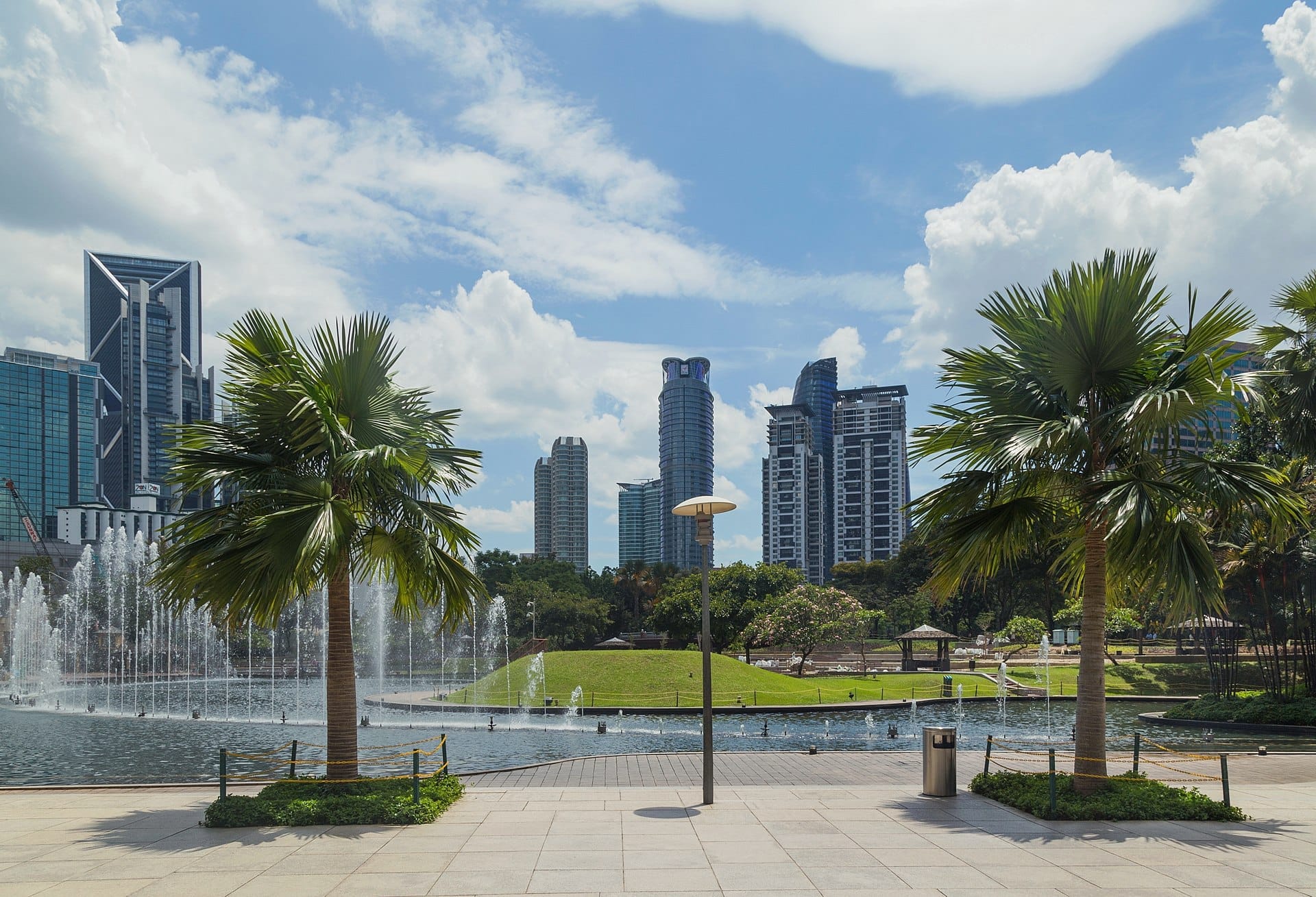
KLCC Park is a 50-acre landscaped garden at the foot of the Petronas Twin Towers, offering a free lagoon pool, a sculpted fountain with nightly light shows, shaded jogging paths, and a children's playground. It is one of the few places in Kuala Lumpur where green space, architecture, and family-friendly amenities converge without an entrance fee.
Quick Facts
- Location
- Kuala Lumpur City Centre (KLCC), Kuala Lumpur
- Getting There
- KLCC LRT Station (Kelana Jaya Line) — direct pedestrian access via underground walkway
- Time Needed
- 1–2 hours; longer if you use the jogging track or splash pool
- Cost
- Free to enter. Wading pool (Symphony Lake) is also free.
- Best for
- Families with young children, joggers, Twin Towers photography, evening fountain shows
What KLCC Park Actually Is
KLCC Park is a 50-acre public garden wrapped around the base of the Petronas Twin Towers in the heart of Kuala Lumpur. Designed by Brazilian landscape architect Roberto Burle Marx, who also shaped Rio's famous Copacabana promenade, the park opened in 1998 alongside the towers and remains one of the most thoughtfully designed urban green spaces in Southeast Asia.
The design is deceptively simple: a large reflecting pool anchors the center, ringed by a 1.3-kilometer jogging track shaded by mature tropical trees. Smaller gardens, a children's wading area, a mosque, and several open lawns fan out from the core. The Twin Towers dominate the northern skyline from almost every point in the park, making it one of the best free vantage points in KL for that iconic shot.
Unlike many city parks in the region, KLCC Park does not feel like an afterthought to the commercial development surrounding it. It coexists with Suria KLCC and the towers without being swallowed by them. The perimeter is clearly defined, the lawn is maintained to a high standard, and the tree canopy is dense enough to provide genuine shade even at midday.
The Fountain Show and Evening Atmosphere
The centerpiece of the park is the Symphony Lake, a sculpted lagoon where an orchestrated fountain performs several times each evening. The show synchronizes water jets with colored lights and music, running for about 10 minutes per session. The water arcs up to around 42 meters at peak height, and on calm nights the sound carries well across the open lawns.
💡 Local tip
Fountain show timings typically fall around 8pm, 9pm and 10pm — but schedules can vary. Arrive 15–20 minutes early to secure a bench with a direct sightline, particularly on weekends when the lawn fills quickly.
The evening is when KLCC Park genuinely comes into its own. After 7 PM, the towers are fully lit, the temperature drops a few degrees, and families spread across the grass with takeaway food. The perimeter jogging track, which feels punishingly exposed during a hot afternoon, becomes a genuinely pleasant loop. Couples take photos with the lit towers in the background, and the fountain lawn draws large crowds for the show — but the park is large enough that it never feels claustrophobic.
If you are planning photographs of the Twin Towers, the blue hour window — roughly 30 minutes after sunset — produces the most compelling images. The sky transitions from orange to deep blue while the towers are lit, giving you a natural balance between ambient light and artificial illumination. No telephoto lens needed; a standard camera or phone is sufficient from the park's southern end.
Tickets & tours
Hand-picked options from our booking partner. Prices are indicative; availability and final rates are confirmed when you complete your booking.
Aquaria KLCC Kuala Lumpur entrance ticket
From 12 €Instant confirmationPetronas Twin Towers and Kuala Lumpur Tower observation deck tickets
From 34 €Private Taman Negara day trip from Kuala Lumpur with lunch
From 85 €Instant confirmationFree cancellationKuala Lumpur city and Batu Caves tour
From 41 €Instant confirmationFree cancellation
Daytime Visits: Heat, Crowds, and the Wading Pool
Visiting KLCC Park between 10 AM and 4 PM is workable but demands realistic expectations. Kuala Lumpur sits close to the equator and humidity rarely drops below 70 percent. The tree canopy along the jogging track provides intermittent shade, but the open lawn and fountain area are exposed. Locals tend to avoid the park during peak afternoon heat, which means weekday midday visits are actually quieter than you might expect.
The children's wading area, a shallow pool with water jets, operates during the day and is free to use. It is genuinely popular with families, particularly on weekends, and is fenced and staffed. Children under 12 will almost certainly want to use it; pack a change of clothes and a towel if you are traveling with young kids. The surrounding benches give parents a shaded place to sit while supervising.
⚠️ What to skip
The open lawn areas receive full sun from around 10 AM to 3 PM. Bring water, wear sun protection, and consider wearing light, breathable clothing if you plan to spend time outside the shaded jogging path during these hours.
The jogging track is a genuine draw for expats and locals who use it regularly. At 1.3 kilometers per loop, it takes about 10–15 minutes to walk at a relaxed pace. The track surface is rubberized, which is easier on joints than concrete, and drinking water fountains are spaced along the route. Early morning joggers start arriving before 7 AM, and the track has a noticeably different, quieter energy before 8 AM compared to the rest of the day.
History and Design Context
The park was conceived as an integral part of the Kuala Lumpur City Centre development, not as a concession to green space requirements. Roberto Burle Marx, who died in 1994 before the park's completion, left his signature style in the organic curves of the paths and the layered planting strategy, which uses multiple canopy heights to create a sense of depth and enclosure within an otherwise dense urban context.
Over 1,900 trees of 74 species were planted during construction, with particular attention to native Malaysian species. Some of these trees are now mature enough to provide the kind of shade that genuinely cools the air beneath them. The planting was also designed to attract bird life, and early morning visitors occasionally spot sunbirds and mynas moving through the canopy — a small but genuine reminder that the park functions as a micro-habitat, not just an aesthetic backdrop.
The park sits adjacent to the KLCC district, which includes the towers, the convention centre, several five-star hotels, and Suria KLCC mall. This concentration of premium real estate surrounding a free public park makes KLCC Park unusual in KL's commercial landscape: entry costs nothing, and no purchase is required to enjoy the space.
Getting There and Getting Around Inside the Park
The most direct approach is via KLCC LRT Station on the Kelana Jaya Line. An underground pedestrian corridor connects the station directly to Suria KLCC mall, and from the mall's ground floor it is a short walk through any of several exits to the park. The signage is clear and the route is fully air-conditioned until you step outside.
If you are coming from the Bukit Bintang area, the elevated pedestrian walkway connects Bukit Bintang to KLCC, passing through Pavilion mall and several air-conditioned links. The walk takes about 15–20 minutes on foot with minimal outdoor exposure, making it a reasonable option even in midday heat.
Inside the park, paths are paved and wide enough for prams and wheelchairs. The main lawn and fountain viewing area are fully accessible. The jogging track has some minor gradient changes but nothing that would pose difficulty for most mobility devices. Restroom facilities are available near the children's play area and are generally maintained to a reasonable standard.
ℹ️ Good to know
Parking is available beneath Suria KLCC mall, but weekday evenings and weekend afternoons see high demand. Public transit is significantly more practical for visits timed around the evening fountain show.
What the Park Is Not (And Who Should Reconsider)
KLCC Park rewards visitors who approach it as a pleasant complement to a broader KLCC itinerary rather than a standalone destination requiring significant time. If you have already seen the towers from a distance, browsed Suria KLCC, and perhaps visited Aquaria KLCC, the park is a natural and free addition. On its own, for a traveler without children and no interest in the fountain show or jogging, it may feel thin.
Visitors primarily interested in cultural depth or historical narrative will find more substance at sites like the Islamic Arts Museum or the National Museum. The park's value is sensory and recreational rather than educational.
It is also worth noting that the park is heavily photographed, and the Twin Towers shot from the south lawn is one of the most reproduced images in Malaysian travel photography. If originality in photography matters to you, you will be sharing that exact angle with dozens of other visitors on any given evening. The experience is still worthwhile; just arrive with calibrated expectations rather than the idea that you have discovered an overlooked perspective.
Insider Tips
- The south end of the park, near the small mosque, sees fewer visitors than the main fountain lawn — it offers an equally strong view of the towers with significantly less foot traffic, particularly during the fountain show.
- Early morning visits before 8 AM offer the best chance of having the jogging track and lawns almost entirely to yourself. The light at this hour is also softer and better for photography than the harsh midday sun.
- The wading pool typically opens around 10 AM and closes before dusk. If you have children who want to use it, arrive by mid-morning on weekends to avoid the longest queues for changing areas.
- The park's tree canopy is noticeably denser on the eastern side near the Traders Hotel edge. If you want to sit and read or rest during the afternoon, this section holds shade longer than the main lawn.
- Some of the best elevated views of the park itself — showing the full layout and both towers together — can be had from the upper floors of the Traders Hotel lobby, which is not restricted to guests.
Who Is KLCC Park For?
- Families with young children who want a free, safe outdoor space with a wading pool and play area
- First-time visitors to KL wanting an unobstructed, free view of the Petronas Twin Towers
- Joggers and walkers looking for a shaded, rubberized track in the city center
- Photographers targeting the Twin Towers at blue hour or during the evening fountain show
- Travelers combining a park visit with shopping at Suria KLCC or a visit to Aquaria KLCC
Nearby Attractions
Other things to see while in KLCC:
- Aquaria KLCC
Located beneath the Kuala Lumpur Convention Centre, Aquaria KLCC is Malaysia's largest urban aquarium, housing over 5,000 aquatic and terrestrial animals across carefully themed zones. The centrepiece is a 90-metre curved underwater tunnel where sand tiger sharks and sawfish glide overhead. It makes for a reliably engaging few hours, especially when the midday heat outside makes outdoor sightseeing uncomfortable.
- Petronas Twin Towers
The Petronas Twin Towers defined Kuala Lumpur's skyline when they opened in 1998 and have anchored the KLCC district ever since. This guide covers what the visit actually feels like, how to get timed tickets, the best hours to go, and what most visitors overlook.
- Petrosains Discovery Centre
Petrosains Discovery Centre is an interactive science museum inside Suria KLCC dedicated to the science of petroleum, technology, and the natural world. Spanning nearly 7,500 square meters across Level 4 of the mall, it offers hands-on exhibits, immersive rides, and educational experiences suited to children and adults alike.
- Suria KLCC
Suria KLCC is Kuala Lumpur's most recognizable shopping mall, occupying the base of the Petronas Twin Towers. Beyond retail, it houses a science discovery center, an aquarium, a concert hall, and some of KL's best casual dining — making it worth a visit even if shopping isn't your priority.