Little India Brickfields: Kuala Lumpur's South Asian Soul
Brickfields is Kuala Lumpur's officially designated Little India, a compact neighbourhood packed with Tamil temples, textile traders, flower-garland sellers, and some of the city's best South Indian vegetarian cooking. It rewards slow walking and curious noses more than any checklist approach.
Quick Facts
- Location
- Brickfields, Kuala Lumpur (south of KL Sentral)
- Getting There
- KL Sentral (KTM, MRT, LRT, ETS, KLIA Ekspres/Transit, Monorail) — 5-minute walk to Jalan Tun Sambanthan
- Time Needed
- 2–4 hours for a thorough walk; half a day during festivals
- Cost
- Free to explore; temple entry free; meals from RM 5–15
- Best for
- Culture seekers, food lovers, photographers, Tamil heritage enthusiasts
What Is Brickfields Little India?
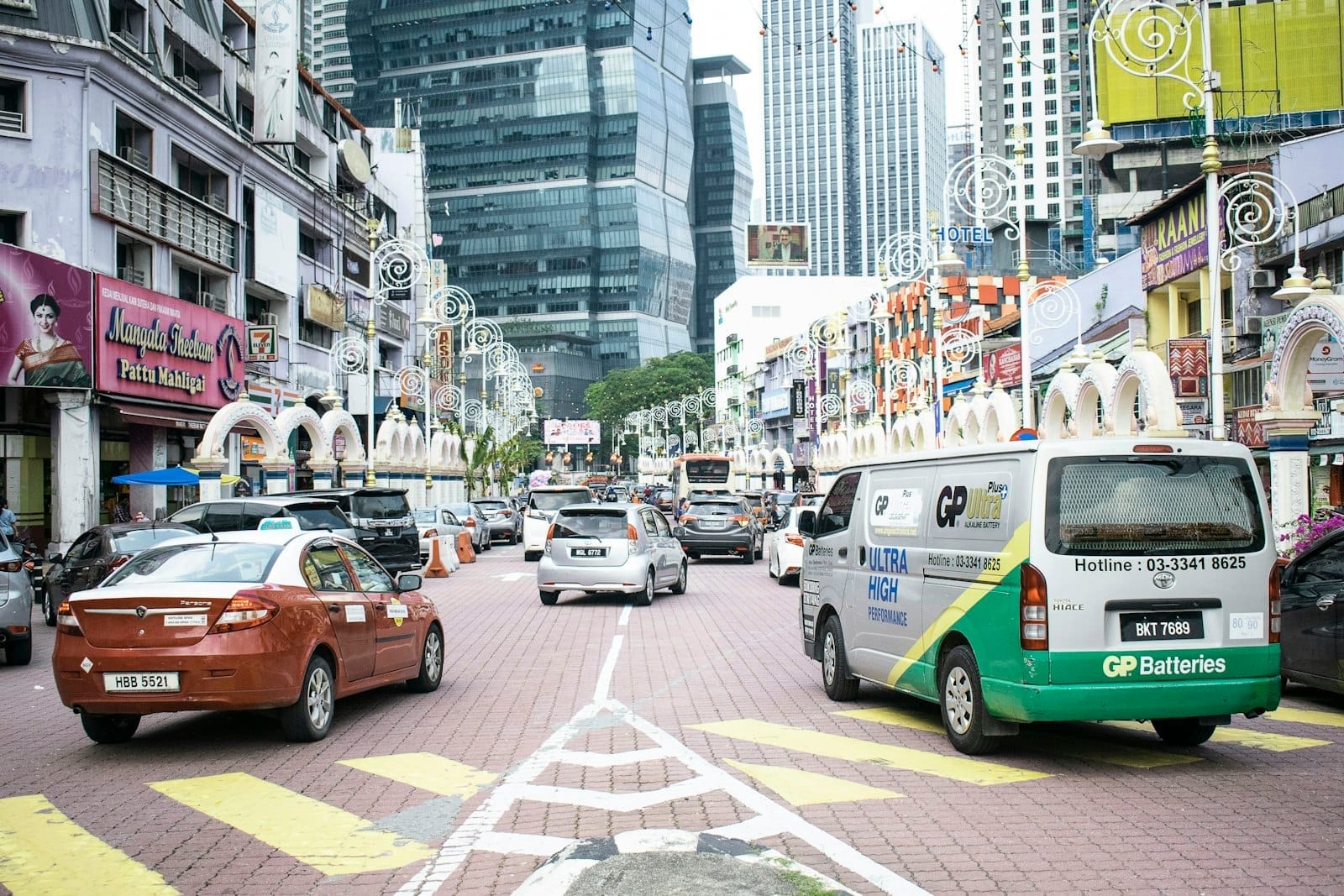
Brickfields is Kuala Lumpur's Little India, a title formalised by the city government to recognise its role as the cultural and commercial heart of the Malaysian Tamil community. The neighbourhood stretches along Jalan Tun Sambanthan and its surrounding lanes, roughly between KL Sentral and the older residential pockets to the south. Unlike some tourist-facing ethnic quarters that have been scrubbed clean for visitors, Brickfields operates as a genuinely functioning community: the flower shops open before dawn to supply offerings for morning temple prayers, the textile merchants spend their days cutting silk by the metre, and the coffee shops fill with regulars who have been coming for decades.
The name Brickfields predates its South Asian character entirely. In the late nineteenth century, the area was a brickmaking centre supplying materials for the expanding colonial town across the river. Indian labourers, many brought to Malaya under British contract, settled in the district and gradually transformed it into the neighbourhood it is today. That layered history, colonial infrastructure, South Asian cultural practice, and modern Malaysian life, gives Brickfields a texture that more polished attractions simply do not have.
💡 Local tip
The easiest way to reach Brickfields is via KL Sentral, one of Southeast Asia's largest transport interchanges. From the main concourse, follow signs toward the taxi bay and then head south on Jalan Tun Sambanthan. The whole walk takes about five minutes.
The Street Experience: What You Will Actually See
Jalan Tun Sambanthan is the spine of the neighbourhood, a wide boulevard lined with double-storey shophouses whose ground floors are given over almost entirely to commerce. The goods spill onto the five-foot ways: towers of steel cooking pots, bolts of silk in magenta and gold, incense sticks bundled by the hundreds, and fresh jasmine garlands strung on wire hooks. The smells shift from block to block, sweet flower, sharp sandalwood, then the unmistakable funk of dried fish from a provisions store that has probably occupied the same unit for forty years.
Turn into the smaller cross-streets, particularly Jalan Scott and the lanes around it, and the commercial energy gives way to something quieter. Low-rise houses with small shrines at their gates, laundry on bamboo poles, neighbours chatting across narrow alleys. This residential layer is what separates Brickfields from a shopping precinct: it is a place people live in, not just visit.
Street food is woven into the fabric of the walk. Banana-leaf rice, served on an actual banana leaf with rice and an array of vegetable curries and papadum, is the signature meal and costs around RM 10 to RM 15 depending on how many side dishes you add. Several shops also sell vadai, the crisp lentil fritters, from large trays near the entrance, perfect for eating while walking.
Tickets & tours
Hand-picked options from our booking partner. Prices are indicative; availability and final rates are confirmed when you complete your booking.
Petronas Twin Towers and Kuala Lumpur Tower observation deck tickets
From 34 €Private Taman Negara day trip from Kuala Lumpur with lunch
From 85 €Instant confirmationFree cancellationKuala Lumpur city and Batu Caves tour
From 41 €Instant confirmationFree cancellationKuala Lumpur city exploration private half-day tour
From 42 €Instant confirmationFree cancellation
Temples and Sacred Spaces
Sri Kandaswamy Kovil off Jalan Tun Sambanthan is the neighbourhood's most significant Hindu temple, dedicated to Lord Murugan. The gopuram, the ornate tower above the entrance gate, is covered in painted stucco figures and rises several storeys, visible from some distance along the street. Shoes must be removed at the entrance, and modest dress is expected. Inside, the air is thick with incense and the sound of priests chanting during morning and evening pujas. Even visitors with no connection to Hinduism will find the experience deeply atmospheric, particularly if they arrive during the main prayer times around 8 AM or 6 PM.
Brickfields also contains a mix of other religious buildings within walking distance of each other: a Methodist church, a Buddhist temple, and a mosque are all found in the surrounding streets. This density of different faith communities occupying the same neighbourhood without obvious friction is one of the more quietly remarkable things about the area.
ℹ️ Good to know
When visiting Sri Kandaswamy Kovil or any temple in Brickfields, dress conservatively: cover your shoulders and knees. Most temples provide sarongs if needed. Photography inside the inner sanctum is generally not permitted, but the exterior gopuram is freely photographable.
Best Time to Visit: Hours and Crowds
Brickfields operates on an early schedule. The flower market along the main street is at its most active between 6 AM and 8 AM, when buyers arrive to stock temple offering trays. The coffee shops fill from around 7 AM with workers having breakfast before heading to KL Sentral. If you want to see the neighbourhood at its most authentic and least crowded, a morning visit on a weekday is the right call.
By midday, particularly on weekends, the main street becomes genuinely congested. The footpaths narrow between pedestrians and display racks, and the heat is at its most punishing. Most shops are open through the afternoon but the experience is more comfortable before noon or after 4 PM when the direct sun moves off the west-facing shopfronts.
Deepavali, the Festival of Lights celebrated by Tamil Hindus, transforms Brickfields into something extraordinary. The entire street is illuminated with thousands of decorative lights for weeks before the festival, and the shopping intensity roughly doubles. Thaipusam, another major Tamil festival, also draws large crowds. These festival periods are genuinely rewarding for visitors who can handle crowds, but they require more time and patience than an ordinary visit.
⚠️ What to skip
Parking in Brickfields is extremely limited and traffic during weekends and festivals can bring the main street to a standstill. Use KL Sentral and walk in. Trying to drive is almost always a poor decision.
Shopping: What to Buy and What to Skip
The most worthwhile purchases in Brickfields are the things you cannot easily find elsewhere in Kuala Lumpur. Fresh flower garlands, particularly jasmine, are sold by weight and make beautiful temporary decorations. Silk and cotton sarees and salwar kameez fabric is sold at competitive prices by merchants who know their stock well. Specialty South Indian groceries, including fresh curry leaf, different grades of mustard seed, tamarind blocks, and rice varieties not found in supermarkets, are available from provisions stores along the main street and surrounding lanes.
Gold jewellery shops occupy several prominent units on Jalan Tun Sambanthan, selling 22-karat pieces in traditional South Indian designs. These are serious commercial operations, not tourist traps, and the prices are generally honest. If you are not in the market for jewellery, they are still worth a glance for the craftsmanship on display.
Visitors expecting the souvenir variety of shopping, fridge magnets, novelty batik, miniature Petronas towers, will not find it here. For that kind of merchandise, Central Market or Petaling Street Market in Chinatown are better options. Brickfields serves a local clientele and its shops reflect that honestly.
Eating and Drinking in Brickfields
South Indian vegetarian cooking is the main event. Banana-leaf rice restaurants are the most distinctive option: you sit at a long table, a banana leaf is laid in front of you, and servers make rapid rounds to ladle rice and a rotating selection of curries, chutneys, and pickles. Eating with your right hand is traditional and entirely acceptable. Most restaurants are open from late morning through early afternoon and again from around 6 PM.
Beyond banana-leaf restaurants, the area has excellent roti canai, the flaky flatbread served with dhal and curry sauces, available at numerous mamak stalls that are open early and late. The teh tarik, pulled tea, is prepared with particular care at some of the older shops, the pour stretched high above the cup to create a frothy, aerated texture. It costs around RM 2 and is among the best practical arguments for visiting early in the morning.
Brickfields is a few minutes' walk from Jalan Alor and the broader Bukit Bintang dining precinct, making it easy to combine a Brickfields cultural walk with an evening meal elsewhere if South Indian food is not your preference.
Context: How Brickfields Fits Into Kuala Lumpur
Kuala Lumpur's identity as a multicultural city is sometimes presented in simplified terms, three communities, three sets of places, neatly separated. Brickfields complicates that narrative usefully. It is a Tamil neighbourhood, but its streets include Chinese temples, Malay food stalls, and a Catholic church. KL Sentral next door brings through a daily cross-section of the entire country. The neighbourhood does not exist in isolation; it is continuously in contact with everything around it.
For visitors trying to understand how Kuala Lumpur actually works rather than just seeing its landmarks, Brickfields is more instructive than the Petronas Twin Towers or the view from Menara KL. The towers tell you something about Malaysia's economic ambitions. Brickfields tells you something about how people actually live.
Visitors who prefer polished, air-conditioned, English-language environments may find Brickfields uncomfortable. The main street is hot, the footpaths are uneven, the shops play Tamil film music at considerable volume, and vendors occasionally address passersby directly. None of this is hostile, but it does require some willingness to engage on the neighbourhood's own terms.
Insider Tips
- Visit Sri Kandaswamy Kovil during the evening puja at around 6 PM for the most complete sensory experience: oil lamps, incense, the sound of temple bells, and the priest circling the fire. It is free, open to respectful non-Hindu visitors, and far more memorable than simply photographing the exterior.
- The flower stalls are at their most impressive and most fragrant in the earliest morning hours, roughly 6 to 8 AM. Jasmine garlands are sold by weight and a small bunch costs a few ringgit. They wilt in the heat, so buy them just before you need them.
- Several provisions stores stock tamarind concentrate, fresh curry leaf, and specialty rice varieties that are difficult to find outside the neighbourhood. If you are self-catering or want to cook South Indian food at home, this is the most useful food shopping stop in Kuala Lumpur.
- Brickfields has a prepaid taxi rank near the KL Sentral exit, which offers fixed-rate rides without negotiation. Useful for reaching other parts of the city directly after your visit without dealing with surge pricing from ride-hailing apps during peak hours.
- During Deepavali season, the decorative lighting along Jalan Tun Sambanthan is turned on after dark and the street takes on a completely different character. An evening visit in the weeks before the festival is one of the more photogenic experiences in KL with no ticket required.
Who Is Little India (Brickfields) For?
- Food travellers wanting an honest introduction to South Indian Malaysian cooking beyond restaurant menus
- Photographers drawn to layered visual texture: temple carvings, textile colour, flower markets, and street-level life
- Visitors with an interest in Tamil cultural heritage and Hindu religious practice in a diaspora context
- Travellers on tight budgets who want a rich cultural experience without paying for tickets or tours
- Anyone with a few hours between trains at KL Sentral looking for something more worthwhile than the mall
Nearby Attractions
Combine your visit with:
- Batu Caves
Batu Caves is a series of ancient limestone caverns set inside a 400-million-year-old hill, crowned by a 43-metre golden statue of Lord Murugan and reached by 272 rainbow-coloured steps. It is the most significant Hindu shrine outside India and one of Southeast Asia's most photographed natural landmarks. Whether you come for the temple rituals, the cave ecology, or simply the spectacle, the site rewards visitors who time their arrival carefully.
- Istana Budaya
Istana Budaya is Malaysia's premier performing arts venue, staging everything from grand theatrical productions to classical concerts and traditional dance. Beyond the performances, the building itself is a striking piece of contemporary Malaysian architecture worth seeing up close.
- Kepong Metropolitan Park
Kepong Metropolitan Park is one of Kuala Lumpur's largest and least-touristed green spaces, built around a large lake with forest-edged trails, cycling paths, and open lawns. It draws locals for morning jogs and weekend picnics rather than international visitors, which makes it genuinely worth exploring.
- Menara KL (KL Tower)
Standing 421 metres tall on Bukit Nanas hill, Menara KL offers one of the clearest panoramic views of Kuala Lumpur's skyline. Less crowded than the Petronas Towers observation deck and with a wider field of vision, it is a serious contender for the city's best high-altitude experience.