Petaling Street Market: The Real Story Behind KL's Most Famous Bazaar
Petaling Street Market sits at the heart of Kuala Lumpur's Chinatown and has been a trading hub since the late 19th century. It draws everyone from fruit vendors and herbal medicine sellers to tourists hunting replica goods, making it one of the city's most layered and honest street experiences.
Quick Facts
- Location
- Jalan Petaling, Chinatown, Kuala Lumpur
- Getting There
- Pasar Seni LRT station and Merdeka MRT station (5-minute walk)
- Time Needed
- 1 to 2 hours
- Cost
- Free entry; budget RM 20–60 for food and browsing
- Best for
- Street food lovers, culture seekers, bargain hunters
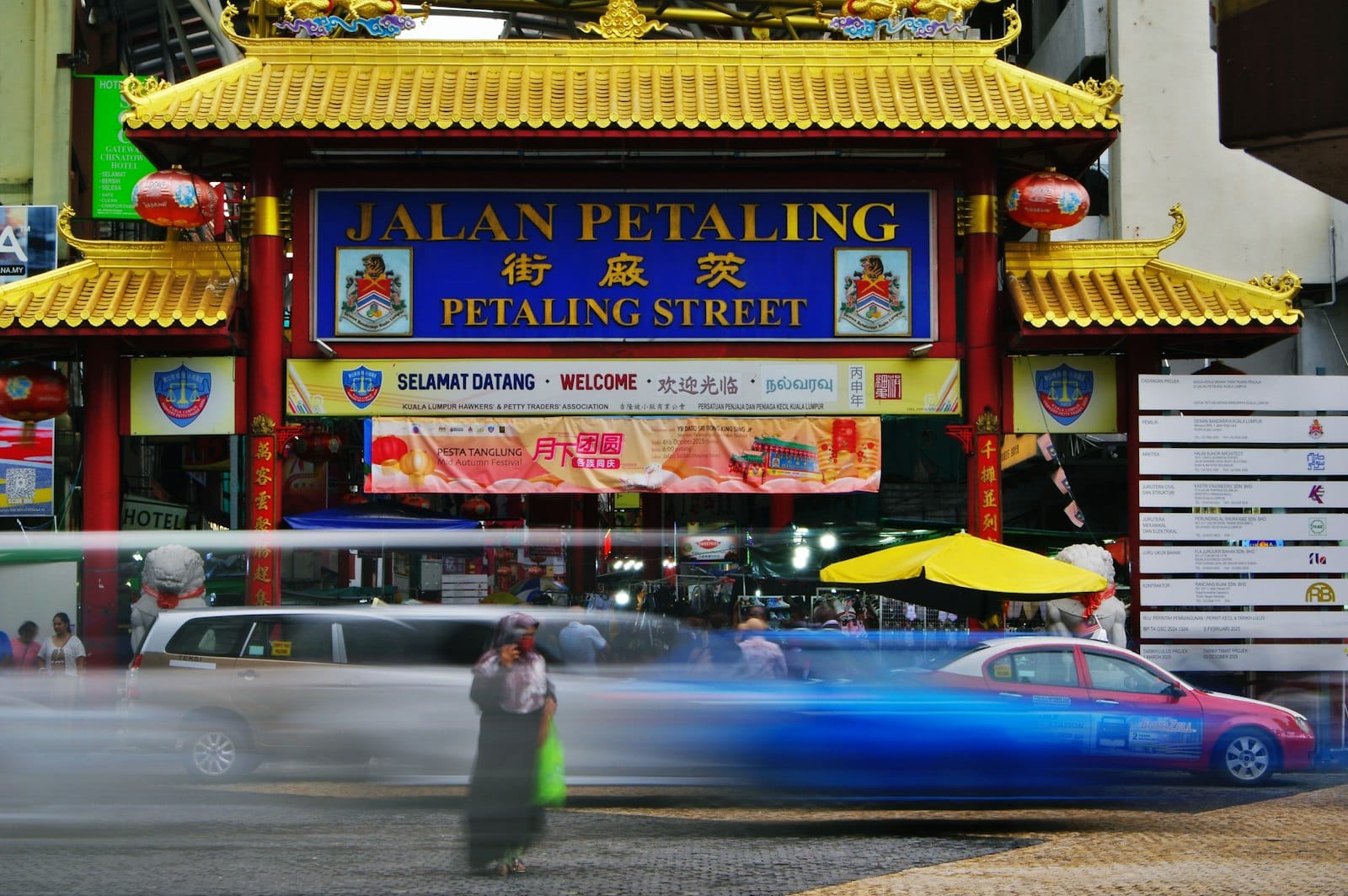
What Petaling Street Market Actually Is
Petaling Street Market, locally known as Chee Cheong Kai, is a covered pedestrian bazaar stretching roughly 450 metres through the core of Chinatown in Kuala Lumpur. The overhead steel-and-canvas canopy, installed decades ago to shelter traders and shoppers, gives the street a tunnel-like quality that traps the smells of roasting duck, dried seafood, and burning incense in a way that open-air markets never do. This is not a curated heritage precinct. It is a working commercial street that has adapted around tourist traffic without completely surrendering to it.
The market operates across two parallel sections. The main covered stretch along Jalan Petaling is lined with stalls selling replica watches, handbags, sunglasses, and clothing. The cross-streets and adjoining lanes, particularly Jalan Hang Lekir, carry a heavier load of food: char kway teow, chee cheong fun, herbal soups, and papaya fruit stalls where vendors wield machetes with practiced efficiency. Neither half is more authentic than the other. Both are essential to understanding what this place actually does.
ℹ️ Good to know
The market runs throughout the day but peaks from late morning through late night. Night hours (after 6pm) bring the most stalls, the most crowds, and the most atmospheric lighting under the red lanterns strung overhead.
A Century of Trade: Historical Context
Petaling Street's origins trace back to the 1880s, when Kuala Lumpur was a tin-mining boomtown governed by rival Cantonese clan factions. The area now called Chinatown was allocated to Chinese settlers by the British colonial administration, and Jalan Petaling quickly became the commercial spine of that community. Shophouses constructed in the Straits Eclectic style, with their characteristic five-foot-ways (covered pedestrian walkways at ground level), lined both sides of the road. Many of those shophouse facades are still standing, though their ground floors have long since been converted into modern retail fronts.
The five-foot-way architecture is worth pausing to examine. These arcaded walkways were mandated by the colonial town plan and appear throughout historic KL, but Petaling Street is one of the easiest places to see them functioning almost as originally intended: as shaded, semi-public corridors connecting commerce to street life. Look up at the upper floors of the shophouses and you will find louvred shutters, potted plants on narrow balconies, and the occasional family laundry line, all unchanged for generations.
The street sits within the broader Chinatown neighbourhood, which extends beyond Petaling Street itself to include clan temples, clan associations, and wet markets that most visitors never reach. For the full picture of the area, budget time beyond the main bazaar strip.
Tickets & tours
Hand-picked options from our booking partner. Prices are indicative; availability and final rates are confirmed when you complete your booking.
Petronas Twin Towers and Kuala Lumpur Tower observation deck tickets
From 34 €Private Taman Negara day trip from Kuala Lumpur with lunch
From 85 €Instant confirmationFree cancellationKuala Lumpur city and Batu Caves tour
From 41 €Instant confirmationFree cancellationKuala Lumpur city exploration private half-day tour
From 42 €Instant confirmationFree cancellation
How the Market Changes Through the Day
Early morning, before 8am, is when the market belongs to its residents. Elderly men play Chinese chess under the shophouse awnings. A handful of fruit vendors set up before the tourist stalls arrive. The smell at this hour is fresh produce and coffee from the kopitiam shops, which open their shutters onto the street. The canvas canopy overhead diffuses the early light into something almost golden. If you are staying nearby, this is worth an early alarm.
By mid-morning, the replica goods traders have laid out their wares and the pitch volume rises. Vendors are persistent but rarely aggressive; a firm shake of the head is universally understood. Noon to 3pm brings the hottest and most crowded conditions, compounded by the canopy trapping heat. The food stalls are at full capacity during the lunch rush, and queues form at the more popular char siu and wonton noodle spots along Jalan Hang Lekir.
The evening transformation is the most dramatic. As daylight fades, strings of red lanterns and bare yellow bulbs illuminate the canopy from inside. The heat drops, the fruit stalls pile higher, and the number of people roughly doubles. This is the version of Petaling Street most visitors remember. Roasted meats hang in lit windows, the sound of woks clanging competes with Cantonese pop from a phone speaker, and the air carries the specific combination of char and sweetness that defines a Chinese market at full output.
💡 Local tip
For street food quality rather than atmosphere, visit between 11am and 1pm. Stalls are freshest and turnover is highest at lunch. For photography and atmosphere, arrive at dusk, around 6:30pm, when the lanterns are lit but natural light still fills the upper canopy.
What to Eat: The Actual Reason to Come
The replica goods are a sideshow. The food is the reason serious visitors return. Jalan Hang Lekir, the cross-street that bisects the main market, is dense with hawker stalls operating out of both permanent shopfronts and wheeled carts. Chee cheong fun, sheets of steamed rice noodle rolled and dressed with sweet shrimp paste and sesame, costs around RM 4 and is made to order at stalls where the wok has been seasoned over decades. Claypot lou mai fan, glutinous rice steamed in a small clay vessel with Chinese sausage and salted fish, appears at a handful of stalls that set up by mid-afternoon.
Roasted meats, barbecued pork, and char siu are available from butcher-style stalls where whole ducks and pork bellies hang in the window on steel hooks. These are priced by weight and served over rice; a satisfying plate runs RM 12 to RM 18. Fresh tropical fruit, particularly papaya, watermelon, and starfruit, is sold pre-cut at the corner stalls and costs RM 3 to RM 6 for a bag. The fruit quality is generally good in the morning and variable by late evening.
After eating, the traditional herbal dessert stalls nearby serve tong sui, warm sweet soups made with lotus seeds, barley, or red bean. For a broader food exploration of the surrounding streets, Central Market is a five-minute walk and offers a cleaner, air-conditioned alternative for those who want a break from the heat.
The Replica Goods: What to Know Before You Buy
Petaling Street has a long-established reputation for replica watches, bags, belts, and sunglasses. The quality spectrum is wide: some goods are barely functional copies; others are made with reasonable materials and will survive several months of use. Prices are not fixed. Stall holders will open negotiations at two to three times their expected final price. A willingness to walk away almost always produces a revised offer. Bargaining is expected and not considered rude, but extended haggling over small amounts will test everyone's patience.
Travellers should be aware that importing replica branded goods into some countries constitutes a customs violation. This is not a hypothetical risk. Declare or research your home country's rules before purchasing items with visible luxury brand markings. The practical advice is straightforward: buy things you would want regardless of the brand logo, not things whose value depends entirely on the logo being convincing.
⚠️ What to skip
Carrying counterfeit goods across international borders can result in confiscation or fines. Check your country's customs regulations before purchasing replica branded items at Petaling Street.
Getting There and Getting Around
Pasar Seni station, served by the Kelana Jaya LRT line and the Putrajaya MRT line, is the closest transit point, roughly a five-minute walk from the northern entrance to Petaling Street. Exit towards Jalan Hang Kasturi and walk south. The approach through the back of Central Market along the river corridor is a more scenic option and passes the River of Life public art installations along the way.
Driving to Petaling Street is not recommended. Parking in Chinatown is limited, expensive by KL standards, and the surrounding streets are frequently congested. For a broader orientation of how to move around the city, the getting around Kuala Lumpur guide covers all transit options in detail.
The market itself is flat and fully walkable. Wheelchair users will find the main covered lane manageable, though the cross-streets have uneven paving and occasional obstacles from stall equipment. Footwear with grip is advisable after rain, when the stone paving becomes slippery from food residue and wet canvas drips.
Temples, Shrines, and the Streets Around the Market
Petaling Street does not exist in isolation. Within a five-minute walk, the Sri Mahamariamman Temple on Jalan Tun H.S. Lee is one of the oldest and most ornate Hindu temples in Kuala Lumpur, its gopuram tower covered in hundreds of sculpted figures. The contrast between the Chinese market character of Petaling Street and the Tamil Hindu devotional architecture one street over is one of the most compressed examples of KL's multicultural layering.
The area also contains several clan association buildings and small Buddhist shrines tucked into shophouse ground floors. These are not tourist attractions in any organised sense; they are functioning religious spaces used by the surrounding community. Respectful observation is appropriate; photography inside should be treated as the sensitive matter it is. For a more structured exploration of local religious heritage nearby, Masjid Jamek is a ten-minute walk north and marks the original confluence of the Klang and Gombak rivers where the city began.
Who Should Think Twice
Petaling Street is frequently presented as an essential Kuala Lumpur experience, and by some measures it is. But travellers who are sensitive to heat, noise, and close crowds may find the mid-day and evening peak hours genuinely uncomfortable rather than adventurous. The covered canopy, while useful against rain, functions like a heat trap in humid weather. Anyone with significant mobility limitations should note that the cross-street surfaces are not consistently maintained.
Those who arrive expecting a pristine heritage experience will be disappointed. This is a commercial market with tourist infrastructure layered over a real trading neighbourhood. The replica goods stalls occupy the most visible positions, which means the first impression for many visitors is one of hawking and hype. Patience and a willingness to explore the side streets and food lanes rather than staying on the main strip will significantly change the experience.
Insider Tips
- Walk the full length of Jalan Petaling and then double back through Jalan Hang Lekir, which runs parallel. The food stalls on Hang Lekir see far fewer tourists and often have shorter queues for better food.
- The kopitiam shops on the edges of the market, particularly those facing the side streets, serve some of the best kopi (traditional Malaysian coffee) in the area and open as early as 6:30am.
- If it rains, the covered canopy keeps the main market mostly dry, but the cross-streets flood quickly. The rain also clears crowds rapidly, making the covered lane unusually peaceful for 20 minutes after a heavy shower.
- Bargaining works best when you are genuinely prepared to walk away. State a price, wait for the counter-offer, and move on slowly if it does not reach your number. Returning ten minutes later to a stall where negotiations stalled often produces the price you wanted.
- The dried goods shops on the periphery of the market, selling preserved mushrooms, dried seafood, and herbal ingredients, are not aimed at tourists and have no interest in bargaining. Prices are fair and fixed, and the product quality is generally high.
Who Is Petaling Street Market For?
- Food explorers who want hawker-style Cantonese dishes in an authentic commercial setting
- First-time KL visitors building an understanding of the city's Chinese trading heritage
- Early risers wanting to see a working neighbourhood market before the tourist crowd arrives
- Travellers on tight budgets who want a full sensory experience without significant entry costs
- Photographers drawn to the interplay of lantern light, hanging meats, and shophouse architecture at dusk
Nearby Attractions
Other things to see while in Chinatown Kuala Lumpur:
- Central Market
Housed in a powder-blue Art Deco building with the current building completed in 1937, Central Market is Kuala Lumpur's most concentrated showcase of Malaysian handicrafts, traditional textiles, and cultural souvenirs. It sits on the edge of Chinatown and draws everyone from bargain hunters to serious collectors of regional art.
- Jalan Masjid India
Jalan Masjid India is Kuala Lumpur's primary South Asian commercial corridor, running through the heart of the city's Indian-Muslim district. It packs sari boutiques, textile merchants, spice vendors, street food hawkers, and gold jewellers into a stretch that rewards slow, unhurried exploration. The surrounding lanes are just as interesting as the main street.
- Kwai Chai Hong
Kwai Chai Hong is a narrow back alley in Kuala Lumpur's Chinatown that has been transformed into an open-air heritage experience. Murals, bronze sculptures, and restored shophouse facades recreate the sights and textures of 1950s Cantonese urban life. It is compact, atmospheric, and one of the most photographed corners of Petaling Street's neighbourhood.
- Sri Mahamariamman Temple
Sri Mahamariamman Temple is Kuala Lumpur's oldest and most ornate Hindu temple, founded in 1873 and rebuilt over decades into a tower of intricate South Indian sculpture. Set on Jalan Tun H.S. Lee in Chinatown, it remains a living place of daily worship — not a tourist attraction dressed up for visitors.