Jalan Masjid India: KL's South Asian Street That Actually Delivers
Jalan Masjid India is Kuala Lumpur's primary South Asian commercial corridor, running through the heart of the city's Indian-Muslim district. It packs sari boutiques, textile merchants, spice vendors, street food hawkers, and gold jewellers into a stretch that rewards slow, unhurried exploration. The surrounding lanes are just as interesting as the main street.
Quick Facts
- Location
- Jalan Masjid India, City Centre, Kuala Lumpur
- Getting There
- Masjid Jamek LRT Station (Ampang/Sri Petaling & Kelana Jaya lines), 5-min walk
- Time Needed
- 1.5 to 3 hours for the street and surrounding lanes
- Cost
- Free to explore; street food from RM 3–8
- Best for
- Textile shopping, street food, South Asian cultural atmosphere, photography
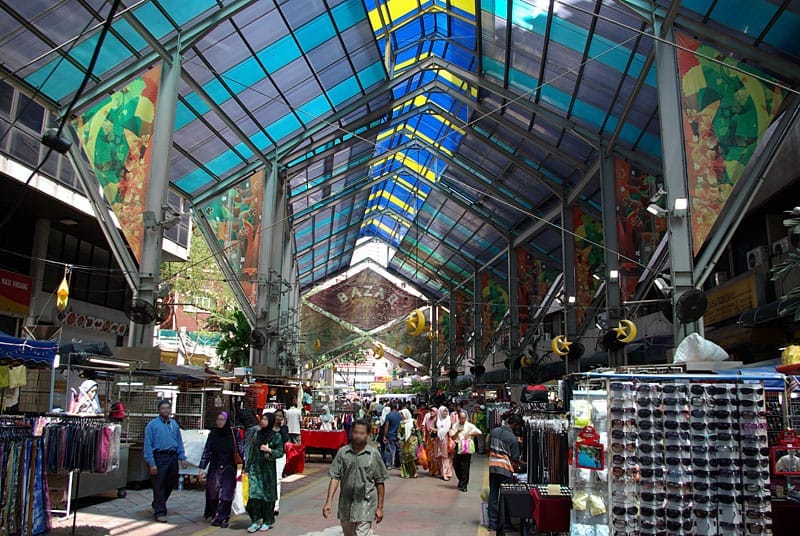
What Jalan Masjid India Actually Is
Jalan Masjid India is a roughly 350-metre commercial street in central Kuala Lumpur, flanked by shophouses and low-rise blocks that have been trading in South Asian goods for well over a century. The name translates directly to 'Indian Mosque Street', and the Masjid India mosque at its northern end gives the area its identity and its anchor point. This is not a sanitised heritage corridor or a tourist reconstruction. It is a functioning commercial district where shop owners restock bolts of silk at dawn, vendors argue over change in Tamil, and the smell of fresh jasmine garlands competes with cardamom and frying dough.
The street is most commonly associated with Kuala Lumpur's Indian-Muslim community, though traders from Sri Lanka, Bangladesh, and Pakistan also have a presence here. The result is a layered commercial culture that is distinctly South Asian but shaped by Malaysia's own multicultural environment. You will find North Indian sari fabrics sold by vendors who speak Malay, Tamil, and English with equal ease, and restaurants serving biryani styles that have absorbed local influences over generations.
ℹ️ Good to know
The street operates seven days a week. Shops typically open from around 9:00 AM and close between 8:00 and 10:00 PM. Street food stalls often start earlier and run later. Friday midday sees some shops briefly close for Jumu'ah prayers.
The Street by Time of Day
Morning is the most practical window to visit if you want to browse without pressure. Between 9:00 and 11:00 AM, shop owners are arranging stock, the pavement stalls are being set up, and the heat is still manageable. You can examine fabric quality and compare prices without the afternoon crowd that packs the narrow footpaths. The air at this hour carries a mix of fresh produce, incense from the mosque, and the sweet oiliness of freshly fried murukku from the nearest snack stall.
By midday and into the afternoon, the street reaches full commercial intensity. Pavement vendors lay out costume jewellery, prayer beads, and printed cloth on collapsible tables. The footpaths narrow further with this overflow, and foot traffic slows to a deliberate shuffle. This is the best time to observe the social life of the street: families shopping for Hari Raya or Deepavali outfits, office workers grabbing a plate of nasi kandar, and textile buyers examining rolls of fabric in doorways.
Late afternoon into early evening is the busiest and most photogenic period. The low light catches the gold embroidery on displayed saris and the coloured glass bangles stacked in rows. Street food vendors are fully operational by 5:00 PM, and the surrounding lanes fill with the smoke of grilling skewers. If you are here for atmosphere rather than focused shopping, evenings reward the most patient visitors.
💡 Local tip
Avoid visiting on a Saturday afternoon during major Muslim or Hindu festivals. The street becomes genuinely difficult to move through, and prices at some stalls temporarily increase.
Tickets & tours
Hand-picked options from our booking partner. Prices are indicative; availability and final rates are confirmed when you complete your booking.
Petronas Twin Towers and Kuala Lumpur Tower observation deck tickets
From 34 €Private Taman Negara day trip from Kuala Lumpur with lunch
From 85 €Instant confirmationFree cancellationKuala Lumpur city and Batu Caves tour
From 41 €Instant confirmationFree cancellationKuala Lumpur city exploration private half-day tour
From 42 €Instant confirmationFree cancellation
What to Look For: Textiles, Jewellery, and Spices
Textiles are the backbone of Jalan Masjid India's commerce. The shophouses along the main street and the parallel Lorong Tuanku Abdul Halim stock an enormous range: raw silk, chiffon, cotton voile, brocade, and ready-made salwar kameez and sarees in styles ranging from everyday cotton to heavily embroidered wedding pieces. Prices are negotiable, particularly if you are buying more than a few metres of fabric, and the vendors are generally experienced at reading what a customer actually wants versus what they are browsing.
Gold and costume jewellery occupy a different register entirely. Several established jewellery shops line the street selling 22-karat gold pieces in South Indian and North Indian styles, alongside newer fashion jewellery aimed at younger buyers. The display cases are worth stopping at simply to look, regardless of intent to purchase. For bangles, the pavement stalls sell glass, metal, and plastic sets in hundreds of colour combinations, typically priced at a few ringgit per set.
The spice and dry goods section, concentrated toward the northern end of the street and spilling into the surrounding lanes, stocks items that are harder to find in supermarkets: whole dried chillies in large quantities, fresh curry leaf bundles, tamarind blocks, dried fish, and a range of South Indian rice varieties. Even if you are not cooking, walking through this section is worth it for the layered smell alone.
Street Food: What to Eat and Where to Look
The food along Jalan Masjid India skews heavily toward Indian-Muslim cuisine, with strong Tamil and Mamak influences throughout. Nasi kandar, the rice-with-multiple-curries format popularised by Indian-Muslim traders in Penang and adapted across Malaysia, is available at several restaurants both on the main street and in the side lanes. The standard approach is to point at whatever curries look good, accept however much rice the server ladles out, and pay afterward based on what you took.
For street-level snacks, look for vendors selling roti john (a split baguette filled with egg and minced meat, then griddled), murtabak (a thick stuffed pancake, available with chicken, mutton, or sardine filling), and various deep-fried snacks sold by weight. Teh tarik, the pulled frothy milk tea, is ubiquitous and excellent here. Freshly squeezed sugarcane juice and fruit juices are a sensible choice in the afternoon heat.
💡 Local tip
For murtabak, the restaurant stalls in the lower section of the street, closer to Jalan Tuanku Abdul Halim, tend to have the longest queues and the highest turnover, which usually indicates freshness. Order ahead if you are in a group.
The Surrounding Lanes: Beyond the Main Street
The side streets and arcades branching off Jalan Masjid India contain some of the most interesting commerce on the whole route. Lorong Bunus, a covered pedestrian arcade running parallel to the main street, is worth the short detour. It is calmer, slightly cooler under its roof, and lined with stalls selling household goods, prayer items, and Malay-style fabrics that differ from the predominantly South Indian stock on the main street.
The area also connects naturally to the broader historic district. A short walk south brings you to Masjid Jamek, one of Kuala Lumpur's oldest mosques and a significant piece of colonial-era architecture. The mosque sits at the confluence of the Klang and Gombak rivers, which is also the historical founding point of Kuala Lumpur itself. It takes ten minutes to walk between the two points, and the contrast between the commercial intensity of Jalan Masjid India and the quiet interior of the mosque grounds is marked.
Further south, the River of Life promenade follows the Klang River through the city centre and connects the Masjid Jamek area with Merdeka Square. It is a pleasant walking route if the afternoon heat has passed, and it links several of KL's most historically significant sites in a single corridor.
Practical Information and Getting There
Masjid Jamek LRT Station is the most convenient arrival point. It sits at the intersection of the Ampang/Sri Petaling line and the Kelana Jaya line, making it reachable from most parts of Kuala Lumpur without a transfer. From the station exit, Jalan Masjid India is a five-minute walk north. Follow the signs toward the mosque and the street opens immediately in front of you.
If you are combining this with a visit to Chinatown and Petaling Street, the two districts are walkable from each other in around fifteen minutes, or a very short taxi ride. The cultural contrast between the two areas is one of the more interesting things about central KL: South Asian textiles and spices on one block, Cantonese dry goods and temple incense a short walk away.
Footwear worth noting: the pavement along Jalan Masjid India is uneven in several sections, with raised tiles and occasional gaps at the edges of vendor setups. Comfortable closed shoes or flat sandals with a grip are a better choice than flip-flops if you are walking the full length of the street and its side lanes. Lightweight, modest clothing is appropriate given the predominantly Muslim commercial character of the area.
⚠️ What to skip
Pickpocketing has been reported in the more crowded afternoon stretches. Keep bags closed and in front of you, and avoid holding your phone out at waist height in dense foot traffic.
For context on how Jalan Masjid India fits into a broader KL itinerary, the KL things to do guide covers the city's major districts and how to sequence them by interest and geography.
Who Should Manage Expectations
Jalan Masjid India rewards visitors who are genuinely interested in everyday commercial culture and have some patience for sensory intensity. If you are after quiet heritage contemplation or polished retail environments, this street will frustrate more than it satisfies. The footpaths are narrow and frequently obstructed, the noise level is high during peak hours, and not every vendor is interested in tourists browsing without intent to buy.
Visitors with limited mobility should note that the pavement is not consistently accessible, and the covered arcades have some steps and uneven surfaces. The main street itself is walkable, but navigating with a wheelchair or pram requires care and some detours.
Insider Tips
- The best fabric prices are typically found in the shophouses rather than the pavement stalls. The stalls target casual browsers; the shops are where serious textile buyers go, and the owners there are more likely to negotiate on bulk.
- The Ramadan bazaar that sets up along Jalan Masjid India in the month before Eid is one of the largest and most atmospheric in the city. If your visit coincides with Ramadan, the evening market is a separate experience worth planning around.
- Several of the jewellery shops on the main street have been operated by the same families for decades. If you are buying gold, ask about the shop's history — some owners are happy to talk, and it is a useful signal of legitimacy.
- The side lane directly behind the Masjid India mosque has a small cluster of spice wholesalers who sell to restaurants. Retail quantities are available, and the prices are noticeably lower than the main street stalls for dry goods like whole spices and dried pulses.
- If you are visiting in the morning and want a proper South Indian breakfast, look for the smaller tiffin-style restaurants in the back lanes rather than the main street. Idli, vadai, and fresh sambar are available early, and these spots are quieter than the main street restaurants.
Who Is Jalan Masjid India For?
- Shoppers looking for South Asian textiles, saris, and fabric at prices lower than dedicated boutiques
- Food explorers interested in Indian-Muslim street food and Mamak-style cooking
- Photographers drawn to colour, commercial density, and everyday street life
- Travellers pairing a cultural walk with nearby historic sites like Masjid Jamek and Merdeka Square
- Anyone wanting to understand the South Asian layers of Kuala Lumpur's multicultural identity
Nearby Attractions
Other things to see while in Chinatown Kuala Lumpur:
- Central Market
Housed in a powder-blue Art Deco building with the current building completed in 1937, Central Market is Kuala Lumpur's most concentrated showcase of Malaysian handicrafts, traditional textiles, and cultural souvenirs. It sits on the edge of Chinatown and draws everyone from bargain hunters to serious collectors of regional art.
- Kwai Chai Hong
Kwai Chai Hong is a narrow back alley in Kuala Lumpur's Chinatown that has been transformed into an open-air heritage experience. Murals, bronze sculptures, and restored shophouse facades recreate the sights and textures of 1950s Cantonese urban life. It is compact, atmospheric, and one of the most photographed corners of Petaling Street's neighbourhood.
- Petaling Street Market
Petaling Street Market sits at the heart of Kuala Lumpur's Chinatown and has been a trading hub since the late 19th century. It draws everyone from fruit vendors and herbal medicine sellers to tourists hunting replica goods, making it one of the city's most layered and honest street experiences.
- Sri Mahamariamman Temple
Sri Mahamariamman Temple is Kuala Lumpur's oldest and most ornate Hindu temple, founded in 1873 and rebuilt over decades into a tower of intricate South Indian sculpture. Set on Jalan Tun H.S. Lee in Chinatown, it remains a living place of daily worship — not a tourist attraction dressed up for visitors.