Kepong Metropolitan Park: KL's Best Escape for Outdoor Recreation
Kepong Metropolitan Park is one of Kuala Lumpur's largest and least-touristed green spaces, built around a large lake with forest-edged trails, cycling paths, and open lawns. It draws locals for morning jogs and weekend picnics rather than international visitors, which makes it genuinely worth exploring.
Quick Facts
- Location
- Kepong, Kuala Lumpur (northern KL)
- Getting There
- Kepong Sentral KTM station, then a 15-20 min walk or short taxi/Grab ride
- Time Needed
- 2 to 4 hours depending on activity
- Cost
- Free admission; small fees for boat rental and certain facilities
- Best for
- Joggers, cyclists, families, birdwatchers, and anyone needing a break from central KL
What Is Kepong Metropolitan Park?
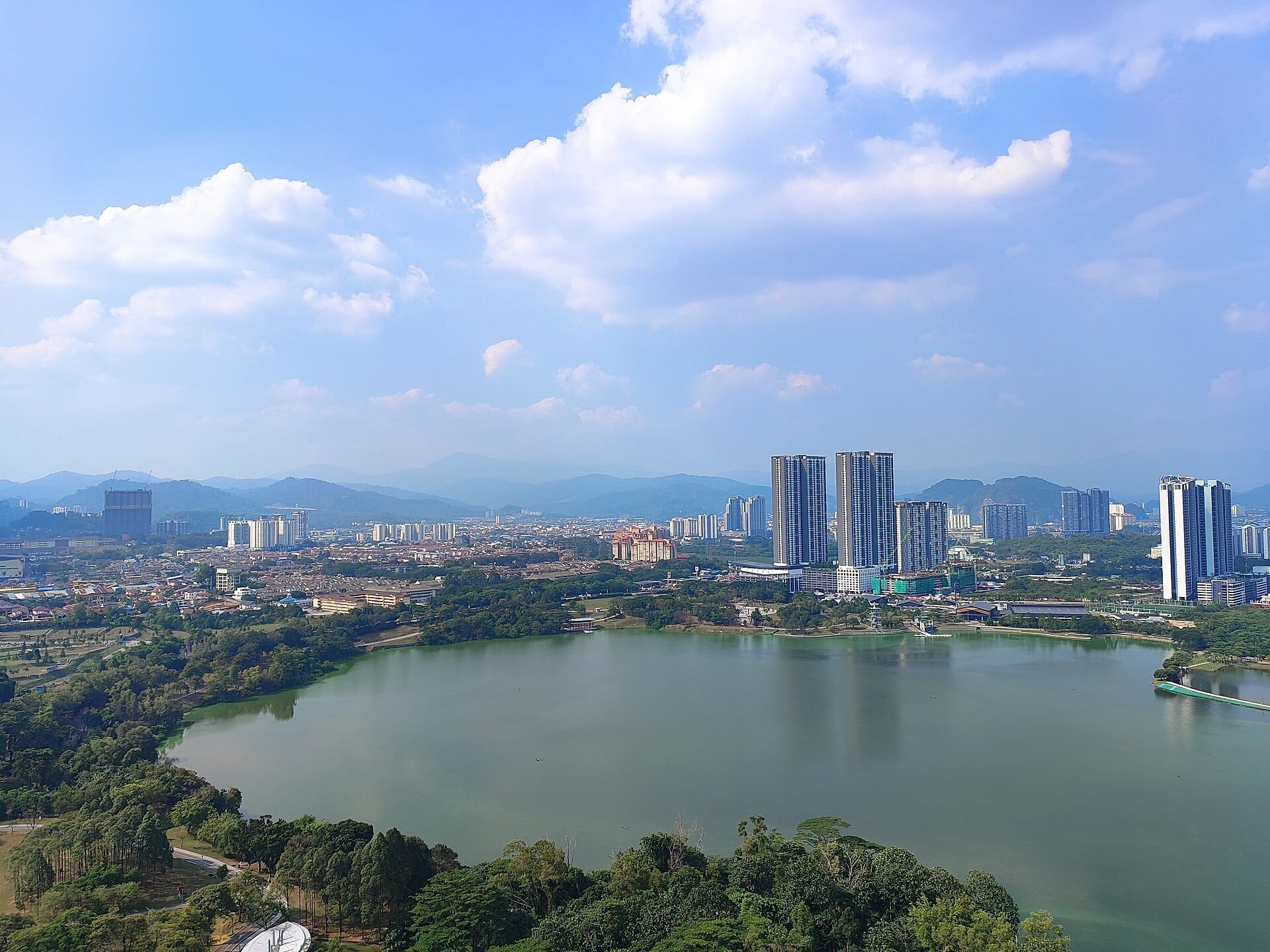
Kepong Metropolitan Park, known locally as Taman Metropolitan Kepong, sits in the northwestern reaches of Kuala Lumpur and covers roughly 89 hectares of landscaped parkland, secondary forest, and open water. The centerpiece is a large man-made lake that reflects the tree canopy on calm mornings and turns a deep metallic grey under overcast skies. Unlike the groomed gardens closer to the city center, this park has the feel of a semi-wild space that has been allowed to fill in around its infrastructure.
The park is not a major stop on tourist itineraries, and that is precisely what makes it valuable. You will find almost no food stalls selling overpriced drinks, no entry queues, and no audio tour kiosks. What you will find is a functioning community park where Kepong residents actually live their outdoor lives: retirees doing tai chi on the lake terrace at dawn, cycling clubs doing warm-up laps on weekend mornings, families setting up food on folding tables in the shade of the secondary forest edge.
💡 Local tip
Arrive before 8am on weekdays for the quietest experience. By 9am on weekends the main jogging path and lake boardwalk become noticeably busier, especially near the main entrance.
The Lake: The Park's Organizing Principle
The lake at Kepong Metropolitan Park is not ornamental. It is large enough that you lose sight of the far shore when mist sits over the water in the early morning, and the shoreline is irregular enough that the walking path that circles it never feels repetitive. The full loop around the lake takes approximately 45 minutes to an hour at a relaxed pace, with some stretches on a concrete path and others on compacted earth through shaded tree cover.
The water draws birds throughout the day. Kingfishers work the shallow edges near the inlet, and egrets can often be seen standing motionless in the reeds on the less-disturbed far side of the lake. If you stop moving and wait for a few minutes near the quieter sections of the shoreline, particularly in the early morning, you will hear the park differently: frogs, insects, and occasional distant hornbill calls from the forest margin.
Paddle boats and rowboats are available for rent at a facility near the main entrance. Pricing is modest and changes periodically, so confirm at the rental counter. This is a popular activity for families on weekend afternoons, and wait times can stretch to 20-30 minutes during school holidays. If you want to use the boats, come before 11am.
Tickets & tours
Hand-picked options from our booking partner. Prices are indicative; availability and final rates are confirmed when you complete your booking.
Petronas Twin Towers and Kuala Lumpur Tower observation deck tickets
From 34 €Private Taman Negara day trip from Kuala Lumpur with lunch
From 85 €Instant confirmationFree cancellationKuala Lumpur city and Batu Caves tour
From 41 €Instant confirmationFree cancellationKuala Lumpur city exploration private half-day tour
From 42 €Instant confirmationFree cancellation
Trails, Forest Edges, and Cycling
Kepong Metropolitan Park has dedicated cycling lanes along parts of its perimeter path, and cyclists use them with enough consistency on weekend mornings that pedestrians should keep to the walking side. If you plan to cycle, rental bicycles are available inside the park, though availability is not guaranteed. Bringing your own, if staying in northern KL, is a better option for longer sessions.
The secondary forest that backs parts of the park is not a marked nature reserve with interpretive signage, but it is dense and reasonably mature, with tall dipterocarps and fig trees that attract macaques and monitor lizards. Long-tailed macaques are present and habituated to people; do not feed them and keep bags zipped. A monitor lizard sighting near the water's edge is common and worth stopping for quietly.
Several fitness stations are spaced along the main path, the kind with parallel bars, balance beams, and overhead rings. These are consistently used by park regulars in the early morning and are in reasonable condition. There is also a children's playground area near the main facilities block.
How the Experience Shifts Through the Day
Early Morning (6am to 8:30am)
This is the park at its best. The light is low and angled, cutting through gaps in the canopy and creating strong reflections on the lake surface. The air carries a layer of moisture and a faint earthiness from the leaf litter at the forest edge. The main path has a steady stream of joggers and power walkers, but it never feels congested. The far sections of the lake loop are nearly empty.
Late Morning to Afternoon (9am to 4pm)
From about 9am onward, the park fills with families and more casual visitors, especially on weekends. The temperature increases noticeably, and the open sections of the lake path offer little shade. Bring water and sun protection; there is limited infrastructure for buying drinks inside the park. The boat rental area is at its busiest in the late morning and early afternoon.
Late Afternoon and Evening
A second wave of activity begins around 5pm as the heat softens. The jogging crowd returns, and the lake takes on warm amber tones. The park closes at a set time in the evening; confirm current closing hours before planning a sunset visit, as they have varied seasonally.
⚠️ What to skip
There is almost no food and drink available inside the park. Bring your own water, particularly if visiting mid-morning or later. The area outside the main entrance has some options, but nothing immediately adjacent.
Getting There and Getting Around
Kepong Metropolitan Park is located in Kepong, in northern Kuala Lumpur. The nearest KTM Komuter station is Kepong Sentral, from which the park is reachable in about 15-20 minutes on foot or a short Grab ride. The walk from the station is manageable but passes through unremarkable suburban streets, so most visitors opt for the Grab.
If you are driving, the park has a car park near the main entrance. On weekend mornings, arrive before 8am to find space without difficulty. Public transport planning for this part of KL is covered well in the getting around Kuala Lumpur guide, which includes KTM Komuter details.
The park is not easily combined with central KL attractions in a single day without a car. It is best visited as a dedicated half-day trip, ideally on a weekday morning for the least disruption.
ℹ️ Good to know
Kepong Metropolitan Park is located roughly 12 kilometres north of the KLCC area. Factor in 30-40 minutes travel time from central Kuala Lumpur by KTM or Grab.
Photography, Birdwatching, and Quiet Activities
The lake's north and west edges, furthest from the main entrance, offer the best photography conditions in the early morning: clean reflections, bird activity, and no crowds in the background. A telephoto lens is useful for bird shots at this distance. The light is at its most useful from 6:30am to 8am.
Birdwatchers will find the park underrated compared to more publicized sites. Common kingfisher, white-throated kingfisher, purple heron, and various warblers have all been recorded here. The secondary forest edge is the most productive area. Visiting on a weekday keeps noise levels manageable.
If birdwatching is a priority, note that the dedicated bird parks in KL proper offer a different but more curated experience. The KL Bird Park in the Lake Gardens area is an enclosed facility with over 3,000 birds, while Kepong offers a wilder, incidental encounter with species in their preferred habitat.
Who This Park Is and Is Not For
Kepong Metropolitan Park is genuinely suited to anyone who wants to see how Kuala Lumpur residents actually spend their outdoor leisure time, away from tourist infrastructure. It is particularly good for joggers, cyclists, families with children, and birdwatchers. It is also one of the few places in KL where you can walk for an hour on a semi-natural path without encountering a shopping mall on either side.
Visitors on short trips focused on iconic KL sights — the Petronas Twin Towers, city museums, or the historic core around Merdeka Square — should probably skip this unless they have a specific reason to head north. The park has no architectural landmarks, no food scene, and no souvenir culture. It is a park in the straightforward sense of the word.
Visitors with mobility limitations should note that the lake path includes uneven earth sections and some moderate inclines. The areas near the main entrance, including the terrace, fitness equipment zones, and boat rental area, are more accessible. Comfortable shoes are essential regardless of how much of the park you plan to explore.
For those trying to plan around weather patterns, the best time to visit Kuala Lumpur guide includes details on the monsoon seasons, which directly affect this park. Heavy afternoon rain is common from October to March and can make the earth paths slippery and unpleasant.
Insider Tips
- The quietest lake loop section is the far northern shore, opposite the main entrance. Walk the full perimeter counterclockwise to reach it before the morning crowd comes through.
- Macaques are present in the secondary forest fringe. They are not aggressive if you ignore them, but do not leave food visible or bags unzipped near the forest edge.
- There is a small fishing area on one side of the lake. Locals fish early morning with long rods from the bank; this is also one of the best spots to see herons standing in the shallows.
- Grab is the most reliable way to leave the park. Taxis are sparse in this area. Book your return ride before you enter the park to avoid waiting.
- The park's condition after heavy rain can vary. The earth sections of the trail become muddy quickly. If it rained the previous afternoon, wear shoes you do not mind getting dirty.
Who Is Kepong Metropolitan Park For?
- Joggers and morning walkers looking for a real route away from traffic
- Families with young children wanting open space and boat rides without an entry fee
- Birdwatchers seeking incidental wildlife encounters rather than curated displays
- Cyclists who want a safe, traffic-free environment in northern KL
- Travelers who want a low-key, genuinely local experience outside the tourist circuit
Nearby Attractions
Combine your visit with:
- Batu Caves
Batu Caves is a series of ancient limestone caverns set inside a 400-million-year-old hill, crowned by a 43-metre golden statue of Lord Murugan and reached by 272 rainbow-coloured steps. It is the most significant Hindu shrine outside India and one of Southeast Asia's most photographed natural landmarks. Whether you come for the temple rituals, the cave ecology, or simply the spectacle, the site rewards visitors who time their arrival carefully.
- Istana Budaya
Istana Budaya is Malaysia's premier performing arts venue, staging everything from grand theatrical productions to classical concerts and traditional dance. Beyond the performances, the building itself is a striking piece of contemporary Malaysian architecture worth seeing up close.
- Little India (Brickfields)
Brickfields is Kuala Lumpur's officially designated Little India, a compact neighbourhood packed with Tamil temples, textile traders, flower-garland sellers, and some of the city's best South Indian vegetarian cooking. It rewards slow walking and curious noses more than any checklist approach.
- Menara KL (KL Tower)
Standing 421 metres tall on Bukit Nanas hill, Menara KL offers one of the clearest panoramic views of Kuala Lumpur's skyline. Less crowded than the Petronas Towers observation deck and with a wider field of vision, it is a serious contender for the city's best high-altitude experience.