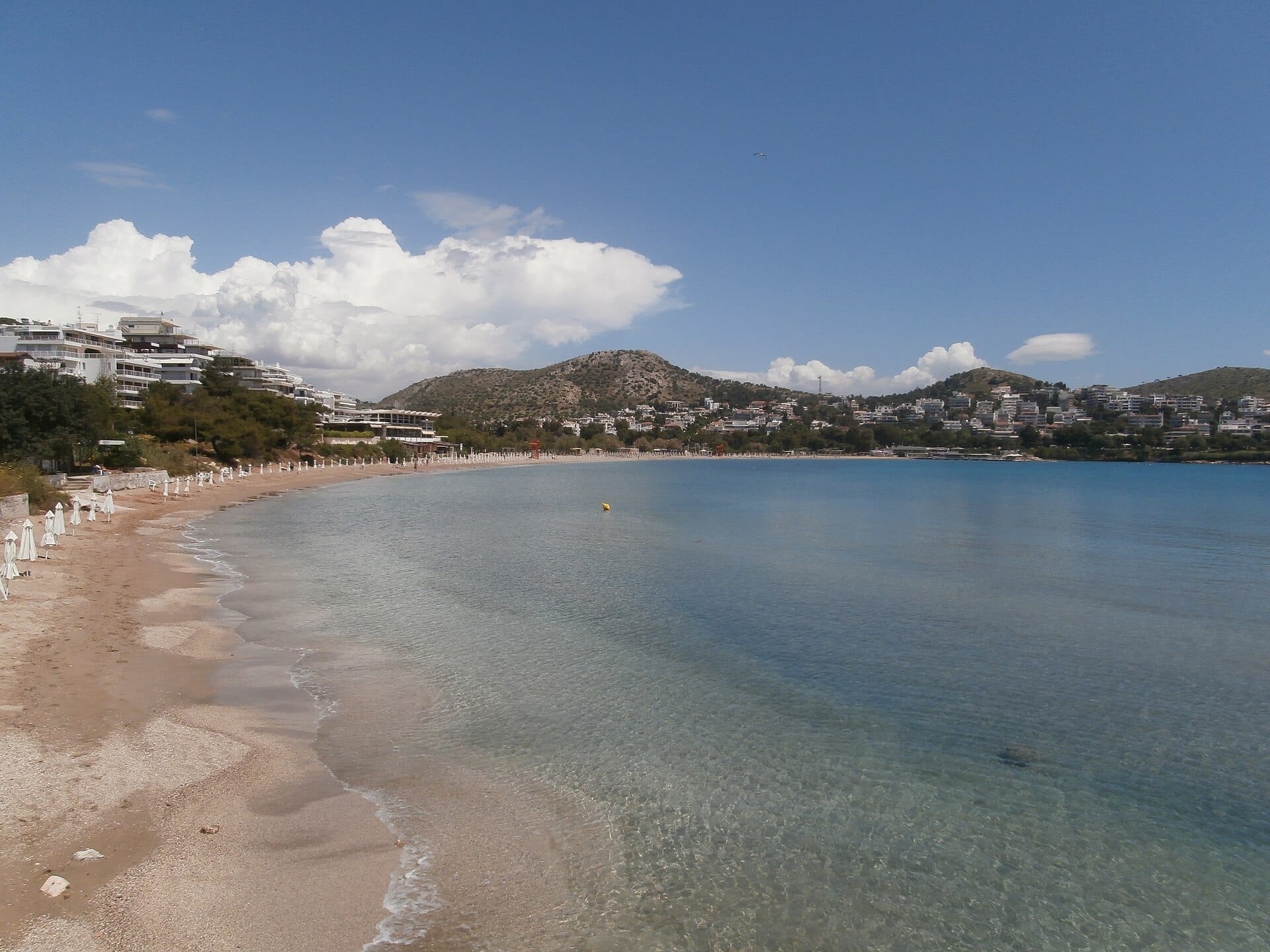
The Athenian Riviera is the coastal zone running south from Piraeus along the Saronic Gulf to Cape Sounio, passing through suburbs like Glyfada, Voula, and Vouliagmeni. It offers organized beaches, yacht marinas, seafood tavernas, and some of Greece's most dramatic coastal scenery — all connected to central Athens by tram, metro, and bus.
Most visitors to Athens never make it past the Acropolis, which means the 70-kilometre coastline stretching south from Piraeus to Cape Sounio remains largely their loss. The Athenian Riviera is where the city exhales: Athenians swim before work in summer, families fill beach clubs on weekends, and the light over the Saronic Gulf in the late afternoon turns everything a particular shade of amber that the city centre simply cannot match.
Orientation: Where the Riviera Begins and Ends
The Athenian Riviera is not a single neighbourhood in the traditional sense. It is a coastal corridor running roughly 70 kilometres along the western and southern edge of the Attica peninsula, tracing the Saronic Gulf from the port of Piraeus in the north down to Cape Sounio. The closest point to the city centre is around 16 kilometres from Syntagma Square, and the full length of the coast takes over an hour to drive end to end without traffic.
The spine of the Riviera is Leoforos Poseidonos, or Poseidonos Avenue, a wide coastal boulevard that passes through the key southern suburbs in sequence: Palaio Faliro, Alimos, Glyfada, Voula, Vouliagmeni, Varkiza, Lagonisi, Saronida, and Anavyssos, before continuing toward the Cape Sounio area. Each suburb has its own character. Glyfada is the most urban, with shopping streets and nightlife. Vouliagmeni is quieter and considerably more upscale. Varkiza and beyond feel more like genuine seaside towns, less polished and more relaxed.
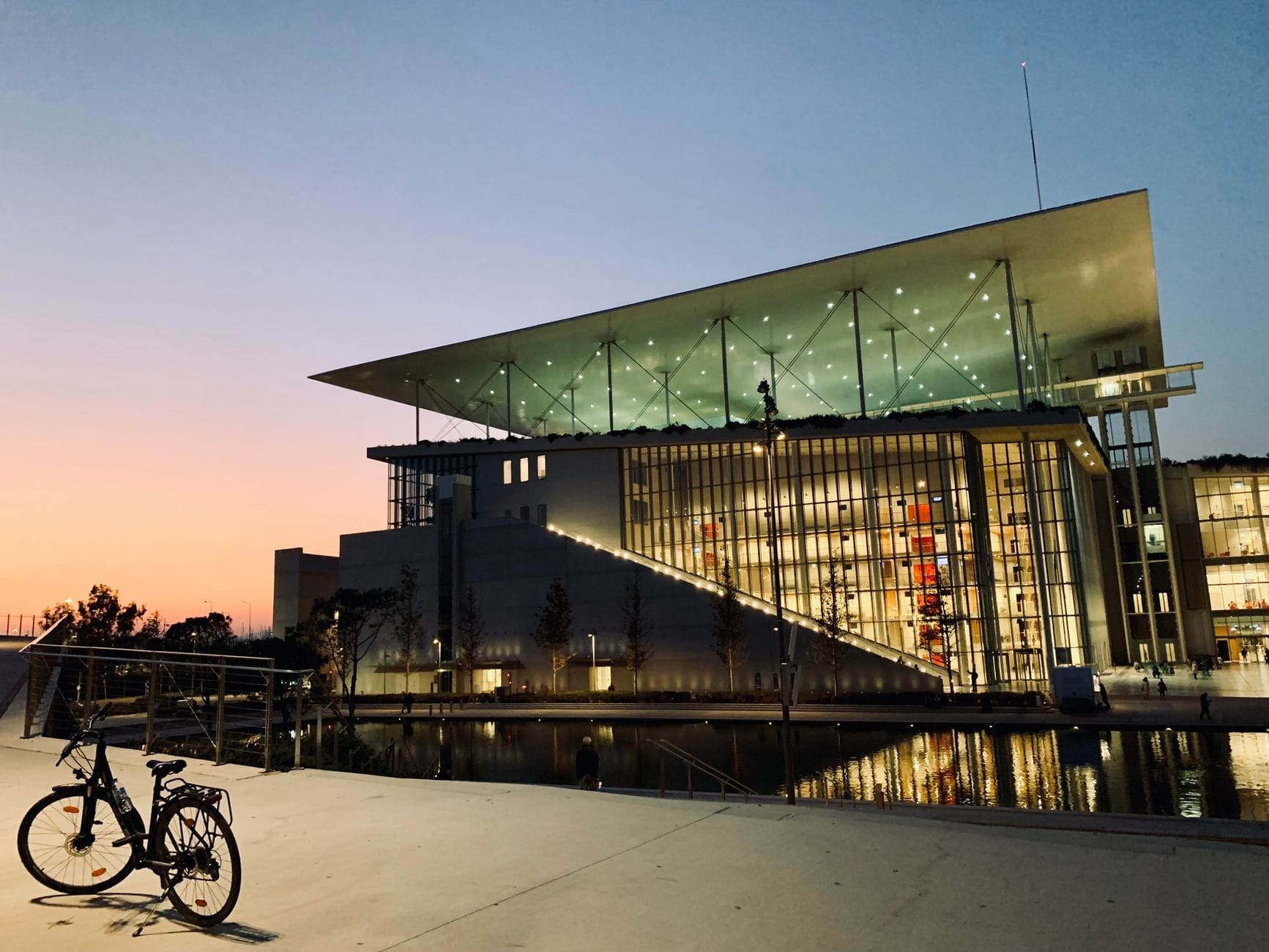
To understand the Riviera's place in the broader city, it helps to know that Piraeusthe Flisvos Marina sits at the northern end and functions as the Riviera's gateway from Athens. The Stavros Niarchos Foundation Cultural Center, one of the most significant architectural projects in modern Greece, sits just south of Flisvos Marina in Kallithea, near where the coastal zone begins to open up. From there, the coast progressively loosens its grip on the city grid and becomes something closer to a Mediterranean shoreline.
ℹ️ Good to know
The Riviera's beaches are divided between free public stretches and organized pay-entry beach clubs (known locally as organized beaches). Organized beaches charge an entry fee that typically includes a sunbed and umbrella. Free public beaches exist but are generally less maintained. Always verify current entry prices directly with each venue, as they change seasonally.
Character and Atmosphere Along the Coast
The Athenian Riviera operates on two distinct rhythms: the weekday rhythm, which belongs mostly to locals, and the weekend rhythm, which can feel like half of Athens has relocated to the shoreline. On a Tuesday morning in July, Poseidonos Avenue is filled with commuters heading north into the city, while the beaches themselves are quiet enough to find a good spot without difficulty. By Saturday afternoon in August, those same beaches are packed, the coastal road is gridlocked, and every taverna within 200 metres of the water has a queue.
The morning light on the Saronic Gulf is genuinely something. The water here is calmer than the open Aegean, and in the early hours before the heat sets in, the sea has a glassy quality that the afternoon wind breaks up. Athenians who live along the coast often swim at 7am before heading to work in summer — a habit that gives the beaches a briefly social, unhurried quality before the heat arrives and the crowds follow.
By afternoon, the sun is relentless between June and September, temperatures routinely exceeding 35°C in central Athens and only marginally cooler on the coast. The beach clubs provide shade and cold drinks, but anyone expecting a breezy, mild Mediterranean afternoon should calibrate expectations accordingly. The afternoon meltemi wind, which arrives most reliably from July onwards, provides relief but also kicks up chop in the water. Evenings are when the Riviera truly shines: the heat drops, the restaurants fill up, and the coastal road takes on a promenade quality, particularly around Glyfada and Vouliagmeni.
The tone of the Riviera shifts considerably as you move south. Palaio Faliro and Alimos are suburban and functional — useful for accessing Flisvos Marina or the tram, but not destinations in themselves. Glyfada is the Riviera's main town, with department stores, international fashion brands, and a nightlife scene that runs late in summer. Vouliagmeni, about 22 kilometres from central Athens, is a different proposition entirely: pine trees come down to rocky coves, the roads narrow, and the clientele at the restaurants tends to arrive in more expensive cars.
What to See and Do
The most straightforward activity on the Riviera is swimming. The organized beaches between Alimos and Vouliagmeni are generally well maintained, with clear water that earns regular Blue Flag certification. The Asteria Beach complex in Glyfada and the Astir Beach on the Astir Peninsula in Vouliagmeni are the most established options, both offering facilities ranging from basic sunbed rental to full watersports. Astir Beach in particular occupies a pine-fringed peninsula that feels genuinely secluded despite being less than 30 kilometres from Syntagma.
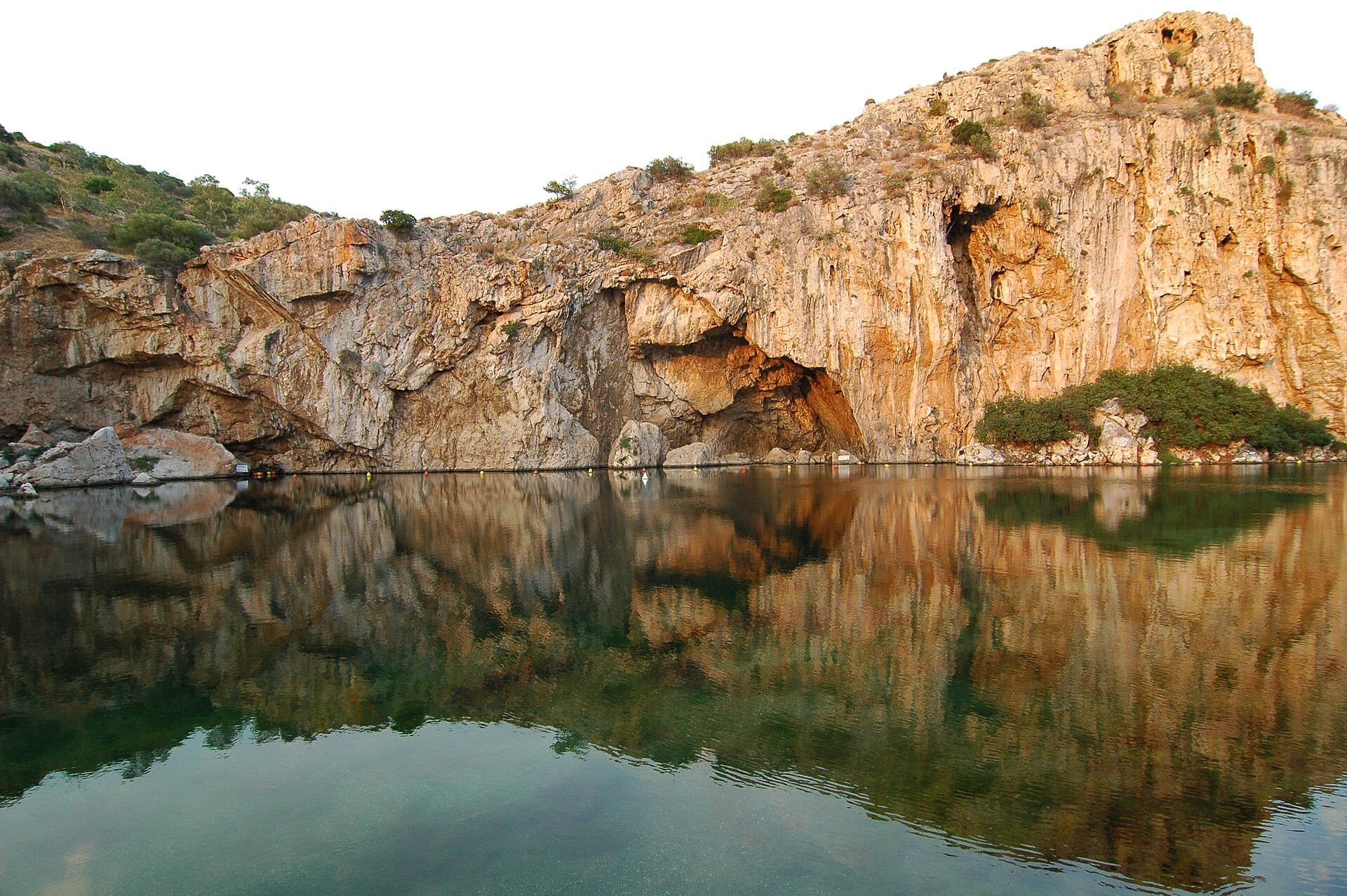
Vouliagmeni Lake, a few kilometres past the Astir Peninsula, is one of the most unusual natural features on the entire coast. It is a brackish thermal lake fed by underground springs, separated from the sea by a narrow strip of land. The water maintains a year-round temperature of around 22–29°C, and the lake is promoted for its mineral properties. It is genuinely popular with older Athenians year-round, not just in summer. Read more about Vouliagmeni Lake before visiting, as entry fees and opening hours should be verified in advance.
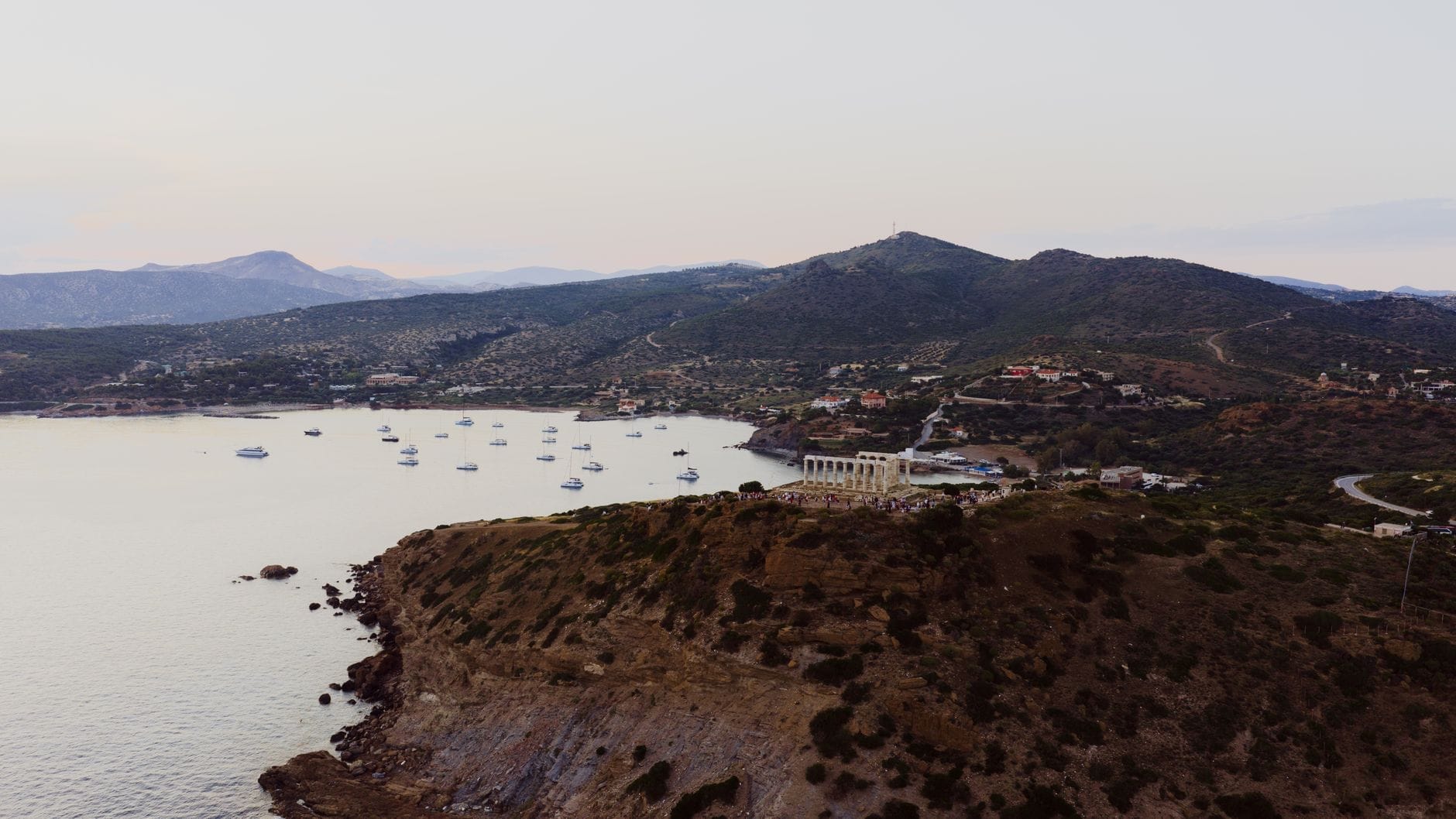
At the far end of the Riviera, the Temple of Poseidon at Cape Sounio is the single most dramatic sight on the entire coastline. Perched on a headland about 60 metres above the sea at the southern tip of Attica, the 5th-century BC temple is visible from far out at sea and has been used as a navigational landmark for millennia. The view from the temple precinct at sunset — with the columns turning gold and the Aegean extending to the horizon — is one of the great visual experiences in the Athens region. The site is around 70 kilometres from central Athens by road and is most practically visited by car or organised tour, though buses do run from the city.
Back near the northern end of the coast, the Stavros Niarchos Foundation Cultural Center in Kallithea is worth including in any Riviera itinerary. Designed by Renzo Piano and opened in 2016, it houses the Greek National Opera and the National Library of Greece in a building surrounded by a 21-hectare park that rolls down toward the sea. The park is free to enter, the views are excellent, and the architecture alone justifies the tram ride from Syntagma.
Flisvos Marina in Palaio Faliro: 302-berth marina with waterfront cafés, useful as a gentle introduction to the coast before heading south
Glyfada beaches: most accessible organized beaches with full facilities, good for families
Astir Beach, Vouliagmeni: premium peninsula beach with pine trees and calmer atmosphere
Vouliagmeni Lake: thermal brackish lake, unique natural feature, open year-round
Cape Sounio and the Temple of Poseidon: best done as a half-day trip, ideally timed for late afternoon
Sailing and watersports: several operators along the coast offer sailing lessons, kayaking, and windsurfing, particularly around Glyfada and Varkiza
Eating and Drinking on the Riviera
Seafood is the dominant food category along the Riviera, and the quality is generally reliable, though the price range is wide. The most tourist-facing restaurants cluster along the waterfront in Glyfada and around Flisvos Marina, where tables spill out toward the sea and the menus are translated into four languages. These are not necessarily bad — the setting does the work — but they are not where Athenians go when they want a serious meal.
For a more local experience, the streets running one or two blocks back from the water in Glyfada and Alimos have a better ratio of neighbourhood tavernas to tourist-facing restaurants. The typical format is simple grilled fish priced by the kilogram, octopus hanging outside to dry in the sun, village salad, and cold Mythos or Alfa beer. Lunch here between noon and 3pm on a weekday is the Riviera at its most unpretentious.
Vouliagmeni has a different food culture. The restaurants here tend toward the aspirational end of Greek cuisine, with menus that incorporate fresh local ingredients and wine lists that reference Greek regional producers. The cove-side restaurants in Vouliagmeni can be excellent but prices reflect the postcode. Booking in advance on weekends in summer is not optional.
For coffee culture, Glyfada's central pedestrian streets have the kind of all-day café scene that Athens does well: Greek coffee or freddo espresso in the morning, cold frappes through the afternoon heat, cocktails as the sun drops. The café strip in Glyfada is also where you will find the most concentrated nightlife on the coast, with clubs and bars that run very late in summer, particularly on weekends.
💡 Local tip
If you want fresh grilled fish at reasonable prices, avoid the first row of waterfront restaurants in any Riviera town and walk one or two streets back. Prices for the same dish can differ significantly, and the quality is often better at the places that rely on repeat local custom rather than passing tourists.
Getting There and Around
The Athens tram is the most scenic way to reach the northern section of the Riviera. Lines run from Syntagma Square down through Neos Kosmos and along the coast to Neo Faliro and Voula, with stops including Flisvos Marina and several beach areas. The journey from Syntagma to the end of the coastal tram line takes around 40-50 minutes. For context on the broader Athens public transport network, the getting around Athens guide covers metro lines, tram routes, and ticketing in detail.
For areas south of Voula — Vouliagmeni, Varkiza, and beyond — the tram does not reach. The most practical metro connection for bus services to these areas is Elliniko station on Line 2 (the Red Line). From Elliniko, several bus lines serve the coast: express services run to Saronida, while local routes continue to Varkiza. Bus A1 runs along the coastal road between Piraeus and Voula. Verify current routes and schedules with OASA before travel, as these can change seasonally.
A car is the most practical option for anyone wanting to explore the full length of the coast at their own pace, particularly for reaching Cape Sounio. Driving from central Athens to Sounio takes around 70 minutes outside of peak hours, considerably more on summer weekends when the coastal road becomes heavily congested south of Glyfada. The road itself, once past Varkiza, becomes genuinely scenic, hugging clifftops with views over the Saronic Gulf.
Taxis and ride-hailing apps are straightforward for reaching Glyfada and Vouliagmeni from central Athens. The Beat app is widely used in Athens. Fares to Glyfada from Syntagma run to around 20-25 euros depending on traffic, though these should be verified as rates are subject to change. For Cape Sounio, a taxi is expensive enough that an organised day tour or car rental makes more economic sense for most visitors.
⚠️ What to skip
Summer weekend traffic on Poseidonos Avenue and the coastal road south of Glyfada can be severe. If you are planning to drive to Vouliagmeni or Varkiza on a Saturday afternoon in July or August, allow significantly more time than Google Maps suggests. Consider leaving Athens before 10am or after 4pm to avoid the worst of it.
Where to Stay
Basing yourself on the Riviera rather than central Athens makes sense for a specific type of trip: one centred on beaches and coastal relaxation rather than archaeological sites and city neighbourhoods. For visitors who want both, staying in a central neighbourhood like Koukaki or Syntagma and making day trips to the coast is generally more efficient. The full overview in the where to stay in Athens guide helps map out these trade-offs.
Glyfada is the most practical coastal base: it has the best public transport connections back to central Athens, the widest range of accommodation options, and a genuinely functional town centre with supermarkets, pharmacies, and everyday services. It suits families and visitors who want beach access without sacrificing urban convenience.
Vouliagmeni is the prestige option. Several high-end resort hotels occupy the peninsula and surrounding coves, some with private beach access and spa facilities. It is quiet, expensive, and somewhat removed from the rest of Athens — which is either a feature or a drawback depending on what you are after. The trade-off is that getting into central Athens for evening dining or sightseeing requires a taxi or a long bus ride.
Varkiza and points further south offer smaller hotels and self-catering apartments that attract Athenians on extended summer stays. For a foreign visitor on a one or two week trip, staying this far out makes logistics around the city considerably more complicated.
Practical Considerations
The Riviera is almost exclusively a summer destination for most visitors. The beach season runs roughly from late spring to early autumn, with peak activity concentrated in July and August. Outside those months, many beach clubs close entirely, and the coastline takes on a quieter, windier character that suits walkers and people seeking the off-season version of a place. For general timing advice, the best time to visit Athens guide covers seasonal conditions across the city and coast.
The summer heat on the Riviera is real. Athens experiences a hot-summer Mediterranean climate, and temperatures can exceed 35°C between June and August, with heatwaves pushing past 40°C. The coast offers marginally more relief than the city centre, but it is not dramatically cooler. Hydration, sun protection, and planning physical activity for morning or evening hours are sensible precautions. The Athens in summer guide covers heat management and what to expect in the peak months.
Organized beaches charge entry fees that typically cover sunbed and umbrella hire. These vary by location and season — expect anything from around 8 euros at modest public beaches to 30 euros or more at premium clubs. Some beach clubs on the southern Riviera operate more as full-service resorts with minimum spend requirements. Always check current pricing before arrival, as these change between seasons.
ℹ️ Good to know
Cape Sounio and the Temple of Poseidon are technically a day trip from the Riviera or central Athens rather than part of the Riviera itself, but they sit at its natural southern terminus. The site is managed by the Greek Ministry of Culture and has its own admission charge and opening hours. Verify these before visiting, as they are updated periodically.
Who the Athenian Riviera Is For
The Riviera is not for every visitor to Athens. Someone on a three-day city break focused on ancient sites and neighbourhood exploration will not need to come here at all — the archaeology, museums, and food of central Athens are more than sufficient. But for anyone staying five days or more, or visiting in summer and wanting to combine city and coast, the Riviera earns its place in the itinerary.
It also makes a strong argument as an add-on to a day trip to Cape Sounio: rather than driving directly back to Athens from the temple, the route north along the coast through Lagonisi, Varkiza, and Vouliagmeni allows for a swim stop and a seafood lunch before returning to the city. For suggestions on structuring this kind of day, the day trips from Athens guide includes Cape Sounio alongside other coastal and archaeological options.
TL;DR
The Athenian Riviera runs 70 km from Piraeus to Cape Sounio along the Saronic Gulf, passing through suburbs including Glyfada, Voula, Vouliagmeni, and Varkiza.
Best suited to visitors staying five or more days in Athens, families wanting beach access, and anyone visiting in summer who needs an escape from city heat.
Glyfada is the most accessible and practical coastal hub; Vouliagmeni offers premium resort options; Varkiza and beyond feel more authentically local but require more planning to reach.
The Temple of Poseidon at Cape Sounio is the single most compelling reason to travel the full length of the coast — aim for late afternoon for the best light.
Avoid the Riviera on summer weekends if you dislike crowds and traffic; weekday visits offer a significantly more relaxed experience at the same beaches and restaurants.
Three full days is the right amount of time to cover Athens at a comfortable pace, from the Acropolis and its world-class museum to the ancient Agora, Monastiraki, Kolonaki, and beyond. This guide breaks it all down day by day, with booking tips, honest crowd warnings, and the practical details most itineraries skip.
Twenty-four hours in Athens is enough to cover the Acropolis, the Acropolis Museum, the historic neighborhoods of Plaka and Monastiraki, and a spectacular sunset viewpoint. This itinerary is built around realistic walking distances, smart timing, and clear guidance on what to skip when time is short.
Athens holds one of the densest concentrations of ancient history on earth. This guide covers the city's major archaeological sites and museums, from the Acropolis and Ancient Agora to lesser-known gems like Kerameikos, with practical tips on tickets, timing, and what to expect at each.
Athens is one of the best cities in Europe to eat well without spending much. This guide covers the essential dishes, where to find them, realistic prices for 2026, and how to avoid the tourist traps that line the most photographed streets in the city.
Athens rewards those who wander beyond the obvious. From a Cycladic island village clinging to the Acropolis rock to a thermal lake on the coast, these are the experiences that make the city feel like yours. This guide covers the lesser-known sites, quiet hills, and local haunts that most visitors walk straight past.
Summer in Athens means intense heat, peak crowds, and some of the longest days in Europe. This guide breaks down what each month actually looks like, how to handle the heat, and how to get the most out of your visit in June, July, or August.
Athens nightlife runs on its own schedule, with dinners starting at 10pm and clubs peaking between 3 and 5am. This guide covers every major district, the best bars and clubs, what things cost, how to dress, and how to navigate the city after dark like a local.
Athens is one of Europe's most affordable capitals, with free archaeological sites, cheap street food, and an excellent public transport network. This guide breaks down exactly what things cost, when to go for the best deals, and how to stretch every euro without missing anything important.
Athens is generally a safe city for tourists, but petty theft, taxi scams, and a few neighborhood considerations are worth knowing before you arrive. This guide covers the real risks, the overhyped ones, and exactly how to stay out of trouble.
Athens rewards shoppers who know where to look. This guide breaks down the city's best markets, shopping streets, and neighborhoods by type, with practical advice on timing, pricing, and what's actually worth buying versus what to skip.
Athens is one of Europe's most walkable capitals, with millennia of history packed into a compact city center. This guide covers the best guided walking tours, self-guided routes, practical logistics, and clear advice on timing, pricing, and what to avoid.
Athens is far more family-friendly than most travelers expect. From interactive museum programs and funicular rides to free outdoor ceremonies and canal kayaking, this guide covers the best activities for children of all ages, honest pricing breakdowns, and practical logistics for navigating Athens with kids.
Athens holds one of the densest concentrations of world-class museums anywhere in Europe. This guide covers every major collection, from the Acropolis Museum's Parthenon sculptures to the Benaki's sweep of Greek history, with practical advice on what to prioritise and when to go.
Athens rewards visitors year-round, but the experience changes dramatically by season. This guide breaks down every month by weather, crowd levels, and cost so you can plan around what actually matters to you.
Athens rewards those who look up, and out. The city's hills, ancient rock outcrops, rooftop bars, and clifftop temples frame the Parthenon, the Saronic Gulf, and the sprawling Attic basin from every angle. This guide covers the best viewpoints in Athens, from completely free hilltop climbs to spectacular paid experiences.
Athens sits at the center of one of Europe's richest regions for day tripping. Within a few hours you can stand at the Oracle of Delphi, swim off a car-free Saronic island, or walk through a Bronze Age citadel. This guide covers the best day trips from Athens, organized by type and travel time.
Athens is one of Europe's most rewarding cities on a tight budget. From ancient hilltop views and marble stadiums to flea markets and ceremonial guards, this guide covers the best free experiences in the Greek capital, plus the specific days when even major paid sites open their gates for nothing.
Athens has one of the most affordable and well-connected urban transport networks in Southern Europe. This guide covers everything from metro fares and airport express buses to taxi flat rates, tram routes, and the ticketing mistakes that catch most first-time visitors off guard.
Athens rewards visitors who go beyond the obvious. This guide covers the best things to do in Athens Greece, from ancient sites and world-class museums to rooftop bars, coastal escapes, and neighborhood walks, with practical advice on tickets, timing, and what to skip.
Choosing where to stay in Athens shapes your entire trip. This guide breaks down every major neighbourhood by walkability, noise level, price range, and proximity to the sights that matter, so you can book with confidence rather than guesswork.