Best Things to Do in Macau: The Definitive Guide
Macau packs an extraordinary range of experiences into just 32.9 km². This guide covers the best things to do in Macau across history, food, casinos, and nature — with crowd warnings, seasonal timing advice, and practical logistics to help you plan a smarter trip.
TL;DR
- The historic core on the Macau Peninsula is free to explore — the Ruins of St. Paul's and Senado Square charge no admission and are best visited early morning to beat crowds.
- Cotai is a different world from the Peninsula: think massive integrated resorts, world-class shows, and architecture spectacles like The Venetian Macao — most of which cost nothing to enter and explore.
- Golden Week holidays (October, January/February, May) push daily visitor counts above 140,000–190,000. Book accommodation early and visit major sites before 9am or after 7pm.
- October to December is the best time to visit for outdoor sightseeing: lower humidity, minimal rain, temperatures around 22–26°C. See the full best time to visit Macau guide for a month-by-month breakdown.
- Macau is compact enough for a packed one-day itinerary, but two days lets you do justice to both the Peninsula's heritage and Cotai's scale.
The UNESCO Historic Centre: Macau's Best Free Attraction
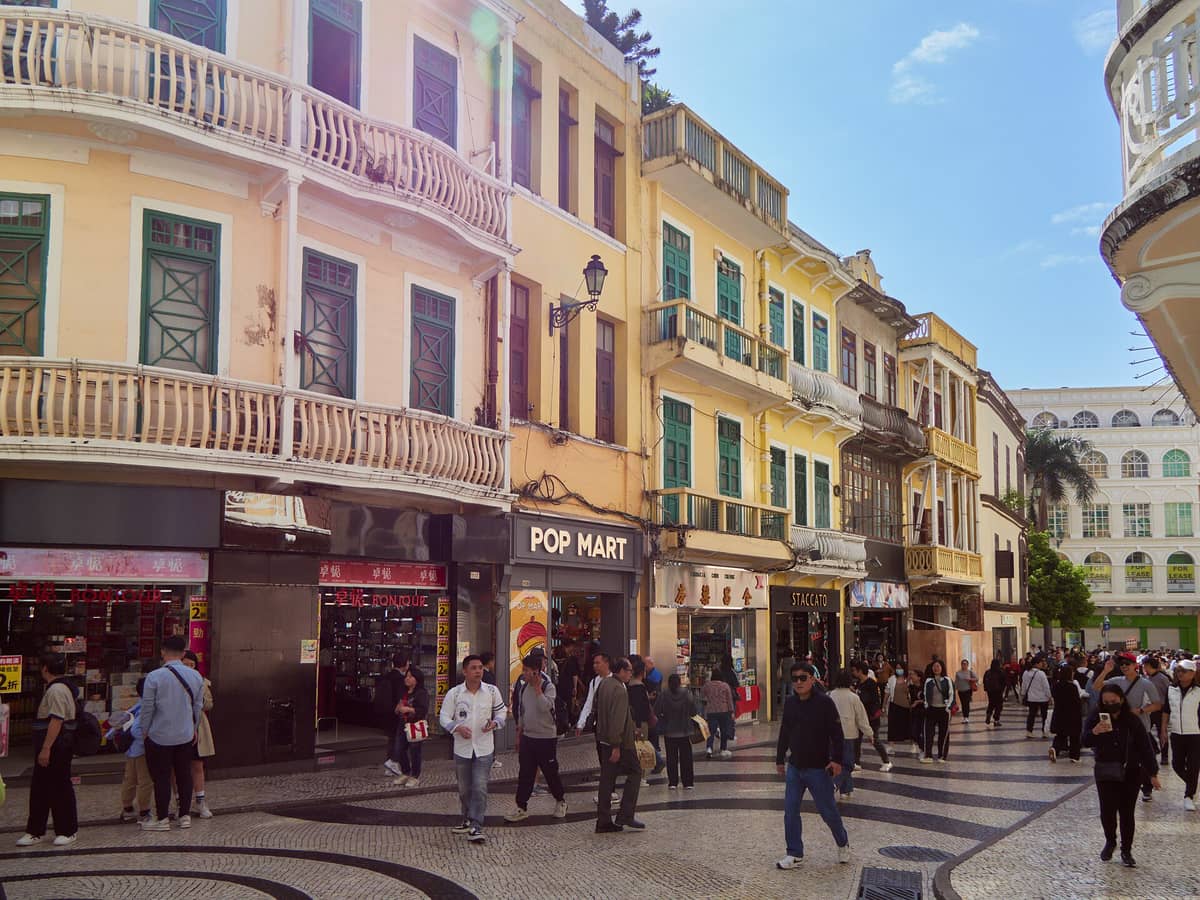
The Historic Centre of Macao is a UNESCO World Heritage Site covering 22 historic buildings and 8 public squares spread across the Macau Peninsula. For first-time visitors, this is where you start. The area is compact — you can walk between the main sites in under two hours — and admission to almost everything is free. The centerpiece is the Ruins of St. Paul's, a 17th-century Jesuit church facade that survived a catastrophic fire in 1835. The interior Sacred Art Museum and Crypt are open roughly 09:00–18:00 (last admission around 17:30), closed early on Tuesdays around 14:00. Admission is free.
Walk downhill from St. Paul's and you reach Senado Square (Largo do Senado), a pedestrianized plaza paved with wave-pattern Portuguese tiles. The Leal Senado Building and the St. Dominic's Church flank the square. Both are free to enter. This area is the photogenic heart of Macau and also its most crowded spot during Chinese public holidays — National Day Golden Week in October 2024 saw over 191,000 visitors arrive in a single day. If you're visiting during Golden Week, aim to reach Senado Square before 8:30am.
💡 Local tip
The Na Tcha Temple sits directly beside the Ruins of St. Paul's and is almost always overlooked by visitors rushing to the main facade. It's a small, active Taoist shrine — worth two minutes of your time for the contrast it offers against the Portuguese stonework right next door.
Beyond Senado Square, the heritage trail extends to lesser-visited sites that reward the curious. The Mandarin House is a 19th-century Qing dynasty residence with four courtyards, open to visitors free of charge. The Lou Lim Ieoc Garden blends Chinese and Portuguese landscaping and offers a quieter escape from the street-level crowds. For a complete self-guided route, the Macau heritage walk guide maps the full circuit with practical timing.
Cotai Strip: The World's Most Concentrated Casino Resort Zone
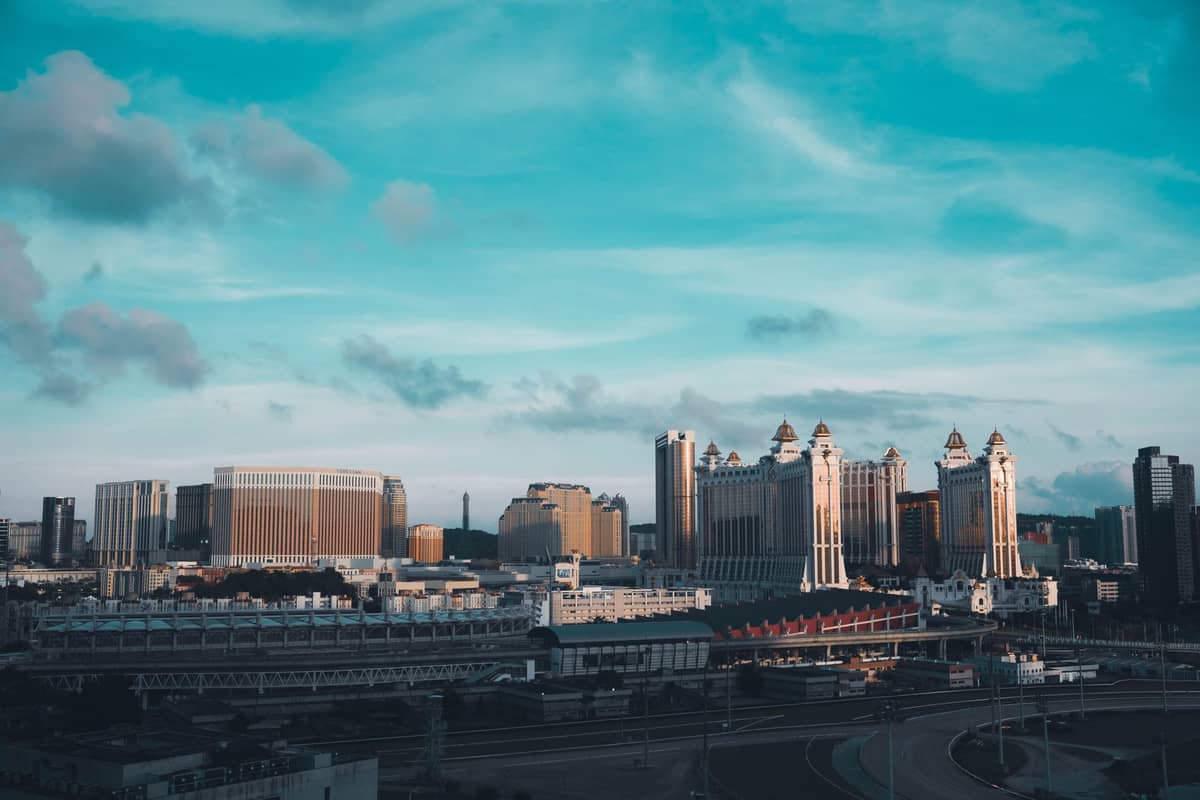
Cotai is reclaimed land between Taipa and Coloane, developed from the early 2000s into a strip of integrated mega-resorts. Even if you have no intention of gambling, Cotai is worth seeing for its sheer architectural ambition. The Venetian Macao replicates the canals and piazzas of Venice across a floor plan larger than five football pitches. Entry to the main mall and casino floor is free; gondola rides cost extra. It's over-the-top by design, and understanding that makes it easier to enjoy on its own terms.
The Parisian Macao features a half-scale Eiffel Tower replica — illuminated at night and open for observation deck tickets. Next door, Wynn Palace has a free cable car over its performance lake and elaborate flower installations that change seasonally. These resorts compete fiercely for visitors, which means free spectacles are everywhere. For a full breakdown of what's worth your time and what to skip, the Cotai Strip guide covers each property in detail.
⚠️ What to skip
Cotai hotels inflate room rates sharply during Chinese Golden Weeks and the Macau Grand Prix (typically November). If your dates are flexible, even shifting your stay by one week on either side of a Golden Week can cut accommodation costs significantly and make major attractions far more pleasant to visit.
Temples, Fortresses, and Hilltop Views
Macau's religious architecture is not just Portuguese. The A-Ma Temple at the southern tip of the Peninsula is the oldest temple in Macau, dedicated to the sea goddess Mazu. It predates Portuguese colonization and remains an active place of worship. Entry is free. Incense clouds the narrow courtyards in the morning, and the carved granite boulder inscriptions on the hillside are genuinely impressive if you know to look for them.
Uphill from the historic core, the Fortaleza do Monte (Monte Fort) houses the Macau Museum within its walls. The fort's ramparts offer one of the best free panoramic views over the Peninsula's red-tile rooftops toward the Pearl River. The museum itself charges a small admission fee and covers Macau's multi-layered history across Portuguese colonization, Chinese traditions, and contemporary SAR life. Combine this with the Guia Fortress and Lighthouse — the oldest Western-style lighthouse on the South China coast, sitting atop Guia Hill — for a half-day of elevated perspectives and manageable walking.
- A-Ma Temple Macau's oldest temple, free entry, most atmospheric in the early morning when worshippers light incense.
- Fortaleza do Monte Free entry to the fort grounds; small fee for the Macau Museum inside. Best views over the Peninsula rooftops.
- Guia Fortress and Lighthouse Walk or take the cable car up Guia Hill. The lighthouse chapel interior has well-preserved 17th-century frescos.
- Kun Iam Temple A large, multi-courtyard Buddhist temple complex on the Peninsula. The 1844 Sino-American treaty was signed in its gardens.
- Penha Hill and Church A quieter hilltop spot with a small chapel and sweeping harbor views — popular with locals, mostly missed by tourists.
Food: Why Macanese Cuisine Deserves More Attention Than It Gets
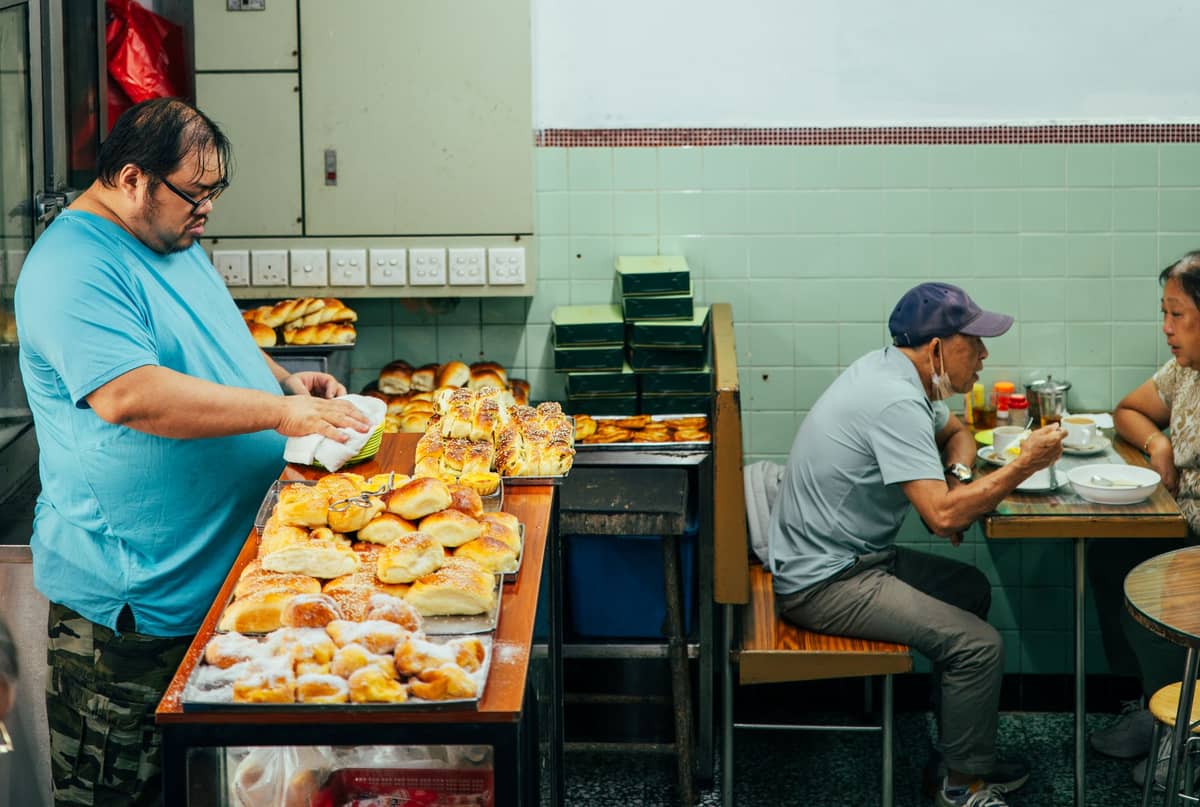
Macanese food is one of Asia's most underrated cuisines — a genuine fusion developed over 400 years of Portuguese colonial history and trade routes through Africa, India, and Southeast Asia. Dishes like minchi (seasoned minced meat with fried egg over rice), African chicken (piri piri-spiced and baked), and bacalhau (salt cod prepared Portuguese style) appear on menus across the Peninsula and Taipa Village. This is not fusion in the modern marketing sense; it's a cuisine that evolved from genuine cross-cultural contact. The Macau food guide breaks down where to find the best versions of each dish.
Street food is concentrated around Senado Square and the alleys leading to St. Paul's. The egg tarts (pastel de nata) at Lord Stow's Bakery in Coloane Village are widely cited as the original Macau-style egg tart — different from the Hong Kong version, with a flakier pastry and a slightly less sweet custard. Lines form quickly after opening. The Macau egg tarts guide explains the Lord Stow's backstory and lists other strong contenders around the city. For broader street food beyond the tourist core, the Macau street food guide maps the best stalls by area.
✨ Pro tip
Taipa Village is a better bet than Senado Square for sit-down Macanese food. The streets around Rua do Cunha have a cluster of mid-range restaurants serving authentic local dishes at prices aimed at residents, not casino tourists. Lunch on a weekday is significantly cheaper and less rushed than weekend dinner service.
Things to Do Beyond the Historic Core
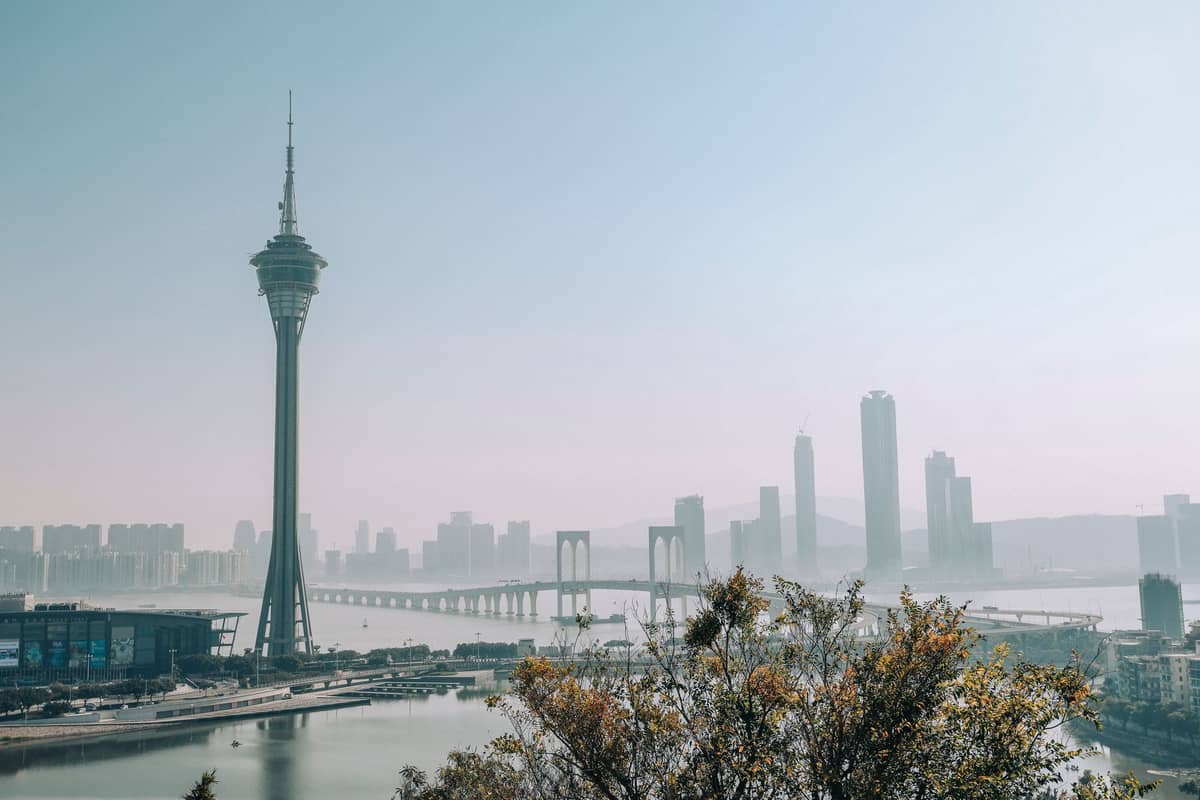
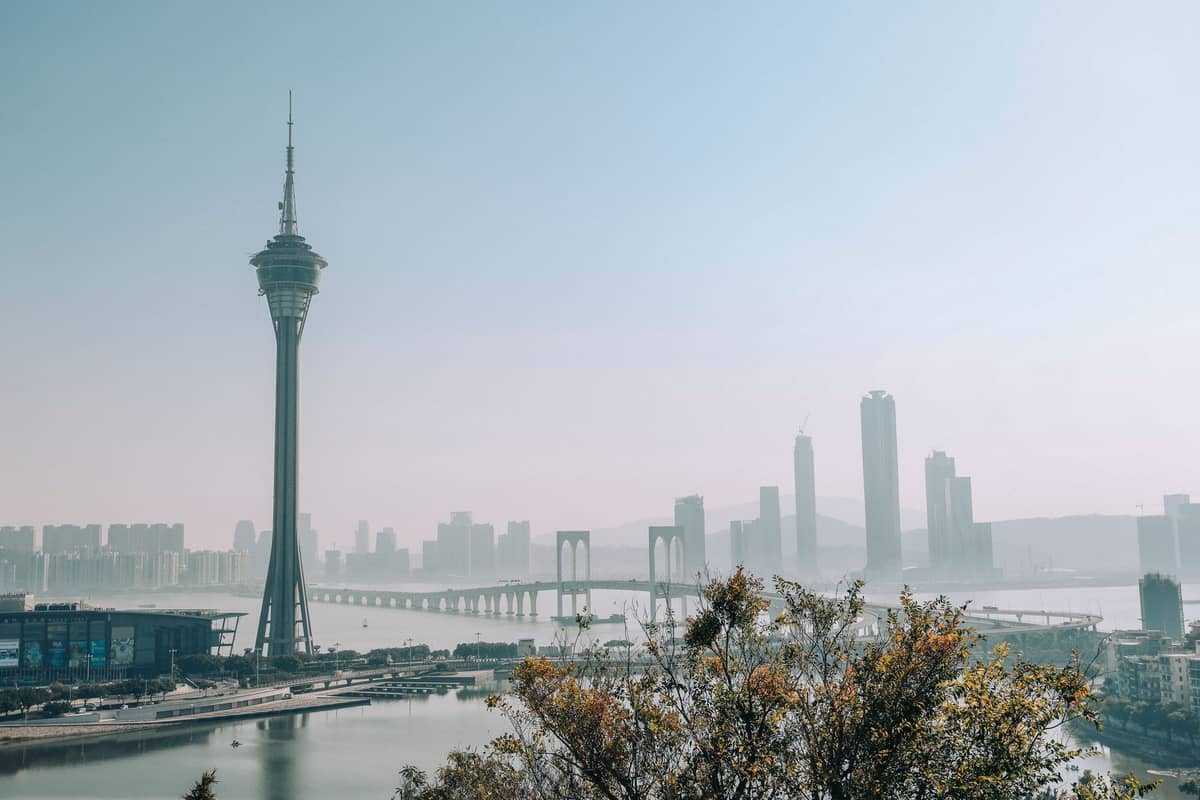
Macau Tower stands 338 metres above the Peninsula waterfront and offers the obvious viewpoint — but also the world's highest commercial bungee jump at 233 metres, along with a SkyWalk around the outer rim of the observation deck. These are not for everyone, and the prices reflect the novelty. The observation deck alone is more reasonably priced and gives good views of the Pearl River Delta on clear days. For everything you need to know before booking the jump, the Macau bungee jump guide covers pricing, logistics, and what to expect.
Coloane, the southern island, is a different pace entirely. Hac Sa Beach is a natural black-sand beach — the name means 'black sand' in Cantonese — with barbecue facilities and a park behind it. It's not a tropical postcard beach, but it's genuinely used by locals and offers a rare patch of green-and-sea in an otherwise urban SAR. The Coloane hiking trails connect the island's forested hills and take one to two hours depending on the route chosen. Seac Pai Van Park at the base of Coloane's hills has walking paths and a small aviary, and is free to enter.
- Macau Grand Prix Museum: free to enter, covers the SAR's decades-long motorsport history with original race cars on display.
- Macau Science Centre: well-suited for families, with interactive exhibits and a planetarium. Small admission fee applies.
- Lou Lim Ieoc Garden: one of the most peaceful spots on the Peninsula, particularly good in the morning before tour groups arrive.
- Macau Museum of Art: the largest art museum in the region, with rotating exhibitions focused on Chinese and Macanese art. Free entry on select days — check ahead.
- Iec Long Firecracker Factory: a preserved colonial-era factory in Taipa that once produced fireworks — now a cultural heritage site open for visits.
Practical Tips for Getting the Most Out of Macau
Macau covers only 32.9 km², which means most things to see are within 20–30 minutes of each other by bus or taxi. Public buses are cheap and cover all major areas including Cotai, Taipa, and Coloane. The Macau Light Rapid Transit (LRT) Taipa Line connects the airport, Cotai resorts, and Taipa Ferry Terminal. Casino resort shuttle buses are free and run from border gates, ferry terminals, and the airport — even if you're not staying at the property, most shuttles are open to all. This makes getting around the Cotai Strip essentially free if you time your connections. The getting around Macau guide has the full breakdown of routes, fares, and logistics.
Currency is the Macanese pataca (MOP), but Hong Kong dollars are accepted almost universally at a fixed rate of approximately 1 HKD to 1.03 MOP. ATMs dispense both currencies. Tipping is not mandatory; many restaurants and hotels add a 10% service charge automatically. Tap water is treated but local advisories recommend boiling or using bottled water. Electricity is 220V/50Hz with British-style Type G plugs common, alongside some Type F sockets — bring an adaptor if your devices use other plug types. Emergency services are reached on 999.
ℹ️ Good to know
Visa rules in Macau are separate from Mainland China and Hong Kong. Many nationalities — including EU member states, the UK, and Australia — receive visa-free entry for short stays, but durations and conditions vary by passport. Always verify current entry requirements with the Macau Public Security Police Force (FSM) immigration portal before booking travel.
If budget is a priority, Macau is more manageable than its casino reputation suggests. The heritage sites, temples, fortress grounds, most gardens, and many museums are free. Casino floors require no spend to walk through. The main costs are accommodation (which spikes during holidays) and meals at resort properties. The Macau on a budget guide maps out a realistic low-spend itinerary, and the free things to do in Macau guide lists every no-cost attraction worth your time.
FAQ
How many days do you need in Macau?
Two full days is enough to cover the Peninsula's UNESCO heritage sites, at least one temple and fortress, and an evening in Cotai. One day is feasible if you focus on the historic core and one or two Cotai properties, but it's rushed. If you want to include Coloane, Taipa Village at a relaxed pace, or a show at one of the resorts, allow three days.
What are the best free things to do in Macau?
The Ruins of St. Paul's, Senado Square, A-Ma Temple, Fortaleza do Monte grounds, Lou Lim Ieoc Garden, Camoes Grotto and Casa Garden, the casino resort interiors at Venetian and Wynn Palace (including the free cable car), and the Grand Prix Museum are all free or have no mandatory admission charge. The majority of Macau's UNESCO-listed sites cost nothing to visit.
When is Macau most crowded?
Golden Week holidays are the peak crowd periods: National Day (October 1–8), Chinese New Year (January/February), and Labour Day (May 1–5). During these windows, daily arrivals have exceeded 170,000–190,000 visitors. Major sites like St. Paul's and Senado Square become extremely congested by mid-morning. Outside Golden Weeks, weekday mornings are substantially quieter.
Is Macau worth visiting if you don't gamble?
Yes, and the gambling-centric reputation undersells what Macau actually offers. The UNESCO heritage sites are among the best-preserved examples of Portuguese colonial architecture in Asia. The food scene — particularly Macanese cuisine — is genuinely distinctive. The Cotai resort architecture is worth seeing as a cultural phenomenon even if you never touch a chip. Coloane provides a complete contrast to the urban core.
How do you get from Hong Kong to Macau?
The fastest and most common route is by high-speed ferry from Hong Kong Island (Sheung Wan) or Kowloon (China Ferry Terminal) or Kowloon to Macau's Outer Harbour or Taipa Ferry Terminal — journey time is approximately one hour. The Hong Kong-Zhuhai-Macau Bridge also connects Hong Kong International Airport to Macau via shuttle bus, which can be convenient if you're arriving from or departing to Hong Kong's airport directly. The full logistics are covered in the Hong Kong to Macau guide.