What to Eat in Macau: A Complete Guide to Macanese Cuisine
Macau's food scene is unlike anywhere else in Asia. A UNESCO Creative City of Gastronomy since 2017, it blends Portuguese, Chinese, and broader Lusophone influences into a cuisine that is entirely its own. This guide covers the essential dishes, where to find them, and what to skip.
TL;DR
- Macanese cuisine is a distinct culinary tradition blending Portuguese, Chinese, and other Asian influences — not simply Portuguese food served in China.
- Macau was designated a UNESCO Creative City of Gastronomy in 2017, and the city's street food culture is as rewarding as its sit-down restaurants.
- Key dishes to try: minchi, African chicken, bacalhau, pork chop bun, and egg tarts.
- Macanese food is found across local restaurants on the Peninsula and in Taipa Village — not only in casino dining rooms.
- The annual Macau Food Festival typically runs in late November, when crowds and prices spike.
What Makes Macanese Cuisine Unique
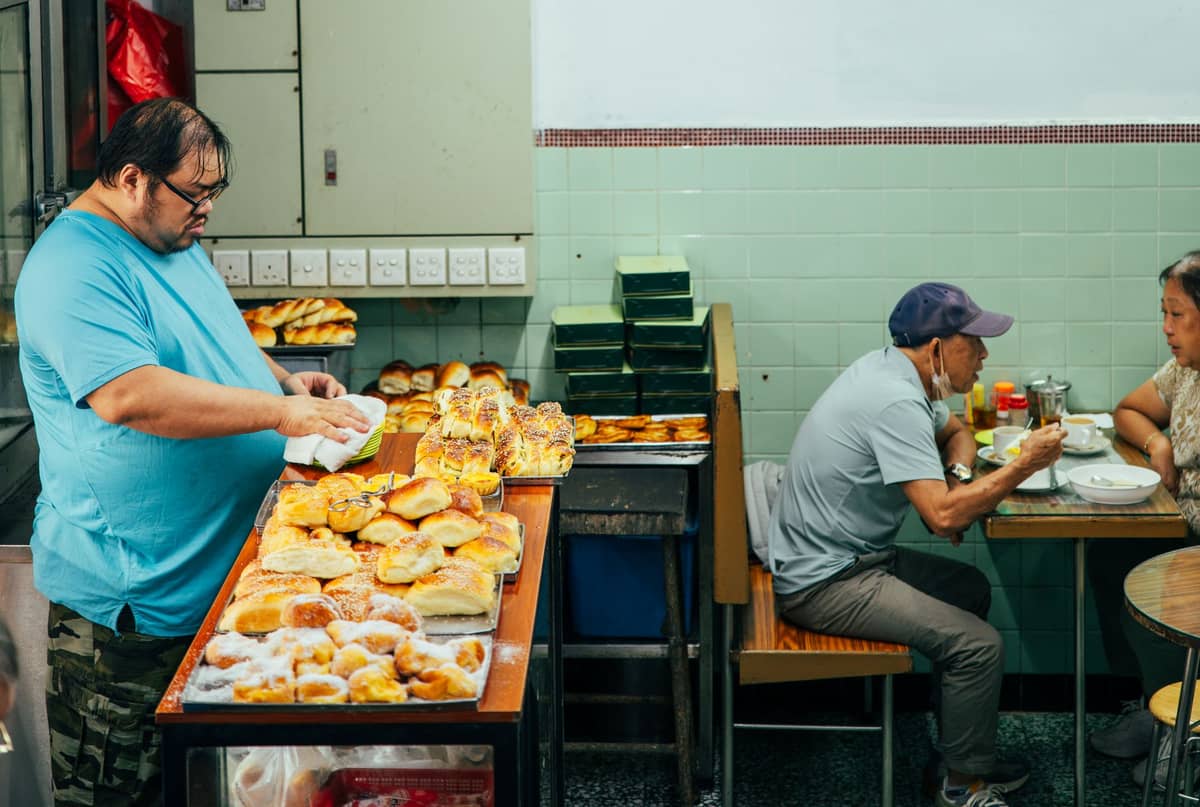
Macanese cuisine is one of the world's oldest fusion cuisines, and that label is not marketing spin. For roughly 400 years, Macau served as a major trading hub in Portugal's maritime empire, connecting Lisbon with Goa, Mozambique, Malaysia, Japan, and southern China. The cooks who fed that world drew from all of it. The result is a cuisine that combines Portuguese techniques and ingredients — salt cod, olive oil, bay leaves, wine — with Chinese cooking methods, Cantonese pantry staples, and spices that passed through Malacca and the Malabar Coast.
Macau was designated a UNESCO Creative City of Gastronomy in 2017, one of only a handful of cities in Asia to hold that status. The Macau government has also supported a formal Macanese Cuisine Database, launched through IFTM (Institute for Tourism Studies), which archives traditional recipes and provides background on individual dishes.
ℹ️ Good to know
Macanese cuisine and Portuguese cuisine overlap but are not interchangeable. Macanese dishes incorporate Chinese ingredients, local spices, and cooking adaptations that developed over centuries in the SAR. If a restaurant advertises itself as purely Portuguese, the menu will read differently from a traditional Macanese kitchen.
The Essential Macanese Dishes You Need to Try
Minchi is the dish that most food writers and locals point to as the heart of Macanese home cooking. It is a simple preparation: seasoned ground pork (or beef), fried with diced potatoes, soy sauce, and sometimes a fried egg on top. The name likely derives from the English word 'mince,' a reminder of Macau's trading-port history. Every family and restaurant has its own ratio and seasoning, which makes comparing versions across the city a worthwhile exercise. It is unpretentious, filling, and genuinely good.
African chicken (galinha à africana) is one of Macau's most famous exports, and its origin story encapsulates the cuisine's history: a recipe thought to have arrived via Portuguese colonial connections in Africa and adapted over generations in Macau. The chicken is marinated and roasted or grilled, then coated in a spiced sauce that typically includes coconut milk, piri piri, and other aromatics. The exact recipe varies between restaurants, and some versions are significantly spicier than others. It pairs well with rice or crusty Portuguese bread.
- Minchi Seasoned ground meat fried with potato and soy sauce. The definitive Macanese comfort dish, served in local restaurants across the Peninsula and Taipa.
- African Chicken (Galinha à Africana) Grilled or roasted chicken in a spiced coconut-piri piri sauce. Versions range from mild to quite hot — ask before ordering if you're heat-sensitive.
- Bacalhau (Salt Cod) Inherited directly from Portuguese tradition, bacalhau appears in Macau in numerous preparations: baked with cream and potato, grilled, or in croquettes.
- Caldo Verde A Portuguese kale and potato soup that became a staple in Macau's Portuguese-influenced restaurants. Earthy and simple, often served as a starter.
- Pork Chop Bun (Pão com Carne de Porco Assada) A bone-in fried pork chop served inside a crusty Portuguese roll. A cult street food item associated with specific bakeries in Taipa Village.
- Egg Tarts (Pastéis de Nata) Macau's version of the Portuguese custard tart, slightly different from Hong Kong's variation. Flaky pastry, burnished custard filling, best eaten warm.
- Serradura (Sawdust Pudding) A layered dessert of whipped cream and crushed Marie biscuits. Cold, sweet, and far better than it sounds. Common in Macanese pastry shops.
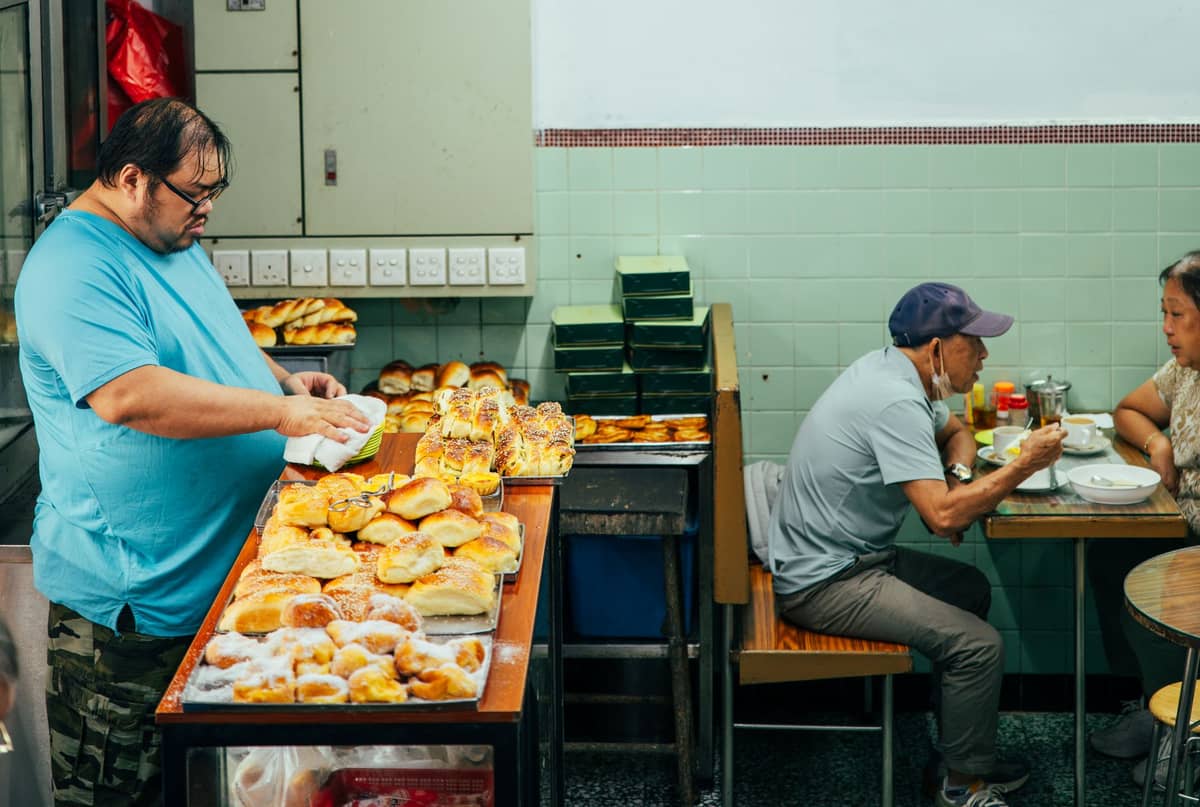
Egg tarts deserve their own mention beyond the list. Macau's version uses a flakier, more layered pastry shell compared to Hong Kong's shortcrust style, and the custard is typically less sweet and slightly more set. Macau's egg tart sceneEgg tarts deserve their own mention beyond the list. Macau's version uses a flakier, more layered pastry shell compared to Hong Kong's shortcrust style, and the custard is typically less sweet and slightly more set. The market is fiercely competitive, with long-running bakeries in Taipa and the Peninsula drawing queues from early morning. They are best consumed within minutes of coming out of the oven.
Where to Eat: Beyond the Casino Restaurants
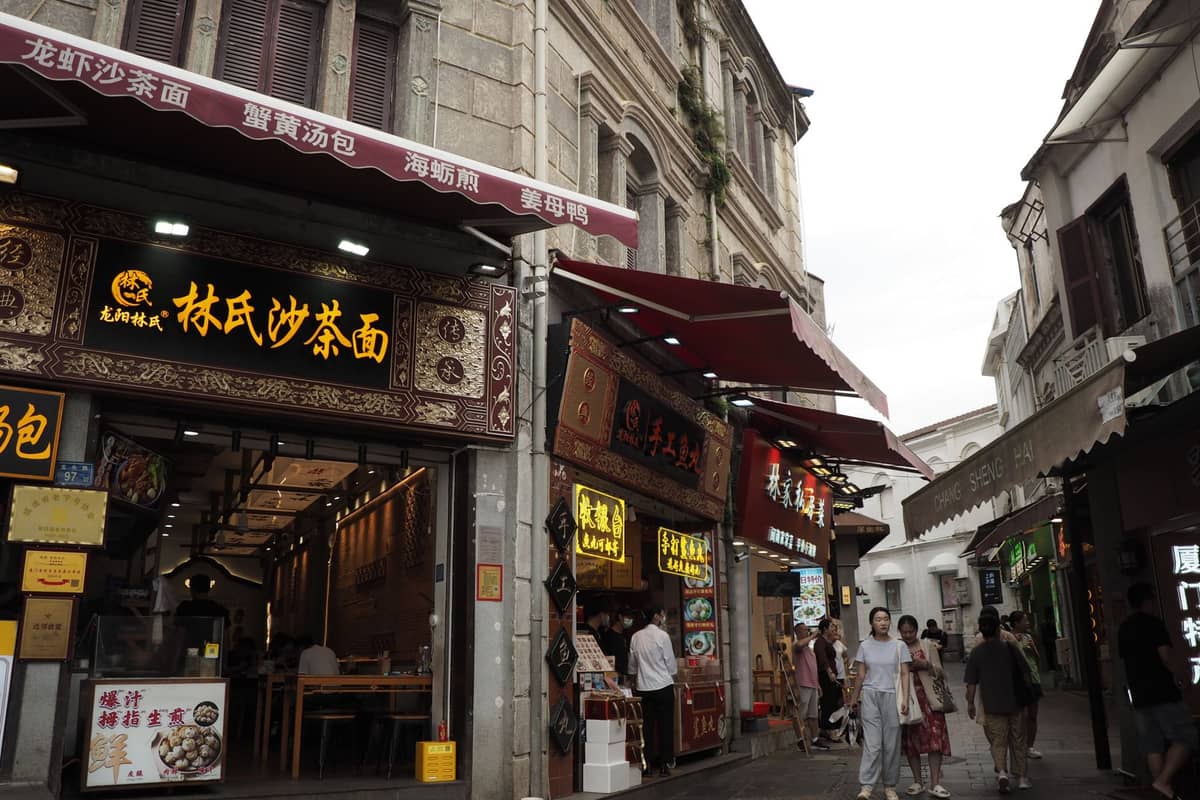
A persistent misconception is that authentic Macanese food is only accessible inside casino resort dining rooms. That is wrong. Some of the best Macanese cooking happens in modest, family-run restaurants on the Macau Peninsula and in Taipa Village, often with no English menu and a single page of handwritten specials. The Macau Government Tourism Office maintains an official restaurant directory that separates Macanese/Portuguese categories from the broader listings, and cross-referencing that with local food reporting gives a reliable shortlist.
Taipa VillageTaipa Village is the single best area for first-time visitors interested in Macanese food. The streets around Rua do Cunha concentrate a high density of bakeries, casual restaurants, and pastry shops in a compact, walkable area. The pork chop bun is practically obligatory here. Evening is the better time to visit for restaurant dining; lunch can get crowded with day-trippers from Hong Kong and mainland China.
For the full sit-down Macanese experience, the upper-end restaurants on the Macau Peninsula offer more formal settings and longer menus. Some major resorts such as Wynn Palace and MGM Cotai publish detailed dining menus and take reservations through their official websites. These are not the places for an authentic local experience, but they offer reliable quality and English-language service in an accessible setting.
⚠️ What to skip
Restaurant rows near the Ruins of St. Paul's tend to be tourist-facing and overpriced relative to quality. They serve Macanese-adjacent dishes, but the cooking is often simplified for mass turnover. Walk two or three streets back from the main tourist drag and prices drop while quality generally improves.
Street Food: The Fastest Route into Macau's Food Culture
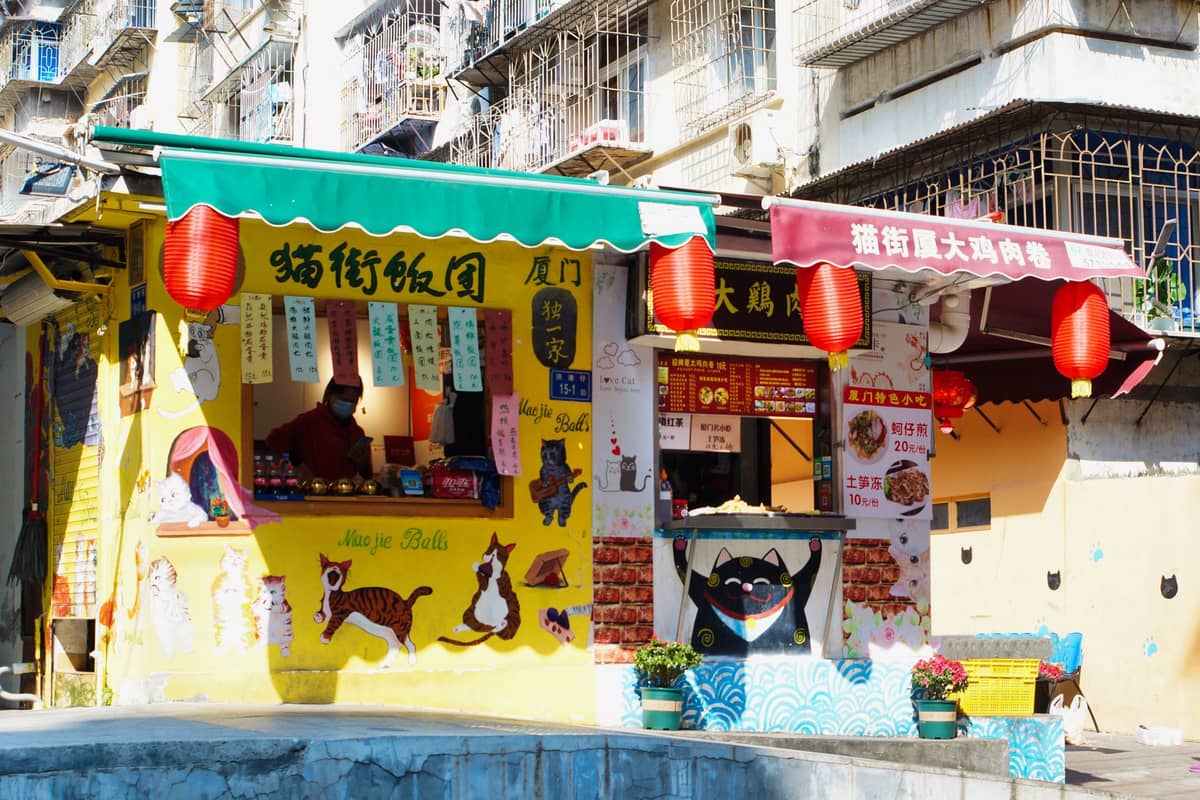
Street food is where Macau's food identity becomes most accessible. The city's compact geography — just over 33 square kilometres total — means you can cover a serious amount of culinary ground on foot in a single day. The Macau Government Tourism Office officially promotes a 'Taste of Macao' trail that links food stops across the historic centre, and it is a reasonable framework for first visits, even if you adapt the route.
Dried pork jerky (bak kwa) is one of the most bought street snacks, particularly along the lanes near the Ruins of St. Paul's. Shops offer samples freely, which can make the lane feel more like a market than a street. Almond cookies are sold in the same area, though quality varies significantly between producers. Buy from shops that bake on-site rather than pre-packaged tourist goods.
For something more substantial, the pork chop bun is the street food benchmark. The Taipa Village version uses a bone-in chop, pan-fried until slightly charred at the edges, placed inside a Portuguese roll that has enough crust to hold together but enough give to absorb the meat juices. It costs a few dozen patacas and is filling enough to replace a meal. There are also vendors around the Inner Harbour area of the Peninsula serving congee, fish balls, and noodle soups — Cantonese street food staples that reflect the majority of Macau's population.
✨ Pro tip
HKD is widely accepted across Macau at a rate of roughly 1 HKD to 1.03 MOP. If you are arriving from Hong Kong, you do not need to exchange currency before eating — most street food vendors and local restaurants accept both without issue.
Practical Details: Timing, Costs, and Seasonal Considerations
Macau's restaurant scene is most crowded on weekends, when significant numbers of visitors arrive from Hong Kong and southern mainland China. If you are planning to eat at a specific restaurant rather than street food, weekday visits are noticeably calmer. The annual Macau Food Festival, typically held across several weeks in mid-to-late November, draws additional crowds and can push accommodation prices up. That said, it is also one of the better times to sample a wide variety of local cooking in a single location, as the festival aggregates vendors from across the city.
Budget-wise, Macau's food spans a wide range. Street snacks and casual meals in local restaurants cost between 30 and 80 MOP per person. A full sit-down lunch at a mid-range Macanese restaurant typically runs 150 to 300 MOP per person, including a drink. Upscale resort dining starts at 400 MOP and climbs quickly. For visitors on tighter budgets, eating well in Macau without overspending is genuinely achievable by sticking to local restaurants and street vendors rather than hotel dining rooms.
- Go to Taipa Village for the pork chop bun, egg tarts, and evening dining at local Macanese restaurants.
- Avoid the row of tourist-facing restaurants directly in front of the Ruins of St. Paul's — better and cheaper options are a short walk away.
- Eat egg tarts warm: buy them from bakeries with visible ovens rather than pre-packaged from souvenir shops.
- The Macau Food Festival in November is worth timing your trip around if food is a primary interest.
- For a structured overview of the food landscape before arrival, the official Macanese Cuisine Database (via IFTM) is a legitimate resource with dish histories and recipe context.
- Most local restaurants do not take reservations; arriving before 12:00 for lunch or before 18:30 for dinner avoids the worst waits.
Pairing Food with the Rest of Your Macau Trip
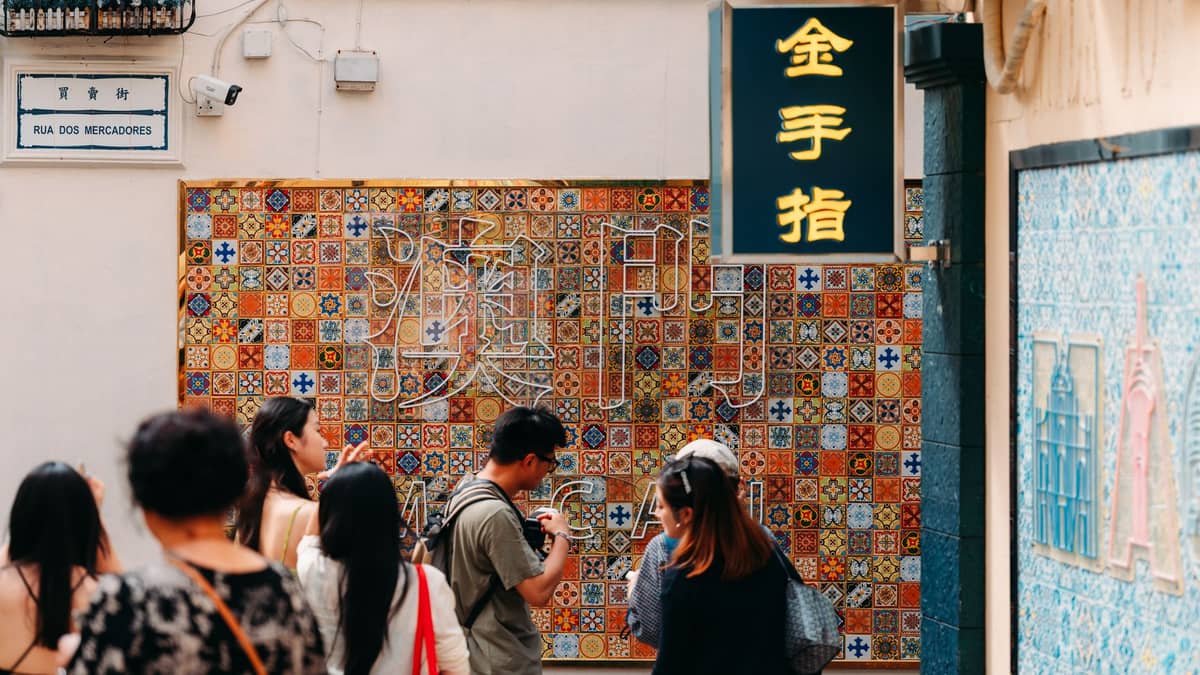
Food and sightseeing overlap naturally in Macau because the historic centre is so compact. A walk through the UNESCO-listed heritage area takes you past markets, bakeries, and street stalls without any detour. If you are building a day around both, the Macau heritage walk route passes through exactly the areas where the best street food is concentrated. Start at Senado Square in the morning when the egg tart shops open, work north toward St. Paul's, and loop back via the Inner Harbour for congee or noodles before lunch.
For couples interested in a more considered food experience, several restaurants in Taipa Village and on the Peninsula offer private dining rooms and longer tasting menus built around Macanese and Portuguese dishes. The Macau couples guide has more detail on the higher-end dining options worth booking in advance. If you are travelling with children, the approachable flavours of minchi, pork buns, and egg tarts tend to work well, and Taipa Village's pedestrian streets make eating while walking easy and safe.
Visitors with a single day in the city should not spend it entirely inside a casino resort. The food alone on the one-day Macau itinerary justifies most of the walking route. Macanese cuisine is at its most interesting when you eat it in the places where it developed — in small restaurants, from market stalls, and in bakeries that have been making the same recipe for decades.
FAQ
What is the most famous food in Macau?
Egg tarts and the pork chop bun are the two dishes most visitors associate with Macau's street food. Among sit-down Macanese dishes, minchi (seasoned ground meat with potato) and African chicken are the most iconic. All four are widely available and reasonably priced.
Is Macanese food the same as Portuguese food?
No. Macanese cuisine is a distinct culinary tradition shaped by Portuguese, Chinese, and other Asian influences developed over roughly 400 years of trading history. It shares some ingredients and techniques with Portuguese cooking but incorporates soy sauce, coconut milk, Chinese spices, and local adaptations that make it a separate cuisine. Macau's government officially recognizes this distinction.
Where is the best place to eat in Macau on a budget?
Taipa Village and the streets around the Inner Harbour on the Macau Peninsula offer the best value. Local restaurants in these areas serve full Macanese and Cantonese meals for 50 to 150 MOP per person. Street snacks like egg tarts, pork buns, and almond cookies cost 10 to 30 MOP each.
When is the Macau Food Festival?
The Macau Food Festival typically takes place over several weeks in mid-to-late November. It draws large crowds and aggregates food vendors from across the city. Accommodation prices can rise during this period, so booking in advance is advisable if you plan to visit then.
Do I need to make restaurant reservations in Macau?
For casual and street food dining, reservations are not necessary and most local restaurants do not take them. For upscale resort restaurants and higher-end Macanese dining rooms, reservations are recommended, especially on weekends and during peak periods like the Food Festival. Major casino resorts publish reservation contact details on their dining pages.