Macau UNESCO Heritage Walk: The Complete Self-Guided Tour of the Historic Centre
The Historic Centre of Macao packs 22 UNESCO-listed monuments and 8 historic squares into a walkable peninsula you can cover in half a day. This self-guided tour gives you a logical route, realistic timing, opening hours, admission prices, and the context to understand what you're looking at — not just where to point your camera.
TL;DR
- The UNESCO inscription covers 22 historic buildings and 8 public squares — not just the Ruins of St. Paul's.
- Almost everything is free; the Macau Museum charges around MOP 15 and is the only major paid site.
- The core circuit takes 3-5 hours on foot; October to December is the most comfortable season — see our best time to visit Macau guide for full seasonal advice.
- The district is a functioning urban neighbourhood, not a roped-off museum complex — restaurants, government offices, and family-run shops sit inside the heritage zone.
- If you only have limited time, combine this walk with a stop at A-Ma Temple and the Guia Fortress for a complete picture of Macau's layered history.
What the UNESCO Inscription Actually Covers
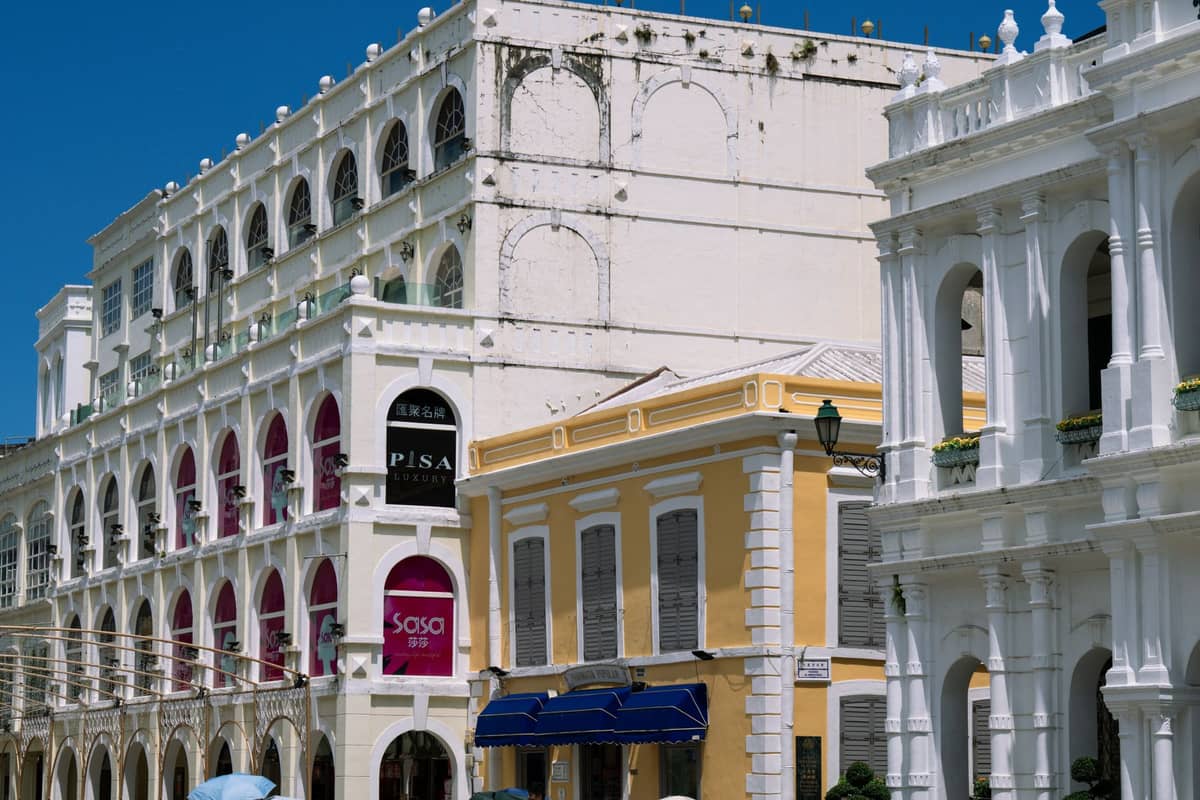
On 15 July 2005, the Historic Centre of Macao became China's 31st UNESCO World Heritage Site. The inscription recognised a compact network of 22 historic buildings and 8 public squares spread across the Macau Peninsula, collectively representing more than 400 years of Sino-Portuguese cultural exchange. That blend is genuinely unusual: you will find Ming-dynasty temples sharing the same neighbourhood as Baroque churches, Portuguese mosaic pavements leading to Chinese clan houses, and colonial administrative buildings facing traditional incense shops.
The misconception that the UNESCO area is simply the Ruins of St. Paul's is persistent and understandable — those stone facade photographs dominate every travel article about Macau. But the designated heritage zone stretches from the inner harbour all the way to Guia Hill, taking in sites as different as the maritime-focused A-Ma Temple, the civic grandeur of Senado Square, and the austere hilltop Guia Fortress and Lighthouse. Treating it as a single attraction rather than a curated neighbourhood is the key mindset shift that makes this walk rewarding.
ℹ️ Good to know
The Historic Centre functions as a living city quarter. Residents live above heritage-listed shopfronts, government clerks work in 18th-century buildings, and street vendors sell egg tarts a few metres from 400-year-old church walls. Respect the neighbourhood accordingly — keep noise down near temples and don't block alleyways for photos.
The Self-Guided Route: A Logical Walk Through the Historic Centre
The most practical approach is to start at the inner harbour near A-Ma Temple, walk uphill through the historic core to the Ruins of St. Paul's, and then either loop back via Senado Square or continue east to Guia Fortress. This south-to-north direction saves you climbing the steepest streets in the afternoon heat. The full circuit, including Guia, covers roughly 4-5 km. Allow at least 3 hours for a highlights-only pass; 5 hours if you plan to enter the museums and explore side streets properly.
- Stop 1: A-Ma Temple (Inner Harbour) The oldest temple in Macau, dedicated to the sea goddess Mazu, and the site that gave Macau its name. Open from around 07:00 daily, free entry. Arrive early to see worshippers and avoid tour groups.
- Stop 2: Mandarin's House A sprawling Qing-dynasty compound that belonged to the family of Chinese author Zheng Guanying. Free entry; check current opening days as it has had intermittent closure periods for restoration.
- Stop 3: Lilau Square and the Moorish Barracks Lilau is one of Macau's smallest and quietest heritage squares, historically the first freshwater spring area. The Moorish Barracks nearby were built for Indian troops in the 19th century — an often overlooked detail of Macau's colonial layering.
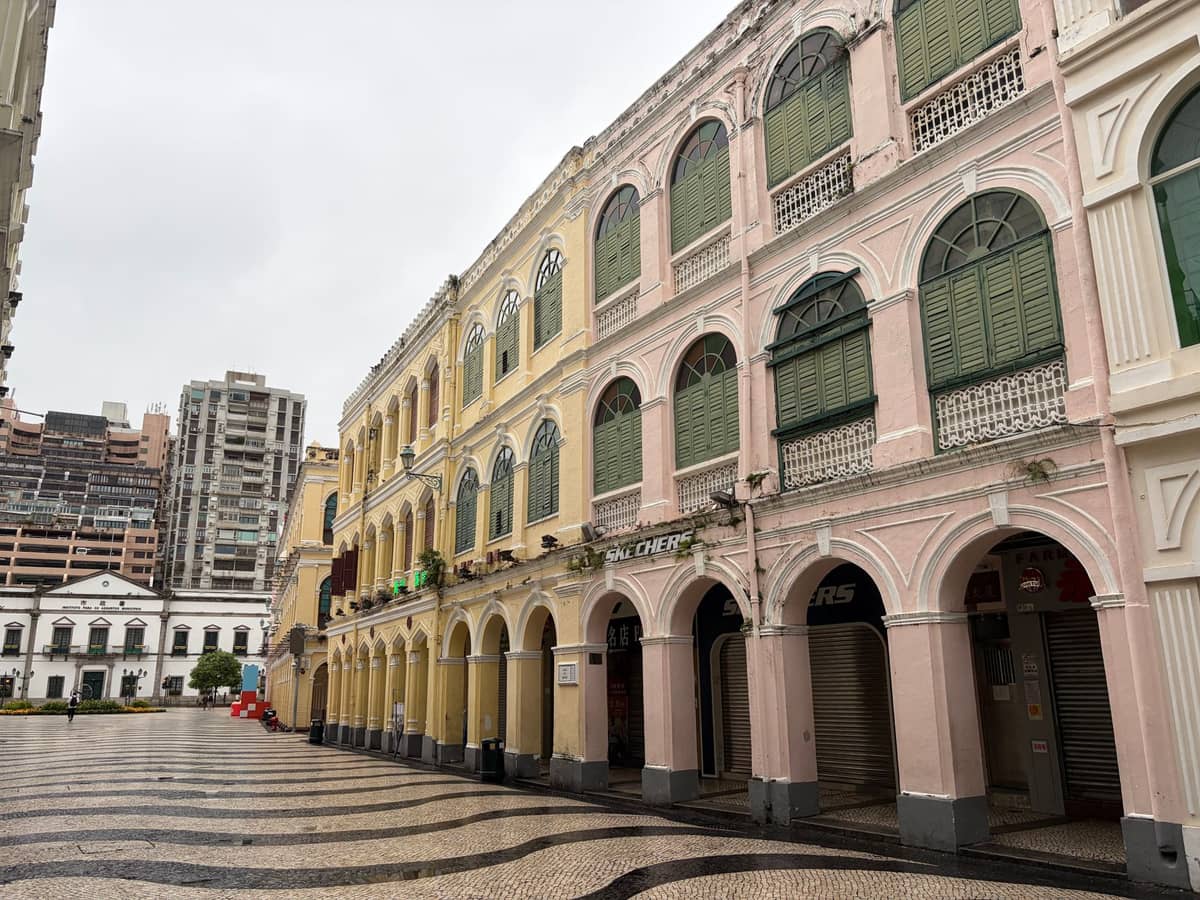
- Stop 4: Leal Senado Building and Senado Square The civic heart of the Historic Centre. The mosaic-paved square and the neo-classical Leal Senado building face each other across the widest open space in the heritage zone. The Leal Senado interior has a courtyard and public library worth stepping into.
- Stop 5: St. Dominic's Church and the Holy House of Mercy St. Dominic's (São Domingos) is arguably the finest Baroque church interior in Macau and usually overlooked in favour of St. Paul's. The Holy House of Mercy (Santa Casa da Misericórdia), founded in 1569, is one of the oldest Western social institutions in Asia.
- Stop 6: Ruins of St. Paul's, Fortaleza do Monte, and Macau Museum The iconic stone facade of St. Paul's is always crowded — arrive before 09:30 or after 16:00 for manageable crowd levels. The Fortaleza do Monte sits directly behind it, and the Macau Museum inside the fort charges MOP 15 with standard hours of approximately 10:00-18:00, closed Tuesdays.
- Stop 7: Guia Fortress and Lighthouse The highest point on the Peninsula and the site of the first modern lighthouse on the Chinese coast. Open roughly 09:00-17:30 daily. The cable car from the Flora Garden is an easier ascent than the walking path, especially in warm weather.
There are additional UNESCO-listed sites that many self-guided visitors skip because they require short detours: the Lou Kau Mansion, the Na Tcha Temple (immediately beside the St. Paul's ruins), the Dom Pedro V Theatre, and the Sir Robert Ho Tung Library. The library's garden courtyard is particularly worthwhile — one of the calmest spots in the entire heritage zone.
✨ Pro tip
The Na Tcha Temple sits in a narrow gap directly to the left of the Ruins of St. Paul's facade. Nearly every visitor photographs St. Paul's and walks away without noticing it. It is small but perfectly preserved, and the contrast between the crumbling Baroque facade and the working Taoist temple a few metres away captures Macau's cultural duality better than almost anything else in the city.
Opening Hours, Entry Fees, and Practical Logistics
The vast majority of the Historic Centre is free and open at all hours. All eight public squares, including Senado Square, Lilau Square, and Camoes Square, require no ticket and have no gate. All churches typically admit visitors for free, with visiting hours generally around 10:00-18:00, though these vary slightly by site and can change for religious events. Always check the door if you arrive and find it closed — many churches hold weekday masses that temporarily restrict tourist access.
- A-Ma Temple: open daily from approximately 07:00, free entry
- Macau Museum (inside Fortaleza do Monte): approximately 10:00-18:00, closed Mondays (open on public holidays), admission around MOP 15
- Guia Fortress and Lighthouse: approximately 09:00-17:30 daily, free entry
- Mandarin's House: verify current opening days before visiting, free entry
- Churches (St. Dominic's, St. Joseph's Seminary Church, Cathedral, etc.): approximately 10:00-18:00, free entry
- Lou Lim Ieoc Garden (near Guia, not UNESCO-listed but worth adding): daily approximately 06:00-21:00, free entry
- Audio-guided heritage ticket covering several major buildings: around MOP 30, available at MGTO tourism counters and official apps
Getting to the Historic Centre is straightforward. Casino shuttle buses stop at the ferry terminals and major hotels, and public buses run frequently to Senado Square from all parts of the Peninsula. If you are staying in Cotai or Taipa, getting around Macau by taxi is inexpensive and takes roughly 15-20 minutes to the historic core. There is no dedicated car park for the heritage zone — walking or public transport is the practical approach.
When to Walk: Crowds, Seasons, and Timing
October to December is the most comfortable period for walking the Historic Centre. Temperatures sit in the low-to-mid 20s Celsius, humidity drops significantly compared to summer, and you will have more blue-sky days for photographs. The trade-off is that this window overlaps with Macau's peak tourism season and major events, so Senado Square and the Ruins of St. Paul's can still get very busy on weekends and public holidays.
Summer (June to September) is genuinely difficult for extended walking. Temperatures regularly reach the low 30s Celsius with high humidity, and afternoon thunderstorms are common. Typhoon risk is real between July and September — if a typhoon signal is raised, most outdoor sites effectively become inaccessible. If you visit in summer, start the walk by 08:00, carry water, and plan to retreat indoors during the 12:00-15:00 heat peak. The compensating advantage is that summer sees fewer Western tourists, so some of the smaller sites feel quieter.
The single busiest times at individual sites are weekend afternoons, Chinese national holidays (particularly Golden Week in October), and during the Macau Grand Prix weekend in November. If your visit coincides with any of these, start the walk before 09:00 and prioritise Guia Fortress first — it receives a fraction of the crowds that St. Paul's does even on the busiest days.
⚠️ What to skip
During major Chinese public holidays, Senado Square and the street leading to the Ruins of St. Paul's (Rua de São Paulo, the main souvenir strip) become genuinely difficult to navigate. Crowd densities can rival major metro stations at rush hour. If you are visiting during Golden Week, either start before 09:00 or plan to visit these specific spots on a weekday.
Combining the Heritage Walk with Food and Neighbourhood Exploration
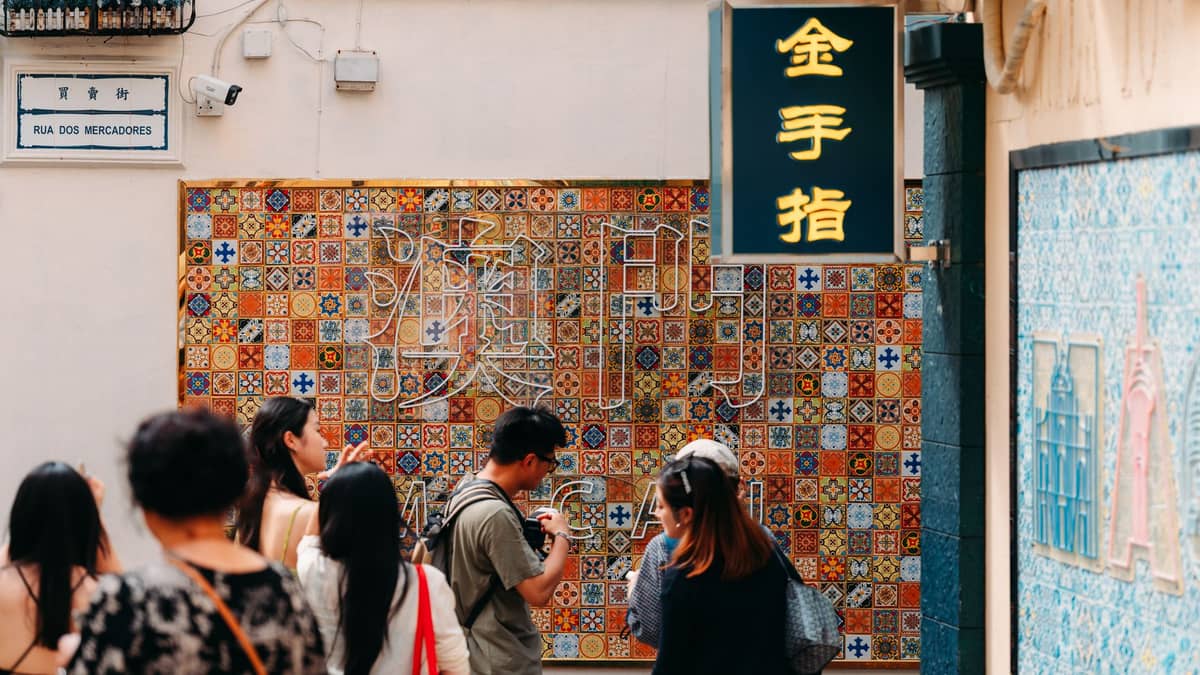
One of the strongest arguments for doing this walk self-guided rather than on an organised food tour is that you can set your own pace and eat as you go. The streets around the Historic Centre contain some of Macau's best street food at prices that have barely changed in years. Rua de São Paulo (the pedestrian alley leading up to St. Paul's) is lined with stalls selling almond cookies, beef jerky, and egg tarts. This street is touristy by design, but the products are genuinely good — the debate over whose egg tarts are best is a local institution. Our Macau egg tarts guide breaks down the main contenders.
For a more complete food experience alongside the walk, the area around the inner harbour and San Malo neighbourhood offers older, less-visited restaurants serving Macanese cuisine — the genuine hybrid cooking that emerged from centuries of Portuguese-Chinese cultural overlap, distinct from either parent cuisine. The Macau food guide covers the key dishes and neighbourhood spots worth seeking out. Most are within easy walking distance of the heritage sites.
If you have more than one day, the Historic Centre pairs well with a half-day in Taipa Village, which has its own colonial-era architecture, quieter streets, and a relaxed food scene without the tourist density of the UNESCO core. The 2 days in Macau itinerary maps out how to split your time effectively.
What the Heritage Walk Does Not Cover (And What to Skip)
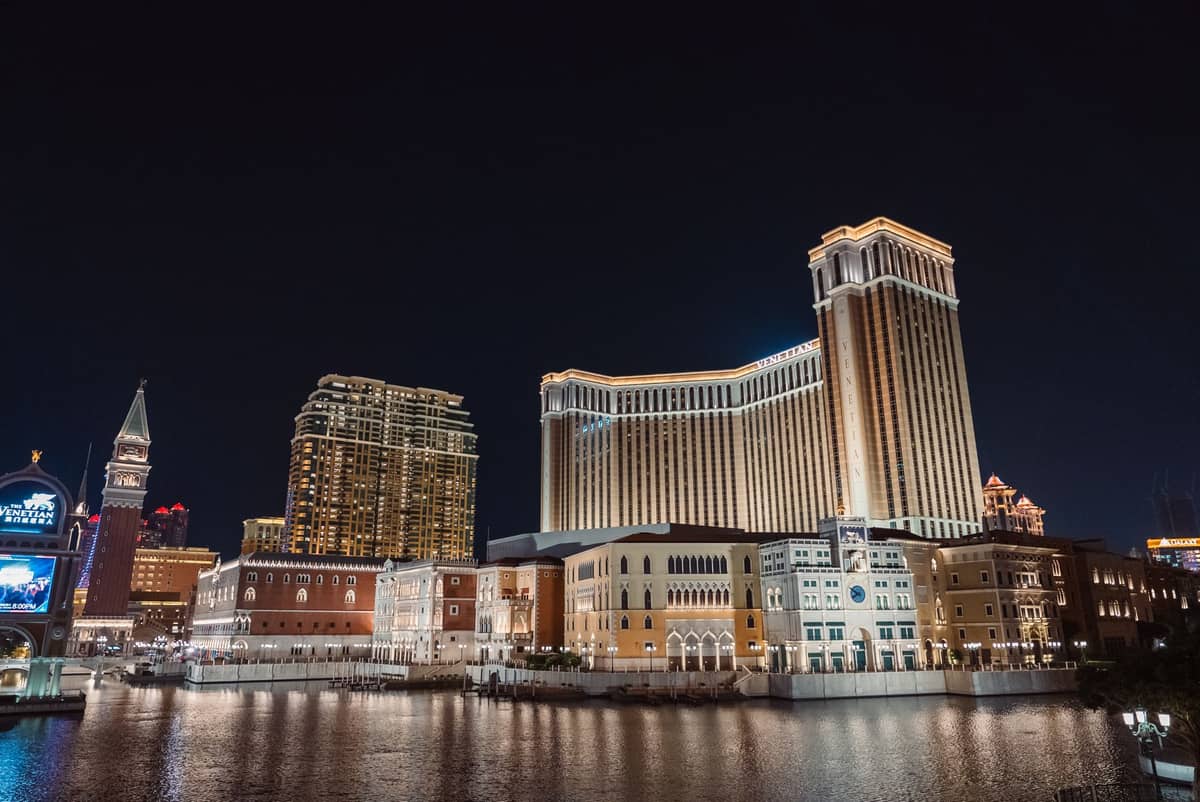
The Macau Fisherman's Wharf sits outside the UNESCO zone and, despite its waterfront location, is primarily a commercial and entertainment complex. It is not worth a detour during a heritage-focused day. Similarly, the casino corridor along the Cotai Strip offers a genuinely different Macau experience but has no connection to the historic core — treat it as a separate evening or day.
The Lou Lim Ieoc Garden and the Camoes Grotto are not UNESCO-listed but sit close enough to the heritage zone that including them adds only 30-45 minutes and significantly broadens the picture of how Macau's Portuguese and Chinese communities organised urban space differently. The Camoes Grotto and Casa Garden is especially good in the early morning when local residents use it for tai chi and casual conversation.
The Macau Museum deserves more time than most visitors give it. At MOP 15, it is one of the best-value museums in the region, with permanent exhibitions covering the history of the territory from its early settlement through the Portuguese colonial period and into the modern SAR. The exhibition on traditional Macanese daily life on the upper floors is more interesting than the ground-floor historical overview. Budget 45-60 minutes rather than the 20 minutes most people spend.
FAQ
How long does the Macau UNESCO heritage walk take?
A highlights-only circuit covering Senado Square, the Ruins of St. Paul's, and A-Ma Temple takes about 3 hours at a comfortable pace. A thorough walk that includes the Macau Museum, Guia Fortress, Mandarin's House, and the smaller churches realistically takes 5-6 hours. Most visitors split it across a morning and early afternoon.
Is the Historic Centre of Macao walk free?
Almost entirely. All eight public squares and all churches are free to enter. The Macau Museum charges around MOP 15. A private audio guide covering several major buildings costs around MOP 30 and is optional. Budget roughly MOP 15-30 for the walk itself, excluding food.
What is the best time of day to visit the Ruins of St. Paul's?
Before 09:30 or after 16:00. The ruins face west, so afternoon light is better for photographs. Midday on weekends is the worst time — the staircase and surrounding square become extremely crowded with tour groups and the souvenir street behind it is nearly impassable.
Can I do the UNESCO heritage walk without a guide?
Yes, and for most visitors it is the better option. All sites are clearly signed in both English and Portuguese. The Macau Cultural Affairs Bureau has an official walking route with downloadable maps. The MGTO also produces a free printed heritage brochure available at tourist information counters near the ferry terminals. An optional audio guide ticket (around MOP 30) adds context at the major buildings.
How do I get to the Historic Centre from the ferry terminal or casino hotels?
From the Outer Harbour ferry terminal, the Leal Senado area is about a 15-minute walk or a short taxi ride. Casino shuttle buses from Cotai and Taipa hotels typically drop passengers at the ferry terminals, from where you can walk or take a short taxi. Public buses connect all parts of the Peninsula to Senado Square. Taxis are metered, widely available, and inexpensive for short urban trips.