Taipa Village is Macau's best-preserved historic neighborhood, occupying the southwestern corner of Taipa Island. Its main food street, colonial villas, and centuries-old temples sit within fifteen minutes' walk of each other, making it one of the easiest and most rewarding half-days in the city.
Taipa Village is what Macau looked like before the mega-resorts arrived: narrow streets, pastel Portuguese facades, incense drifting from temple doorways, and a food street that draws serious eaters from across the Pearl River Delta. It sits just a few kilometers from the Cotai casino corridor yet feels like a different city entirely.
Orientation
Taipa Village occupies the southwestern tip of Taipa Island, one of two main islands that make up the non-peninsula part of Macau SAR. Taipa itself sits between the Macau Peninsula to the north, connected by three bridges, and Cotai to the south, the reclaimed land strip that now hosts the city's largest casino resorts. For a broader sense of how Taipa fits into the wider territory, the Macau Peninsula guide and the Cotai Strip overview are useful companion reads.
The village core is centered on Rua do Cunha and the grid of lanes that fan out from it: Rua do Regedor, Rua Correia da Silva, and Rua da Ponte Negra. These streets, along with the broad promenade that runs along the southern waterfront, define the walkable heart of the neighborhood. The whole area is compact enough to cover on foot in an hour, though most visitors spend considerably longer once the food slows them down.
To the east, Taipa Village transitions into newer mid-rise residential blocks and eventually reaches the airport and the Taipa Ferry Terminal. To the north, the streets climb gently toward Taipa Houses Museum and Pak Tai Temple before opening into more modern development. The village boundary is informal rather than administrative, but most locals and visitors understand it to mean the area within roughly ten minutes' walk of Rua do Cunha.
Character & Atmosphere
The defining quality of Taipa Village is the contrast between its physical scale and its cultural density. The streets are genuinely narrow, the buildings genuinely old, and the whole place is genuinely used by people who live here, not just by tourists passing through. That lived-in quality is what separates it from more stage-managed heritage districts.
In the early morning, before the food stalls fully open, Taipa Village is at its quietest and most atmospheric. Elderly residents do tai chi near the waterfront promenade. Temple caretakers sweep the courtyard outside Pak Tai Temple. The yellow-and-white Portuguese colonial villas along the hillside catch the low morning light in a way that makes them look more like southern Europe than southeastern China. The air smells of stone, incense, and occasionally fresh bread from a bakery on one of the side lanes.
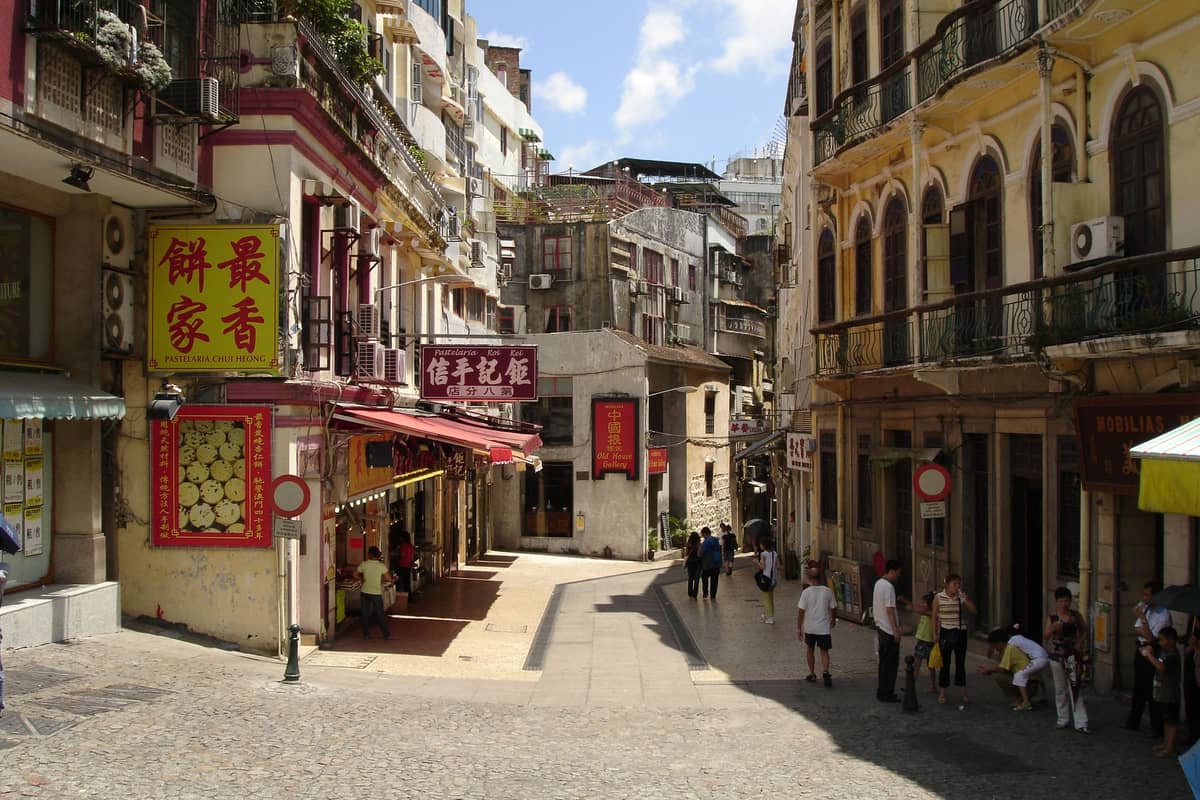
By mid-morning, Rua do Cunha starts filling with visitors, and by early afternoon it is the busiest stretch in the neighborhood. Vendors call out samples of pork chop buns and almond cookies. The lane is narrow enough that two groups of tourists walking in opposite directions must navigate around each other. This is not a criticism, simply a practical reality: if you want the village at its most photogenic and least crowded, come before 10am or after 5pm on weekdays.
After dark, the atmosphere shifts again. The food street thins out, smaller restaurants fill with local families and groups of workers from nearby districts, and the promenade becomes a quiet evening walk. The village is well-lit and feels safe at night. It is not a nightlife destination in the way that parts of the Macau Peninsula are, but it is pleasant for a late dinner followed by a slow walk along the waterfront.
💡 Local tip
Weekday mornings between 8am and 10am offer the best combination of light, atmosphere, and space. Weekends bring noticeably larger crowds to Rua do Cunha, particularly in the afternoon, when tour groups from the casino hotels arrive via shuttle.
What to See & Do
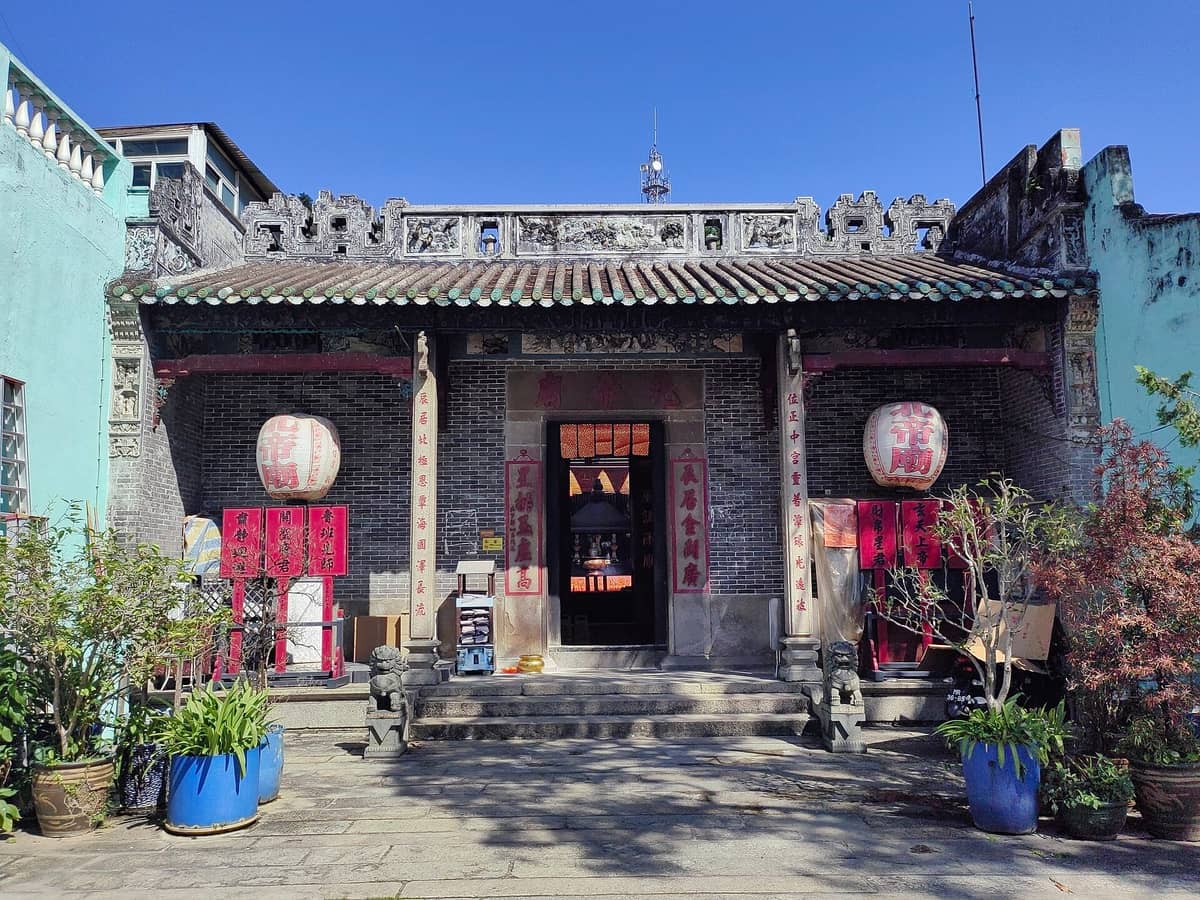
The Pak Tai Temple is the spiritual anchor of the village and one of Macau's most visually striking temples. Dedicated to the God of the North, it sits on a slight rise above the main streets and is fronted by a wide forecourt where worshippers burn offerings and light incense coils. The main hall contains an ornate bronze statue of Pak Tai flanked by ceremonial guardians. The temple is free to enter and open most of the day, though visiting during active prayer times requires some quiet awareness of the people using it for worship rather than sightseeing.
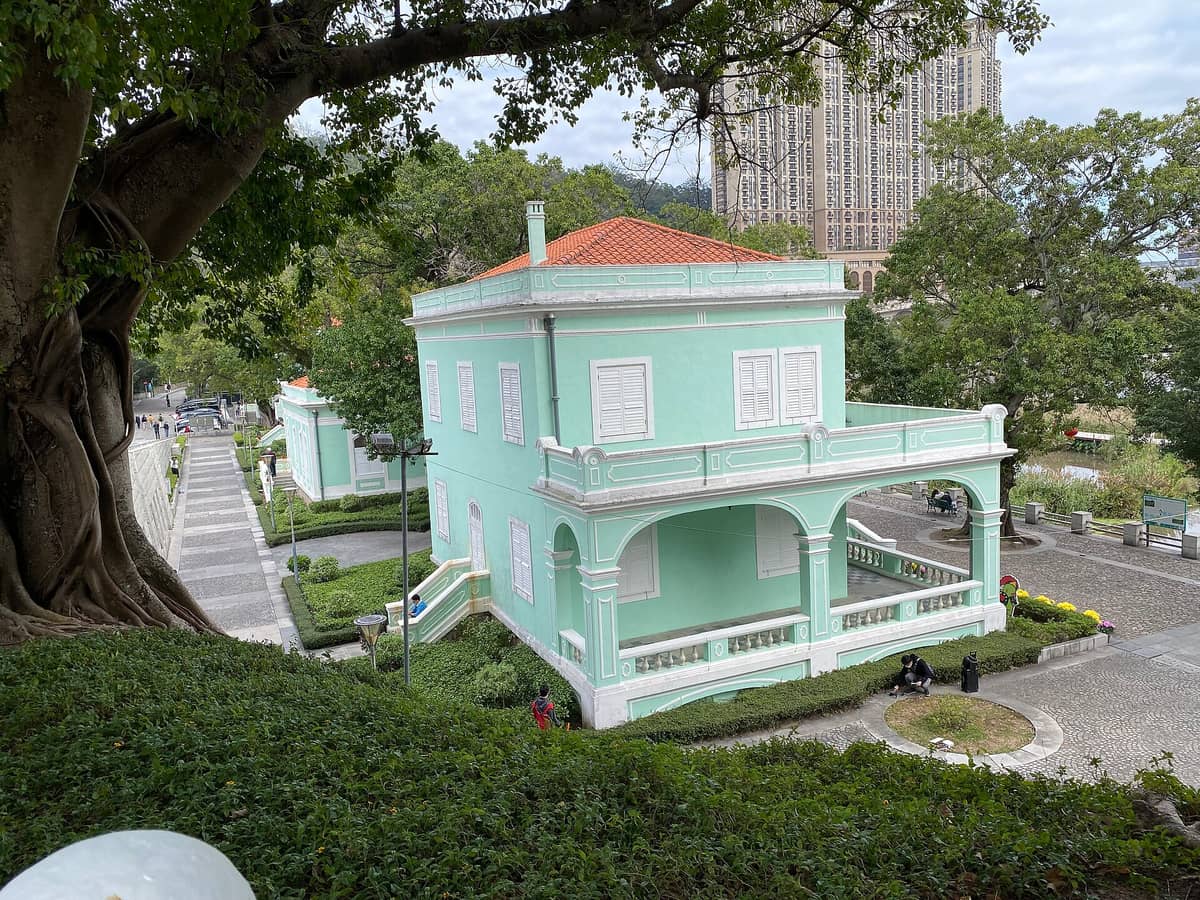
Just a short walk from the temple, the Taipa Houses Museum is the best surviving example of how Macau's Portuguese colonial administrators actually lived in the early twentieth century. Five pastel-painted villas along the Avenida da Praia have been preserved and converted into exhibition spaces covering Macanese domestic life, regional culture, and the history of the island. The complex is arranged along a palm-lined promenade that doubles as one of the nicest evening walks in Taipa.
Beyond the two headline attractions, the village rewards slow walking. The streets between Rua do Cunha and the waterfront contain small shrines tucked into wall niches, old banyan trees growing through paving stones, and doorways that reveal glimpses of courtyards and washing lines. There are several small art galleries and craft shops in the lanes off the main food street, varying in quality but worth a look. The southern promenade itself, running along the edge of reclaimed land that now separates the old village from the water, is a good place to sit and watch evening light settle over the estuary.
Pak Tai Temple: the neighborhood's main religious site, free entry
Taipa Houses Museum: five colonial villas converted into cultural exhibitions
Rua do Cunha: the main food and shopping lane
The southern promenade (Avenida da Praia): waterfront walk past the heritage villas
Side lanes off Rua do Cunha: small galleries, local shrines, and street detail
ℹ️ Good to know
Taipa Village is part of the broader Taipa Island area. If you have a full day, the village pairs well with a morning visit to the Cotai casino resorts or an afternoon exploring the Macau Peninsula's UNESCO-listed historic centre, which is about 15-20 minutes away by bus.
Eating & Drinking
Food is the main reason many visitors make the trip to Taipa Village at all, and Rua do Cunha delivers on the reputation. This street, sometimes called the Food Street of Taipa, is lined on both sides with restaurants, snack stalls, and specialty shops selling Macanese and Portuguese-influenced food alongside more widely available Cantonese staples. For an overview of what to eat across Macau, the Macau food guide covers the full picture, but Taipa Village is one of the best single locations to sample several things in one walk.
The pork chop bun is the dish most associated with the village. Vendors along Rua do Cunha serve them fresh from griddles: a thick, bone-in pork chop marinated in Chinese spices and grilled until charred at the edges, served in a soft Portuguese-style roll. The combination is distinctively Macanese, and worth eating here rather than at a casino food court. Almond cookies and egg rolls are the standard souvenir snacks, sold by shops that let you sample before buying. For a sit-down meal, Macau's egg tarts also appear at several bakeries in and around the village, made in the local Portuguese style with a flaky rather than shortcrust pastry.
Restaurant options on and around Rua do Cunha range from inexpensive noodle shops with plastic stools and laminated menus, through mid-range Macanese restaurants with proper dining rooms, to a handful of more polished Portuguese restaurants in the side lanes that require a reservation on weekends. Prices across the village are noticeably lower than in comparable tourist-facing restaurants on the Macau Peninsula or inside the casino complexes. A filling lunch from street stalls will cost well under 100 MOP per person; a sit-down dinner at a mid-range restaurant typically runs 150 to 300 MOP per person before drinks.
Cafes are scattered through the lanes, mostly small independent operations serving Portuguese-style coffee, milk tea, and cold drinks. There are a few bakeries that open early and attract the morning crowd. The village is not a cocktail bar destination, but some of the Portuguese restaurants serve wine and Sangria, and there are a couple of casual bars near the promenade suitable for a drink in the evening.
💡 Local tip
If you want to eat lunch on Rua do Cunha without fighting through tour groups, aim to arrive before noon or after 2pm. The street is at its most congested between 12pm and 1:30pm, especially on weekends and public holidays.
Getting There & Around
Several public bus routes connect Taipa Village to the Macau Peninsula and the rest of Taipa Island. Routes 11, 15, 22, 28A, 30, 33, and 34 all serve the area, with stops at Rua do Cunha (T320), Largo Tamagnini Barbosa (T321), and Ponte Negra/Rua do Regedor (T323). Bus fares in Macau are low and fixed; exact current fares should be confirmed with the Macau transport authority before travel. For a full breakdown of how to move around the city, the getting around Macau guide covers all options including bus, LRT, taxi, and casino shuttles.
The Macau Light Rapid Transit (LRT) Taipa Line has two stations within walking distance of the village. Pai Kok Station is about an 11-minute walk from the village core, exiting from Exit A. Estádio (Stadium) Station is also nearby and offers a slightly different approach route through the residential streets to the north of the village. The LRT connects Taipa Village to Macau International Airport, the Taipa Ferry Terminal, and the Cotai casino strip, making it a convenient option if you are arriving from or continuing to any of those points.
Taxis are available throughout Taipa and can be flagged on the main roads surrounding the village. Note that taxis do not typically enter the narrower pedestrian lanes around Rua do Cunha. Many of the larger casino hotels on Cotai run complimentary shuttle buses to Taipa Village, which can be a free and convenient option if your hotel operates such a service. Check directly with your hotel for current shuttle schedules.
Once inside the village, everything is on foot. The core area, from the entrance of Rua do Cunha to the southern promenade and the Taipa Houses Museum, is compact enough to walk in under fifteen minutes at a relaxed pace. The streets are mostly flat, with a gentle incline toward Pak Tai Temple. There are no significant accessibility barriers on the main routes, though some cobblestone lanes can be uneven.
Where to Stay
Taipa Village itself has very limited hotel accommodation, partly because the historic building stock was not built for conversion into large-scale hotels and partly because the nearby Cotai Strip concentrates most of Taipa Island's tourism infrastructure. For travelers who want to stay within walking distance of the village, small guesthouses and boutique properties occasionally operate in the surrounding residential streets, but availability is inconsistent. The Macau accommodation guide covers the full range of options across the territory.
For most visitors, the practical choice is to stay on Cotai and visit Taipa Village as a half-day excursion, or to stay on the Macau Peninsula and reach the village by bus or LRT in under thirty minutes. Staying on Cotai puts you closest geographically, with the village accessible by casino shuttle or a short taxi ride. Properties like The Venetian Macao and Galaxy Macau on the Cotai Strip run regular shuttle services to and from Taipa Village, effectively making the old neighborhood an extension of their guest amenities.
Travelers who prioritize the historic atmosphere over casino proximity will find the Macau Peninsula a better base overall, since it offers more boutique and mid-range hotel options within walking distance of UNESCO-listed sites. The trade-off is a slightly longer journey to Taipa Village, though bus connections are frequent and reliable.
⚠️ What to skip
If you are visiting Taipa Village as a day trip from Hong Kong, factor in travel time carefully. The ferry crossing from Hong Kong takes roughly an hour, and then you need to reach Taipa from the ferry terminal. Allow at least four to five hours in Macau to make the trip to Taipa Village worthwhile.
Is Taipa Village Worth Your Time?
For most visitors to Macau, yes, Taipa Village is worth the trip. It offers something genuinely different from the casino complexes and the tourist-facing strips around Senado Square: a slower pace, a more local atmosphere, and food that reflects the actual culinary history of the territory rather than an international hotel interpretation of it.
That said, Taipa Village has become significantly more visited over the past decade, and parts of it now feel crowded and commercial during peak hours. Rua do Cunha in particular can feel like a theme park version of itself on a busy weekend afternoon. If you are someone who avoids heavily touristed streets regardless of their authenticity, you may prefer to focus your time on the promenade, the temples, and the quieter lanes rather than the main food strip. The Macau heritage walk guide includes Taipa Village as part of a broader itinerary that helps pace the experience across the whole territory.
For travelers with children, Taipa Village is particularly well-suited: it is compact, flat, full of interesting things to look at and eat, and straightforward to navigate. For couples, the promenade at dusk has a genuinely romantic quality. For solo travelers and independent walkers, it makes an excellent two-hour morning loop before heading to the Macau Peninsula. If you are trying to decide how to structure a limited visit, the one-day Macau itinerary places Taipa Village in the context of a full-day schedule.
TL;DR
Taipa Village is Macau's most walkable historic neighborhood, centered on Rua do Cunha and best explored on foot in a two to three hour visit.
The food street, Pak Tai Temple, and Taipa Houses Museum form the core triangle of the visit; all are within fifteen minutes' walk of each other.
Crowds peak on weekend afternoons; weekday mornings before 10am offer the best atmosphere and the least congestion.
Public buses (routes 11, 22, 28A, 30, 33, 34) and the LRT Taipa Line (Pai Kok or Estádio stations) both provide easy access from the rest of Macau.
Best suited to food lovers, heritage walkers, families, and anyone who wants a break from the casino-resort scale of the rest of Taipa Island.
Macau packs an extraordinary amount into a tiny 33.3 km² territory: UNESCO-listed baroque ruins, Portuguese-Chinese temples, world-class casino resorts, and some of the best street food in Asia. This two-day itinerary sequences everything logically, so you spend less time commuting and more time experiencing. Whether you arrive by ferry from Hong Kong or fly into MFM, this guide covers it all.
Macau's subtropical climate means the difference between a comfortable walking tour and a rain-soaked slog can come down to which month you book. This guide breaks down every season honestly, covering weather patterns, festival crowds, typhoon risks, and the specific windows that suit different types of trips.
Macau packs an extraordinary range of vantage points into a tiny territory: hilltop fortresses, a 338-metre tower, colonial chapels, and glittering resort skylines. This guide covers the best views in Macau, from free hilltop walks to ticketed observation decks, so you can plan exactly when and where to look out.
The Cotai Strip is Macau's modern mega-resort corridor, built on reclaimed land between Taipa and Coloane. This guide covers every major property, how to get around, what's worth your time, and what to ignore, so you can plan a visit without the guesswork.
Macau's location at the heart of the Pearl River Delta makes it an ideal base for day trips to Hong Kong, Zhuhai, and Shenzhen. This guide covers ferry schedules, border crossings, journey times, costs, and what to actually do once you arrive.
Macau is far more than paid casino floors and ticketed attractions. From a UNESCO-listed historic core you can walk entirely for free to spectacular casino architecture open to all, this guide covers the best experiences in Macau that won't cost you a thing.
Macau is one of the world's most densely packed destinations, yet it's surprisingly easy to navigate once you understand how the layers of transport fit together. This guide breaks down every option, from flat-rate public buses to the growing LRT network, metered taxis, and high-speed ferries to Hong Kong, with real fares, clear trade-offs, and practical advice for every part of the city.
Getting from Hong Kong to Macau takes about an hour by high-speed ferry or via the world's longest sea-crossing bridge. This guide breaks down every option, with current prices, departure points, booking tips, and what to expect at the border.
Macau is far more than a casino strip, but it is not the right destination for everyone. This guide cuts through the hype to give you a clear, practical picture of what Macau offers, who will love it, and what to skip entirely.
At 233 metres above ground, the bungee jump at Macau Tower holds a Guinness World Record as the highest commercial bungee jump facility on a building. This guide covers prices, booking, safety details, what actually happens on jump day, and the alternatives worth considering.
Macau is the world's most significant casino destination, generating more gaming revenue than Las Vegas. This guide covers everything a first-timer needs: entry rules, the best casino resorts to visit, which games to play, how casino shuttles work, and the practical details that most guides skip.
Chinese New Year transforms Macau into one of the most spectacular celebrations in Asia. From golden dragon parades along the historic streets to fireworks over the Pearl River, this guide covers every event, practical pitfall, and planning detail you need to make the most of it.
Macau holds one of the most concentrated collections of Catholic heritage in Asia, shaped by over 400 years of Portuguese missionary history. This guide covers the finest churches, sacred art museums, and colonial landmarks that make the Historic Centre of Macao a UNESCO World Heritage Site.
Macau's Portuguese egg tarts are one of the city's most iconic foods — flaky pastry, silky custard, charred on top. This guide covers the best bakeries, what to expect, how to get there, and the real history behind the tart that conquered East Asia.
The Macao International Fireworks Display Contest is one of Asia's most spectacular pyrotechnic competitions, drawing international teams to light up the Pearl River Delta sky each September and October. This guide covers exactly where to watch, what it costs, how to avoid the worst crowds, and what can go wrong.
Macau's food scene is unlike anywhere else in Asia. A UNESCO Creative City of Gastronomy since 2017, it blends Portuguese, Chinese, and broader Lusophone influences into a cuisine that is entirely its own. This guide covers the essential dishes, where to find them, and what to skip.
Macau packs more romantic variety into 32.9 km² than most destinations manage across an entire country. This guide covers the best things to do in Macau as a couple, from UNESCO heritage walks and world-class dinner shows to quiet Coloane beaches and sky-high views over the Pearl River Delta.
The Macau Grand Prix transforms the city's public streets into one of motorsport's most demanding circuits every November. This guide covers tickets, grandstand selection, transport disruptions, hotel booking strategy, and everything else you need to plan a successful race week visit.
The Historic Centre of Macao packs 22 UNESCO-listed monuments and 8 historic squares into a walkable peninsula you can cover in half a day. This self-guided tour gives you a logical route, realistic timing, opening hours, admission prices, and the context to understand what you're looking at — not just where to point your camera.
Macau's luxury scene is concentrated in Cotai's integrated resorts. This guide covers the best 5-star hotels, Michelin-starred restaurants, and exclusive experiences, with practical notes on pricing, booking lead times, and how to get the most out of a high-end visit.
Macau after dark is far more than slot machines and baccarat tables. This guide breaks down the city's best nightlife options, from world-class live shows and casino lounges to local bars and outdoor evening spots, with a clear sense of what's worth your time and money.
Macau has a reputation for casino excess and luxury hotels, but the reality for budget travelers is far more promising. Free UNESCO heritage sites, standard bus fares of MOP 6 (or as low as MOP 3 on regular routes with a Macau Pass), and some of Asia's best street food make this one of the most affordable short-trip destinations in the region. Here is exactly how to do it right.
Macau packs an extraordinary amount into 32.9 km². This 24-hour itinerary moves you from UNESCO-listed colonial ruins and ancient temples in the morning through street food and Portuguese-influenced neighborhoods at midday, and into the neon spectacle of the Cotai Strip by evening. Every stop is timed, priced, and ranked so you don't waste a minute.
Shopping in Macau spans two very different worlds: glittering integrated resort malls stocked with European luxury brands, and old-school street markets selling pork jerky by the strip. This guide covers both, with hours, price ranges, and a clear sense of where your money is actually well spent.
Macau's street food scene goes far beyond casino buffets. This guide covers the essential snacks, the four main areas to find them, clear price benchmarks, and timing tips so you spend less time queuing and more time eating.
Macau's temples are among its most rewarding and often overlooked attractions. From a 15th-century sea goddess shrine that may have named the territory to an ornate Buddhist complex where a landmark treaty was signed, this guide covers every major Chinese religious site worth visiting.
Macau is far more than casinos and nightlife. With giant pandas, outdoor parks, observation decks, indoor playgrounds, and a UNESCO-listed historic district that kids can actually explore on foot, it offers a surprisingly strong lineup for families. This guide covers the best family-friendly things to do in Macau, with practical details on pricing, timing, and what to skip.
Macau packs an extraordinary range of experiences into just 32.9 km². This guide covers the best things to do in Macau across history, food, casinos, and nature — with crowd warnings, seasonal timing advice, and practical logistics to help you plan a smarter trip.
Choosing where to stay in Macau shapes your entire trip. This guide breaks down the Macau Peninsula, Cotai Strip, Taipa, and Coloane by atmosphere, price, and practical access — so you can pick the right base whether you're here for UNESCO heritage, casino resorts, or quiet beaches.