Is Macau Worth Visiting? A Practical Assessment
Macau is far more than a casino strip, but it is not the right destination for everyone. This guide cuts through the hype to give you a clear, practical picture of what Macau offers, who will love it, and what to skip entirely.
TL;DR
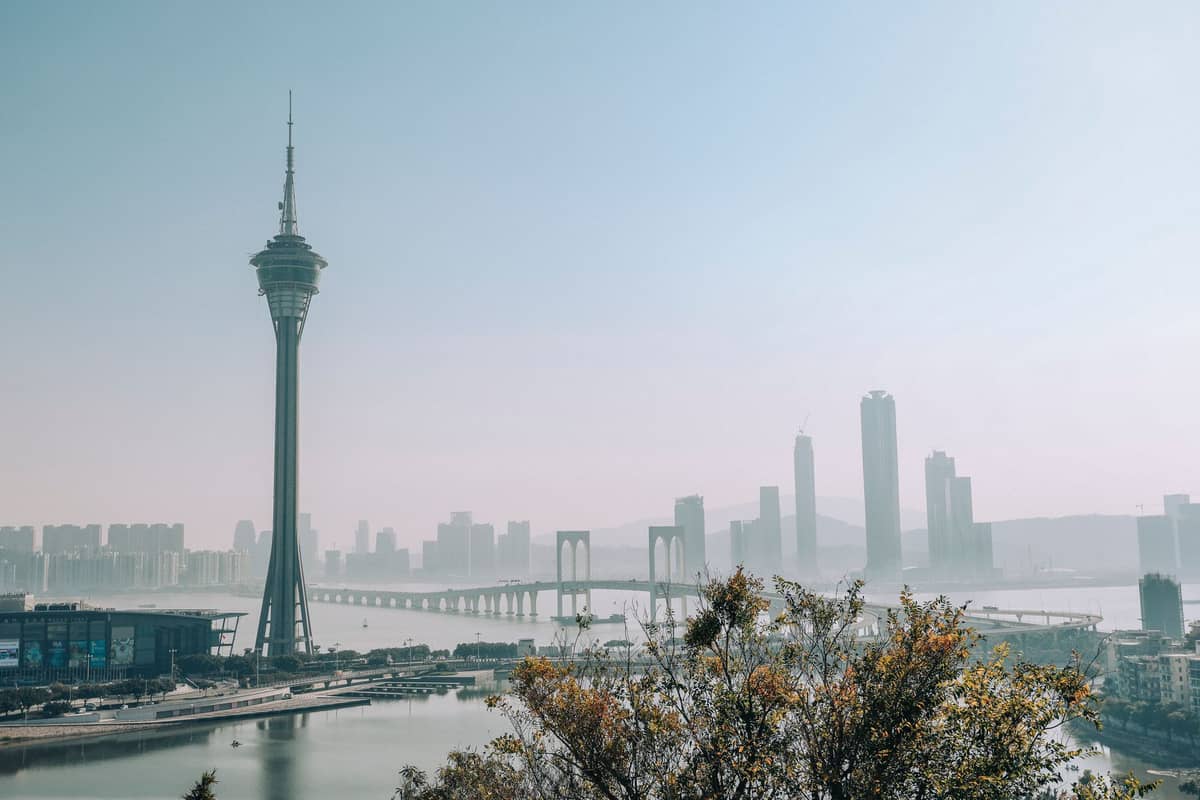
- Macau is worth visiting for its UNESCO-listed Historic Centre, unique Portuguese-Chinese food culture, and genuinely compact size — most major sights are reachable on foot or by free casino shuttle.
- The best time to visit is October to December: temperatures sit around 20–26°C, humidity drops, and typhoon season is over. See our best time to visit Macau guide for a month-by-month breakdown.
- If you come only for gambling, you can do that anywhere. The real case for Macau is its layered history: Baroque churches alongside Taoist temples, all within a few city blocks.
- Budget travelers can do Macau cheaply — UNESCO sites are free, casino shuttles are free, and street food costs next to nothing. High rollers will find some of Asia's most extravagant resorts.
- A day trip is enough for a first taste, but two full days lets you move beyond the Ruins of St. Paul's and explore Taipa Village and Coloane properly.
What Macau Actually Is (And What It Isn't)
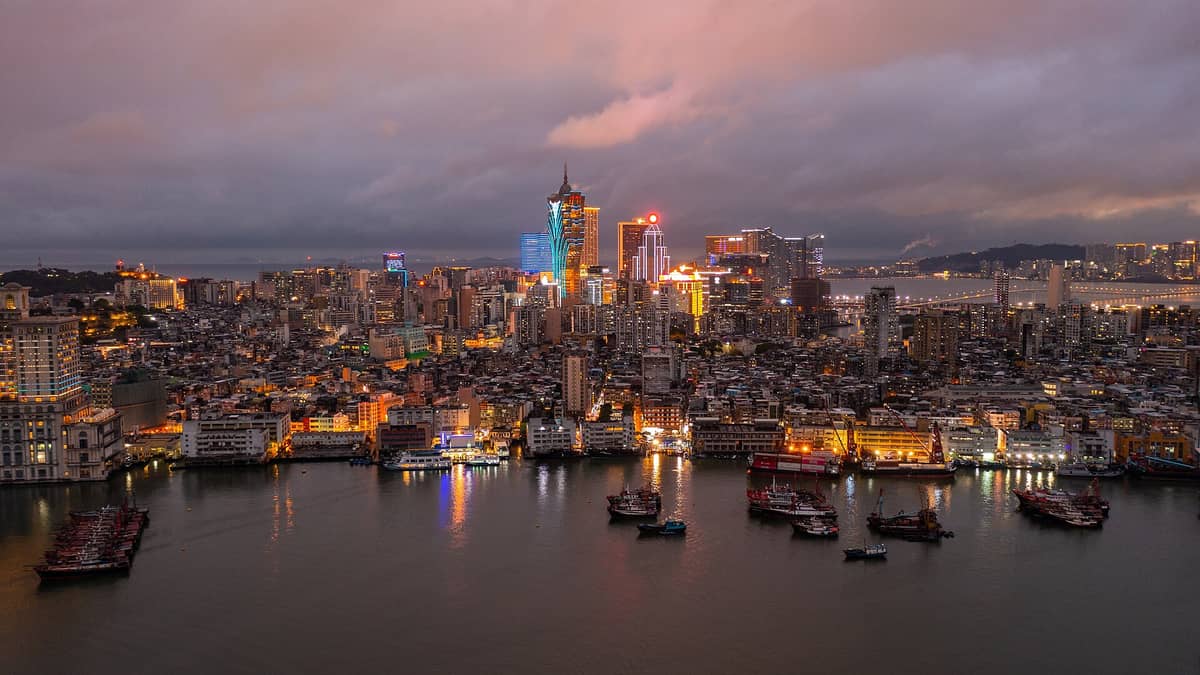
Macau is a Special Administrative Region of China, covering roughly 32.9 km² across the Macau Peninsula, Taipa island, Coloane island, and the reclaimed Cotai strip between them. It has its own immigration system, currency (the Macanese pataca, MOP), legal framework, and tourism identity — separate from both mainland China and Hong Kong. The population sits around 700,000 people, making it one of the most densely settled territories on the planet.
The casino-only reputation is the biggest misconception visitors bring with them. Yes, Macau's gaming industry is enormous — the territory has historically generated more gambling revenue than Las Vegas — but the Historic Centre is a UNESCO World Heritage Site containing 22 historic buildings and 8 public squares, ranging from 17th-century Portuguese fortresses to centuries-old Chinese temples. These are not reconstructions or theme-park facsimiles. They are functioning, lived-in pieces of architecture that genuinely coexist in one small urban area.
ℹ️ Good to know
Macau operates under 'one country, two systems' with its own entry policies. Many nationalities — including EU member states, the UK, Australia, and the US — enjoy visa-free entry for short stays, but conditions vary by passport. Always verify current requirements with the official Macao SAR Government immigration portal before you travel, as rules are updated periodically.
The Case For Visiting Macau
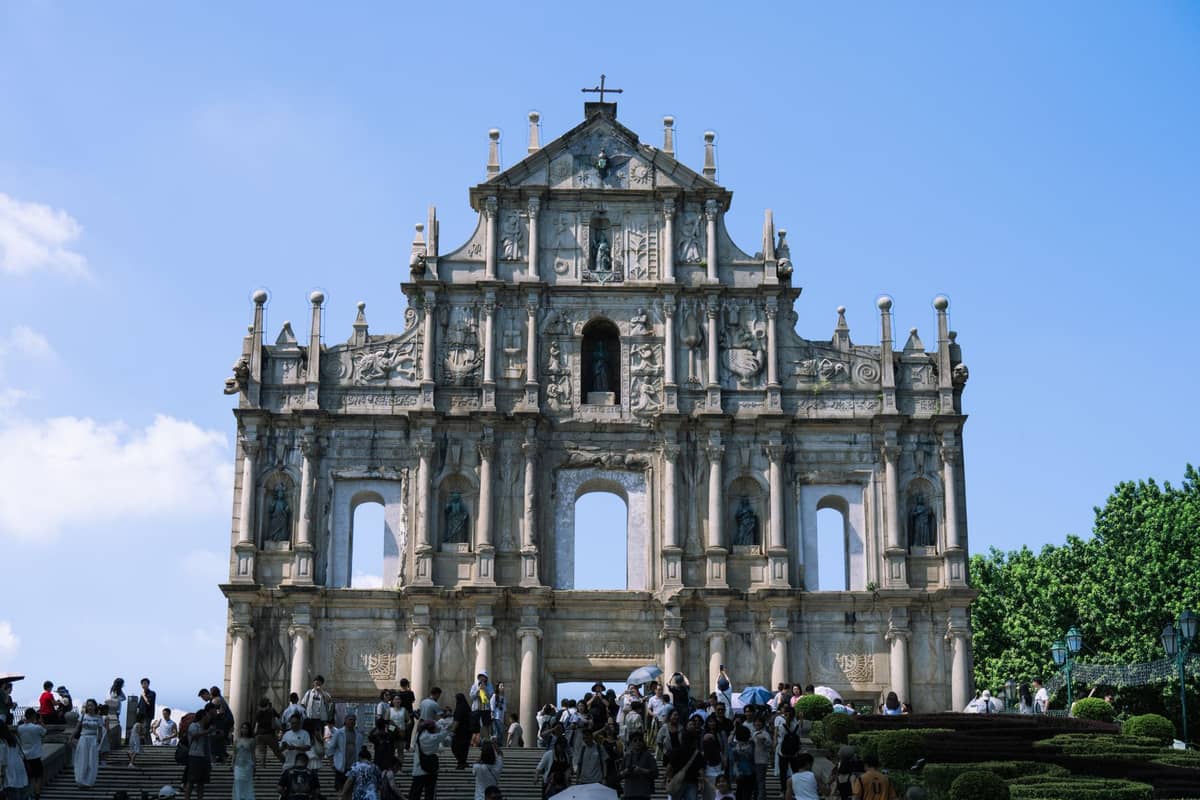
The strongest argument for Macau is its historical density. Within a 20-minute walk from Senado Square, you can visit the Ruins of St. Paul's, a 17th-century Jesuit facade that survived three fires and still dominates the skyline, the Na Tcha Temple sitting immediately beside it, the Fortaleza do Monte with panoramic views of the peninsula, and the Macau Museum built into the fortress walls. Entry to all of these is either free or very low cost.
The food scene is another serious draw. Macanese cuisine is a genuine fusion product of Portuguese and southern Chinese cooking traditions, not a marketing concept. Dishes like African chicken, minchi, and bacalhau (salt cod) coexist with dim sum, congee, and pork chop buns. The Macau egg tart — flakier and more custard-forward than its Hong Kong equivalent — is worth seeking out at Lord Stow's Bakery in Coloane Village. The street food scene along Rua do Cunha in Taipa is dense and cheap.
- UNESCO Historic Centre 25 protected sites free to visit, concentrated in the Macau Peninsula. A heritage walk covers most of the key monuments in half a day.
- Unique cuisine Macanese cooking is one of the world's oldest fusion traditions — Portuguese techniques applied to Chinese and Southeast Asian ingredients over 400 years.
- Extreme compactness At 32.9 km², the entire territory is smaller than many city parks elsewhere. Getting between sights is rarely more than a 10-15 minute walk or bus ride.
- Free casino infrastructure Major resorts run complimentary shuttle buses between the ferry terminals, airport, border gates, and their properties. You can use these to get around even if you never gamble.
- Easy access from Hong Kong High-speed ferries (TurboJET, Cotai Water Jet) and the Hong Kong-Zhuhai-Macau Bridge make day trips or overnight visits very practical from Hong Kong.
The Honest Drawbacks
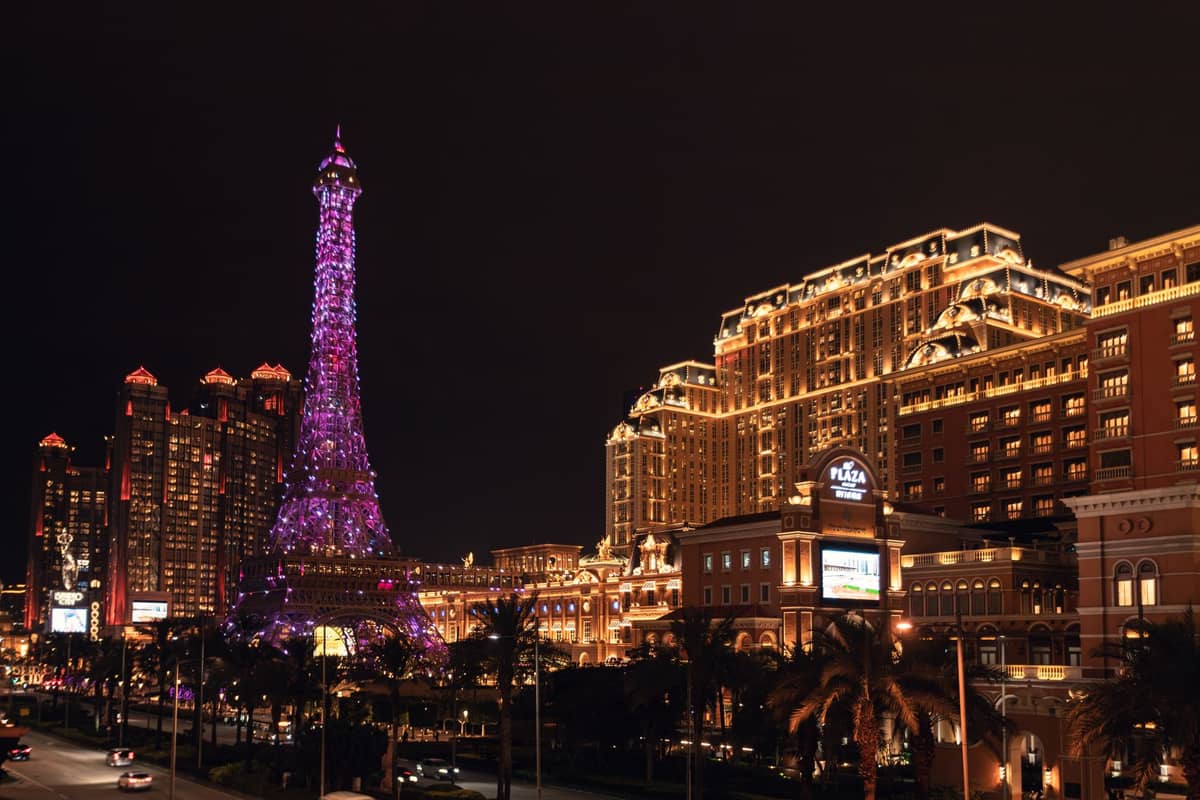
Macau is not a relaxed destination. The casino zones on the Cotai Strip are deliberately overwhelming — loud, artificially lit, and designed to disorient. The Venetian Macao replicates St. Mark's Square under a painted sky ceiling; The Parisian Macao has a half-scale Eiffel Tower. If fake replicas of European monuments feel cynical to you rather than fun, skip Cotai and focus entirely on the peninsula and Coloane.
Crowds are a genuine issue around the main heritage sites. The Ruins of St. Paul's can feel more like a bottleneck than a monument during peak hours on weekends and public holidays. Golden Week — the PRC National Day period in early October — brings massive visitor surges, higher hotel prices, and crowded streets throughout the territory. The same applies around Chinese New Year. If those dates are your only option, manage expectations: get to popular sites before 9 AM or after 5 PM.
The summer heat and humidity are real deterrents for outdoor sightseeing. From June through September, temperatures regularly reach the high 20s to low 30s Celsius, combined with high humidity and frequent heavy rain. Typhoons are a genuine risk from July to September and can disrupt ferry crossings, close outdoor attractions, and cause significant schedule changes with minimal notice. Visiting during this period is not recommended unless you have flexible travel plans and are comfortable with weather disruptions.
⚠️ What to skip
If a typhoon signal No. 8 or above is hoisted during your visit, most businesses close, public transport halts, and ferry services suspend. Check the Macau Meteorological and Geophysical Bureau (SMG) website for real-time signal updates during typhoon season (roughly June–October).
How Long Do You Actually Need?
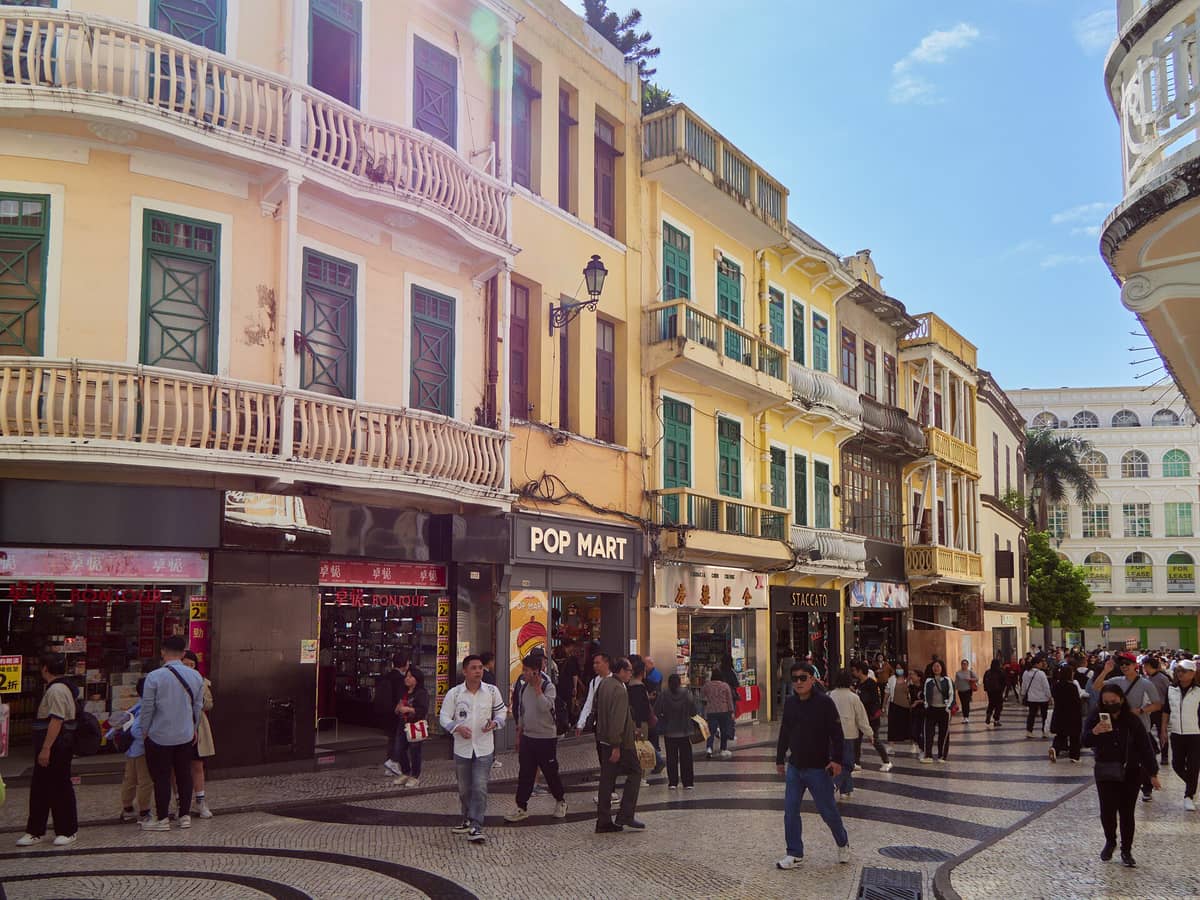
A single day from Hong Kong is enough to cover the main Historic Centre landmarks: Senado Square, the Leal Senado Building, St. Dominic's Church, the Ruins of St. Paul's, and Fortaleza do Monte. Add the A-Ma Temple on the southern tip of the peninsula and you have a full, satisfying day without touching a casino. See our Macau one-day itinerary for a timed route.
Two days is the sweet spot. The second day opens up Taipa Village — quieter streets, the Taipa Houses Museum, good restaurants — and allows a half-day in Coloane for Coloane Village's charming square, Lord Stow's Bakery, and either Hác Sá or Cheoc Van beach. Three or more days makes sense if you want to explore the Cotai resort hotels, catch a show, or use Macau as a base for regional day trips.
✨ Pro tip
Arrive by ferry in the morning and leave by the Hong Kong-Zhuhai-Macau Bridge bus in the evening (or vice versa) for a varied experience of both access routes. Bridge buses depart between the Hong Kong Boundary Crossing Facilities and the Macau Border Crossing Facilities in Cotai, where you connect to city transport.
Who Macau Is (and Isn't) Right For
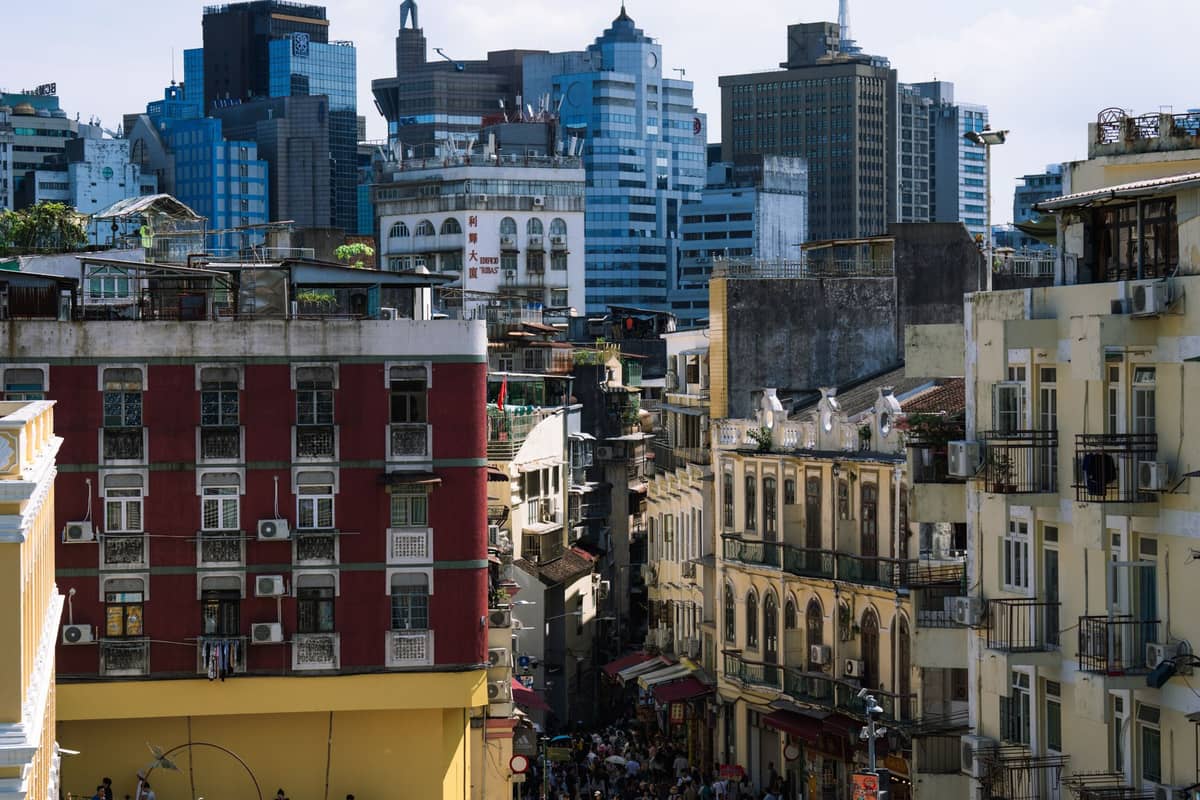
History and architecture travelers will get significant value here. The collision of Portuguese colonial architecture and Chinese religious buildings in the same narrow streets is genuinely unusual anywhere in the world, and the UNESCO designation reflects real historical significance, not just political goodwill.
Food-focused travelers have plenty of material to work with. Between Macanese restaurants, the dense street food corridors of Taipa, and high-end dining inside the casino resorts, the eating options are serious. The Macau food guide covers the full range from MOP 15 pork chop buns to multi-course tasting menus.
Couples will find Macau unexpectedly romantic outside the casino zones: cobblestone streets, Baroque church facades, harbor views from Guia Fortress, and candlelit restaurants in Coloane. The Macau for couples guide has specific recommendations beyond the obvious resort hotels.
Macau is less compelling as a beach destination. Hác Sá Beach is the longest stretch of sand in the territory, but with a city of this density nearby, the experience is not comparable to dedicated beach destinations in the region. If pure beach time is your goal, Macau is not the right choice.
- Go if: you want a genuinely different cultural experience that combines Chinese and European history in a compact, walkable area
- Go if: you are traveling through the Pearl River Delta region and have 1-2 spare days from Hong Kong or Guangzhou
- Go if: you enjoy casino resorts as entertainment venues, not just for gambling — the shows, restaurants, and spectacle are legitimately impressive
- Skip if: you are looking for beaches, nature, or wide-open spaces — Macau has almost none of those at meaningful scale
- Skip if: you find synthetic theme-park environments deeply off-putting — Cotai is unavoidable in the general tourism conversation, even if you never enter a casino
Practical Details Before You Go
Getting around Macau is straightforward. Public buses cover the entire territory at very low fares, and most major hotels and casino resorts operate free shuttle buses between key terminals and their properties. The Macau Light Rapid Transit (LRT) links the airport on Taipa through the Cotai casino zone. Taxis are available but can struggle with non-Portuguese, non-Chinese speakers — carry your destination written in Chinese characters. Full logistics are covered in our guide to getting around Macau.
The currency is the Macanese pataca (MOP), but Hong Kong dollars are widely accepted at an approximate 1:1.03 rate. Most hotels and large restaurants take credit cards; street food stalls and small shops often prefer cash. ATMs are plentiful. Voltage is 220V/50Hz with Type G plugs standard (alongside some Type D/F/M sockets) — visitors from continental Europe and North America will need adaptors.
Tipping is not obligatory. Service charges of around 10% are frequently included in hotel and restaurant bills. For street food and taxis, rounding up is common but not expected. Emergency services are reached on 999, with 112 also recognized. The international dialing code for Macau is +853. Tap water is treated, but local guidance typically advises sticking to boiled or bottled water.
💡 Local tip
If your trip is budget-focused, Macau is surprisingly affordable. UNESCO heritage sites are free, casino shuttles replace paid transport, and a full meal of Macanese street food costs well under MOP 100. For a structured approach to keeping costs down, see the Macau on a budget guide.
FAQ
Is Macau worth visiting if you don't gamble?
Yes, emphatically. The UNESCO Historic Centre, Macanese food culture, temple-hopping, and the quiet streets of Coloane Village have nothing to do with casinos. Many visitors spend a full two days in Macau without entering a gaming floor.
How long should you spend in Macau?
One day is enough for a focused heritage walk covering the main peninsula sites. Two days lets you add Taipa Village and Coloane properly. Three or more days is only necessary if you want to explore casino resort entertainment or use Macau as a regional base.
Is Macau expensive compared to Hong Kong or Southeast Asia?
Street food and public transport are cheap — comparable to or cheaper than Hong Kong. Mid-range hotels run higher during peak periods like Golden Week. Casino resort hotels are expensive by design. The overall cost depends almost entirely on where you stay and whether you gamble.
What is the best time of year to visit Macau?
October to December is the most comfortable window: temperatures around 20–26°C, lower humidity, minimal rain, and typhoon season over. Avoid July to September if possible due to heat, heavy rain, and typhoon risk. Golden Week in early October brings good weather but very large crowds.
Can you visit Macau as a day trip from Hong Kong?
Yes. High-speed ferries (TurboJET and Cotai Water Jet) take roughly 55–60 minutes and run frequently throughout the day. The Hong Kong-Zhuhai-Macau Bridge shuttle is another option. A day trip is realistic for the Historic Centre highlights, though an overnight stay gives significantly more depth.