One Day in Macau: The Perfect 24-Hour Itinerary
Macau packs an extraordinary amount into 32.9 km². This 24-hour itinerary moves you from UNESCO-listed colonial ruins and ancient temples in the morning through street food and Portuguese-influenced neighborhoods at midday, and into the neon spectacle of the Cotai Strip by evening. Every stop is timed, priced, and ranked so you don't waste a minute.
TL;DR
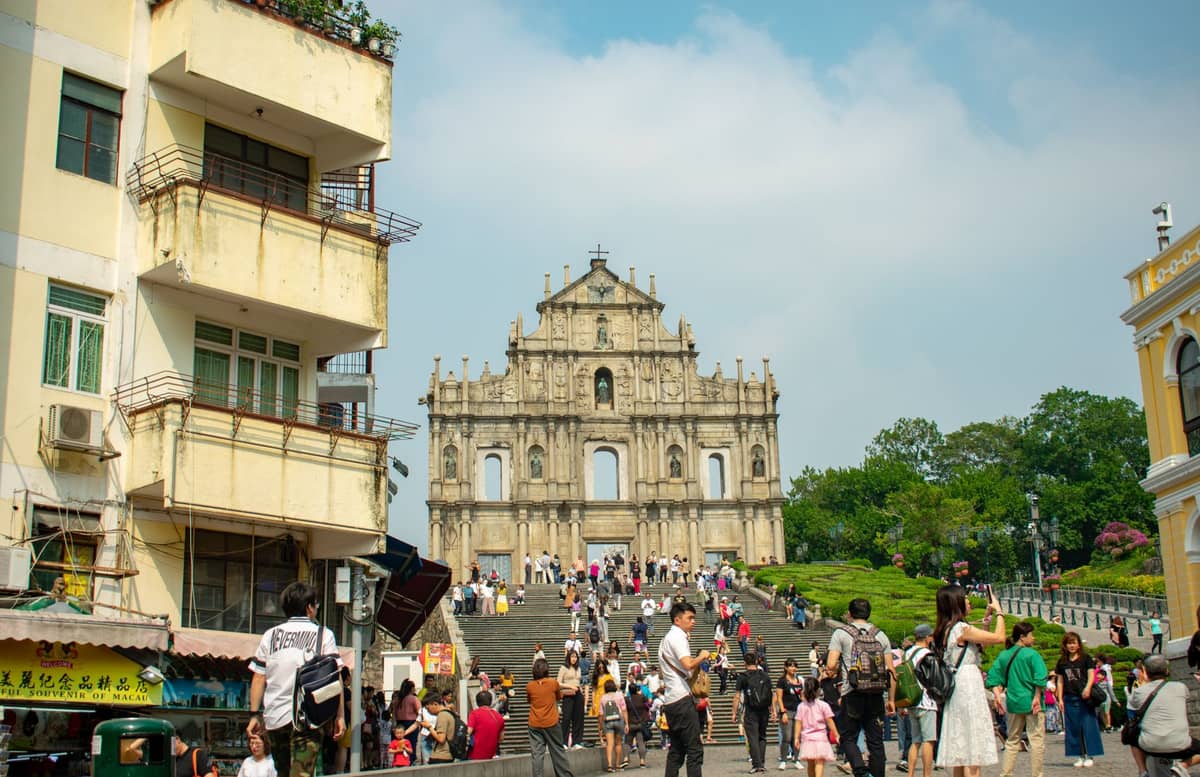
- Start early at Senado Square and the Ruins of St. Paul's — the facade is free and open 24 hours; the Museum of Sacred Art opens at 09:00.
- The Historic Centre is walkable in a morning; use public buses (MOP 6 cash / MOP 3 with Macau Pass) or taxis (MOP 21 flag-fall) to reach Cotai for the afternoon and evening.
- Most UNESCO-listed landmarks — including A-Ma Temple, Senado Square, and the St. Paul's facade — are free to enter.
- If you have more than one day, our 2-day Macau itinerary covers Coloane, Taipa Village, and the deeper cuts.
- October to December is the best window for a one-day visit: dry weather, moderate crowds, and comfortable temperatures around 22-26°C.
Before You Start: Logistics That Actually Matter
Macau covers only 32.9 km² total, but the contrast between the historic Macau Peninsula and the mega-resort Cotai Strip is enormous — geographically, culturally, and architecturally. A well-paced 24-hour visit covers both without feeling rushed, but the sequencing matters.
Currency is the Macanese pataca (MOP), and Hong Kong dollars are accepted almost everywhere at a flat 1:1 rate in most shops even though the official rate is 1 HKD to 1.03 MOP. Cards are accepted at hotels and larger restaurants, but cash is essential for buses, street food, and small temples. Get MOP from ATMs on arrival rather than exchanging at the ferry terminal, where rates are typically worse. Emergency number is 999. The tourism hotline runs 24 hours at +853 2833 3000.
- Public Bus MOP 6.00 cash (exact change only, no coins returned) or MOP 3.00 with a Macau Pass card. Reliable and frequent; the main way locals get around.
- Light Rapid Transit (LRT) MOP 6-12 in cash depending on distance (roughly half with a card). Connects Taipa, the airport, and Cotai. Useful for the second half of the day.
- Taxi Flag-fall MOP 21 for the first 1.6 km, then MOP 2 per 220 m. Add MOP 8 surcharge from the airport or ferry terminals, and MOP 3 per luggage item. Faster than buses for cross-district trips.
- Casino Shuttles The Venetian, Galaxy, and most major Cotai resorts run free shuttle buses from the ferry terminals and border gates. Legitimately useful and completely free — no obligation to gamble.
- Walking The entire Historic Centre can be covered on foot. Carry water in summer; the humidity between June and September is punishing.
💡 Local tip
Pick up a Macau Pass contactless card at the ferry terminal or convenience stores on arrival. It halves your fares on regular buses (MOP 3 instead of MOP 6; MOP 4 on express routes) and works at some shops and restaurants. Worth it even for a single day.
Morning (08:00-12:00): The Historic Centre on Foot
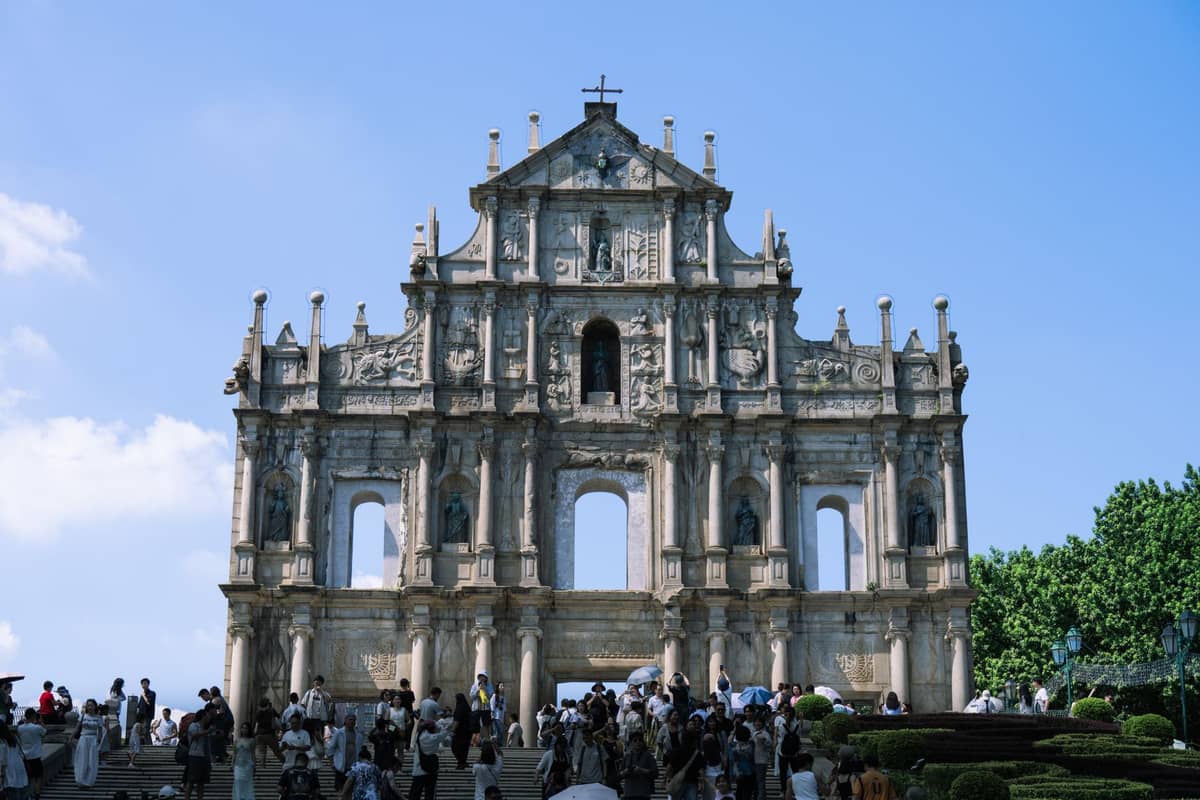
Start at the Ruins of St. Paul's before 09:00. The baroque facade — all that remains of a 17th-century Jesuit church destroyed by fire in 1835 — is free to visit at any hour, and the stone staircase fills with tour groups from about 09:30 onward. The Museum of Sacred Art and Crypt beneath opens at 09:00 (closed Tuesday afternoons) and is worth 20 minutes for the Portuguese colonial religious history alone.
From St. Paul's, walk south through the narrow lanes to Na Tcha Temple — a tiny, bright-red Taoist shrine that sits directly beside the ruins, built in 1888 and part of the same UNESCO listing. Then continue downhill toward Fortaleza do Monte, the 17th-century fort with panoramic views over the Peninsula. It opens early, entry is free, and the cannons still point toward the old Portuguese commercial rivals who no longer pose much of a threat.
By 10:30, work your way to Leal Senado Building and St. Dominic's Church on the north side of Senado Square. The square itself is paved in wave-pattern Portuguese calçada and flanked by pastel colonial buildings — the visual heart of Macau's heritage zone. St. Dominic's Church (free entry, typically open from around 09:00) has a small museum of religious art on its upper floors that most visitors skip entirely and shouldn't.
ℹ️ Good to know
Senado Square and the St. Paul's facade are accessible 24 hours. If you're arriving in Macau late in the day or staying overnight, these sites look spectacular after dark when the surrounding streets are lit up and crowds have thinned significantly.
For those interested in Macau's deeper colonial history, the Macau Museum inside Fortaleza do Monte covers the territory's history from pre-Portuguese times through the 20th century. Allow 45 minutes to an hour. Check current opening hours and admission fees before visiting, as these are updated periodically by the Cultural Affairs Bureau.
Midday (12:00-15:00): Food, Temples, and the Southern Peninsula
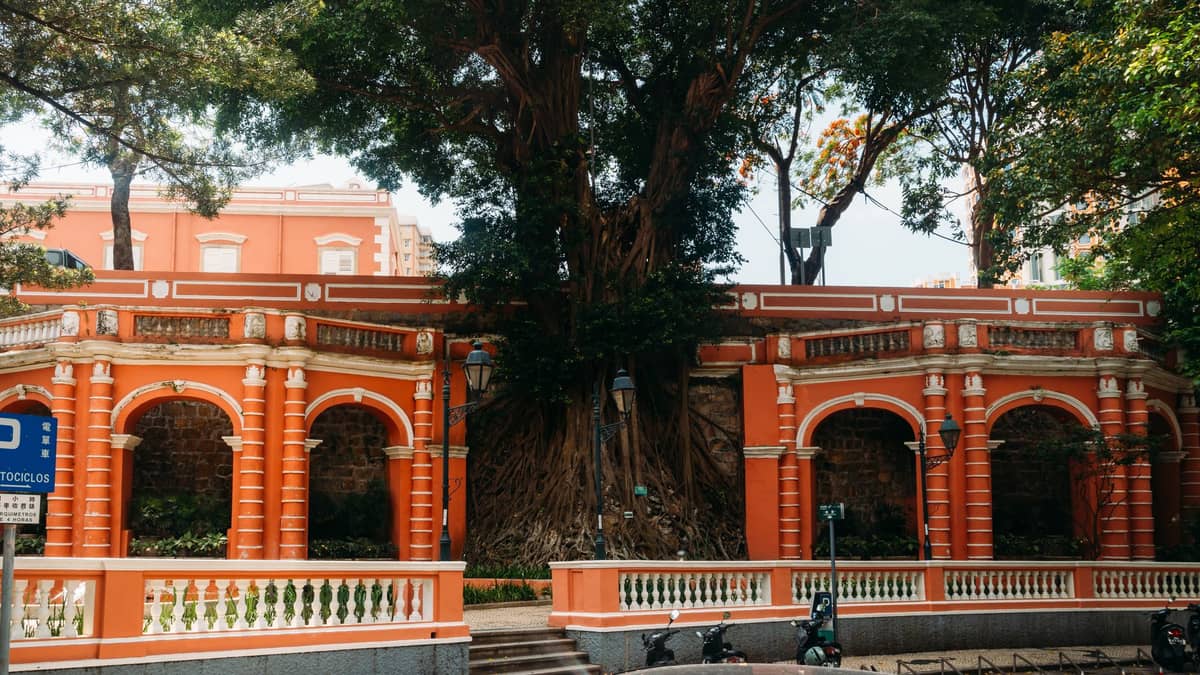
Macau's food culture is one of the most underrated in Asia. The city's Macanese cuisine blends Chinese, Portuguese, African, and South Asian influences into dishes you genuinely cannot find anywhere else. For lunch, choose between sitting down at a proper Macanese restaurant near Senado Square or eating your way through the street food corridor along Rua do Cunha in Taipa Village — the latter requires a bus or taxi but rewards the detour.
- Egg tarts (pastéis de nata, Macau-style): flakier and richer than the Hong Kong version. Lord Stow's Bakery in Coloane is the original, but branches and competitors operate near the Peninsula.
- Pork chop bun (排骨包): a grilled bone-in pork cutlet stuffed into a soft Portuguese roll. Found at street stalls near Senado Square for around MOP 30-45.
- Beef jerky (牛肉乾): dried and grilled to order at shops along Rua de Felicidade. Samples are freely offered — take them.
- Almond cookies and serradura (sawdust pudding): both iconic souvenirs and snacks. Buy cookies loose from factory shops rather than pre-packaged tourist versions.
- Minchi: a Macanese ground meat dish with potatoes and soy sauce, served at sit-down restaurants. Affordable and filling.
After eating, take a bus (routes vary; check the DSAT transport app) south to A-Ma Temple near the southern tip of the Peninsula. This is one of Macau's oldest temples, dedicated to the goddess Mazu, and it's free to enter daily from around 07:00 to 18:00. The incense-heavy lower courtyard with its enormous smoking urns and stacked prayer coils is the most atmospheric spot in all of Macau's historic quarter. Arrive before 14:00 to catch the best light inside the rock carvings above the main pavilion.
⚠️ What to skip
A-Ma Temple is a working religious site, not a photo backdrop. Dress modestly (shoulders and knees covered), speak quietly inside the shrines, and ask before photographing anyone in prayer. Most visitors handle this without issue, but the temple is genuinely sacred to the local community.
Afternoon (15:00-18:00): Cross to Cotai
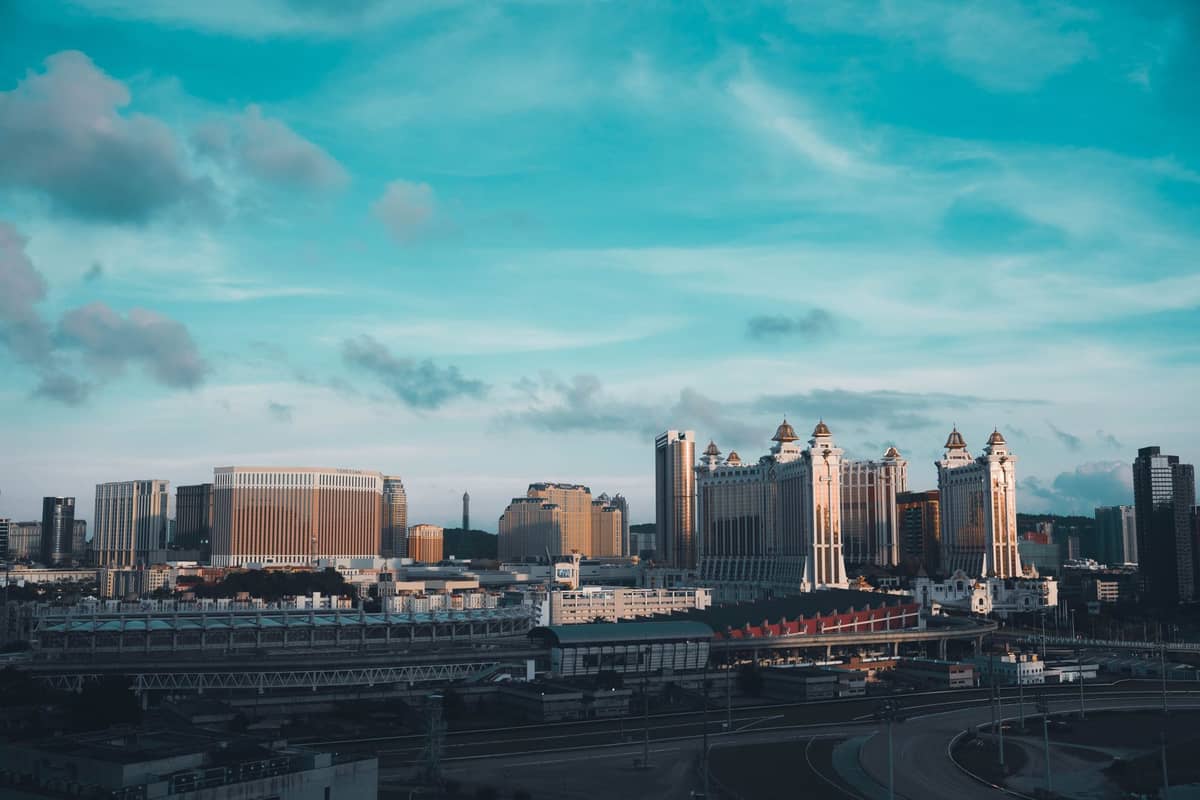
By mid-afternoon, the Peninsula's historic sites are thoroughly covered. This is the moment to cross to Cotai for a completely different Macau: the reclaimed land between Taipa and Coloane that now hosts some of the largest casino resorts on the planet. The easiest route is a free shuttle bus from the Macau Outer Harbour Ferry Terminal directly to your chosen resort. Alternatively, the LRT connects from Taipa to Cotai stations.
The two anchors of the Cotai Strip worth visiting are The Venetian Macao and The Parisian Macao. The Venetian is the larger footprint — over 1 million square feet of gaming floor, canal-side shopping corridors with gondoliers, and a food court that is genuinely useful for budget travelers. The Parisian has a half-scale Eiffel Tower replica on its facade that is worth seeing lit up after dark. Both are free to enter and walk through.
If the mega-resort aesthetic feels hollow, the better afternoon option is a short detour to Taipa Houses Museum in Taipa Village: five restored colonial villas from the early 20th century, painted in green and yellow, overlooking a small garden. Entry fees are low and hours run into the late afternoon. It shows a quieter, more residential face of Macau that the Cotai developments have mostly replaced. Our guide to Macau's heritage walk covers this area in more depth.
Evening (18:00-23:00): Dinner, Towers, and the Lights
Dinner in Macau is worth spending properly on. The city's Portuguese restaurant scene is a legitimate reason to visit — bacalhau (salt cod) prepared a dozen ways, African chicken (galinha africana) with its peanut and chili sauce, and Macanese seafood rice are dishes shaped by 400 years of trading routes from Lisbon to Goa to Guangdong. Restaurants cluster around Taipa Village and the Rua do Cunha area; budget around MOP 200-350 per person for a full sit-down meal with wine. For a broader overview of where to eat, the Macau food guide has neighborhood-by-neighborhood recommendations.
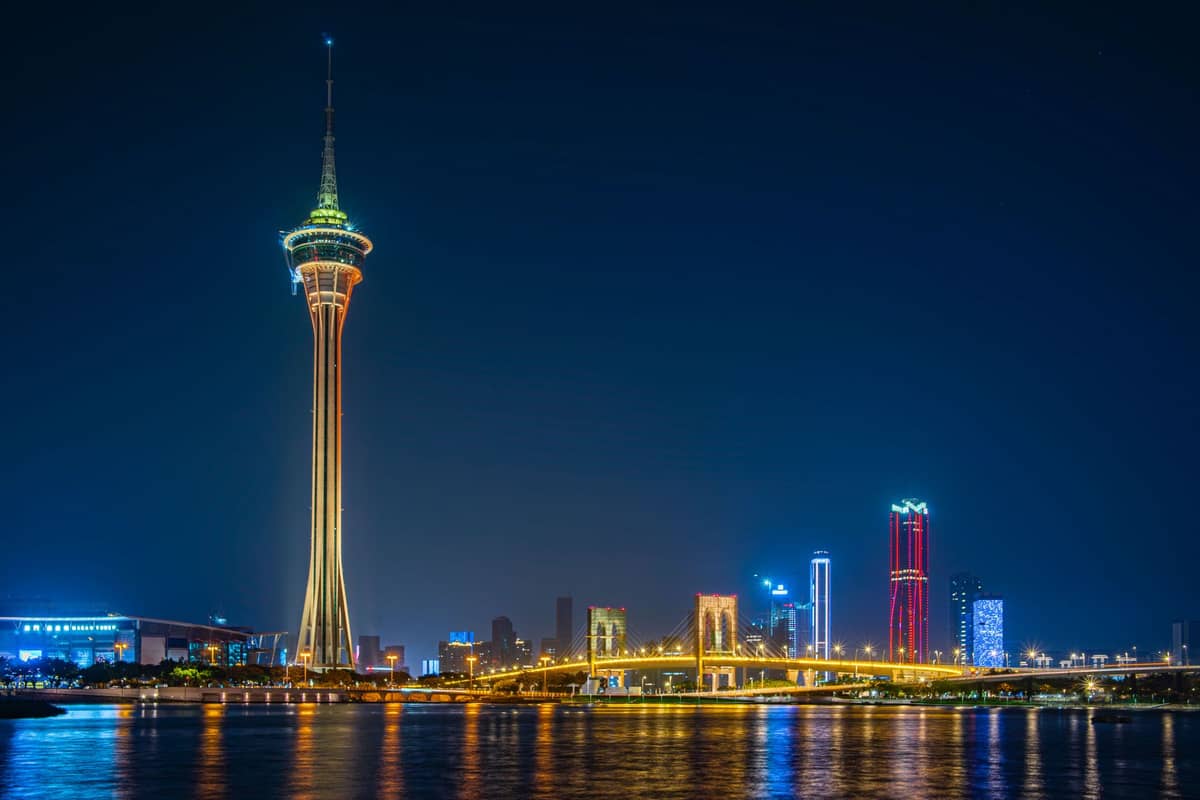
After dinner, the Macau Tower observation deck gives the best elevated view of the city at night, with the Peninsula's heritage skyline in one direction and Cotai's neon towers in the other. The tower sits at 338 meters; the outdoor observation deck is enclosed, and the SkyWalk and bungee options are available for those who want more than a view. Check current pricing before visiting as admission fees are updated periodically.
To close the night, return to the casino floor of your preferred Cotai resort or head back to the Peninsula for a quieter end at a bar near Senado Square. The square itself is atmospheric at night with the colonial buildings illuminated and foot traffic lighter than daytime. For those interested in what Macau's night scene actually looks like beyond the casino floor, the Macau nightlife guide breaks down the options by area and budget.
What to Skip on a One-Day Visit
With only 24 hours, some things simply don't fit, and it's worth being direct about which popular stops are worth cutting. The Macau Fisherman's Wharf near the Outer Harbour is frequently listed in generic itineraries but is essentially a faded theme-park shopping complex that doesn't compare favorably to anything else in the city. Skip it. The Kun Iam Statue on the waterfront is photogenic from a distance but adds little to a packed itinerary. Similarly, the Grand Prix Museum is genuinely interesting for motorsport fans but niche enough to cut unless racing history is a personal priority.
Coloane's beaches, hiking trails, and Coloane Village deserve more time than a one-day itinerary allows. If you can extend to two days, the southern island is a completely different pace. The same applies to Lou Lim Ieoc Garden and the Guia Fortress and Lighthouse — both are worthwhile, but not at the expense of the core route above. For travelers who keep coming back, our guide to things to do in Macau covers the full range.
FAQ
Is one day enough for Macau?
Yes, for a first visit focused on the highlights. The UNESCO Historic Centre, A-Ma Temple, and a Cotai resort can all be covered comfortably in 24 hours. A second day unlocks Taipa Village, Coloane, and slower exploration of the heritage sites you'll inevitably rush past on day one.
Can I do Macau as a day trip from Hong Kong?
Absolutely. High-speed ferries from Hong Kong Island and Kowloon run frequently and take roughly 55-70 minutes. Factor in immigration on both ends and you lose about 90 minutes of your day total. Early morning departures give you the most time. Check current ferry schedules and book ahead during weekends and public holidays when boats fill up.
How much does a day in Macau cost?
The Historic Centre is almost entirely free to visit. Budget travelers can cover transport (MOP 20-40 by bus), street food meals (MOP 80-150 total), and a couple of attraction entry fees for well under MOP 300 (around USD 35-40) for the day. A sit-down Portuguese dinner, Macau Tower entry, and a taxi or two pushes that to MOP 600-900 per person.
What is the best time of year for a one-day Macau visit?
October through December. Temperatures sit around 22-26°C, humidity drops significantly compared to summer, and typhoon season has passed. February through early April is the next best window. Avoid July and August if you can: temperatures regularly exceed 32°C with high humidity, and typhoon disruptions can cancel ferry services without much warning.
Do I need to book anything in advance for a one-day Macau itinerary?
For the Historic Centre, nothing needs advance booking — all major sites are walk-up. If you plan to dine at a specific Portuguese restaurant on a weekend, a reservation is sensible. Ferry tickets from Hong Kong should be booked in advance for weekends and Chinese public holidays. Macau Tower observation deck and any bungee or SkyWalk experiences can also fill up and benefit from pre-booking.