Coloane Village: Macau's Slowest, Most Rewarding Afternoon
Coloane Village (Vila de Coloane) sits at the southern tip of Macau, a former fishing settlement that has held onto its old rhythms while the rest of the city raced ahead. Whitewashed colonial buildings, a small harbor, incense-drifting temples, and the original Lord Stow's Bakery make this the most atmospheric half-day trip in the territory. Entry is free, and the bus ride from central Macau takes under an hour.
Quick Facts
- Location
- Coloane Village, Coloane Island, Macau SAR — southwestern tip of the island, near the seafront
- Getting There
- Public buses 25, 26, 26A, 15, and 21A serve Coloane Village or nearby stops. No LRT connection; taxis are available but verify current fares before travel.
- Time Needed
- 2 to 4 hours for the village on foot; pair with Hác Sá or Cheoc Van beach for a full day
- Cost
- Free to enter and walk. Budget for food and drinks — a famous egg tart at Lord Stow's Bakery costs a few MOP.
- Best for
- Slow walkers, architecture browsers, photographers, couples, and anyone who needs a break from casino-floor noise
- Official website
- www.macaotourism.gov.mo/en/step-out-macao/coloane
What Coloane Village Actually Is
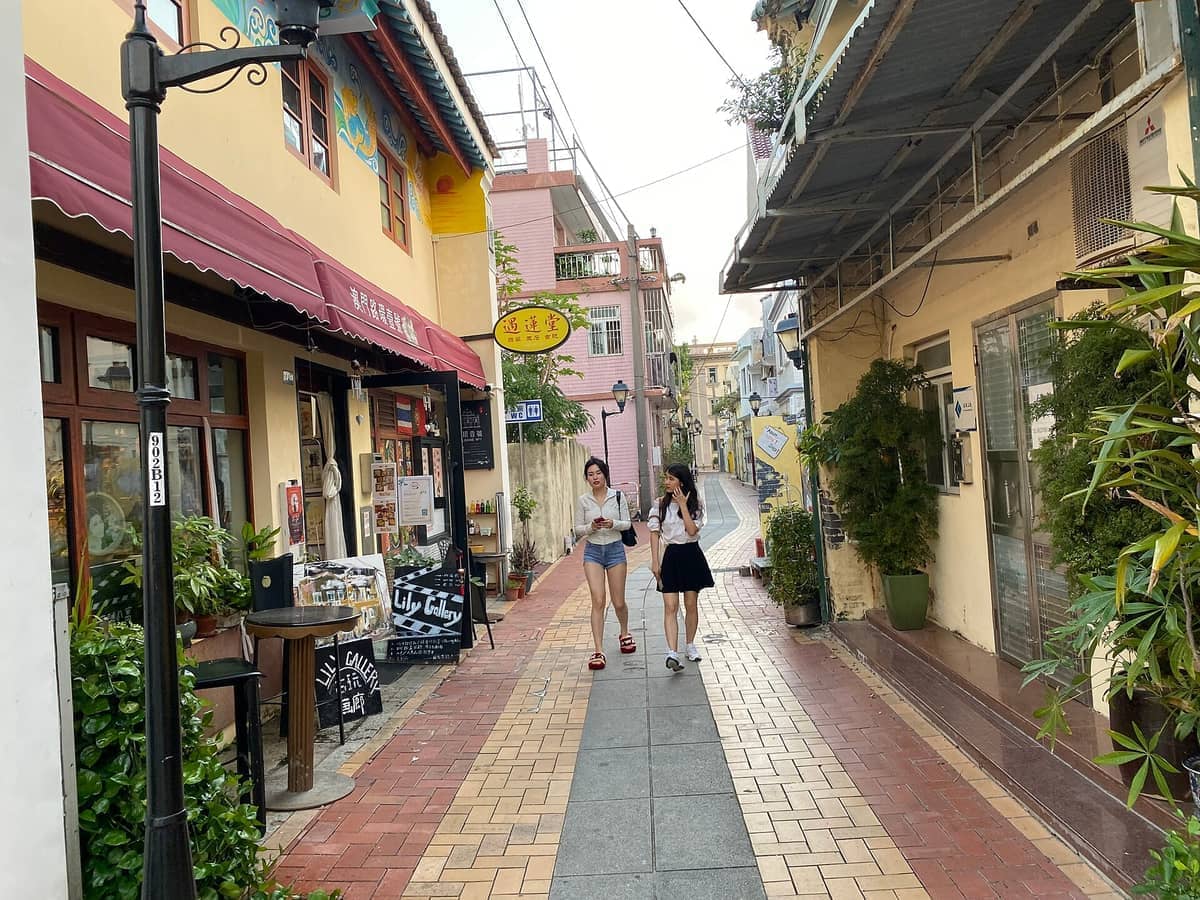
Coloane Village — known in Portuguese as Vila de Coloane and in Chinese as 路環村 — occupies the southwestern edge of Coloane Island, the southernmost island in the Macau SAR. While most of Macau has been transformed beyond recognition by decades of rapid casino development and land reclamation, Coloane was largely left alone. The result is a compact former fishing settlement where the pace is genuinely different: narrower lanes, older facades, the faint smell of incense from temple doorways, and neighbors who seem unbothered by visitors.
The village is not a theme park or a museum district with roped-off buildings. It is a working community where people live, worship, and run small businesses. That authenticity is both its appeal and a reason to visit with some respect for its residents. If you are coming from the Ruins of St. Paul or Senado Square, Coloane Village will feel like a different city entirely.
💡 Local tip
The village is a public area with no gates or opening hours — you can arrive at any time. Morning visits before 10am offer the quietest lanes and the best light for photography. Weekday afternoons are noticeably less crowded than weekends.
The Village on Foot: What You Will Actually See
The core of the village takes perhaps 20 minutes to cross on foot, but that timescale assumes you keep moving. Most visitors end up doubling back, pausing at doorways, and getting distracted by small details — the hand-painted ceramic house numbers in Portuguese style, the latticed windows on older shophouses, the sudden opening of a small square.
The village seafront sits along a calm inner harbor, facing the Pearl River estuary. Fishing boats are moored here, and on weekday mornings you may see activity related to the day's catch. The waterfront promenade is short but pleasant, giving views across the water toward the Chinese mainland. There are benches, and locals use this stretch for early morning walks.
The colonial-era buildings along the main square and adjacent lanes are among the most photogenic in Macau. Pastel yellows, greens, and whites with decorative plasterwork sit directly alongside traditional Chinese shopfronts. Neither style dominates — they simply coexist, which is a reasonable shorthand for Macau's broader history. The square itself is centered on a small war memorial commemorating those who died fighting pirates in the early twentieth century, and it serves as a kind of quiet gathering point for the village.
Temples, Churches, and the Texture of Religious Life
Two temples and a church sit within easy walking distance of each other near the village center, which tells you something about how Coloane has absorbed competing influences over centuries. The Chapel of St. Francis Xavier, located beside the main square, is a small white Catholic church reconstructed in 1928. It is modest in scale but carefully maintained, and the pale yellow facade makes it an obvious focal point for photographs. The church is sometimes open during the day; visiting hours vary and are not officially posted, so it is worth trying the door.
Nearby, the Tam Kong Temple draws local worshippers more than tourists. Dedicated to a deity associated with the sea and protection of fishermen, it reflects the village's maritime heritage directly. Incense coils hang from the ceiling and the smell of burning offerings drifts out into the lane — a sensory detail that no photograph fully captures. If you are following a broader tour of Macau's religious sites, the Macau temples guide provides useful context for both the Chinese and Portuguese-Catholic traditions you will encounter here.
Lord Stow's Bakery: Worth the Bus Ride Alone
It would be dishonest to write about Coloane Village without acknowledging that for many visitors, the primary destination is Lord Stow's Bakery. Founded by British pharmacist Andrew Stow in 1989, this bakery on the village square is credited with creating the Macau-style Portuguese egg tart — a crisp, flaky pastry shell filled with a lightly caramelized custard that is richer and less sweet than the Hong Kong variety. The original Coloane location remains the most atmospheric place to try one. Lines form on weekends, but they move quickly. For a broader look at where egg tarts fit into Macau's food culture, the Macau egg tarts guide covers the full story.
Beyond Lord Stow's, the village has a small selection of restaurants and cafes serving Macanese and Portuguese food. These are genuine neighborhood spots rather than tourist operations, with menus that skew toward local staples: African chicken, bacalhau preparations, simple rice and noodle dishes. Prices are reasonable by Macau standards. None of this is gourmet dining, but eating lunch here after a morning walk is one of the more pleasant ways to spend time in the territory.
ℹ️ Good to know
Lord Stow's Bakery is located directly on the village square and is clearly signposted. Egg tarts sell out by early afternoon on busy days — weekday mornings guarantee the freshest stock and shortest waits.
When to Visit and How Weather Changes the Experience
Coloane Village is at its best between October and December, when Macau's subtropical climate delivers warm, dry days with lower humidity and good light. The autumn months offer the most comfortable conditions for walking the village's lanes and sitting by the waterfront without discomfort. For a full breakdown of seasonal trade-offs across the territory, the best time to visit Macau guide covers the rainy season and typhoon risk in detail.
In summer (June through September), heat and humidity are significant. The village lanes offer little shade, and the waterfront gets direct afternoon sun. Visiting early in the morning — before 9am — makes summer visits manageable, and the low tourist footfall at that hour has its own appeal. Typhoon warnings occasionally shut down public transport, including buses to Coloane, so check weather advisories before traveling during typhoon season.
Spring (March through May) brings mist and drizzle, which can actually flatter the old architecture with soft, diffused light. Bring a light waterproof layer. Winter (December through February) is Macau's driest and mildest season — daytime temperatures typically range from around 15 to 20 degrees Celsius — and the village is noticeably quieter than in peak autumn or the summer school holiday period.
Getting There and Getting Around
The most practical way to reach Coloane Village from central Macau is by public bus. Routes 25, 26, 26A, 15, and 21A serve the village or stops nearby — verify current route numbers and stops with the Macao SAR transport authority before travel, as schedules are updated periodically. The journey from the Macau Peninsula takes roughly 30 to 45 minutes depending on traffic and the specific bus route. For a full overview of how public transport works across the territory, the getting around Macau guide is a useful reference.
Taxis are available and will take you directly to the village, but fares and surcharges are subject to change — confirm current rates locally. The Macau LRT (Light Rapid Transit) does not currently extend to Coloane, so buses and taxis remain the primary options. There is no need to hire a guide; the village is compact and entirely navigable without one.
Many visitors combine Coloane Village with a beach trip to Hác Sá Beach or Cheoc Van Beach, both of which are on the same island and reachable by bus or short taxi ride. This combination makes for a well-rounded full-day itinerary on Coloane without requiring any return to the peninsula between stops.
Photography and Practical Notes
The village square and the Chapel of St. Francis Xavier photograph well in the hour or two after sunrise, when the warm light hits the whitewashed facades and the lanes are still empty. By mid-morning on weekends, tour groups begin arriving and the square becomes considerably more crowded. The harbor area offers cleaner shots in the morning before fishing activity picks up.
The lane surfaces are uneven in places — worn stone and cobble-style paving — so supportive footwear is more practical than sandals or flat dress shoes, particularly if you plan to explore beyond the main square. There is no official accessibility assessment available for the village; visitors with mobility considerations should be aware that the terrain is not uniformly flat and that some lanes have steps.
Coloane Village appears in several walking itineraries covering Macau's quieter side. If you are looking to build a fuller day around the island's character, the Coloane island overview covers the broader area including its parks and hiking options. For those working within a tight schedule, the Macau one-day itinerary suggests how to fit the village into a compressed visit.
Who Should Think Twice
Coloane Village is genuinely slow-paced and deliberately low-key. Visitors looking for spectacle, interactive experiences, or the energy of the casino resorts will find it underwhelming. There is no single headline attraction here — no famous view, no major museum, no ticketed experience. The appeal is cumulative and atmospheric rather than immediate.
Children under 10 may find the walking format tedious without specific activities planned; the beach at Hác Sá makes a more practical add-on if you are traveling with younger kids. Visitors pressed for time who are prioritizing the UNESCO heritage sites on the peninsula may also find the bus journey to Coloane a difficult trade-off against other sights.
Insider Tips
- Arrive before 9am on a weekday morning for the quietest village experience and the best photography light — the square before tour groups arrive looks like a different place entirely.
- The bus journey itself is worth paying attention to: the route passes through Cotai's mega-resort corridor before the landscape opens up into the greener, lower-rise scenery of Coloane. It is a useful visual reminder of how much variety fits into a small territory.
- Egg tarts at Lord Stow's are freshest in the morning batches and tend to sell out on weekend afternoons. If you want one warm from the oven, time your arrival accordingly.
- The small lanes behind the main square, away from the waterfront, see far fewer visitors and contain some of the village's oldest residential architecture. They take about 10 minutes to explore and most tour groups skip them entirely.
- Combining Coloane Village with a walk in Seac Pai Van Park, located on the same island, adds a green and quiet counterpoint to the village streets — both are reachable on the same bus route.
Who Is Coloane Village For?
- Travelers who want a genuine contrast to Macau's casino and hotel architecture
- Food-focused visitors making the pilgrimage to the original Lord Stow's Bakery
- Photographers seeking colonial streetscapes without crowds — especially on weekday mornings
- Couples looking for a relaxed half-day that combines a village walk with a nearby beach
- Anyone following Macau's Portuguese heritage trail across the territory's historic sites
Nearby Attractions
Other things to see while in Coloane:
- Cheoc Van Beach
Cheoc Van Beach sits at the southern tip of Coloane Island, offering free access, a seasonal swimming pool, and a noticeably quieter atmosphere than most of Macau. It works best for a half-day escape from the city's casino density, though water quality checks are worth doing before you swim.
- Coloane Hiking Trails
The Coloane Trail is Macau's longest marked hiking route, an approximately 8-kilometre loop through forested hillsides above Coloane Island. Free to access, genuinely peaceful, and surprisingly challenging in places, it offers the clearest contrast to the casino-dense cityscape most visitors never leave.
- Hac Sa Beach (Black Sand Beach)
Hac Sa Beach is Macau's largest natural beach, set on the quieter southern coast of Coloane. Known for its historically dark, iron-rich sand and laid-back atmosphere, it offers a genuine contrast to the city's casino towers and heritage corridors. Entry is free, buses run regularly, and the surrounding area rewards those who arrive with time to spare.
- Seac Pai Van Park and Giant Panda Pavilion
Tucked into the forested hills of Coloane, Seac Pai Van Park is Macau's largest natural park and home to the Macao Giant Panda Pavilion. It offers a genuine contrast to the neon intensity of the casino strips, with giant pandas, red pandas, shaded walking trails, and free admission to almost everything.