Coloane Hiking Trails: Macau's Best Escape into Nature
The Coloane Trail is Macau's longest marked hiking route, an approximately 8-kilometre loop through forested hillsides above Coloane Island. Free to access, genuinely peaceful, and surprisingly challenging in places, it offers the clearest contrast to the casino-dense cityscape most visitors never leave.
Quick Facts
- Location
- Coloane Island, Macau SAR – trail access off Estrada do Alto de Coloane and via Seac Pai Van Park
- Getting There
- Public buses 15, 21A, 25, 26, 26A, 50, N3 to Seac Pai Van Park or Coloane Village; walk uphill to signed trailheads
- Time Needed
- 2.5 to 4 hours for the full loop; allow extra time for viewpoints and rest stops
- Cost
- Free – the trail is a public outdoor space with no admission fee
- Best for
- Nature lovers, runners, photographers, and anyone needing distance from the casino strip
What the Coloane Trail Actually Is
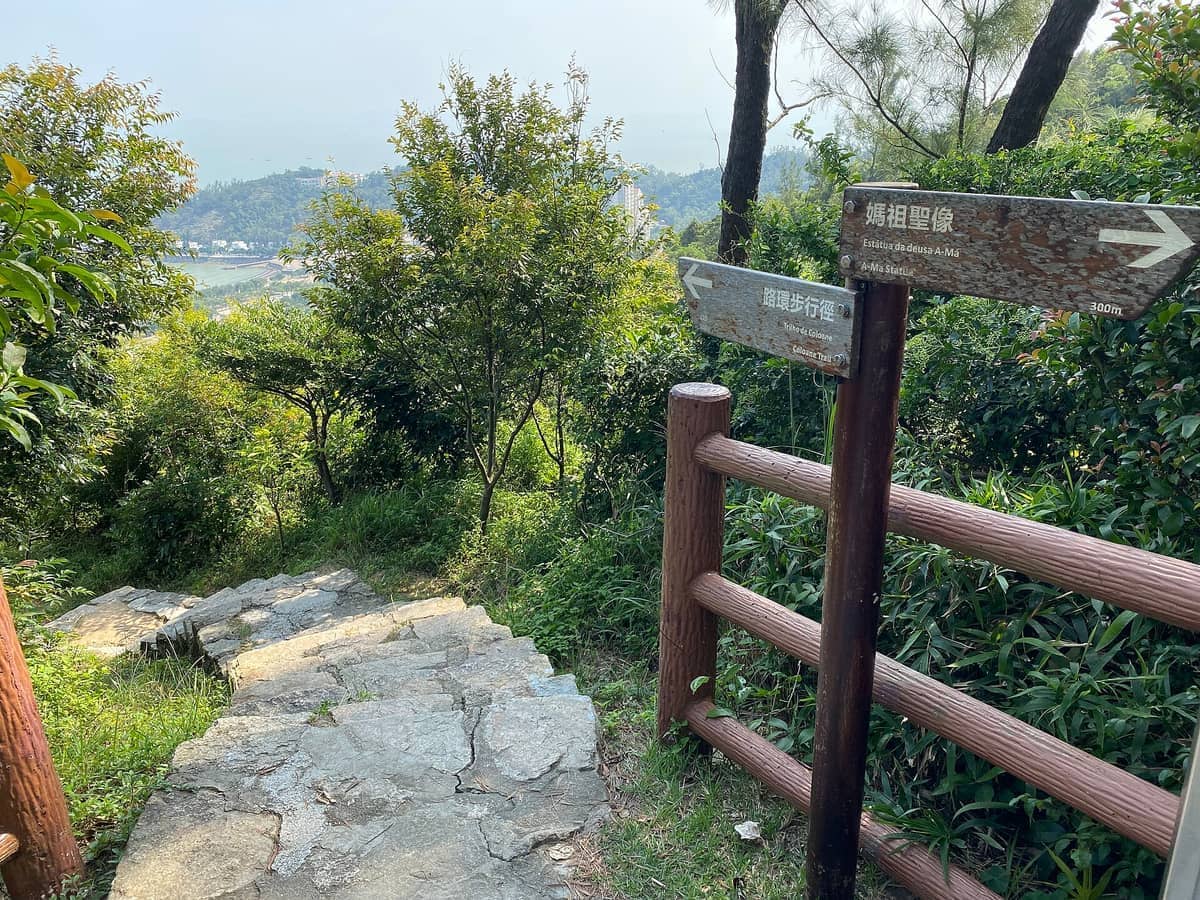
The Coloane Trail, officially the Trilho de Coloane (路環步行徑), is Macau's longest officially designated hiking route. Opened in 1993, the trail forms a loop of approximately 8 kilometres around Alto de Coloane, the highest point in the Macau SAR, rising to around 170 metres above sea level. In a territory that is 32.9 square kilometres with some of the world’s highest urban density, this is about as close to genuine wilderness as you will find.
The route circles through subtropical forest, past rocky outcrops, open hilltop viewpoints, and secondary vegetation that has recovered impressively from earlier land use. Signage is in Portuguese and Chinese, and trail markers are generally reliable on the main loop, though junctions with minor paths can be ambiguous in a few spots. A physical map from Seac Pai Van Park or a downloaded offline route is worth having before you start.
💡 Local tip
The most straightforward entry point is through Seac Pai Van Park, near the Giant Panda Pavilion. Walk past the pavilion and follow the 'Coloane Trail' signs up the hillside. This approach gives you a gradual warm-up before the steeper sections.
The Experience at Ground Level
Once you pass the park's upper boundary and the city noise drops away, the trail changes character quickly. The canopy closes overhead, and the temperature drops a noticeable few degrees compared to the roads below. The path underfoot is a mix of compacted earth, flat stone steps, and exposed root sections. It is not a manicured urban park walk. Sections near the summit involve genuine stair climbing, and the descent on the far side can be slippery after rain.
The sounds shift as you climb. Street traffic fades and is replaced by birdsong, cicadas from April through September, and the creak of bamboo in the breeze. The air carries a faint smell of leaf litter and damp soil, more common to a rural hillside than a city of roughly 680,000–690,000 people. In the cooler months, there is sometimes morning mist sitting in the valley below the summit, and the view through it across the Pearl River Delta is worth pausing for.
The hilltop near Alto de Coloane itself opens onto a wide view that surprises most first-time visitors: the Cotai Strip resorts to the north, the South China Sea to the south, and the green contours of Coloane dropping away in every direction. On a clear autumn day, you can see well into Zhuhai and, in the other direction, across to offshore islands. This contrast between the casino skyline and the quiet hillside you are standing on is one of Macau's more striking juxtapositions.
How the Experience Changes by Time of Day
Early morning, particularly between 7 and 9 am, is when locals dominate the trail. You will encounter older residents doing their morning exercise, joggers completing the loop at a fast pace, and the occasional group doing tai chi at one of the wider path sections near the summit. The light at this hour comes in low and golden through the tree cover, and the forest is noticeably cooler and quieter.
By mid-morning on weekends, the trail picks up considerably, especially during the October to February dry season when the weather draws larger numbers. The path is wide enough in most sections to pass comfortably, but the staircase sections can create brief bottlenecks. Midday in summer should be avoided: humidity between June and September climbs sharply, the forest provides some shade, but the exposed summit sections offer no protection from the heat.
Late afternoon, roughly 3 to 5 pm in the cooler months, is arguably the most photogenic window. The light on the South China Sea turns warmer, the crowds have thinned from the morning peak, and the pace on the trail slows. Sunset from the upper section can be excellent, but the trail should not be started late: it is unlit and the descent becomes genuinely difficult in darkness.
⚠️ What to skip
The trail has no lighting. Start no later than early afternoon if you are doing the full 8-kilometre loop, particularly in winter when daylight ends around 6 pm. Bring a head torch if you have any doubt about timing.
Practical Walkthrough: Getting There and Starting the Route
Coloane is the southernmost island of Macau SAR, connected to Taipa and the broader territory by road. Getting there by public bus takes around 20 to 40 minutes from the Macau Peninsula, depending on the route and traffic. Buses 15, 21A, 25, 26, 26A, 50, and N3 all serve stops near Seac Pai Van Park or Coloane Village, which are the two main starting points for the trail.
From Seac Pai Van Park, the path is clearly signed from the Giant Panda Pavilion entrance. From Coloane Village, a signed road and staircase lead uphill from the village square; this approach is slightly more urban at the start but drops into forest within ten minutes of walking. Either entry works for the loop, which can be walked in either direction.
Wear proper footwear. Trail running shoes or hiking boots are appropriate for this route. Flip-flops and thin-soled shoes become a problem on the root-covered and wet-stone sections, particularly on descents. Bring at least one litre of water per person, more in summer. There are no refreshment stalls or water points on the trail itself.
If you are building a full day around Coloane, combining the trail with time at Hac Sa Beach afterwards is a natural pairing: the beach is a short bus or taxi ride from the trail's lower exits, and the contrast between forest exercise and a quiet beach is a pleasant finish to the day.
Weather, Seasons, and When to Go
Macau's subtropical climate divides into a wet season (roughly May to September) and a drier, cooler period from October through February. For hiking the Coloane Trail, the drier months are significantly more pleasant. October and November are the peak window: temperatures sit around 22 to 26 degrees Celsius, humidity drops, and the trail surface is dry and firm.
December through February brings the coolest conditions, with daytime temperatures often in the mid-teens. These months are comfortable for physical activity, though early mornings can feel cold at the exposed summit. March and April are transitional: the temperatures are manageable but humidity begins building, and fog is common in spring mornings, which can reduce views significantly.
The trail is not formally closed during typhoon season, but hiking during or immediately after a typhoon signal is dangerous. The Macau Meteorological and Geophysical Bureau issues storm signal warnings (Signal 1 through 10) that are publicly broadcast; if any signal of 3 or above is in effect, outdoor hiking should be cancelled. After heavy rain, several sections of the descent become slippery enough to require real caution even for experienced walkers.
ℹ️ Good to know
The best single month for hiking this trail is October. The wet season has ended, crowds are moderate, temperatures are ideal for sustained walking, and the South China Sea views from the summit are consistently clear.
Photography and What to Expect at the Viewpoints
The main photographic payoff on the Coloane Trail is the summit area near Alto de Coloane, where the tree cover opens and the view extends in multiple directions. The Cotai Strip casino towers, including the unmistakable profile of the resorts, are visible to the north. To the south, the sea opens up, and on clear days, distant islands are distinguishable on the horizon.
For wider panoramic context, the trail pairs well with other elevated viewpoints in Macau. Guia Fortress and Lighthouse on the Macau Peninsula offers a different angle on the city, while Penha Hill and Church gives a lower but more intimate urban panorama. The Coloane Trail summit is the only place in Macau where you can look down at the casino towers rather than up at them.
A wide-angle lens captures the full sweep of the summit view, but even a phone camera handles it well in good light. The forest sections are darker and more textured; they suit slower shutter speeds or portrait modes better than wide landscape shots. Macros of the trail-side vegetation and fungi are underrated photographic subjects on this route.
Accessibility and Who Should Think Twice
The Coloane Trail is a genuine hiking path, not an accessible walking route. Significant staircase sections, uneven natural surfaces, and exposed root crossings make it unsuitable for wheelchairs and difficult for anyone with limited mobility. Vehicles can reach some of the upper road areas near Alto de Coloane, which gives limited access to the broader hilltop zone, but the trail loop itself cannot be completed without sustained physical effort.
Visitors who are looking for a short, flat stroll rather than a proper hike will find the Coloane Trail more demanding than expected. If a scenic walk without significant climbing is the goal, the waterfront path in Coloane Village or the lower perimeter of Seac Pai Van Park are gentler alternatives. Young children can manage portions of the trail, but the full 8-kilometre loop with its elevation change is tiring for small legs and should be planned carefully.
If you are visiting Macau primarily for heritage sites and street food rather than outdoor activity, the trail is optional. The concentration of UNESCO-listed history near the Ruins of St. Paul and the surrounding Macau Peninsula neighbourhood offers a different but equally distinctive experience without the physical commitment.
Insider Tips
- Download an offline map of the trail before you start. The trail signs are generally reliable on the main loop, but a few junctions with minor paths can be confusing, and mobile data coverage in the denser forest sections is inconsistent.
- The Giant Panda Pavilion at Seac Pai Van Park is worth a brief stop before or after the hike. The pandas are active in the early morning, which aligns well with an early trail start.
- Bring cash and plan to eat in Coloane Village after the hike. The village square has a handful of small restaurants and the famous Lord Stow's Bakery, widely credited with developing the Macau-style egg tart. It is a 10-15 minute walk or short taxi ride from the trail exits.
- The trail is a genuine running route for local athletes. If you are a trail runner, the 8-kilometre loop with its elevation gain is a solid workout, and early weekend mornings see a small but consistent running community on the path.
- Typhoon season (July to September) brings not just rain but fallen branches and occasional trail debris. Even on clear days after a storm, check the condition of the path before committing to the full loop.
Who Is Coloane Hiking Trails For?
- Hikers and trail runners looking for a physical challenge within a small urban territory
- Photographers interested in the visual contrast between forest and casino skyline
- Travellers spending two or more days in Macau who want something beyond heritage and casinos
- Nature-oriented visitors who find Macau's urban density overwhelming and need an outdoor reset
- Early risers who want a quiet, local-facing experience before the tourist crowds arrive in the city centre
Nearby Attractions
Other things to see while in Coloane:
- Cheoc Van Beach
Cheoc Van Beach sits at the southern tip of Coloane Island, offering free access, a seasonal swimming pool, and a noticeably quieter atmosphere than most of Macau. It works best for a half-day escape from the city's casino density, though water quality checks are worth doing before you swim.
- Coloane Village
Coloane Village (Vila de Coloane) sits at the southern tip of Macau, a former fishing settlement that has held onto its old rhythms while the rest of the city raced ahead. Whitewashed colonial buildings, a small harbor, incense-drifting temples, and the original Lord Stow's Bakery make this the most atmospheric half-day trip in the territory. Entry is free, and the bus ride from central Macau takes under an hour.
- Hac Sa Beach (Black Sand Beach)
Hac Sa Beach is Macau's largest natural beach, set on the quieter southern coast of Coloane. Known for its historically dark, iron-rich sand and laid-back atmosphere, it offers a genuine contrast to the city's casino towers and heritage corridors. Entry is free, buses run regularly, and the surrounding area rewards those who arrive with time to spare.
- Seac Pai Van Park and Giant Panda Pavilion
Tucked into the forested hills of Coloane, Seac Pai Van Park is Macau's largest natural park and home to the Macao Giant Panda Pavilion. It offers a genuine contrast to the neon intensity of the casino strips, with giant pandas, red pandas, shaded walking trails, and free admission to almost everything.