Penha Hill and the Chapel of Our Lady of Penha: Macau's Quiet Hilltop Escape
Rising above the rooftops of the São Lourenço district, Penha Hill carries one of Macau's oldest Catholic chapels and one of its best free viewpoints. The combination of colonial architecture, winding cobbled streets, and panoramas over the Inner Harbour makes it a compelling alternative to the more crowded heritage sites to the north.
Quick Facts
- Location
- Penha Hill (Bishop Hill / 主教山), São Lourenço district, Macau Peninsula
- Getting There
- Bus routes 3 or 8 to A-Ma Temple stop, then walk uphill; routes 6B, 9, 16, 28B also pass nearby
- Time Needed
- 45–90 minutes including the climb and views
- Cost
- Free entry to hill and chapel
- Best for
- Photographers, history enthusiasts, couples, anyone seeking calm away from casino crowds
What Is Penha Hill?
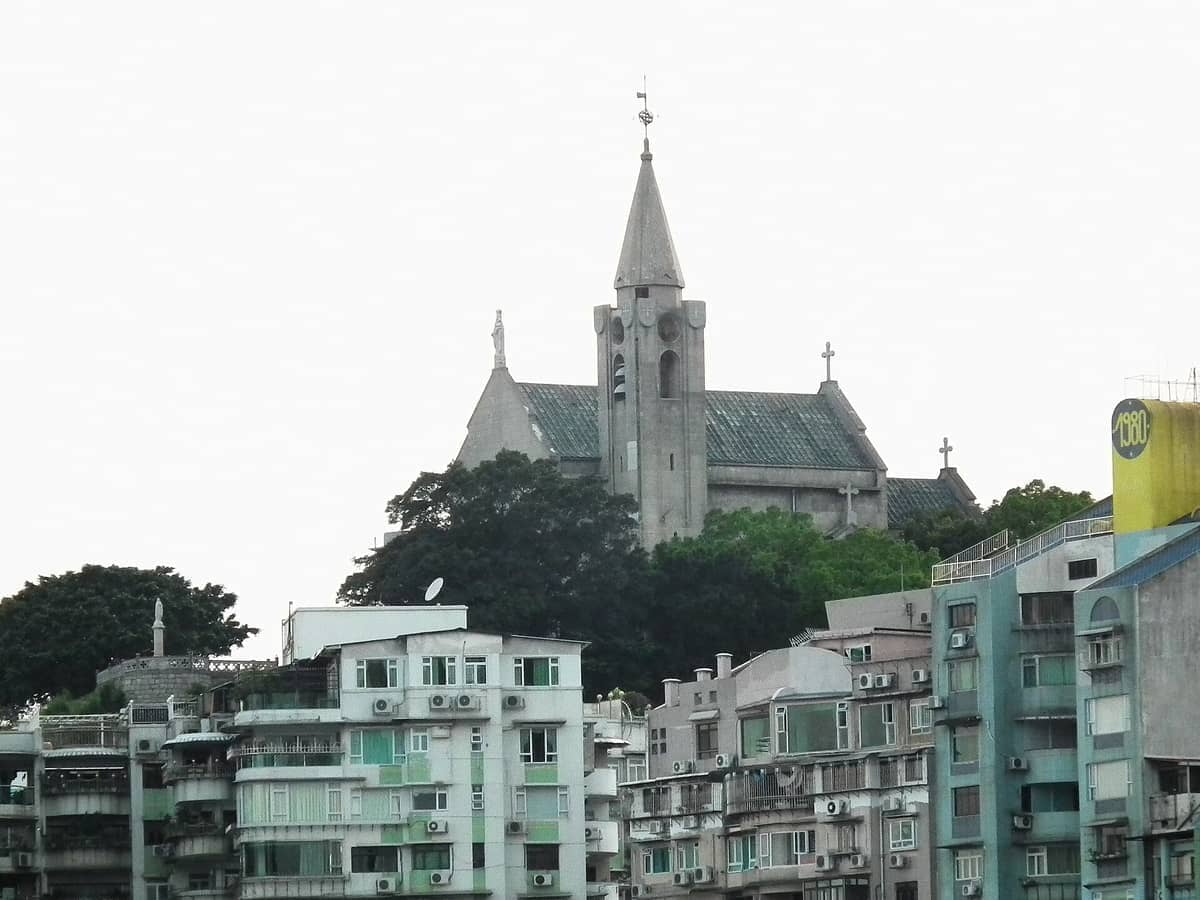
Penha Hill, known locally as Bishop Hill or 主教山, is a modest but meaningful summit on the southern end of the Macau Peninsula. At its peak stands the Chapel of Our Lady of Penha (Portuguese: Capela de Nossa Senhora da Penha; Chinese: 西望洋聖堂), a compact whitewashed church attached to a bishop's residence. The site is not large or grand in the way of Macau's casino towers or its UNESCO-listed plazas, but it earns its place on any serious itinerary through a combination of genuine historical weight, uncrowded atmosphere, and views that reward the twenty-minute walk up from street level.
This is one of the few spots on the Peninsula where the noise of traffic fades completely and you hear only wind, birdsong, and the occasional distant ferry horn from the Inner Harbour below. For travelers worn down by the sensory intensity of the casino strip, Penha Hill functions as a genuine reset.
ℹ️ Good to know
Opening hours vary slightly by source: the hill grounds are generally accessible from around 07:30 to 18:30, while the chapel interior typically opens from 10:00 and closes around 17:00. Confirm locally if interior access matters to your visit.
Getting There: The Climb Is Part of the Experience
Access to Penha Hill begins off Calçada da Penha, a lane that branches from Rua Boa Vista on the western side of the Peninsula. From the A-Ma Temple bus stop, served by routes 3 and 8, the walk takes roughly ten to fifteen minutes through a quiet residential quarter. Routes 6B, 9, 16, and 28B also pass close to the hill if you are coming from a different part of the Peninsula.
The ascent is steep in places, following cobblestone paths and narrow stairways that wind past old apartment buildings and garden walls. It is not a hike in any technical sense, but the uneven surfaces and gradient make it genuinely difficult for visitors with mobility impairments or those using strollers. Wear shoes with grip rather than sandals, especially after rain when the stones become slick. In summer, the climb in full humidity can be tiring, so carry water and consider going early in the morning before temperatures peak.
⚠️ What to skip
The cobblestone path has no handrails in most sections and becomes slippery in wet weather. Visitors with limited mobility should be aware that the summit is not easily accessible by wheelchair.
The route up also passes through the kind of lived-in residential streets that rarely feature in travel photography, which is part of its appeal. This is the Macau Peninsula at its most local, away from souvenir shops and tourist flows. If you combine this walk with a visit to the nearby A-Ma Temple at the bottom of the hill, you get two of the Peninsula's most atmospheric sites in a single morning.
The Chapel: 400 Years of History on a Small Footprint
The original chapel on this site was built in 1622, traditionally attributed to Augustinian friars. Its founding is tied to a specific moment in Macau's history: Portuguese sailors and traders sought divine intercession after narrowly escaping Dutch naval attacks, and the chapel became a site of thanksgiving and protection. For navigators departing Macau into uncertain waters, this hilltop church was one of the last landmarks they would see as the city receded behind them.
The building standing today is not the original. A fortress that once occupied Penha Hill was demolished in the late nineteenth century, and the chapel itself underwent reconstruction in 1837 before being entirely rebuilt and expanded in 1935, giving it the clean, restrained Art Deco‑inflected lines visible now. A small bishop's residence is attached, adding a domestic scale that distinguishes the complex from Macau's grander ecclesiastical monuments. The result is a building that reads as quietly dignified rather than spectacular: cream-colored walls, a modest bell tower, arched doorways, and a forecourt that opens to the view.
For broader context on Macau's Catholic heritage, the Macau churches guide covers the full landscape of Portuguese ecclesiastical architecture across the SAR, from the more famous ruins to smaller working parishes like this one.
The View: What You Actually See from the Summit
The panorama from Penha Hill faces west and south across the Inner Harbour and toward Taipa. On a clear day, the water glitters silver in the morning light and you can make out the Governador Nobre de Carvalho Bridge arching in the middle distance. The layered rooflines of the older Peninsula neighborhoods spread out below, interrupted by the occasional tower block and, further out, the unmistakable skyline of the casino resorts.
Morning visits, especially between 08:00 and 09:30, offer the best light for photography and the coolest temperatures. The golden hour before 08:00 turns the harbour surface warm and the chapel walls almost amber. By midday the light flattens and the heat becomes genuinely uncomfortable in summer months. Late afternoon light, around 16:00 to 17:00, brings another good window before the chapel interior closes, casting long shadows across the courtyard and illuminating the western-facing facade.
💡 Local tip
For the clearest harbour views, visit between October and February when humidity is lower and haze minimal. Summer views are often obscured by atmospheric haze even on technically sunny days.
Photographers looking for the most dramatic elevated perspectives across Macau should also consider comparing this spot with Guia Fortress and Lighthouse, which sits on the highest point of the Peninsula and offers a different angle across the city. The two viewpoints complement each other rather than duplicate the experience.
How the Experience Changes Through the Day
Early mornings on Penha Hill belong to local residents. Older Macanese and Chinese walkers complete their daily exercise circuits along the paths before 08:00, and the air smells of damp stone and flowering shrubs from the surrounding gardens. The chapel is typically quiet at this hour, with only a handful of visitors. If the chapel door is open, the interior is cool and dim, with filtered light coming through modest stained glass.
By mid-morning, tour groups and independent visitors begin arriving, though the numbers rarely feel overwhelming by the standards of Macau's most-visited sites. The Ruins of St. Paul's, by comparison, can host thousands of visitors simultaneously; Penha Hill seldom feels crowded at any hour. By noon, most visitors have left and the hill enters a quiet midday lull. Late afternoon sees a small second wave, often couples and photographers chasing the setting sun.
The surrounding neighborhood itself rewards slow walking. The streets below the summit on the southern slope are lined with Portuguese-era villas in varying states of preservation, some immaculate and others fading gracefully. It is the kind of streetscape that requires patience rather than a checklist.
Practical Details for Your Visit
Admission to Penha Hill and the Chapel of Our Lady of Penha is free. The hill grounds are generally open from around 07:30 to 18:30, while the chapel interior typically opens at 10:00 and closes around 17:00 in the afternoon. These hours are reported consistently across multiple travel sources but have not always been confirmed by an official parish notice, so checking locally before making the chapel interior a priority is sensible.
There are no cafes, ticket kiosks, or facilities on the hill itself. Bring water, especially in summer. The nearest food options are back down in the streets around the A-Ma Temple area and along Barra. Wear sunscreen and a hat between May and September: the summit is exposed with limited shade.
If you are planning a full day around the southern Peninsula, pair Penha Hill with the Maritime Museum and A-Ma Temple below, then walk north toward the Mandarin House for a coherent half-day through the area's most historically layered streets. For a structured route covering all these sites, the Macau heritage walk guide maps out practical sequences.
Who Should Skip This Attraction
Penha Hill will disappoint visitors expecting a dramatic set-piece or a heavily interpreted heritage experience. There are no on-site displays, audio guides, or historical panels. The chapel is modest by the standards of European Catholic architecture and by the scale of Macau's own cathedral. If your time is genuinely limited to half a day and you have not yet seen the Ruins of St. Paul's or Senado Square, prioritize those first. Penha Hill is the kind of place that works best as a complement to the main sites, not a replacement.
Visitors with mobility limitations, as noted, will find the cobblestone approach genuinely difficult. And in summer typhoon season, the exposed hilltop can become unsafe during Signal 8 or above weather warnings; follow the Macau Meteorological and Geophysical Bureau advisories and avoid elevated outdoor sites during active weather events.
Insider Tips
- The best unobstructed harbour view from the summit is from the low wall on the western side of the forecourt, slightly to the left of the chapel entrance. Most visitors cluster directly in front of the chapel door and miss the wider angle.
- The chapel interior, when open, contains a small grotto carved into the rock face behind the altar. It is easy to walk past without noticing if you are focused on the main nave.
- The streets on the southern slope below the summit, around Estrada de D. Maria II, are lined with early twentieth-century Portuguese colonial villas that see almost no tourist traffic. A slow walk through this area before or after the summit adds texture that the hilltop alone cannot provide.
- Autumn weekday mornings, particularly Tuesday to Thursday between late October and December, offer the calmest conditions: cool temperatures, low haze, good light, and virtually no tour groups.
- If you see a taxi on the winding road approaching the summit, some drivers will take passengers up for a small fare rather than the full walk. This is not a formal service but can be arranged informally if the climb is a concern.
Who Is Penha Hill and Penha Church For?
- Photographers wanting soft morning light over the Inner Harbour without competing with crowds
- Couples looking for a quiet, atmospheric spot away from casino noise
- History-focused travelers interested in Portuguese colonial Macau beyond the main UNESCO corridor
- Visitors combining a walk through the old residential streets of São Lourenço with nearby temple and museum sites
- Travelers on a tight budget who want a genuinely rewarding free experience
Nearby Attractions
Other things to see while in Macau Peninsula:
- A-Ma Temple (Ma Kok Miu)
A-Ma Temple, known locally as Ma Kok Miu, is the oldest temple in Macau, with origins traced to 1488. Part of the UNESCO-listed Historic Centre of Macao, this atmospheric complex blends Taoist, Buddhist, Confucian, and folk traditions across six distinct halls climbing Barra Hill. Entry is free, and the site remains an active place of worship year-round.
- Camões Grotto and Casa Garden
Tucked into the northwest of the Macau Peninsula, Camões Grotto and Casa Garden form one of the city's most layered heritage sites. The park honors Portugal's greatest poet in a setting of banyan trees and rocky outcrops, while the adjacent 18th-century mansion carries the architectural weight of colonial trade history. Both are free to enter and rarely crowded.
- Dom Pedro V Theatre
The Dom Pedro V Theatre (Teatro Dom Pedro V) is the oldest Western-style performance venue in East Asia, completed in 1860 and — though normally a working venue — temporarily closed for renovation until early October 2026. Its pale green neoclassical facade on Largo de Santo Agostinho is one of the most photogenic and historically layered corners of the Macau Peninsula, and admission is free when it is open to visitors
- Fortaleza do Monte (Mount Fortress)
Fortaleza do Monte, built between 1617 and 1626, rises above the historic centre of Macau with cannon-lined ramparts, sweeping 360-degree views, and the acclaimed Macao Museum within its walls. For the price of a cup of coffee, or nothing at all on free days, this UNESCO-listed site delivers more history per square metre than almost anywhere else in the city.