Maritime Museum Macau: A Seafaring Story at the City's Oldest Museum
Opened in 1987 and set beside the ancient A-Ma Temple on the Inner Harbour waterfront, the Maritime Museum is one of Macau's older public museums. Free to enter and rich in Portuguese and Chinese seafaring history, it rewards visitors who arrive with a little curiosity and a sense of place.
Quick Facts
- Location
- No. 1, Largo do Pagode da Barra, Macau Peninsula (Inner Harbour waterfront, next to A-Ma Temple)
- Getting There
- Multiple bus routes to A-Ma Temple stop, including routes 1, 2, 5, 6B, 7, 9, 10, 10A, 11, 18, 21A, 26, 28B and MT4
- Time Needed
- 1 to 1.5 hours for a thorough visit; combine with A-Ma Temple for a half-day
- Cost
- Free admission.
- Best for
- History lovers, families, travellers wanting context on Macau's seafaring past without spending a cent
- Official website
- www.museumaritimo.gov.mo
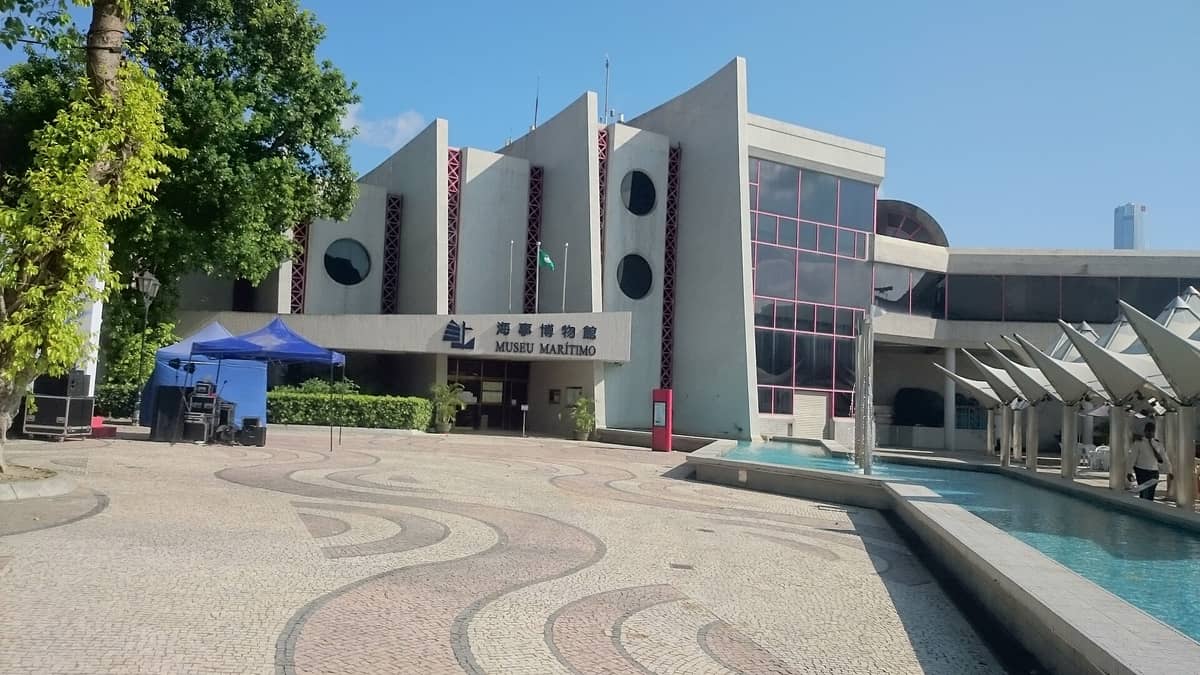
What the Maritime Museum Actually Is
The Maritime Museum, known in Portuguese as the Museu Marítimo and in Chinese as 海事博物館, occupies a compact waterfront building at the edge of Largo do Pagode da Barra. Established in 1987, it holds the distinction of being Macau's oldest museum, predating even the territory's modern wave of casino-era development. Its subject is the sea in all its dimensions: fishing traditions, navigation technology, storm survival, and the tangled maritime histories of the Chinese and Portuguese communities that shaped this small peninsula.
The location is not accidental. The museum sits directly adjacent to A-Ma Temple, the 15th-century shrine to the Goddess of the Sea from which Macau itself is said to have derived its name. Sailors once prayed at A-Ma before setting out across the Pearl River Delta. Today, visitors move between temple incense and museum exhibits in the span of twenty minutes, and the juxtaposition tells you more about Macau's identity than most introductory panels could.
💡 Local tip
Arrive between 10:00 and 11:00 on a weekday morning. The museum opens at 10:00 and crowds are thin at this hour. Last admission is at 17:30; closing time is 18:00; the museum is closed on Tuesdays.
The Setting: Inner Harbour and the Barra Waterfront
The Inner Harbour district feels like a different city from the casino corridor. Here, the buildings are low, the streets narrow, and the air carries a faint brine from the channel. On weekday mornings, delivery trucks idle near the old wharves, and older residents walk along the promenade with a pace that belongs to a different era. The museum entrance faces the water, and on clear mornings the light off the harbour is genuinely striking for photographers.
This waterfront stretch is one of the most historically dense corners of the Macau Peninsula. The A-Ma Temple compound begins just metres from the museum's front steps, and the Barra district beyond contains Portuguese-era architecture that survived Macau's rapid modernisation. Walking here in the late afternoon, when the light drops across the old tiled rooftops, is one of the more understated pleasures the city offers.
Weather matters in this neighbourhood more than in most. The Inner Harbour is exposed and humid in summer, with temperatures regularly reaching the low 30s Celsius between June and September. A visit in October or November, when temperatures settle around 22 to 26 degrees and humidity drops noticeably, is significantly more comfortable for combining the museum with outdoor exploration of the surrounding streets.
Inside the Museum: What You Will See
The collection is organised around two broad threads: the Chinese fishing and seafaring traditions that defined life on the Pearl River Delta for centuries, and the Portuguese maritime expansion that brought European sailors to southern China in the 16th century. Neither strand is presented in isolation. The museum's most interesting moments come when the two histories intersect, particularly in the sections dealing with navigation instruments and boat design.
Scale models of traditional junks and Portuguese caravels sit in cases alongside actual fishing equipment: nets, hooks, floats worn smooth by use. There are navigation tools, maps, and charts that reward slow looking. The displays on typhoons and monsoon-season survival are especially worth reading in the context of a region where seasonal storms have always shaped daily life. Macau sits squarely in the typhoon belt, and the meteorological exhibits give that fact a human dimension.
The museum is compact. Two moderately engaged adults can cover it comfortably in about an hour. Families with children who have any interest in boats and maritime adventure will likely want slightly more time, particularly around the boat models and hands-on display areas. If you are a specialist in maritime history looking for original artefacts at the depth of a major European naval museum, this will feel modest by comparison. As a curated introduction to Macau's relationship with the sea, it does the job clearly and without excess.
Historical and Cultural Context
Macau's position at the mouth of the Pearl River made it one of the first significant contact points between European maritime powers and China. Portuguese traders established a formal presence here in the mid-16th century, and the territory served as a critical waypoint on trading routes connecting Lisbon, Goa, Malacca, and Nagasaki for over two centuries. The Maritime Museum exists to preserve memory of that commercial and cultural exchange. For broader context on Macau's Portuguese-era landmarks, the Macau churches guide covers the religious architecture that emerged from the same historical period.
On the Chinese side, the Pearl River Delta fishing communities had their own sophisticated seafaring culture long before European contact. The museum documents both traditions without flattening either, which is harder to do than it sounds. The bilingual labelling in Chinese and Portuguese is a reminder that both languages remain official in Macau's administration today, even as Cantonese and English dominate daily life.
The museum's location beside A-Ma Temple is more than geographic coincidence. The temple is dedicated to Mazu, the Chinese goddess of the sea, and has been a site of ritual significance for fishermen and sailors for over five centuries. The area around Largo do Pagode da Barra is therefore one of the few places in Macau where the seafaring histories of both communities are physically present in the same city block.
Practical Walkthrough: Getting There and Getting Around
The museum is at No. 1, Largo do Pagode da Barra, on the southwestern tip of the Macau Peninsula. Multiple bus routes service the A-Ma Temple stop nearby, including routes 1, 2, 5, 6B, 7, 9, 10, 10A, 11, 18, 21A, 26, 28B, and MT4. From central Macau, the ride takes roughly 10 to 15 minutes depending on traffic and the route taken. Taxis are readily available across the peninsula and the fare from the Ruins of St. Paul's area should be modest.
If you are planning a heritage walk through the Peninsula rather than a single attraction visit, the museum fits naturally into a southwest Macau circuit. Pair it with A-Ma Temple, then walk north along the Inner Harbour side streets toward the Mandarin House and eventually up toward the historic centre. This route takes most of the morning and covers the most architecturally varied part of the old city.
Admission is currently free. The museum is open daily from 10:00 to 18:00, with last entry at 17:30, and closes on Tuesdays. Check the official website or contact the museum directly at +853 2859 5481 before visiting, as hours and entry policies can change. Visitors with mobility requirements should contact the museum in advance to confirm current accessibility provisions, as specific details are not published on the official museums portal.
⚠️ What to skip
The museum is closed every Tuesday. Arriving on a Tuesday is one of the most common visitor mistakes in this part of the city, since A-Ma Temple next door remains open and draws people to the area regardless.
Photography and the Best Time of Day
Morning light on the Inner Harbour is the most useful for exterior photography. The museum's waterfront facade faces roughly east, catching good light in the first two hours after opening. By midday the light flattens and the heat in summer becomes a deterrent to lingering outside. Interior photography is generally permitted without flash, though some display cases create reflection challenges. The scale model boats photograph well from slightly above; if you are tall, crouching to eye level with the models produces more engaging images.
The neighbourhood itself rewards a camera. The streets immediately around Largo do Pagode da Barra contain some of the most intact 20th-century Portuguese colonial streetscapes in Macau, with coloured tile facades, wrought iron balconies, and narrow lanes that have not been significantly altered by development. For travellers interested in photographing Macau beyond the casino skyline, this corner of the city's best vantage points is often overlooked and deserves more attention.
Is It Worth Your Time?
For travellers who are already visiting A-Ma Temple, the Maritime Museum is a straightforward addition. Entry is free, the walk between the two is under two minutes, and the museum provides historical context that makes the temple visit more meaningful. That pairing alone justifies the detour from any Peninsula itinerary.
For travellers on a tight one-day schedule focused on the UNESCO historic centre, the museum requires a deliberate detour southwest. It is worth making if maritime history or Portuguese colonial heritage interests you. If your time is genuinely limited and you have to choose, the Macau Museum at Monte Fort covers Macau's general history with a broader scope. Both are free. The Maritime Museum wins on atmosphere and location; the Macau Museum wins on breadth.
Travellers looking purely for dramatic spectacle will be underwhelmed. The museum is quiet, the exhibits are informational rather than immersive, and the building is modest. Travellers who find satisfaction in understanding the layered histories of a place, presented carefully and without commercial noise, will leave with a clearer picture of how Macau came to exist at all.
Insider Tips
- Combine the Maritime Museum with A-Ma Temple in a single 90-minute visit. Walk the temple compound first, then cross to the museum. The sequence makes the maritime goddess iconography at the temple more legible once you have seen the fishing community exhibits inside.
- The bus stop for A-Ma Temple is also used by locals heading to the Inner Harbour market area. If you take bus route 1 or 2 from the city centre, sit on the right side of the bus heading southwest for views of the old harbour buildings along the route.
- The lanes immediately behind the museum contain a cluster of small Portuguese-style residential buildings that rarely appear in travel photographs. Spend ten minutes walking one block inland from the waterfront before heading back toward the centre.
- If you are visiting in summer, arrive at opening time at 10:00. By noon the combination of heat and humidity at the Inner Harbour becomes genuinely tiring, and the museum's interior air conditioning makes the early hours particularly appealing.
- The museum contact email is museumaritimo@marine.gov.mo. If you are travelling with a large group or have specific accessibility questions, emailing ahead will get you clearer information than most online sources can provide.
Who Is Maritime Museum For?
- History and culture travellers who want to understand Macau's origins beyond the casino narrative
- Families with children who have any interest in boats, fishing, and navigation
- Budget travellers: free entry makes this one of the most cost-effective attractions on the Peninsula
- Photographers looking for an authentic, non-touristy neighbourhood to explore around a cultural anchor
- Visitors already planning to visit A-Ma Temple, for whom the museum is a natural and effortless addition
Nearby Attractions
Other things to see while in Macau Peninsula:
- A-Ma Temple (Ma Kok Miu)
A-Ma Temple, known locally as Ma Kok Miu, is the oldest temple in Macau, with origins traced to 1488. Part of the UNESCO-listed Historic Centre of Macao, this atmospheric complex blends Taoist, Buddhist, Confucian, and folk traditions across six distinct halls climbing Barra Hill. Entry is free, and the site remains an active place of worship year-round.
- Camões Grotto and Casa Garden
Tucked into the northwest of the Macau Peninsula, Camões Grotto and Casa Garden form one of the city's most layered heritage sites. The park honors Portugal's greatest poet in a setting of banyan trees and rocky outcrops, while the adjacent 18th-century mansion carries the architectural weight of colonial trade history. Both are free to enter and rarely crowded.
- Dom Pedro V Theatre
The Dom Pedro V Theatre (Teatro Dom Pedro V) is the oldest Western-style performance venue in East Asia, completed in 1860 and — though normally a working venue — temporarily closed for renovation until early October 2026. Its pale green neoclassical facade on Largo de Santo Agostinho is one of the most photogenic and historically layered corners of the Macau Peninsula, and admission is free when it is open to visitors
- Fortaleza do Monte (Mount Fortress)
Fortaleza do Monte, built between 1617 and 1626, rises above the historic centre of Macau with cannon-lined ramparts, sweeping 360-degree views, and the acclaimed Macao Museum within its walls. For the price of a cup of coffee, or nothing at all on free days, this UNESCO-listed site delivers more history per square metre than almost anywhere else in the city.