Mandarin's House: Inside Macau's Most Intimate Qing Dynasty Mansion
Once home to one of 19th-century China's most influential thinkers, Mandarin's House is a meticulously restored Qing-era residential compound in the heart of Macau's UNESCO-listed historic district. Admission is free, the architecture is extraordinary, and the crowds are far thinner than at the nearby Ruins of St. Paul's.
Quick Facts
- Location
- No. 10, Travessa de António da Silva, Largo do Lilau, Macau Peninsula
- Getting There
- Walk from Senado Square (~15–20 min) or take a bus toward the Barra district; narrow streets make this best approached on foot
- Time Needed
- 45–90 minutes
- Cost
- Free admission
- Best for
- History lovers, architecture enthusiasts, photography, quiet sightseeing away from main tourist crowds
- Official website
- www.wh.mo/mandarinhouse/en
What Is Mandarin's House?
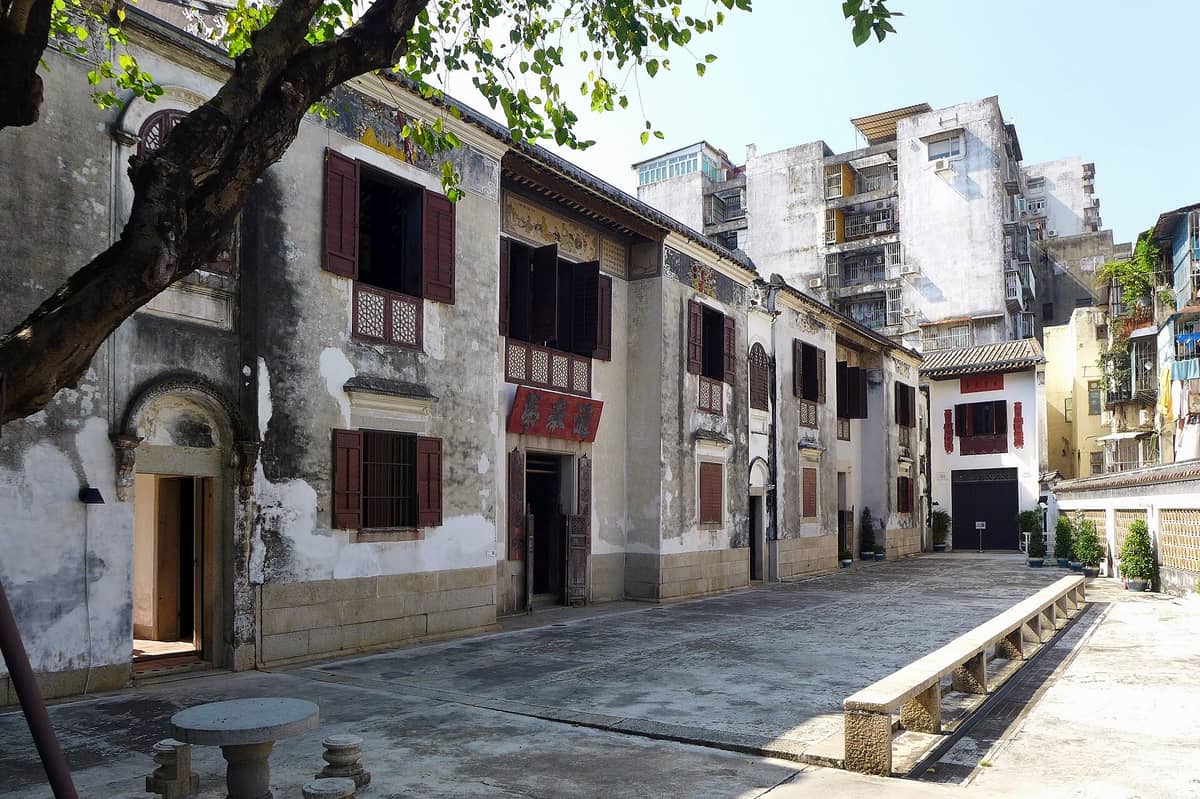
Mandarin's House, known in Chinese as 鄭家大屋 (Zhèngjiā Dàwū, meaning "Zheng Family Mansion"), is one of Macau's most significant historic residences and a component site of the UNESCO-listed Historic Centre of Macao. Built by Zheng Wenrui before 1869, it became the lifelong home of his son Zheng Guanying, a reformist thinker, merchant, and author whose book "Warnings in Times of Prosperity" shaped late Qing intellectual debate on modernization and national sovereignty. Zheng Guanying completed that landmark work within these very walls.
The compound sat in prolonged disrepair for decades before undergoing a major restoration and opening to the public in February 2010. In 2018, it was designated a "World Heritage Youth Education Base" by the UNESCO World Heritage Training and Research Centre for the Asia-Pacific region. Today it stands as one of the finest surviving examples of 19th-century Chinese residential architecture in Macau, and one of the few heritage sites on the peninsula where you can wander courtyards and corridor halls in near silence, even on a busy weekend.
💡 Local tip
Mandarin's House is closed every Wednesday (except when Wednesday falls on a public holiday). Visiting Thursday through Sunday gives you the additional option of joining a free guided tour in Cantonese, offered on Saturday and Sunday mornings and afternoons at set times.
The Architecture: What You're Actually Looking At
The compound covers roughly 4,000 square metres and unfolds through a sequence of interconnected courtyards, reception halls, side chambers, and residential quarters arranged along a central axis. This layout follows the traditional Chinese si he yuan (quadrangle courtyard) logic, where spatial hierarchy communicates social rank: the deeper into the compound you move, the more private the function of each room.
What makes Mandarin's House architecturally distinctive is the layering of Chinese structural convention with Portuguese and Western decorative details. You'll notice it in the carved granite door surrounds, the Baroque-inflected plasterwork on some interior walls, and the mix of Chinese timber screens alongside floor tiles that carry a faintly European character. This isn't superficial fusion; it reflects the genuine cross-cultural commerce of 19th-century Macau, where a successful Chinese merchant family would absorb foreign visual language without abandoning the spatial grammar of home.
The main hall retains its original timber roof structure, with darkened rafters and carved brackets that reward close inspection. The inner courtyards open to the sky, letting light filter down onto worn stone paving in a way that feels genuinely ancient. The restoration team made deliberate choices to preserve patina rather than over-polish, so the surfaces carry credible age rather than the raw brightness of a total reconstruction.
How the Experience Changes by Time of Day
Morning visitors, arriving close to the 10:00 opening, will find the compound cool and largely empty. The light enters the front courtyard at a low angle, throwing sharp shadows across the carved stonework and illuminating the roof tiles with a warm amber tone. This is the best window for photography: contrast is high, the crowds are thin, and the sounds from the surrounding neighborhood, distant ferry horns from the Inner Harbour, birds in the trees of Largo do Lilau just outside, create an atmosphere that feels genuinely removed from the rest of the city.
By midday, especially on weekends, school groups and tour parties pass through, though the compound's maze-like layout means you can usually find a quiet corner even when it is nominally busy. The inner courtyards become hotter in summer without much shade, so bring water if you visit between June and September. By late afternoon, around 16:30–17:00, the light again improves and visitor numbers typically thin out before the 17:30 last-admission cutoff.
⚠️ What to skip
Summer heat (June–September) can make the open courtyards uncomfortable by mid-morning. Wear light clothing, bring water, and consider arriving right at 10:00 to get through the compound before the day heats up. Autumn (October–December) offers the most pleasant visiting conditions overall.
Walking Through the Compound: A Practical Sequence
The entrance is set back from the street along a short lane off Largo do Lilau. Once through the gatehouse, the space opens immediately into the first courtyard. Take a moment here before walking further: the proportions of the front facade, the heavy timber gates, the stone threshold worn smooth by a century and a half of foot traffic, set the register for everything that follows.
Move through the main reception hall and into the second courtyard. Display panels here explain the life and significance of Zheng Guanying in English, Chinese, and Portuguese. The text is genuinely informative rather than ceremonial, and it helps frame what you're looking at structurally and historically. From the second courtyard, corridors branch left and right into side rooms that once served as studies, storage, and servants' quarters. Several rooms display period furniture and domestic objects appropriate to the Qing era.
The rear section of the compound is the quietest and the most atmospheric. Smaller courtyards, a garden area with mature planting, and the sense of layered privacy that a large extended family residence requires all come together here. Allow time to slow down in this section rather than treating the compound as a walk-through.
Getting There and the Surrounding Area
Mandarin's House sits in the southwestern part of the Macau Peninsula, a short walk from Largo do Lilau, one of the oldest squares in the city. The walk from Senado Square takes roughly 15–20 minutes on foot and passes through residential backstreets that few package tourists explore. It is part of the broader Macau heritage walk that connects the peninsula's major historic sites, and pairing it with the nearby A-Ma Temple makes for a coherent half-day itinerary in this southern section of the peninsula.
Local buses run along Rua do Almirante Sérgio toward the Barra area; check current route numbers with the Macau SAR transport authority before you travel, as routes are updated periodically. Taxis can drop you near Largo do Lilau, but the final approach on foot through the narrow lane is unavoidable. The getting around Macau guide has current details on bus routes and taxi fares across the peninsula.
The surrounding streets between Mandarin's House and the waterfront are worth exploring at a slow pace. The Inner Harbour area retains a working-neighborhood feel completely different from the polished historic core near Senado Square. There are small noodle shops, incense wholesalers, and modest temples that see almost no tourists.
Photography Notes and Practical Details
The compound is well suited to photography. The interior is shaded enough that you rarely need harsh flash, and the mix of tight corridor perspectives and open courtyard shots gives real variety. The carved wooden screens and stone doorways are the most reproduced images; for something less expected, look at the roof ridge details from the second courtyard and the worn texture of the threshold stones at each successive gate.
There is no bag check, no audio guide rental, and no gift shop. The experience is deliberately understated. Signage is trilingual (Chinese, Portuguese, English) and clear enough to navigate without a guide, though the free Saturday and Sunday guided tours in Cantonese add depth if you understand the language.
Wheelchair access is limited throughout the compound. The approach via cobbled streets around Largo do Lilau involves uneven surfaces and level changes. Inside, narrow corridors and steps between courtyard levels mean full access is not possible for visitors with significant mobility constraints. This is a structural reality of a 19th-century residential complex, not an oversight in the restoration. Visitors planning a broader accessible itinerary across the peninsula should check the Macau one-day itinerary guide for access notes across multiple sites.
Is It Worth Your Time?
For anyone with genuine interest in Chinese domestic architecture, Qing-era social history, or the particular cross-cultural character that defines Macau's built heritage, Mandarin's House is one of the most rewarding stops on the entire peninsula, and it is free. It holds its own against the more famous Ruins of St. Paul's not through spectacle but through intimacy and legibility. You can actually understand how people lived here.
Visitors who do not find historic house museums engaging, who are primarily in Macau for its casinos, dining, or entertainment options, or who are working through a very tight itinerary focused on the main Senado Square area, may not feel the walk to the southwestern peninsula is justified. For those visitors, the things to do in Macau guide covers a broader range of attractions across different interests and budgets.
The house is also worth knowing about as a counterweight to Macau's casino reputation. It represents an entirely different layer of the city: intellectual, domestic, historically complex, and quietly absorbing. That contrast alone can make it the most memorable part of a visit.
Insider Tips
- Arrive within the first 30 minutes of opening (10:00–10:30) on a weekday for the best light in the front courtyard and the fewest other visitors. Weekday mornings are noticeably quieter than weekend afternoons.
- The free guided tours on Saturday and Sunday are offered in Cantonese, but even if you don't speak the language, following the group through the compound gives you a sequenced walk that ensures you don't miss any of the secondary rooms in the rear sections.
- Combine the visit with Largo do Lilau immediately outside: this small square is one of Macau's oldest public spaces and has a freshwater spring that once served the whole neighborhood. It's rarely crowded and makes a good rest stop before or after.
- The compound's depth from front to rear is greater than it appears from the entrance. Budget at least 60 minutes if you want to read the display panels and explore the side corridors, rather than treating it as a quick courtyard photo stop.
- Autumn and early winter (October to December) are the most comfortable months to visit. The heat and humidity of summer make the open courtyards taxing by mid-morning, while the winter months offer clear skies and cooler temperatures ideal for exploring on foot.
Who Is Mandarin's House For?
- Architecture and design enthusiasts interested in how Chinese and European building traditions intersected in 19th-century Macau
- History and culture travelers who want to understand Macau beyond its casino identity
- Photographers looking for atmospheric courtyard and interior shots with good natural light
- Travelers on a budget: the combination of free admission and the walkable southern peninsula heritage circuit offers exceptional value
- Anyone following the UNESCO heritage trail who wants depth beyond the most-photographed sites
Nearby Attractions
Other things to see while in Macau Peninsula:
- A-Ma Temple (Ma Kok Miu)
A-Ma Temple, known locally as Ma Kok Miu, is the oldest temple in Macau, with origins traced to 1488. Part of the UNESCO-listed Historic Centre of Macao, this atmospheric complex blends Taoist, Buddhist, Confucian, and folk traditions across six distinct halls climbing Barra Hill. Entry is free, and the site remains an active place of worship year-round.
- Camões Grotto and Casa Garden
Tucked into the northwest of the Macau Peninsula, Camões Grotto and Casa Garden form one of the city's most layered heritage sites. The park honors Portugal's greatest poet in a setting of banyan trees and rocky outcrops, while the adjacent 18th-century mansion carries the architectural weight of colonial trade history. Both are free to enter and rarely crowded.
- Dom Pedro V Theatre
The Dom Pedro V Theatre (Teatro Dom Pedro V) is the oldest Western-style performance venue in East Asia, completed in 1860 and — though normally a working venue — temporarily closed for renovation until early October 2026. Its pale green neoclassical facade on Largo de Santo Agostinho is one of the most photogenic and historically layered corners of the Macau Peninsula, and admission is free when it is open to visitors
- Fortaleza do Monte (Mount Fortress)
Fortaleza do Monte, built between 1617 and 1626, rises above the historic centre of Macau with cannon-lined ramparts, sweeping 360-degree views, and the acclaimed Macao Museum within its walls. For the price of a cup of coffee, or nothing at all on free days, this UNESCO-listed site delivers more history per square metre than almost anywhere else in the city.