Getting Around Macau: Complete Transport Guide
Macau is one of the world's most densely packed destinations, yet it's surprisingly easy to navigate once you understand how the layers of transport fit together. This guide breaks down every option, from flat-rate public buses to the growing LRT network, metered taxis, and high-speed ferries to Hong Kong, with real fares, clear trade-offs, and practical advice for every part of the city.
TL;DR
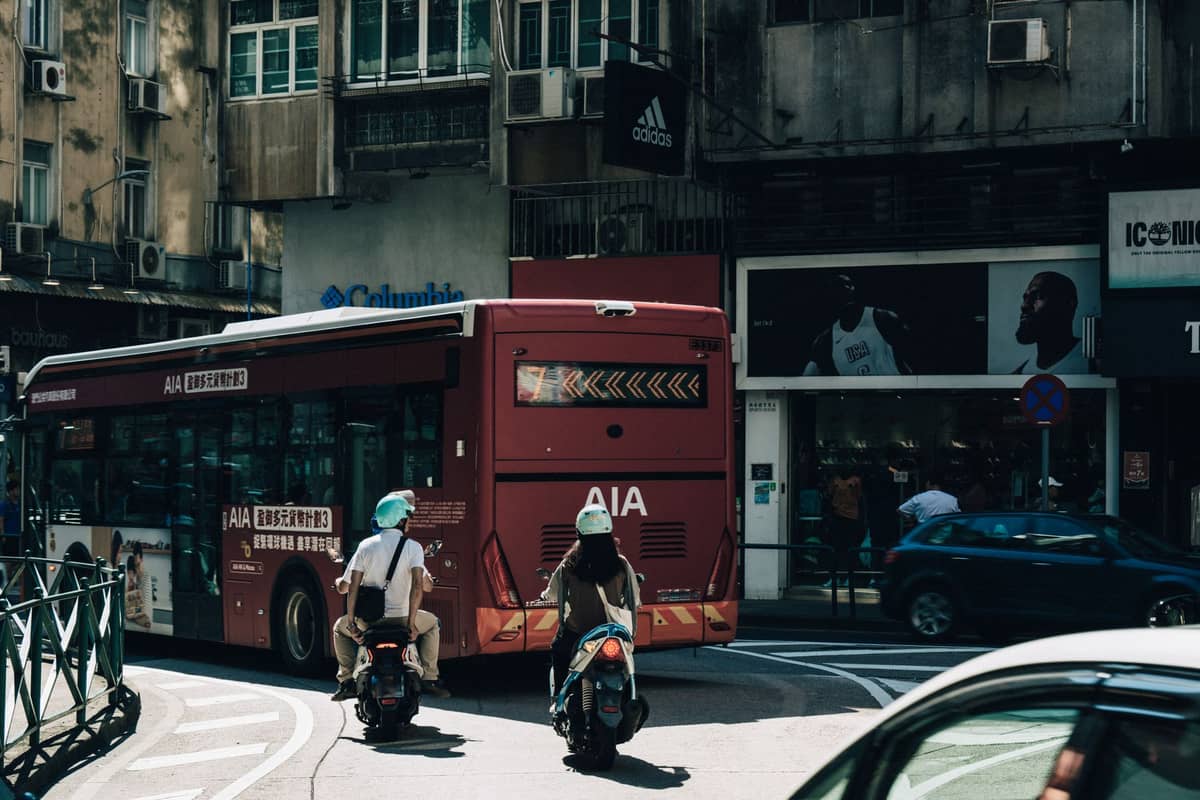
- Public buses are the cheapest way to get around: MOP 6 cash or MOP 3 with a Macau Pass card, flat rate, no change given.
- The Macau LRT covers Taipa and Cotai well and reaches the Peninsula at Barra, next to A-Ma Temple; it still does not serve Senado Square, so buses remain essential for the historic centre.
- Taxis are metered, affordable by regional standards, and widely available: flag-fall is MOP 21 for the first 1,600 m.
- Free casino shuttle buses are one of Macau's best-kept transport secrets and link major resorts to ferry terminals, the border, and the airport. See our Macau casinos guide for resort locations.
- Ferries to Hong Kong take around 55 minutes; book ahead on weekends. For the full arrival picture, check our guide on getting from Hong Kong to Macau.
Understanding Macau's Layout Before You Plan Your Route
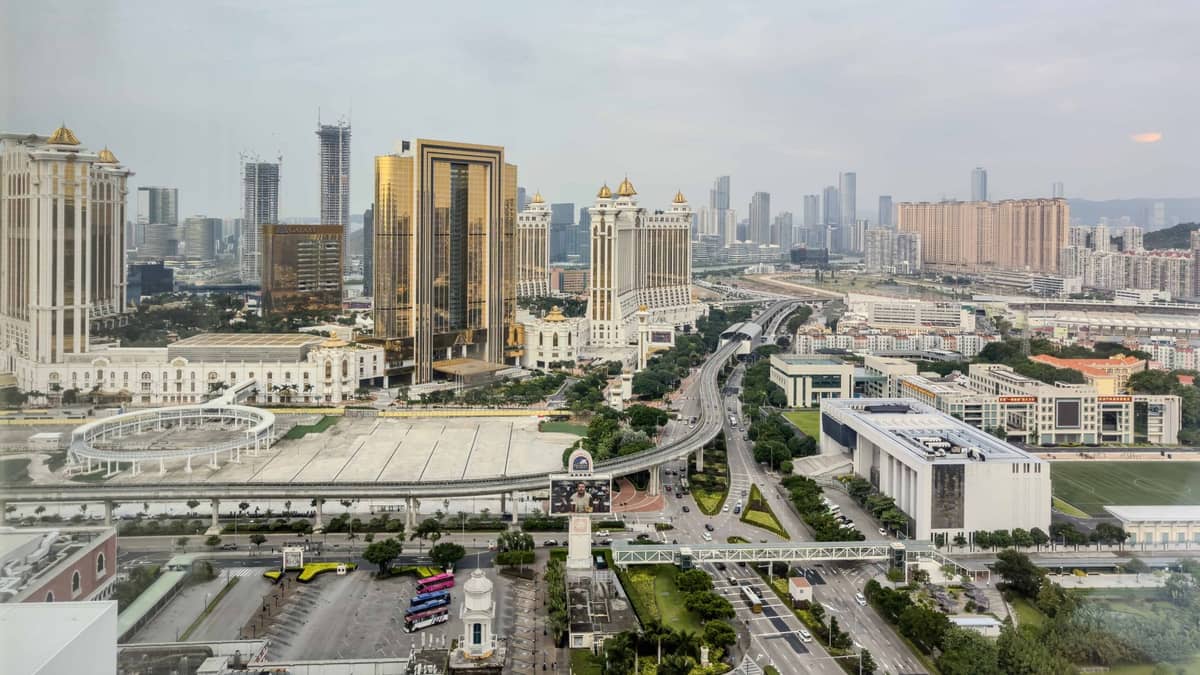
Macau covers only about 32.9 km², split between the Macau Peninsula in the north, the island of Taipa in the middle, and Coloane to the south. Sandwiched between Taipa and Coloane is Cotai, the large reclaimed strip where the mega-casino resorts are concentrated. Three bridges cross the inner harbour linking the Peninsula to Taipa, and from there roads continue south through Cotai to Coloane.
The practical implication: you will almost certainly be moving between at least two of these zones during your visit. Tourists based on the Peninsula need transport to reach Cotai resorts and Coloane beaches. Those staying in a Cotai hotel need buses or taxis to reach the UNESCO heritage sites concentrated on the Peninsula. Knowing this geography up front saves confusion when picking routes.
ℹ️ Good to know
Hong Kong dollars (HKD) are widely accepted across Macau at a near 1:1 rate (officially around 1 HKD to 1.03 MOP). For transport, carrying some Macanese pataca (MOP) is still advisable for exact bus fares and taxi meters.
Public Buses: The Cheapest Way to Get Everywhere
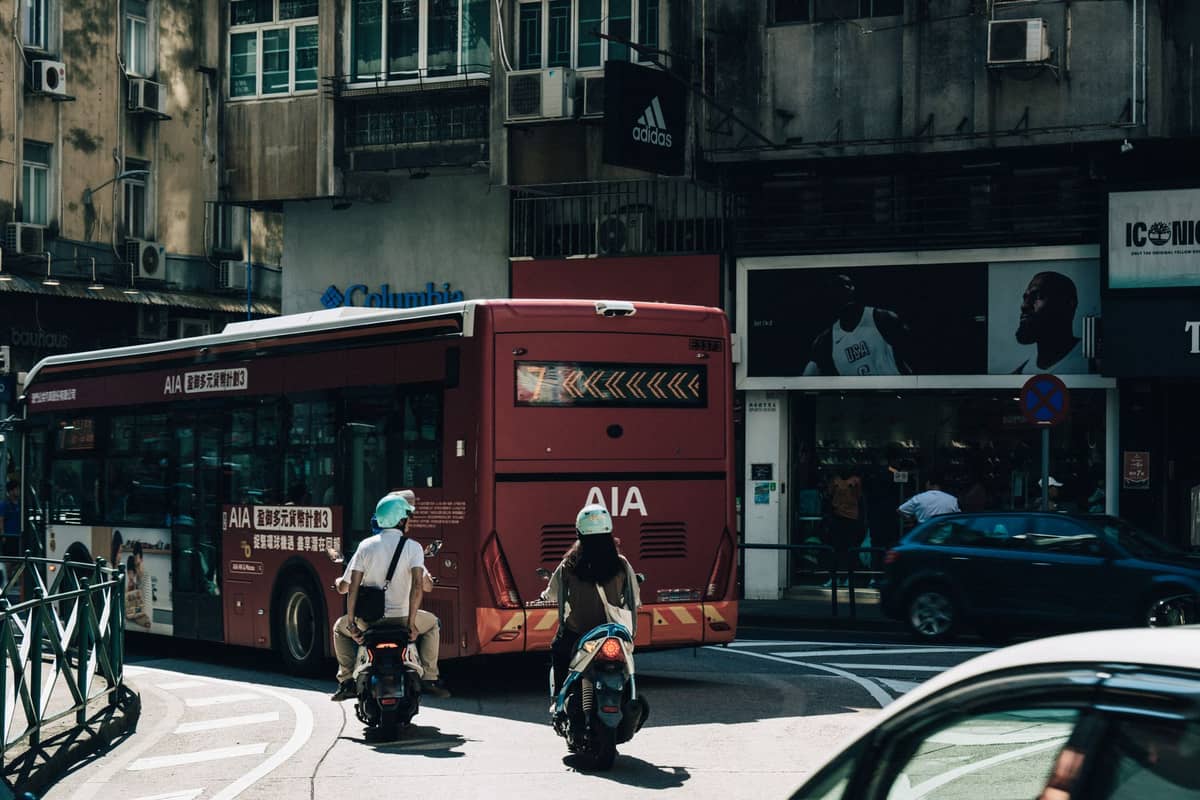
Macau's public bus network is dense, reliable, and covers every part of the territory including the airport, ferry terminals, border gates, and all residential districts. For most short trips, a bus will get you there, though routes can be confusing for first-timers because many lines overlap in the historic centre before fanning out to different destinations.
- Cash fare MOP 6.00 flat rate on standard routes. Drivers do not give change, so have exact coins ready or use a card.
- Macau Pass / MPay Standard routes cost MOP 3.00 with a contactless Macau Pass card or MPay app. Express 'X' routes cost MOP 4.00. This is by far the most convenient payment method and saves you 50% on every journey.
- Coverage Routes connect the Peninsula, Taipa, Cotai casino strip, Coloane village, Hac Sa Beach, and the airport. Route maps are available at bus stops and on the DSAT (Transport Bureau) website.
- Crowding Buses on major routes (like those serving the Ruins of St. Paul's and the ferry terminals) can get extremely packed on weekends and during Golden Week. Budget extra time.
Getting a Macau Pass card is straightforward: purchase one at convenience stores near ferry terminals and major bus stops. If you are arriving by ferry from Hong Kong, pick one up before leaving the terminal building. The card works on buses and the LRT, making it the single most useful item to have in your wallet for a few days in Macau. For a broader picture of the territory and where buses take you, our things to do in Macau guide maps out the key areas worth visiting.
⚠️ What to skip
Bus fares are flat-rate regardless of distance on most routes, and drivers will not give change for cash. If you board with a MOP 10 note and the fare is MOP 6, you lose MOP 4. A Macau Pass card eliminates this problem entirely.
The Macau LRT: Useful for Taipa and Cotai, Limited Elsewhere
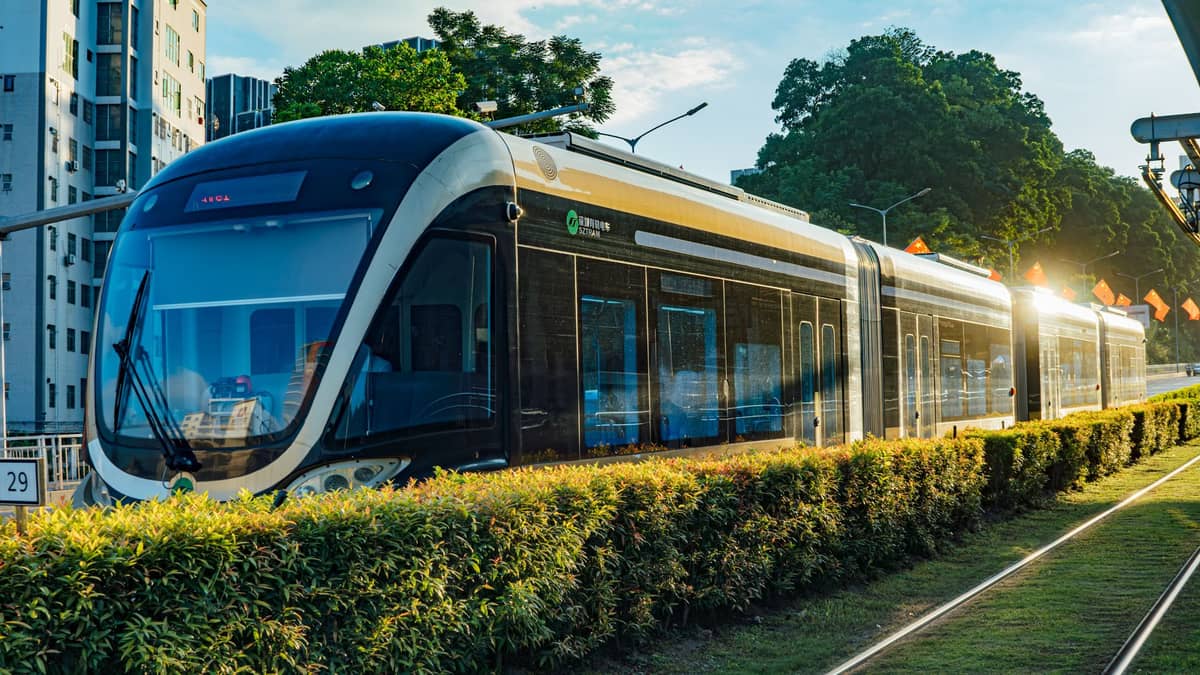
The Macau Light Rapid Transit (LRT) is an automated, driverless rail system that currently serves Taipa, Cotai, Seac Pai Van, and Hengqin. The Taipa Line connects Macau International Airport, residential Taipa, Taipa Ferry Terminal, and the major Cotai casino resorts. The Seac Pai Van Line serves the Seac Pai Van area. Extensions toward the Macau Peninsula are under phased development but not yet complete.
- Operating hours Taipa Line runs 06:30–23:15 Monday to Thursday, and 06:30–23:59 Friday, Saturday, Sunday, and public holidays. Train frequency is every 5 to 10.5 minutes.
- Fares Single journeys are generally in the range of MOP 6–12 depending on distance, with Macau Pass discounts applied. Verify current fares on the official MLRT website before travel.
- Journey time End-to-end on the Taipa Line takes around 28 minutes.
- Key stations for tourists Airport, Taipa Ferry Terminal, Cotai West (near The Venetian, Parisian, and Galaxy), Cotai East (near Wynn Palace, City of Dreams, and MGM Cotai). Most major resorts are within walking distance of an LRT station.
The LRT is genuinely useful if your itinerary keeps you in Taipa and Cotai. Staying at The Venetian Macao or Galaxy Macau and flying in through MFM? The LRT handles that connection cleanly. But if you want to reach the historic Peninsula, the Ruins of St. Paul's, or inner harbour markets, the LRT won't help you yet. Buses or taxis are still your tools for the Peninsula.
Taxis: Metered, Readily Available, With a Few Caveats
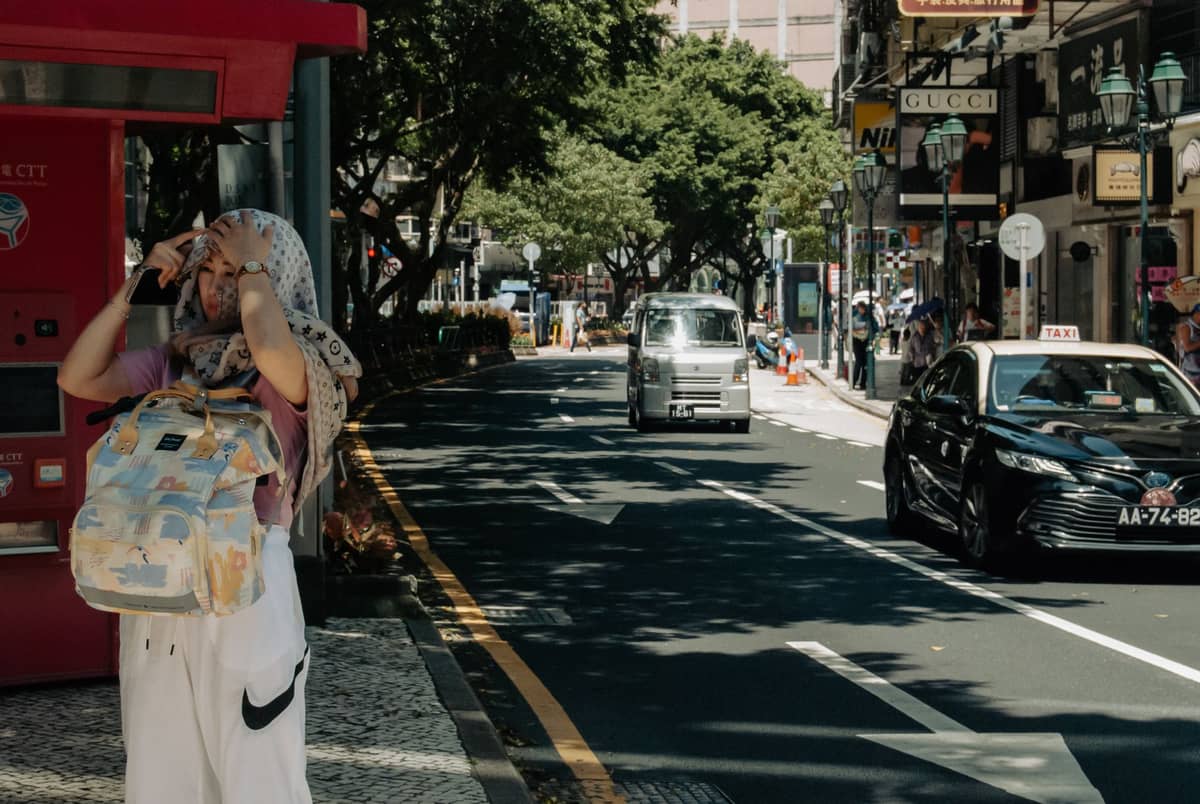
Taxis in Macau are metered and reasonably priced by the standards of a high-income destination. Standard black taxis are the most common. Yellow taxis operate in Coloane and can be harder to flag down in central areas. The meter starts at MOP 21 for the first 1,600 metres, then increments at MOP 2.00 per 220 metres. Waiting time is charged at MOP 2.00 per 55 seconds.
- Luggage surcharge MOP 3.00 per trunk item.
- Location surcharges A mandatory MOP 8.00 surcharge applies to pickups at the airport, major ferry terminals, Hengqin Port, and the Hong Kong-Zhuhai-Macau Bridge (HZMB) port.
- Ride-hailing apps Private-hire Uber exited after regulatory issues; licensed taxis can be booked through the Uber app again as of 2026. Local or regional app-based alternatives may exist but are not standardised, so verify current options before relying on them.
- Language barrier Some taxi drivers speak limited English. Have your destination written in Chinese characters on your phone, or use a hotel card showing the address.
✨ Pro tip
Before getting into a taxi, show the driver your destination written in Chinese on your phone. Most hotel concierges will print a destination card for you on request. This one habit eliminates the most common point of friction in Macau taxi rides.
Free Casino Shuttles: Macau's Most Underused Transport Network
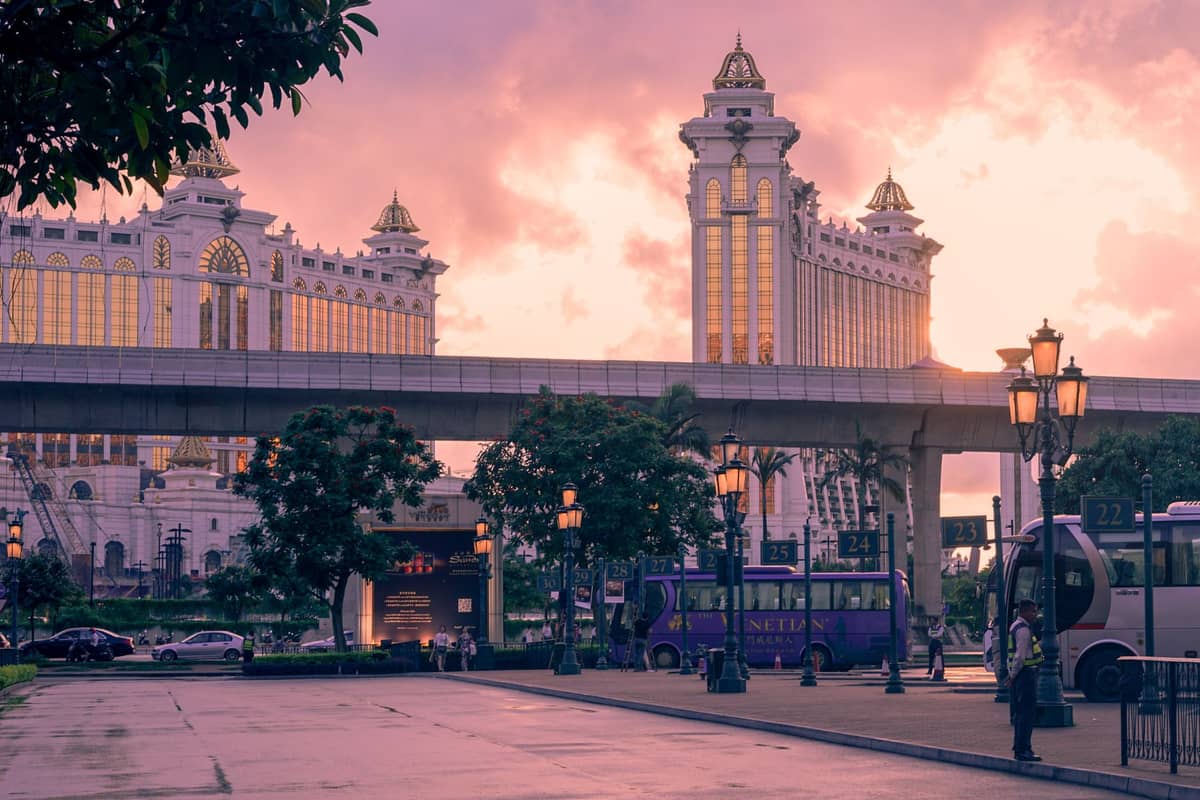
This is genuinely one of the most useful pieces of transport knowledge for any visitor to Macau. The major casino resorts operate extensive, free shuttle bus networks connecting their properties to the ferry terminals, border crossings, and the airport. You do not need to be a guest or gambler to use them in most cases, though this is technically at the resort's discretion.
Shuttles run between major Cotai properties like Wynn Palace, MGM Cotai, Studio City Macau, and The Parisian Macao, as well as Peninsula properties like the Grand Lisboa. Each resort publishes its own shuttle timetable, so check the property website for current routes and departure times before your trip.
The practical upside: instead of paying for a taxi from the Taipa Ferry Terminal to a Cotai resort, you can catch a free shuttle. Similarly, if you arrive at the HZMB port from the mainland, most major resorts have direct shuttle links from there. These buses are air-conditioned, frequent during peak hours, and free. Using them strategically can meaningfully cut your transport costs, particularly if you are moving between ferry terminals and casino areas multiple times.
Ferries to Hong Kong: What the Timetables Don't Tell You
The high-speed ferry service between Macau and Hong Kong is one of the most popular ways to enter and exit the territory. Two main operators, TurboJET and Cotai Water Jet, serve routes between Macau (both the Outer Harbour Ferry Terminal on the Peninsula and Taipa Ferry Terminal in Cotai) and Hong Kong (Macau Ferry Terminal in Sheung Wan and China Ferry Terminal in Tsim Sha Tsui). Standard crossings take around 55 minutes. Our dedicated guide on travelling from Hong Kong to Macau covers the full arrival and departure process in detail.
- Economy fares (approximate) Around HKD 175 on weekdays, HKD 190 on weekends and public holidays, and HKD 220 for night sailings. First Class is priced higher. Fares are subject to change; verify on the operator website before booking.
- Frequency During peak summer season (June to September), there are around 55 crossings per week across Macau's ports. Frequency drops in quieter months.
- Booking Online booking is available through HKMOJet (the joint ticketing platform for TurboJET and Cotai Water Jet) and through Cotai Water Jet's own website. Booking ahead is strongly recommended on weekends, public holidays, and during major festivals.
- Night sailings Overnight ferries do run, but they are not continuous all-night service. Check the specific first and last departure times for your chosen route, as they vary by terminal and operator.
⚠️ What to skip
Ferries between Macau and Hong Kong do not run every few minutes through the night. There are defined first and last departures, and popular sailings sell out on weekends and during Golden Week. Always check the timetable and book in advance if your timing is tight.
Getting from Macau Airport to the City
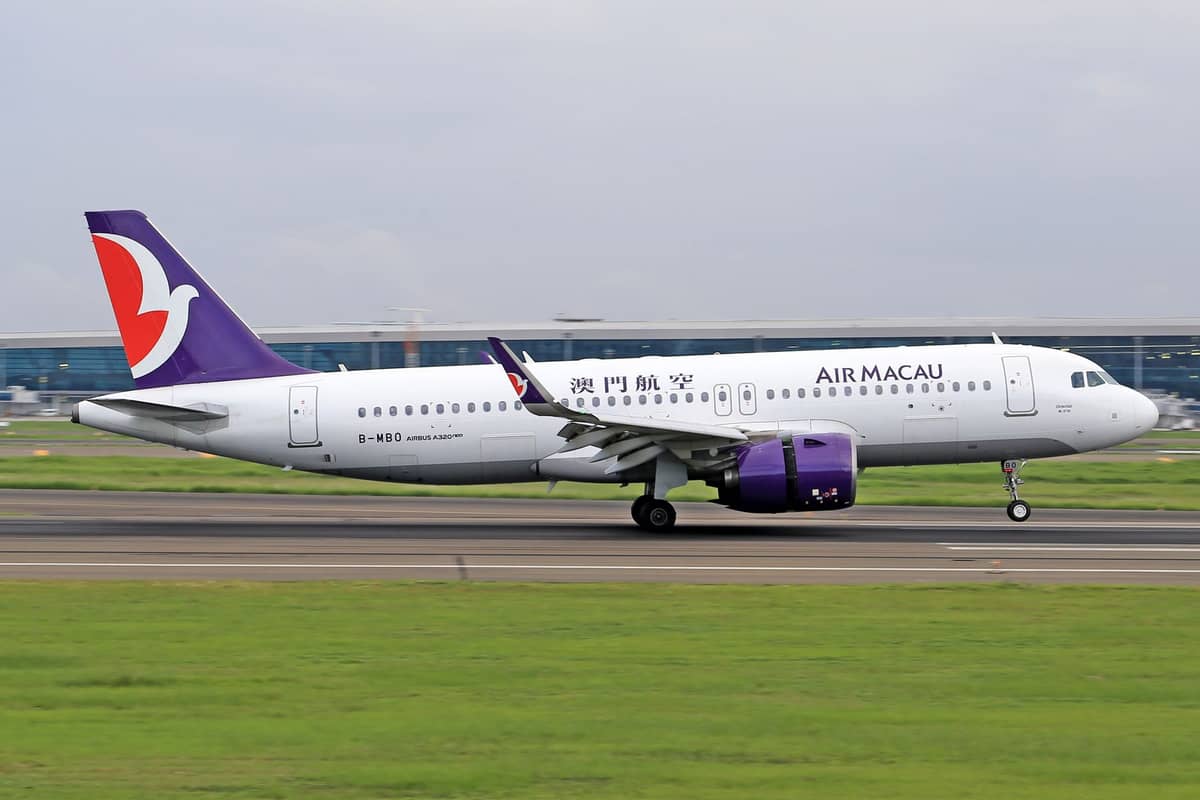
Macau International Airport (IATA: MFM) sits on Taipa island, roughly 8 to 10 km by road from the historic Peninsula. Despite its proximity, first-time arrivals often spend more time than necessary figuring out their options at the terminal. There are four realistic choices.
- LRT (most direct to Cotai resorts) The airport has a dedicated LRT station. If your hotel is in Cotai or Taipa, this is the cleanest option. Fares are in the MOP 6–12 range depending on your stop.
- Public bus Several routes connect the airport to the Peninsula and Cotai. Fares are MOP 6 cash or MOP 3 with a Macau Pass. Journey time to the Peninsula varies with traffic but expect 20–40 minutes.
- Taxi Available at the designated rank outside arrivals. Note the MOP 8 airport pickup surcharge on top of the metered fare. For groups carrying luggage, this is often the most practical option despite the higher cost.
- Free casino shuttle Most major resorts operate shuttles from the airport. If you are staying at or near a casino resort, this is the easiest and cheapest option. Check your resort's website for the shuttle stop location and schedule.
If you are arriving and heading straight to the historic Peninsula to see landmarks like the Leal Senado Building or St. Dominic's Church, a taxi is probably the least stressful option for the first trip, especially with luggage. Once you are oriented, buses become far more intuitive.
Seasonal and Event Considerations
Macau's transport pressure points are predictable. Chinese New Year, Golden Week (early October), and the Macau Grand Prix in November push both road traffic and ferry demand to extremes. During these periods, buses run late, taxis become scarce, and ferry tickets can sell out days in advance. The Macau International Fireworks Festival in autumn also draws large crowds, particularly around the waterfront.
The quietest period for transport is weekday mornings between major festival windows, roughly January (post-New Year) through March, and again in September after summer peak but before Golden Week. During these windows, taxis are plentiful, buses run on schedule, and ferry tickets are available on the day of travel. If your schedule is flexible, this is when getting around Macau is genuinely effortless.
💡 Local tip
During the Grand Prix weekend in November, sections of the Peninsula road circuit are closed to normal traffic. Plan any cross-city movements carefully and allow significantly extra time. The LRT and casino shuttles become even more useful during this period as road traffic jams can be severe.
FAQ
Do I need to buy a Macau Pass card or can I just use cash?
You can use cash on buses (MOP 6 flat rate, exact change only), but a Macau Pass card halves the fare to MOP 3 and also works on the LRT. If you are staying more than a day and plan to use buses regularly, a Macau Pass card pays for itself quickly. Buy one at convenience stores near any major ferry terminal or bus interchange.
Is it easy to get a taxi in Macau?
Yes, in most areas taxis are readily available, particularly near ferry terminals, casino hotels, and major intersections. The exception is during peak hours on holiday weekends and major events like the Grand Prix, when demand spikes sharply. Private-hire Uber does not operate; licensed taxis can be booked through the Uber app (relaunched in 2026). The flag-fall is MOP 21 for the first 1,600 m.
Does the Macau LRT cover the historic old town?
Not yet. The current LRT network covers Taipa, Cotai, Seac Pai Van, and Hengqin. The UNESCO heritage sites, temples, and colonial streetscapes on the Macau Peninsula are not served by the LRT as of the time of writing. Extensions are planned but timelines shift. For the Peninsula, use public buses or taxis.
How far in advance should I book a ferry to Hong Kong?
For weekday travel outside major holidays, same-day booking is usually fine. For weekends, public holidays, Chinese New Year, and Golden Week, book at least two to three days ahead, ideally more. Economy class sells out faster than you might expect on popular routes. Use the HKMOJet platform or Cotai Water Jet's own website for online booking.
Can I get around Macau without spending much on transport?
Yes. With a Macau Pass card, most bus trips cost MOP 3 each way. Casino resort shuttle buses are free and cover a surprising amount of ground between resorts, ferry terminals, and border crossings. A combination of public buses and free shuttles can get you around most of Macau at minimal cost. For more budget strategies, see our guide to exploring Macau on a budget.