Hong Kong to Macau: Ferry, Bridge, and Everything You Need to Know
Getting from Hong Kong to Macau takes about an hour by high-speed ferry or via the world's longest sea-crossing bridge. This guide breaks down every option, with current prices, departure points, booking tips, and what to expect at the border.
TL;DR
- Two main options: high-speed ferry (about 1 hour, multiple operators) or the Hong Kong–Zhuhai–Macau Bridge (HZMB) shuttle bus, which runs 24 hours.
- Ferry fares start around HK$194 on weekdays (economy class); the HZMB shuttle bus costs from around HK$65 one-way — still significantly cheaper but slower door-to-door.
- Ferries leave from Sheung Wan (Hong Kong Island) or Tsim Sha Tsui (Kowloon) and arrive at either Macau Outer Harbour or Taipa Ferry Terminal — choose your terminal based on where you're staying; see where to stay in Macau for neighborhood guidance.
- All crossings require immigration clearance on both sides — there is no passport-free route between Hong Kong and Macau.
- Once in Macau, getting around is straightforward — check the getting around Macau guide for buses, LRT, and casino shuttles.
The Two Ways to Get from Hong Kong to Macau
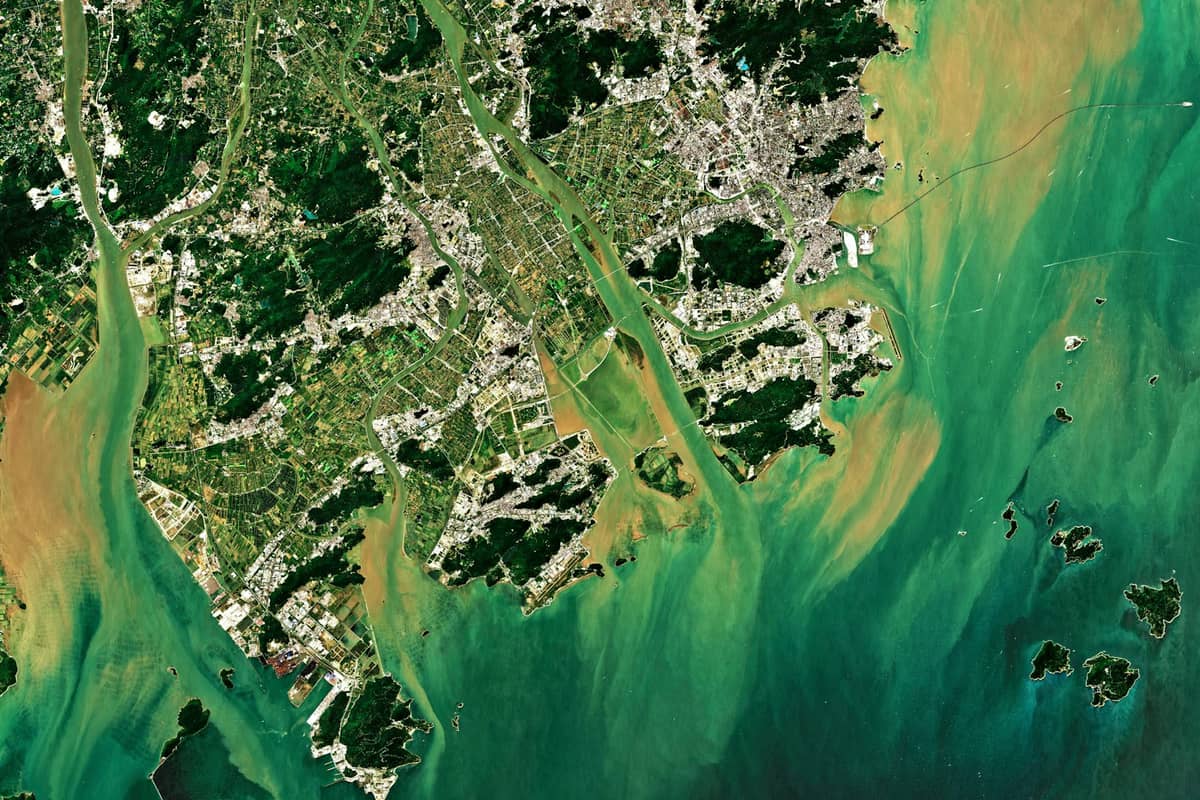
Hong Kong and Macau sit about 60–65 kilometers apart across the Pearl River Delta. They share proximity and history, but they are separate Special Administrative Regions with their own immigration controls, currencies, and transport systems. You cannot drive a private car directly between them (the HZMB has strict vehicle access rules), and there is no rail connection. In practice, you are choosing between two options: a high-speed ferry or the HZMB shuttle bus.
The ferry is the classic choice, and for good reason. It runs directly between city centers, takes about an hour, and operates from early morning to late evening with departures roughly every 30 to 60 minutes depending on the operator and time of day. The HZMB shuttle bus is cheaper, runs around the clock, and crosses the 55-kilometer bridge-tunnel-island structure that opened in October 2018. However, it requires travel to and from the boundary crossing facilities at either end, which adds significant time compared to a central-to-central ferry trip.
ℹ️ Good to know
Macau operates its own immigration system, separate from Mainland China and Hong Kong. You will clear immigration twice on every crossing — once leaving Hong Kong and once entering Macau. Make sure your passport has enough validity and check current visa-free entry rules for your nationality via the Macau Public Security Police Force (FSM) website before you travel, as policies are updated periodically.
High-Speed Ferry: The Most Popular Route
Two operators dominate the Hong Kong–Macau ferry route: TurboJET and Cotai Water Jet. Both run high-speed catamarans with a crossing time of approximately one hour under normal sea conditions. The key difference is their destination terminals in Macau, which matters depending on where you plan to spend your time.
- TurboJET (Hong Kong Macau Ferry Terminal, Sheung Wan) Departs from the Hong Kong Macau Ferry Terminal in Sheung Wan on Hong Kong Island, arriving at Macau Outer Harbour terminal on the Macau Peninsula. Best if you're heading to the historic districts, the Ruins of St. Paul's, or peninsula-side hotels and casinos. Weekday economy fares are around HK$194 daytime, HK$212 on weekends and public holidays, and HK$242 on night sailings. Super Class (more spacious seating, priority boarding) costs approximately HK$406–HK$460 depending on sailing time.
- Cotai Water Jet (Hong Kong Macau Ferry Terminal or China Ferry Terminal) Connects both Sheung Wan (Hong Kong Island) and China Ferry Terminal in Tsim Sha Tsui (Kowloon) with Taipa Ferry Terminal, closer to Cotai and Taipa Village. If you're staying in one of the large integrated resorts on the Cotai Strip — The Venetian, Galaxy, Parisian — this drops you much closer to your hotel. Day fares vary by class and sailing; check the official Cotai Water Jet schedule for current pricing as fare structures include multiple cabin classes.
Ferries typically start running around 07:00–07:30 and continue until approximately 22:30 to 23:30, with higher frequency during peak travel times. In practice, you rarely wait long between sailings — the route is well-serviced. Book in advance during Golden Week, Chinese New Year, and the Macau Grand Prix weekend in November, when demand spikes significantly and economy seats sell out.
⚠️ What to skip
Ferry services are suspended or disrupted during typhoons. If you're traveling between June and September, check typhoon signal status on the day of travel via the Macau Meteorological and Geophysical Bureau (SMG) or Hong Kong Observatory. Operators post service updates on their websites, but cancellations can happen with short notice. The HZMB shuttle bus may also suspend certain time slots during severe weather.
HZMB Shuttle Bus: The Budget Option That Never Sleeps
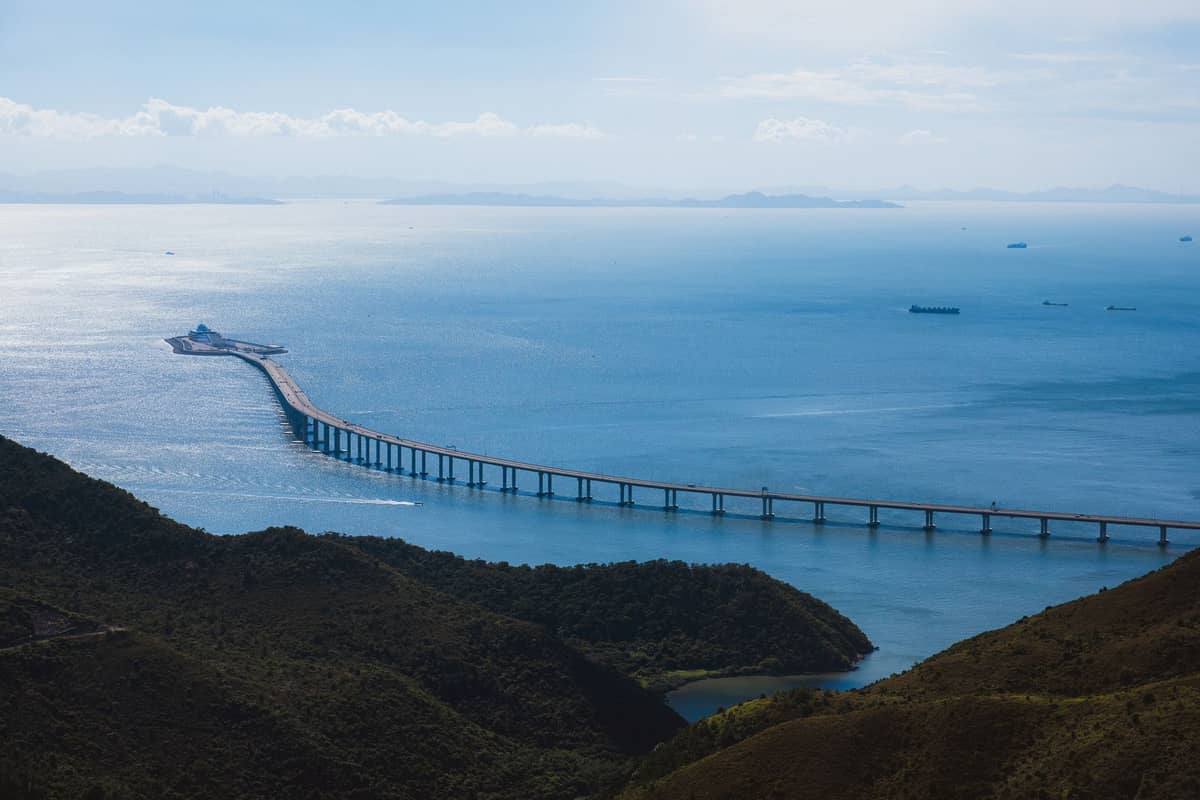
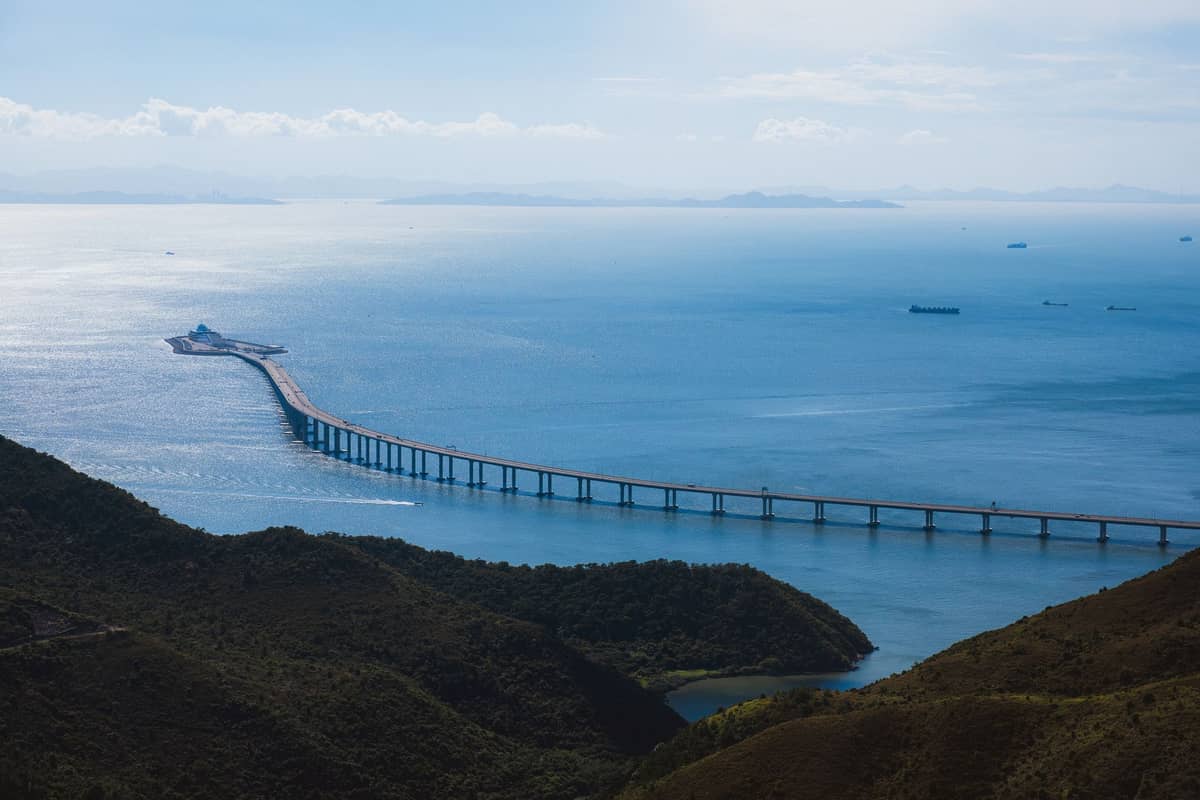
The Hong Kong–Zhuhai–Macau Bridge is one of the more striking infrastructure projects in the region: a 55-kilometer combined bridge-tunnel-island crossing that opened in October 2018. Private vehicles require special permits that most visitors cannot obtain, so the practical way to use it is the dedicated shuttle bus service operated by Hong Kong-Zhuhai-Macao Bridge (HZM) Bus.
The shuttle runs 24 hours a day, seven days a week. Daytime headways are approximately 5 to 10 minutes, dropping to 15 to 30 minutes overnight. A single adult ticket is generally HK$65 in the daytime and HK$70 at night — substantially cheaper than the ferry. The catch is logistics. You need to get yourself to Hong Kong Port, located at Lantau Island near the airport. From Central or Kowloon, that means a bus or taxi ride first. On the Macau side, you arrive at Macau Port on the western edge of the peninsula, then need another bus, taxi, or casino shuttle to reach your final destination. Door-to-door, the total journey can easily exceed two hours.
That said, the bridge option makes strong sense in specific situations: if you're arriving at or departing from Hong Kong International Airport (which is adjacent to Hong Kong Port), traveling very late at night when ferries have stopped, or if budget is the primary concern. For most leisure travelers staying near the city center on either side, the ferry wins on convenience.
✨ Pro tip
If you land at Hong Kong International Airport and want to head straight to Macau, the HZMB shuttle bus is genuinely convenient — the Hong Kong Port is right next to the airport, avoiding the trip into central Hong Kong entirely. This also works in reverse for flight connections out of HKG.
Terminals, Logistics, and What to Expect at the Border
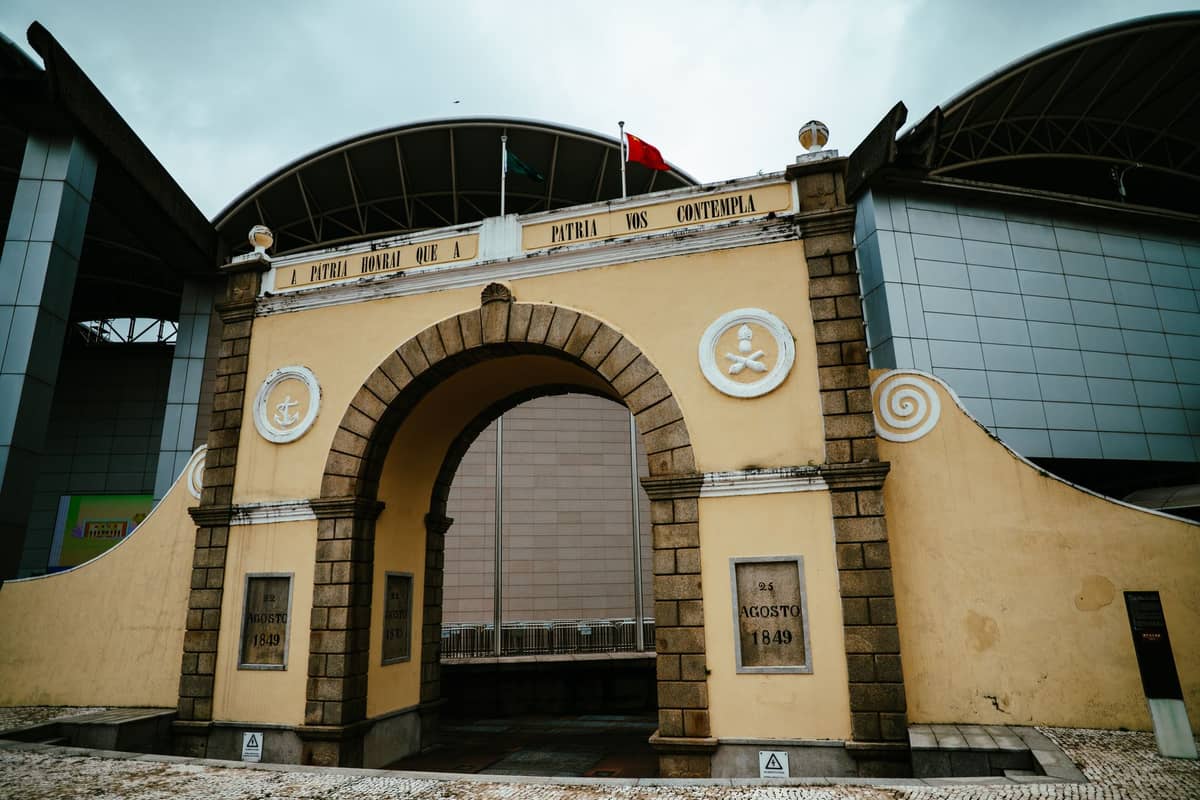
Understanding the terminal layout saves real time. In Hong Kong, the two main departure points are the Hong Kong Macau Ferry Terminal in Sheung Wan (conveniently connected to Sheung Wan MTR station) and China Ferry Terminal in Tsim Sha Tsui, Kowloon. Both are well-signed and have check-in counters, departure lounges, and baggage facilities. Arrive at least 30 to 45 minutes before your sailing — ferry check-in closes before departure and they do not hold sailings.
In Macau, ferries arrive at either the Outer Harbour Terminal (also called the Macau Ferry Terminal) on the Peninsula or Taipa Ferry Terminal, which sits near the Cotai Strip and is the closer landing point for major integrated resorts. From Taipa Ferry Terminal, several casino and hotel shuttle buses depart for free — one of the more useful perks in Macau's transport ecosystem. From the Outer Harbour Terminal, buses, taxis, and casino shuttles can take you to most destinations on the Peninsula or into Cotai.
Immigration at both Hong Kong and Macau ports is generally efficient outside peak travel windows. You will queue separately leaving Hong Kong and again entering Macau. Most nationalities with short-stay visa-free access to Macau clear fairly quickly. The process involves passport scanning, an immigration declaration card (you may be given one on the ferry), and biometric checks. Macau's e-channel kiosks speed things up for eligible travelers.
- Keep your passport (not just a national ID card) — Macau immigration requires a valid travel document
- Fill in the arrival card on the ferry to save time at the counter
- HKD is accepted across most of Macau at approximately 1:1.03 MOP — no need to exchange currency before arriving
- Macau's emergency number is 999; international dialing code is +853
- Tap water is treated but most visitors use bottled water; standard voltage is 220V with Type G (UK-style) plugs common
Booking Tickets: When to Buy in Advance
For the ferry, you can book directly through TurboJET's official website or the Cotai Water Jet site. Third-party aggregators like Ferryhopper and Ferryscanner also list schedules and allow booking, which is useful for comparing sailing times across both operators in one view. On most ordinary weekdays, walk-up tickets are available at the terminal counters without issue. The economy-class upper deck and Super Class fill fastest — if you have a preference, book a day or two ahead.
Peak periods require more planning. The weeks around Chinese New Year, Macau's public holidays, the Grand Prix in November, and the Macau International Fireworks Festival in September and October see very high demand. Economy sailings on popular morning and evening slots can sell out days in advance. Night sailings are generally easier to get last-minute but are priced higher. The HZMB shuttle bus does not require advance booking and operates on a turn-up-and-go basis.
Ticket policies are operator-specific. TurboJET and Cotai Water Jet tickets are not interchangeable, and rebooking fees apply. Read the terms when you buy, especially if your travel dates might shift. Travel insurance that covers transport delays is worth considering during typhoon season.
Planning Your Time in Macau
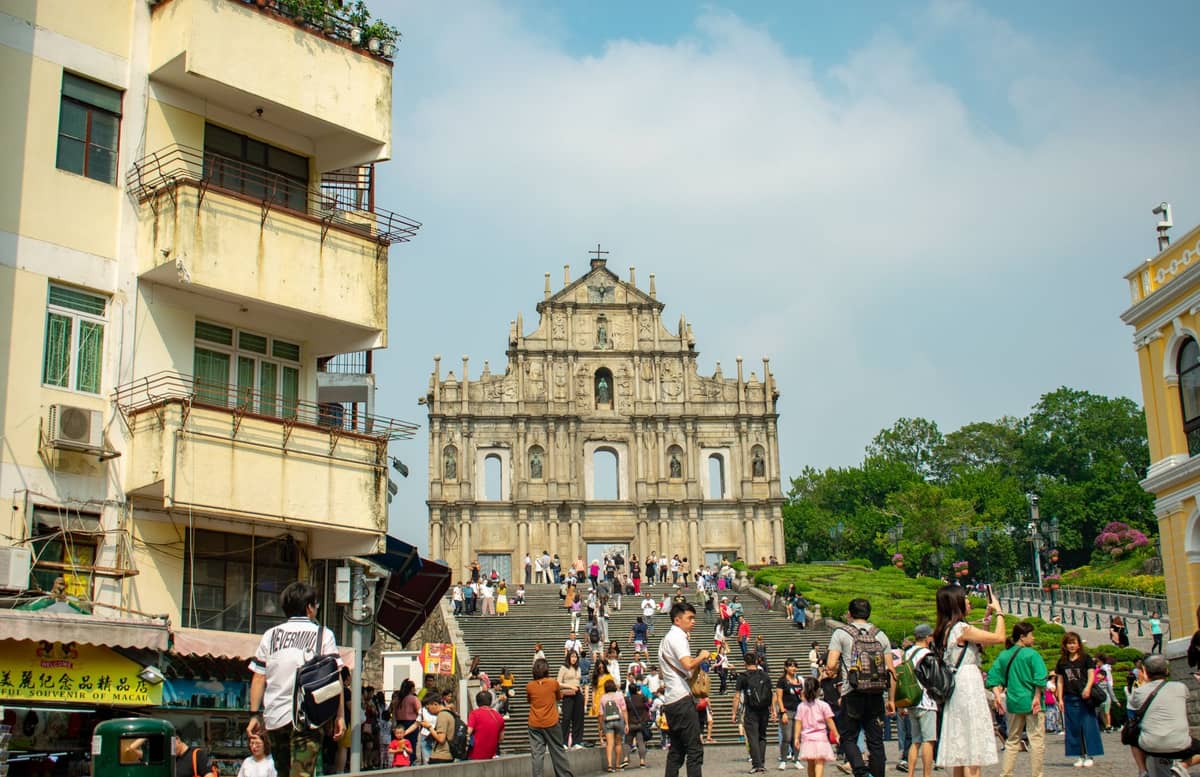
Most visitors traveling from Hong Kong do Macau as a day trip or stay one to two nights. Both are viable. A day trip gives you enough time to walk the historic UNESCO-listed centre — the Ruins of St. Paul's, Leal Senado Building, and Senado Square — grab some egg tarts, and see the casino strip before catching a late ferry back. But Macau rewards a longer stay.
Overnight visitors can explore Coloane and its beaches, take the heritage walk through quieter neighborhoods, and experience Macau after the day-trippers have left. The city feels notably different at night. If you're considering staying, the 2-day Macau itinerary covers the best use of a 48-hour window, and the best time to visit Macau guide explains the seasonal trade-offs in detail. October to December offers the most comfortable weather: warm, dry, and lower humidity than summer.
💡 Local tip
Casino hotels on the Cotai Strip frequently offer competitive room rates that undercut what you might expect — especially midweek. If you're considering staying overnight, check rates at the integrated resorts directly. Many include free shuttle services from the ferry terminals and the HZMB Macau Port, which effectively solves the last-mile transport problem.
FAQ
How long does it take to get from Hong Kong to Macau by ferry?
The ferry crossing itself takes approximately one hour under normal conditions. Add 30 to 45 minutes at the Hong Kong terminal for check-in and departure, plus immigration time on arrival in Macau. Total travel time from central Hong Kong to your Macau destination is realistically 90 minutes to 2 hours.
Is the Hong Kong–Zhuhai–Macau Bridge faster than the ferry?
The bridge crossing is fast, but the full journey usually is not. The HZMB shuttle bus itself crosses in roughly 40 minutes, but you need to travel to Hong Kong Port at Lantau first, clear immigration at both ends, and then travel onward from Macau Port. Door-to-door, the bridge route typically takes longer than the ferry for travelers coming from central Hong Kong or Kowloon. It is genuinely convenient if you're arriving or departing via Hong Kong International Airport, which sits adjacent to Hong Kong Port.
Do I need a visa to go from Hong Kong to Macau?
Macau has its own immigration system separate from Hong Kong and Mainland China. Many nationalities — including those from the EU, UK, Australia, USA, and others — enjoy visa-free entry to Macau for short stays. However, the rules and permitted durations vary by nationality and are updated periodically. Check the current entry requirements via the Macau Public Security Police Force (FSM) official website before you travel.
Can I use Hong Kong dollars in Macau?
Yes. Hong Kong dollars (HKD) are widely accepted across Macau at an approximate rate of 1 HKD to 1.03 MOP (Macanese pataca). You will typically receive MOP in change. For most visitors, there is no urgent need to exchange currency before crossing — HKD works at shops, restaurants, taxis, and casinos throughout Macau.
What time is the last ferry from Hong Kong to Macau?
Last ferry departures are typically around 22:30 to 23:30, though the exact schedule varies by operator, terminal, and season. Check the TurboJET and Cotai Water Jet official websites for current timetables. If you need a very late crossing, the HZMB shuttle bus runs 24 hours and is the only option after ferries stop for the night.