Grand Lisboa Macau: Inside the Icon of the Peninsula
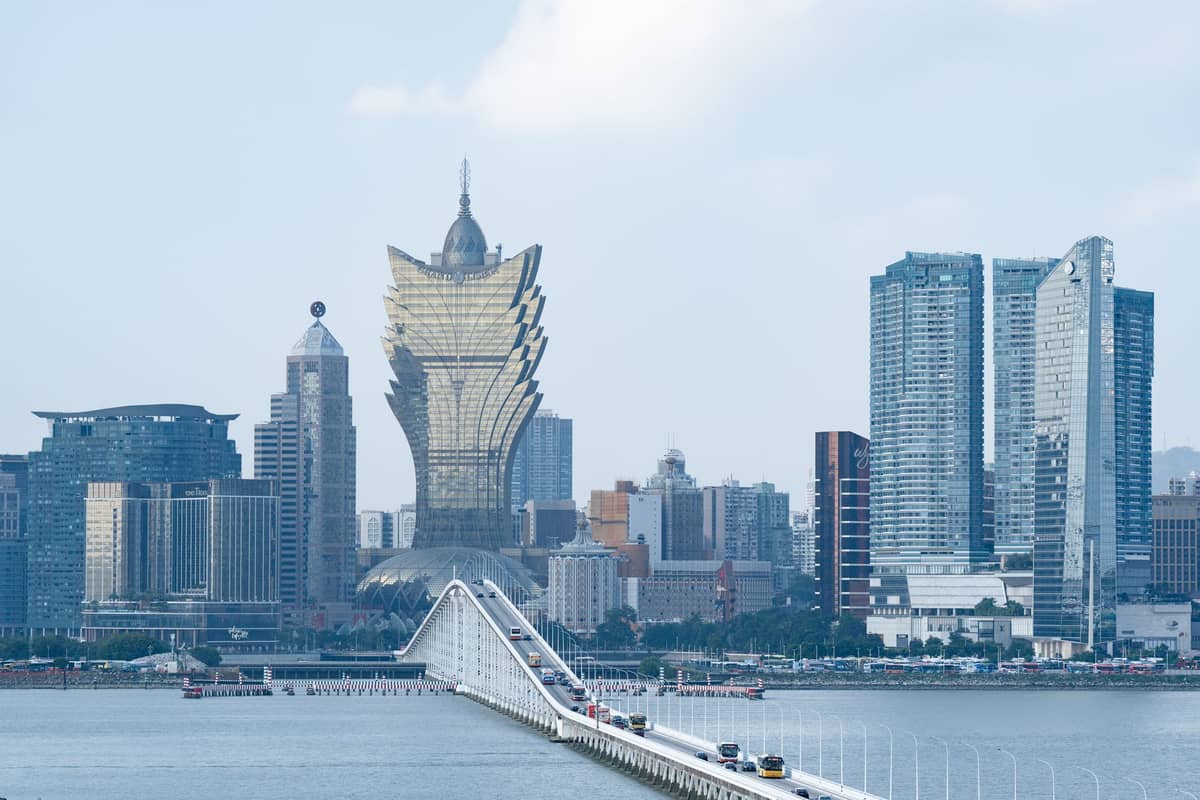
Grand Lisboa is the lotus-shaped tower that defines the Macau Peninsula skyline. Operated by SJM, it combines a 24-hour casino, a cluster of high-end restaurants, and a landmark hotel on Avenida de Lisboa. Whether you're here to gamble, dine, or simply photograph one of Asia's most distinctive buildings, this guide tells you exactly what to expect.
Quick Facts
- Location
- Avenida de Lisboa, Macau Peninsula
- Getting There
- Taxi or local bus along Avenida de Lisboa; approx. 8–10 min from Macau Ferry Terminal, 15–20 min from the airport
- Time Needed
- 1–3 hours depending on whether you dine, gamble, or just explore
- Cost
- Casino entry is free (minimum gambling age in Macau casinos: 21). Dining and hotel rooms priced separately
- Best for
- Architecture fans, casino visitors, upscale dining, night photography
- Official website
- www.grandlisboa.com/en
What Grand Lisboa Actually Is
The Grand Lisboa Hotel and Casino is the signature property of SJM (Sociedade de Jogos de Macau), one of Macau's major gaming concessionaires. Its tower, designed with a lotus flower and bird-cage motif, rises prominently above much of the Macau Peninsula and is visible from the ferry terminal, the hills of Penha, and even parts of neighboring Taipa. The building isn't just a casino: it's a full integrated resort with hotel rooms, multiple restaurants ranging from casual coffee shop to Michelin-starred dining, a spa, and a casino floor that runs around the clock.
The official address is Avenida de Lisboa, placing it in the commercial heart of the Peninsula, a short walk from the Lisboa Hotel (its older sibling property) and within reasonable walking distance of the Macau Ferry Terminal. For first-time visitors to Macau, Grand Lisboa often serves as an accidental landmark: you find yourself using the tower to orient yourself, the way you'd use a cathedral spire in a European city.
ℹ️ Good to know
Grand Lisboa's casino is open 24 hours daily. The minimum gambling age in Macau is 21. There is no admission fee to enter the casino floor, but expect to show ID if you look young.
The Architecture: Why It Looks Like That
The Grand Lisboa tower is one of those buildings people either love immediately or find overwhelming. The lower podium is styled to reference a giant lotus flower, Macau's civic symbol, while the upper section of the tower curves and glitters in a shape that draws comparisons to a birdcage or an ornate lantern. At night, the entire structure is lit in gold and white, making it arguably the brightest single point on the Peninsula skyline.
Whether you find this beautiful or excessive probably depends on your tolerance for maximalist design. What's not in dispute is the tower's effectiveness as urban punctuation. It anchors the southern end of the Peninsula's casino corridor and provides a clear visual reference point from almost every elevated position in the city. If you want the definitive photo of the tower itself, the elevated walkway near the Lisboa Hotel offers a clear frontal view, particularly at dusk when the building's lights begin to overtake the natural sky.
Photographers pursuing the wider Peninsula skyline should consider the vantage points listed in the best views in Macau guide, which includes several spots where Grand Lisboa appears in context with the surrounding cityscape.
The Casino Floor: What to Expect
The Grand Lisboa casino is large, loud, and operates without any natural light. The gaming floor features hundreds of table games alongside electronic machines, with baccarat dominating as it does across Macau. The atmosphere at midday and at 2am is surprisingly similar: dealers in uniform, the rhythmic sound of chips, and the faint smell of cigarette smoke despite ventilation systems. Macau casinos permit smoking in designated gaming areas, which is worth knowing before you spend extended time on the floor.
Unlike some of the newer Cotai resorts, Grand Lisboa has a distinctly local feel. You'll hear more Cantonese here than at, say, the Venetian or the Parisian. The clientele skews toward experienced gamblers rather than tourists treating casino entry as a sightseeing activity. That gives the floor a more serious energy, which some visitors appreciate and others find unwelcoming.
⚠️ What to skip
If your goal is casino tourism rather than actual gambling, Grand Lisboa's floor may feel less accessible than the more tourist-oriented properties on the Cotai Strip. The Cotai resorts are designed with spectacle in mind; Grand Lisboa is designed around gaming.
For a broader comparison of Macau's casino landscape, the Macau casinos guide breaks down the differences between Peninsula properties and the newer integrated resorts across the water.
Dining at Grand Lisboa: The Range Is Genuine
Grand Lisboa's food and beverage offering spans a wider range than most visitors expect. At the top end, the property houses one of Macau's most decorated fine dining restaurants, with a wine cellar that is regularly cited among the largest in Asia. At the other end, the Round-The-Clock Coffee Shop operates 24 hours and functions as a practical option for late arrivals or anyone who needs a meal at an unconventional hour.
The mid-tier restaurants cover Chinese regional cuisines and Cantonese specialties. Portions are generous, quality is consistent, and the setting is considerably more formal than the street food corridors nearby. If you're planning a special meal in Macau, Grand Lisboa's flagship restaurant is worth considering: book well in advance, particularly on weekends and during Chinese public holidays when demand across the city spikes sharply.
Grand Lisboa's dining sits at a different price point from Macau's famous street food culture. For context on eating across the full spectrum, the Macau food guide covers everything from the egg tart vendors near Senado Square to casino restaurants.
Time of Day: How the Experience Shifts
Morning is the quietest window inside Grand Lisboa. The casino floor is active but not packed, the restaurants are setting up, and the lobby is calm enough to actually look at the architecture and the lobby displays without navigating crowds. This is the best time for a relaxed look around if you're not here to gamble.
Evening, particularly from 8pm onward, brings a different character. The casino reaches peak volume, the restaurants fill, and the building's exterior lighting becomes fully saturated against the dark sky. The area around Avenida de Lisboa gets considerably busier, with taxis queuing and cross-border coaches arriving and departing. If you're here for photography, arrive around sunset: the transition from daylight to full night illumination, roughly 30 to 45 minutes, produces the most visually interesting shots of the tower.
Late night, past midnight, the casino is still in full operation but the surrounding streets quiet considerably. The coffee shop remains open, and the building itself is never fully asleep, but the frenetic energy of peak evening hour has passed. For visitors who want to see the casino atmosphere without the fullest crowds, this window can work well.
Getting There and Getting Around Nearby
Grand Lisboa sits on Avenida de Lisboa on the Macau Peninsula, making it straightforward to reach from most central points. From the Macau Ferry Terminal it's approximately a five-minute taxi ride. Local buses running along Avenida de Lisboa stop nearby. The hotel also maintains designated pick-up and drop-off points for cross-border coaches serving Guangzhou and Hong Kong routes, which is useful if you're arriving directly from the border.
The surrounding neighborhood rewards walking. The Ruins of St. Paul's and Senado Square are reachable on foot in around 15 to 20 minutes, depending on your pace and how often you stop. The Macau Museum and Fortaleza do Monte are a similar distance. The area between Grand Lisboa and Senado Square is one of the densest clusters of heritage in the city.
If you're planning a full day around the Peninsula, the Macau heritage walk guide maps out a logical route that connects Grand Lisboa's neighborhood to the UNESCO historic core.
💡 Local tip
Grand Lisboa's free shuttle buses connect to key points including the ferry terminals and border gates. Check current routes at the concierge or guest services desk. Schedules change seasonally.
Accessibility and Practical Notes
The Macao Government Tourism Office includes Grand Lisboa in its accommodation listings with barrier-free access indicators, suggesting step-free routes and lift access are available across public areas. For specific accessibility requirements, including wheelchair access to casino areas, adapted bathrooms in hotel rooms, or assistance services, contact the property directly before your visit. Staff at the front desk and concierge are accustomed to handling these requests.
Dress code inside Grand Lisboa is smart-casual at minimum. On the casino floor, beachwear and flip-flops are out of place. For the fine dining restaurants, smart dress is expected and some require reservations made days or weeks ahead. The lobby and public areas are open to non-guests and non-gamblers, so walking through to look at the interior is perfectly normal.
Macau's currency is the Macanese pataca (MOP), and Grand Lisboa accepts both MOP and Hong Kong dollars, as do most major properties on the Peninsula. Credit cards are accepted throughout the hotel and restaurants. On the casino floor, transactions typically use chips purchased at the cage.
Insider Tips
- The exterior of Grand Lisboa is best photographed from the elevated walkway connecting the old Lisboa Hotel to the street, particularly at dusk when the building's gold lighting competes with the remaining daylight. Arrive 30 minutes before sunset and stay for the full transition.
- The Round-The-Clock Coffee Shop is a practical and underrated option for late-night meals on the Peninsula. It serves a broad menu at hours when most of Macau's street stalls have closed.
- Grand Lisboa hosts cross-border coach services to Hong Kong and Guangzhou directly from its designated coach area. If you're continuing to either destination after your stay, this can save a separate taxi trip to a bus terminal.
- The casino floor's house edge and minimum bets are generally higher than some of Macau's smaller local casinos. If you're a casual gambler on a limited budget, check table minimums before sitting down: they vary considerably by area of the floor and time of day.
- For visitors staying nearby rather than at Grand Lisboa itself, the hotel lobby is worth walking through at least once. The interior design, particularly the ceiling and display cases in the public areas, reflects a level of detailing that the casino floor's functional layout doesn't prepare you for.
Who Is Grand Lisboa For?
- Architecture and design enthusiasts who want to see Macau's most recognizable modern structure up close
- Serious casino visitors looking for a more local, less tourist-oriented gaming atmosphere than the Cotai resorts
- Diners seeking high-end Cantonese and Chinese cuisine with one of Macau's most extensive wine lists
- Night photographers working the Peninsula skyline, where Grand Lisboa functions as an anchor point for compositions
- Travelers arriving via cross-border coach from Hong Kong or Guangzhou who want immediate proximity to Peninsula sights
Nearby Attractions
Other things to see while in Macau Peninsula:
- A-Ma Temple (Ma Kok Miu)
A-Ma Temple, known locally as Ma Kok Miu, is the oldest temple in Macau, with origins traced to 1488. Part of the UNESCO-listed Historic Centre of Macao, this atmospheric complex blends Taoist, Buddhist, Confucian, and folk traditions across six distinct halls climbing Barra Hill. Entry is free, and the site remains an active place of worship year-round.
- Camões Grotto and Casa Garden
Tucked into the northwest of the Macau Peninsula, Camões Grotto and Casa Garden form one of the city's most layered heritage sites. The park honors Portugal's greatest poet in a setting of banyan trees and rocky outcrops, while the adjacent 18th-century mansion carries the architectural weight of colonial trade history. Both are free to enter and rarely crowded.
- Dom Pedro V Theatre
The Dom Pedro V Theatre (Teatro Dom Pedro V) is the oldest Western-style performance venue in East Asia, completed in 1860 and — though normally a working venue — temporarily closed for renovation until early October 2026. Its pale green neoclassical facade on Largo de Santo Agostinho is one of the most photogenic and historically layered corners of the Macau Peninsula, and admission is free when it is open to visitors
- Fortaleza do Monte (Mount Fortress)
Fortaleza do Monte, built between 1617 and 1626, rises above the historic centre of Macau with cannon-lined ramparts, sweeping 360-degree views, and the acclaimed Macao Museum within its walls. For the price of a cup of coffee, or nothing at all on free days, this UNESCO-listed site delivers more history per square metre than almost anywhere else in the city.