Hac Sa Beach (Black Sand Beach): Macau's Natural Coastal Escape
Hac Sa Beach is Macau's largest natural beach, set on the quieter southern coast of Coloane. Known for its historically dark, iron-rich sand and laid-back atmosphere, it offers a genuine contrast to the city's casino towers and heritage corridors. Entry is free, buses run regularly, and the surrounding area rewards those who arrive with time to spare.
Quick Facts
- Location
- Hac Sa Beach (Praia de Hác Sá), Coloane, Macau
- Getting There
- Buses 21A, 26A, 15, 15T to 黑沙海灘 / Praia De Hac Sá stop
- Time Needed
- 1.5 to 3 hours; longer if combining with Coloane Village
- Cost
- Free beach access; bus approx. MOP$6 one way
- Best for
- Families, couples, budget travelers, half-day escapes from the city
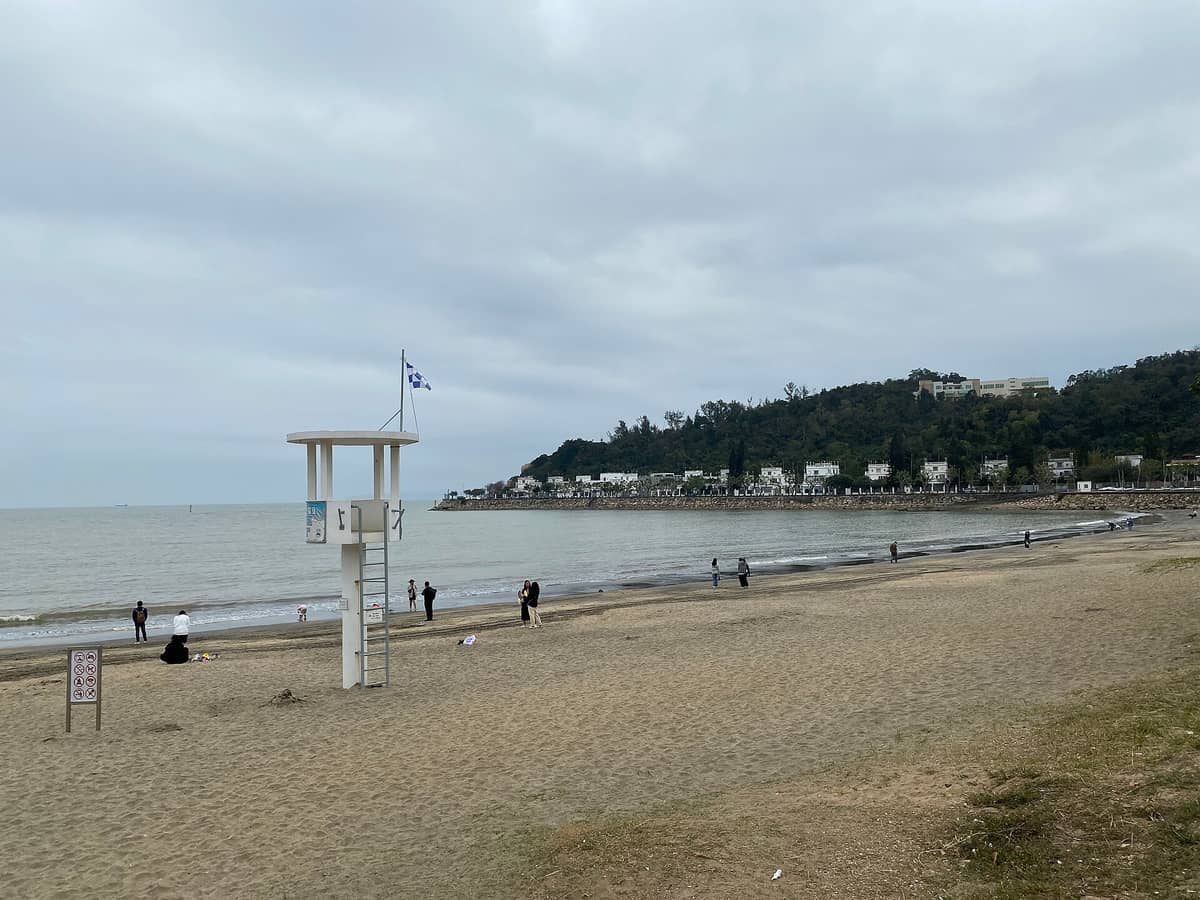
What Hac Sa Beach Actually Is
Hac Sa Beach, officially Praia de Hác Sá in Portuguese and known in Chinese as 黑沙海灘, translates simply to Black Sand Beach. The name refers to the beach's distinctive dark, iron-rich sand, which is naturally occurring and unlike anything else in Macau. At around 1.5 kilometres of shoreline, it is recognized as Macau's largest natural beach, and it sits on the southeastern coast of Coloane, the southernmost of Macau's islands.
A practical note worth knowing before you arrive: over the years, lighter-colored sand has been added to parts of the beach to address coastal erosion. The result is a mixed palette rather than a uniformly jet-black shoreline. The darker sand is still clearly visible in sections, particularly toward the water's edge and at quieter corners of the beach, but visitors expecting a dramatic all-black beach may find the reality more nuanced. The experience is still visually unusual by Macau's standards.
ℹ️ Good to know
Beach access is free and effectively open 24 hours. The main park and sports facilities generally operate from early morning to around midnight; specific facility hours can vary. Confirm locally before visiting, as hours are subject to change.
How the Beach Changes Through the Day
Early mornings at Hac Sa belong to local residents. By 7 or 8am, you will find older Coloane locals doing slow exercises along the esplanade path that runs parallel to the sand, occasionally accompanied by small dogs. The air carries a faint salt smell mixed with the green scent from the tree line behind the beach, and the water is generally calm in the morning light. It is the most peaceful time to visit, with few tourists and excellent light for photography, especially in the cooler months between October and February.
By late morning and early afternoon on weekends, particularly during summer, the beach fills noticeably. Families from the city set up under the shade of the casuarina trees that line the back of the beach. Children gravitate toward the shallow sections near the shore. The water temperature in July and August is warm enough to swim comfortably, though the sea here can carry some turbidity, so the underwater visibility is limited. This is not a snorkeling beach.
Late afternoon brings a different quality of light. As the sun drops toward the hills behind Coloane, the darker patches of sand take on a richer tone and the beach crowds thin out. On weekday afternoons outside summer, you may find the beach almost completely quiet, which makes it one of the more atmospheric places in Macau to sit and do very little. Sunset is worth timing your visit around if the weather cooperates, as the orientation of the beach offers good westward views.
Getting to Hac Sa Beach
The most straightforward way to reach Hac Sa Beach by public transport is to take bus 21A, 26A, 15, or 15T, all of which serve the stop signed clearly as 黑沙海灘 / Praia De Hac Sá. Bus 15 runs from Border Gate (the northern crossing into mainland China) all the way to Hac Sa. The bus fare is approximately MOP$6 one way, and services run from early morning until around midnight, making late evening visits technically possible, though the area has minimal lighting after dark.
Taxis are available from most parts of Macau and can drop you directly at the beachfront. From Taipa or Coloane Village, the journey is short. If you are already exploring Coloane Village, the beach is only a few minutes away by taxi or a 20-minute walk along the road through the hills. Combining both in a single afternoon is a practical and rewarding option.
💡 Local tip
If coming from the Macau Peninsula, bus 26A is often the most direct option. Confirm bus routes at the official DSAT transport portal (dsat.gov.mo) before your visit, as routes and schedules can be updated.
The Setting: Coloane's Quieter Character
Hac Sa Beach sits in Coloane, the southern island of Macau that retains the most green space and the fewest high-rises of any part of the territory. The hills behind the beach are forested, and the surrounding roads are lined with trees rather than casino signage. Compared to the Cotai Strip just a few kilometres north, the contrast is considerable.
Behind the beach, there is a large recreational park area with barbecue pits, sheltered pavilions, and some basic sports facilities. On weekends and public holidays, local families use this space extensively. The smell of charcoal grills in the afternoon is a reliable indicator that the park section is busy. The area has a distinctly local, low-key feel that visitors used to Macau's more polished tourist attractions may find refreshing.
The beach is also a reasonable starting point for exploring Coloane's hiking trails. The hills immediately behind Hac Sa connect to walking paths that wind through the island's interior forest. For a more structured approach to the area's outdoor options, the Coloane hiking trails provide access to Alto de Coloane, the highest point in Macau, with views across the Pearl River Delta.
Facilities, Swimming, and Practical Notes
The beach has public restrooms and shower facilities available free of charge, which is a practical convenience after swimming or a dusty walk from the hills. There are food and drink options in the immediate vicinity, including a small cluster of restaurants near the beach entrance area. Fernando's Restaurant, a long-standing Portuguese eatery just off the beach, is frequently cited by visitors as a worthwhile lunch stop when visiting Hac Sa.
Swimming conditions at Hac Sa are generally safe in calm weather, though the beach is not staffed by lifeguards at all hours. The sea floor slopes gradually, which makes it accessible for children in the shallower sections. During typhoon season (typically July to September), storm signals can arrive with little warning. Macau operates a tiered typhoon signal system, and beach activities should be suspended once any warning signal is raised. Check the Macau Meteorological and Geophysical Bureau (smg.gov.mo) for current conditions during summer visits.
On accessibility, the beach has a flat esplanade path running along its length, which is manageable for pushchairs. There is no confirmed formal wheelchair-accessible boardwalk extending onto the sand itself. Visitors with specific mobility requirements should check conditions on the ground or contact the Coloane area leisure facilities at +853 2888 2366 before travelling.
⚠️ What to skip
Typhoon season (July to September) brings real risks to beach visits. Even if skies look clear in the morning, signals can escalate rapidly. Always check smg.gov.mo for the current typhoon signal before heading to any beach in Macau.
Photography and the Best Season to Visit
The dark sand creates strong visual contrast with white sea foam at the water's edge, and the casuarina tree line provides natural framing from behind the beach. Early morning in October through December, when Macau's humidity drops and the light is clear, produces the most photogenic conditions. The trees cast long shadows across the sand in the first two hours after sunrise, and the beach is almost always empty at that hour.
For travel planning purposes, autumn (October to December) is consistently the most comfortable season to visit Macau as a whole. Lower humidity, more sunshine, and minimal typhoon risk make outdoor attractions far more enjoyable. For a broader look at how weather shapes your visit, the guide on the best time to visit Macau covers seasonal trade-offs in detail.
Midday in summer is the hardest time to appreciate Hac Sa. Heat and humidity above 30°C, combined with direct sun on dark sand, make the beach surface uncomfortably hot underfoot. Bring sandals, sunscreen with a high SPF, and water. There is limited shade on the open sand itself, though the tree line at the back of the beach provides some relief.
Who Will Enjoy Hac Sa, and Who Might Not
Hac Sa Beach works best as a half-day activity rather than a full-day destination, unless you combine it with Coloane Village or the hiking trails. Families with young children will find enough space, safe shallow water, and facilities to spend several comfortable hours here. Budget travelers will appreciate that the beach costs nothing to access and that bus fares from the city are minimal. Couples looking for a quieter corner of Macau, away from the casino environment, will find the atmosphere genuinely relaxing, especially on weekday mornings. For a broader picture of what the island offers, the free things to do in Macau guide includes Hac Sa alongside other no-cost options.
Visitors who have already been to well-developed beach destinations in Southeast Asia may find Hac Sa modest in comparison. The water clarity is not exceptional, there are no water sports operators or beach bars in the international resort sense, and the sand color, while distinctive, is partially diluted by erosion-control additions. If your primary goal is a polished beach resort experience, Hac Sa will not deliver that. It is a local beach, valued for its space, its unusual sand, and its distance from Macau's more saturated tourism zones.
Travelers on a tight schedule focusing entirely on Macau's UNESCO heritage sites and casino architecture may find the transit time to Coloane hard to justify. That said, Hac Sa pairs efficiently with a visit to Coloane Village, and the two together make a logical full half-day. See how the beach fits into a broader itinerary in the 2 days in Macau planning guide.
Insider Tips
- Arrive before 9am on a weekday to have the beach almost entirely to yourself. The casuarina trees cast diagonal shadows across the dark sand in early morning, which makes for the best photographs of the beach's distinctive texture.
- The section of darker, original black sand is most visible at the southern end of the beach and near the water's edge at low tide. Walk along the shoreline rather than staying near the tree line if you want to see the iron-rich sand at its most dramatic.
- Fernando's Restaurant, a short walk from the beach entrance, has been serving Portuguese food here for decades. Arrive at opening time on weekends to avoid a wait, as it draws a steady lunch crowd from both local residents and visitors.
- Bus 26A from the Macau Peninsula often gets crowded on weekend afternoons heading back toward the city. If you want a seat, aim to leave Hac Sa before 3pm or after 5:30pm to avoid the peak outbound rush.
- The barbecue park area behind the beach requires advance booking for specific grilling stations, especially on public holidays. If you are visiting with a larger group and planning to cook, make an online reservation with Coloane leisure management beforehand.
Who Is Hac Sa Beach (Black Sand Beach) For?
- Families with young children looking for safe shallow water and free beach facilities
- Budget travelers who want a beach day in Macau without any admission cost
- Couples seeking a low-key, unhurried afternoon away from the casino environment
- Photographers interested in the beach's unusual dark sand and natural tree-line backdrop
- Walkers and hikers using the beach as a base for exploring Coloane's hill trails
Nearby Attractions
Other things to see while in Coloane:
- Cheoc Van Beach
Cheoc Van Beach sits at the southern tip of Coloane Island, offering free access, a seasonal swimming pool, and a noticeably quieter atmosphere than most of Macau. It works best for a half-day escape from the city's casino density, though water quality checks are worth doing before you swim.
- Coloane Hiking Trails
The Coloane Trail is Macau's longest marked hiking route, an approximately 8-kilometre loop through forested hillsides above Coloane Island. Free to access, genuinely peaceful, and surprisingly challenging in places, it offers the clearest contrast to the casino-dense cityscape most visitors never leave.
- Coloane Village
Coloane Village (Vila de Coloane) sits at the southern tip of Macau, a former fishing settlement that has held onto its old rhythms while the rest of the city raced ahead. Whitewashed colonial buildings, a small harbor, incense-drifting temples, and the original Lord Stow's Bakery make this the most atmospheric half-day trip in the territory. Entry is free, and the bus ride from central Macau takes under an hour.
- Seac Pai Van Park and Giant Panda Pavilion
Tucked into the forested hills of Coloane, Seac Pai Van Park is Macau's largest natural park and home to the Macao Giant Panda Pavilion. It offers a genuine contrast to the neon intensity of the casino strips, with giant pandas, red pandas, shaded walking trails, and free admission to almost everything.