Taipa Houses-Museum: A Window into Macau's Portuguese Past
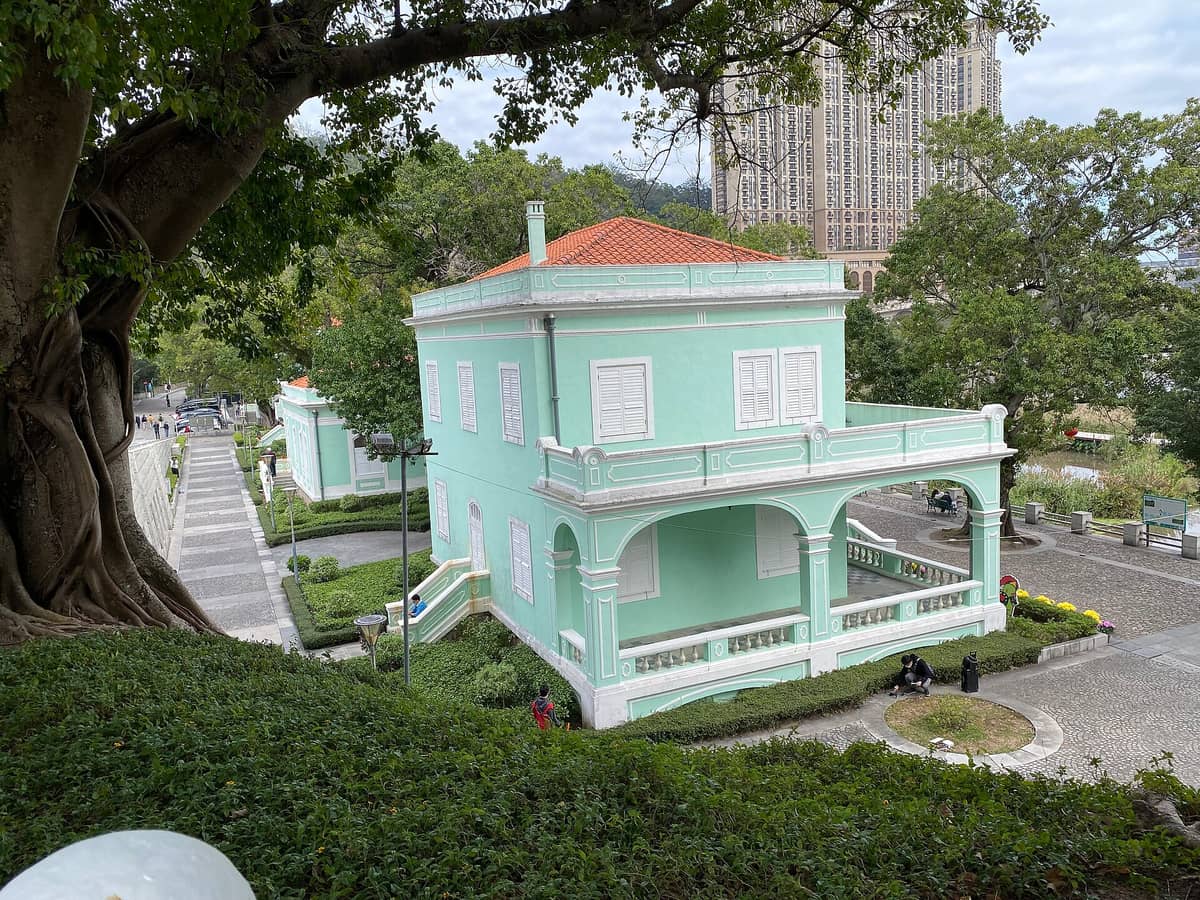
The Taipa Houses-Museum is a complex of five pale-green Portuguese colonial villas built in 1921 along the Taipa waterfront. Free to enter and rarely overcrowded, it offers one of Macau's most intimate looks at the domestic life, architecture, and cultural overlap that defined the territory before the casino era reshaped everything.
Quick Facts
- Location
- Avenida da Praia, Carmo Zone, Taipa Village, Macau SAR
- Getting There
- Short walk from Taipa Village centre; local buses serve Avenida da Praia from the Peninsula and Cotai. Taxis are easy from anywhere on Taipa.
- Time Needed
- 45 minutes to 1.5 hours
- Cost
- Free admission. Small fees may apply for certain special or temporary exhibitions.
- Best for
- History lovers, architecture enthusiasts, couples, and anyone wanting a calm break from the casino strip
- Official website
- www.icm.gov.mo/en/housesmuseum
What the Taipa Houses-Museum Actually Is
The Taipa Houses-Museum, known in Portuguese as the Casas-Museu da Taipa, is a row of five identical pale-green colonial villas sitting along Avenida da Praia in Taipa Village. Built in 1921 as official residences for senior Portuguese administrators, they represent one of the most coherent surviving examples of Portuguese colonial domestic architecture in all of Macau. Unlike the grand ecclesiastical landmarks on the Peninsula, these are houses scaled to human life: verandas, tiled floors, shuttered windows, modest parlors.
Each villa has been repurposed to tell a different story. Some recreate furnished period interiors showing how elite Macanese families lived in the early twentieth century. Others host exhibitions on local customs, Portuguese-Chinese cultural fusion, and traditional crafts. The complex is managed by the Cultural Affairs Bureau of the Macao SAR Government and sits within a wider garden and promenade area that stretches toward the old Taipa waterfront.
ℹ️ Good to know
Opening hours: Tuesday to Sunday, 10:00–19:00 (no admittance after 18:30). Closed Mondays. Admission is free. Verify hours close to your visit, as some sources indicate extended evening opening for the surrounding grounds at certain times.
The Architecture and Its Historical Context
The five villas were constructed in a style sometimes called Portuguese tropical colonial: two-storey structures with wide verandas designed to catch coastal breezes, high ceilings, and wrought-iron balustrades. The pale green exterior, offset by white trim and terracotta roof tiles, gives the row a distinctive uniformity that photographs well and reads clearly even at a distance. At the time of their construction, Taipa was still a separate island connected to the Peninsula only by boat, and the houses faced a broad estuary rather than the urban sprawl that surrounds them today.
By 1921, Macau had already spent nearly four centuries under Portuguese administration, creating a layered society of Portuguese officials, Macanese (people of mixed Portuguese and Asian descent), Chinese merchants, and various communities from across the Portuguese empire. The houses reflect that social order directly: they were not built for wealthy traders or clergy, but for the civil servants who kept the bureaucratic machinery running. For a broader tour of Macau's ecclesiastical architecture from the same era, the Macau churches guide covers the Peninsula's religious landmarks in detail.
The complex was restored and opened to the public in the late twentieth century, as Macau began investing seriously in heritage tourism ahead of the 1999 handover to China. The restoration work was careful: original floor tiles, wood paneling, and period furniture were preserved or authentically replicated. Standing in the main parlor of the central house, you can see Portuguese blue-and-white azulejo tiles alongside Chinese ceramic details, a visual summary of Macau's centuries-long cultural negotiation.
What You Actually See Inside
The five houses are not all open simultaneously, and configurations can shift depending on whether a temporary exhibition is running. In the standard layout, visitors move through recreated living and dining rooms furnished in early twentieth-century style: dark wood sideboards, cane-backed chairs, lace tablecloths, framed photographs of officials in colonial dress. The scale is intimate rather than grand, which is precisely what makes it interesting. This is not a palace; these rooms were lived in.
One house is typically dedicated to regional folk customs and traditional celebrations, with displays on festivals, costumes, and religious practices that blended Portuguese Catholic and Chinese Buddhist influences. Another often focuses on the history of Taipa itself, using old maps and photographs to show the island before land reclamation transformed its coastline. The contrast between the photographs of an open estuary and the dense urban environment you walked through to get here is quietly startling.
The interiors are accessed via original staircases and narrow doorways. Natural light filters through louvered shutters and creates a soft, slightly dappled effect in most rooms. There is no aggressive air conditioning, which means the spaces feel slightly warm in summer but authentic in a way that climate-controlled attractions rarely achieve. Display labels are in Chinese and Portuguese, with English translations available throughout.
💡 Local tip
Photography tip: The best interior light is in the morning, when sunlight enters from the east-facing windows. The exterior facade photographs well throughout the day, but the promenade side catches warm late-afternoon light that makes the green villas glow. Avoid midday if you want shadow detail in exterior shots.
The Promenade and Garden: Often Better Than the Museum Itself
The strip of garden and promenade running in front of the Taipa Houses is an underrated part of the visit. A wide, paved walkway faces the direction of the old Taipa waterfront, flanked by trimmed hedges, benches, and mature trees that provide real shade. In the morning, you will find elderly locals doing slow exercises or sitting with newspapers. By mid-afternoon, families and tour groups pass through. In the early evening, before the museum closes, the light turns golden and the facade of the houses is at its most photogenic.
The garden area is generally accessible even for visitors with mobility limitations, offering a pleasant vantage point of the exterior even if the interior steps are difficult to navigate. The surrounding streets of Taipa Village are flat and walkable, lined with low-rise shophouses selling egg tarts, dried seafood, and Portuguese wine, making it easy to combine the museum visit with a broader wander.
When to Visit and How to Get There
The museum is open Tuesday through Sunday, 10:00 to 19:00, with the last entry at 18:30. It is closed on Mondays. Arriving between 10:00 and 11:30 on a weekday is the most comfortable window: the tour groups that dominate by midday have not yet arrived, the interiors are coolest, and the morning light in the garden is pleasant. Weekend afternoons can feel crowded in the narrow interior rooms, though the complex is large enough that you can usually find a quiet corner.
Getting here from the Macau Peninsula takes roughly 15 to 25 minutes by taxi, depending on traffic. From the Cotai Strip casinos, a taxi to Taipa Village takes under ten minutes. Local buses serve the Avenida da Praia area from both directions. If you are coming from further afield, the guide to getting around Macau covers bus routes and transit options in useful detail.
Macau's subtropical climate means summer visits (June through September) involve heat and high humidity. The museum interiors offer some relief, but the promenade is exposed. October through December is genuinely more comfortable: temperatures drop to the low-to-mid twenties Celsius, humidity falls, and Taipa Village is pleasant to walk at any hour. Bring comfortable shoes; the interior floors are original tile and can be slippery, and the surrounding streets involve some uneven paving.
⚠️ What to skip
Typhoon season in Macau officially runs from mid-May through mid-November, with peak risk from July through September. If a typhoon signal is raised during your visit, attractions close and outdoor areas become unsafe. Check the Macau Meteorological and Geophysical Bureau (SMG) for current warnings before heading out.
Is It Worth Your Time?
If you have even a passing interest in colonial history, architectural details, or Macau's cultural identity beyond the casinos, the Taipa Houses-Museum is worth an hour of your time and costs nothing to enter. It is not a major world-class museum with deep collections or cutting-edge curation. The displays are modest by international standards, and anyone expecting extensive multimedia or lavish artifacts may find it underwhelming. But that is somewhat beside the point. The value here is the physical experience of these spaces: the proportions of the rooms, the texture of the tiles, the view from the veranda over a garden that still manages to feel quiet despite being a short walk from one of Asia's most densely developed tourism zones. For context on how this fits into a broader Taipa visit, see the Taipa Village neighbourhood guide.
Visitors who come solely for casino entertainment and have no interest in history or architecture may find the museum slow. Children under ten will likely engage briefly with the period rooms before losing interest, though the garden area gives them space to move. If you are building a full day in Macau, the houses fit naturally into a walking route that includes Pak Tai Temple and the surrounding village lanes, adding cultural weight to what might otherwise be a purely gastronomic stroll through Taipa.
Accessibility Notes
The interior of the houses involves staircases and original doorways that are narrow by modern standards. Visitors using wheelchairs or with significant mobility limitations will find the interior rooms difficult or impossible to access fully. The surrounding promenade and garden, however, are on level ground and provide a genuine view of the exterior architecture and the overall atmosphere of the complex. It is worth visiting even if interior access is limited.
Insider Tips
- The houses look their best from the promenade side in the late afternoon, roughly 16:00 to 17:30, when the angle of the light turns the green facades warm. This is also the quietest period on weekdays after the midday tour group rush has passed.
- Check the Cultural Affairs Bureau website before visiting to see if a temporary exhibition is running. These can change the layout of which houses are open and occasionally introduce small admission fees for specific displays.
- The egg tart shops on the main street of Taipa Village, a five-minute walk away, sell freshly baked tarts throughout the day. Arriving at the museum when it opens at 10:00 and then heading to the village for breakfast pastries makes for a logical and satisfying morning sequence.
- If you want the facade photograph without pedestrians in the frame, arrive right at 10:00 on a Tuesday through Thursday. The garden is virtually empty for the first thirty minutes, giving you a clear line of sight to all five villas.
- The museum labels are thorough in English, but the context is richer if you read up on Macanese identity and the Luso-Chinese cultural synthesis beforehand. Even a brief read on the subject transforms the period rooms from curiosities into legible documents of a specific historical moment.
Who Is Taipa Houses-Museum For?
- History and heritage travelers who want to understand Macau beyond the casinos
- Architecture enthusiasts interested in Portuguese colonial tropical design
- Couples looking for a calm, photogenic stop during a Taipa Village afternoon
- Budget travelers: the museum is free and easy to combine with the surrounding walkable village
- Anyone building a half-day Taipa itinerary that includes temples, street food, and waterfront walking
Nearby Attractions
Other things to see while in Taipa Village:
- Iec Long Firecracker Factory Heritage Site
The Iec Long Firecracker Factory Heritage Site in Taipa preserves one of Macau's most unusual industrial chapters. A free wooden walkway winds through crumbling cannon rooms, waterways, and warehouses where firecrackers were once manufactured at scale, with an on-site exhibition bringing the story to life.
- Pak Tai Temple (Taipa)
Standing at Largo Camões since around 1843, Pak Tai Temple is one of Taipa's oldest places of worship, dedicated to the Taoist deity Pak Tai (the God of the North). Free to enter, easy to reach by bus, and surrounded by some of Taipa Village's best street food and colonial architecture, it rewards visitors who take time to look beyond the obvious.