Macau Street Food Guide: Best Snacks and Where to Find Them
Macau's street food scene goes far beyond casino buffets. This guide covers the essential snacks, the four main areas to find them, clear price benchmarks, and timing tips so you spend less time queuing and more time eating.
TL;DR
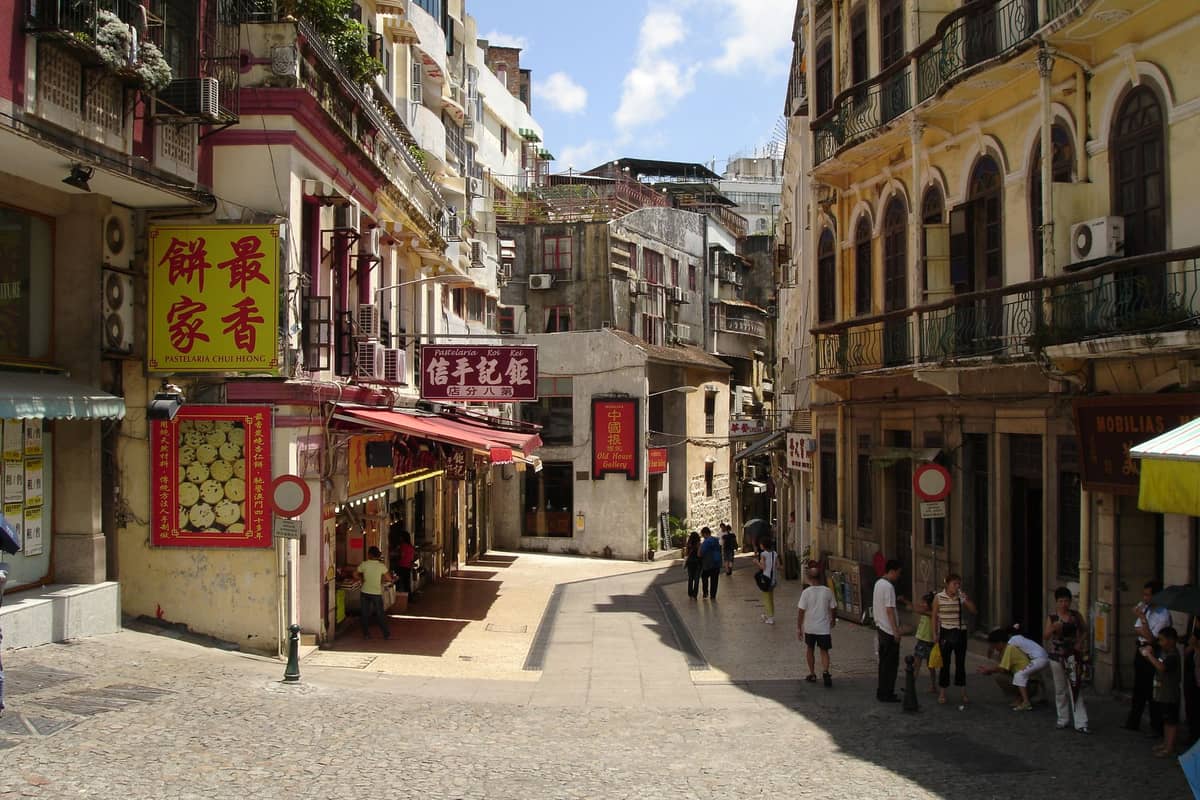
- The four best street food zones are Rua do Cunha (Taipa Village), Senado Square, the Red Market area, and the New Port Night Market — each with a distinct character and food focus.
- Expect to pay MOP 10–20 for simple skewers, MOP 35–55 for pork chop buns, and MOP 13 per egg tart at Lord Stow's or Margaret's. Street food is not as cheap as it used to be.
- Lord Stow's Bakery (Coloane) and Margaret's Café e Nata (near Senado) are separate bakeries with different egg tart recipes — worth trying both if you have the time.
- The New Port Night Market runs daily from 15:00 to 02:00, making it the best option for late-night eating; most Taipa Village stalls close around 22:00.
- For a deeper dive into the broader food scene, the Macau food guide covers sit-down restaurants, Macanese cuisine, and budget meal options across all districts.
Why Macau's Street Food Scene Is Worth Your Time
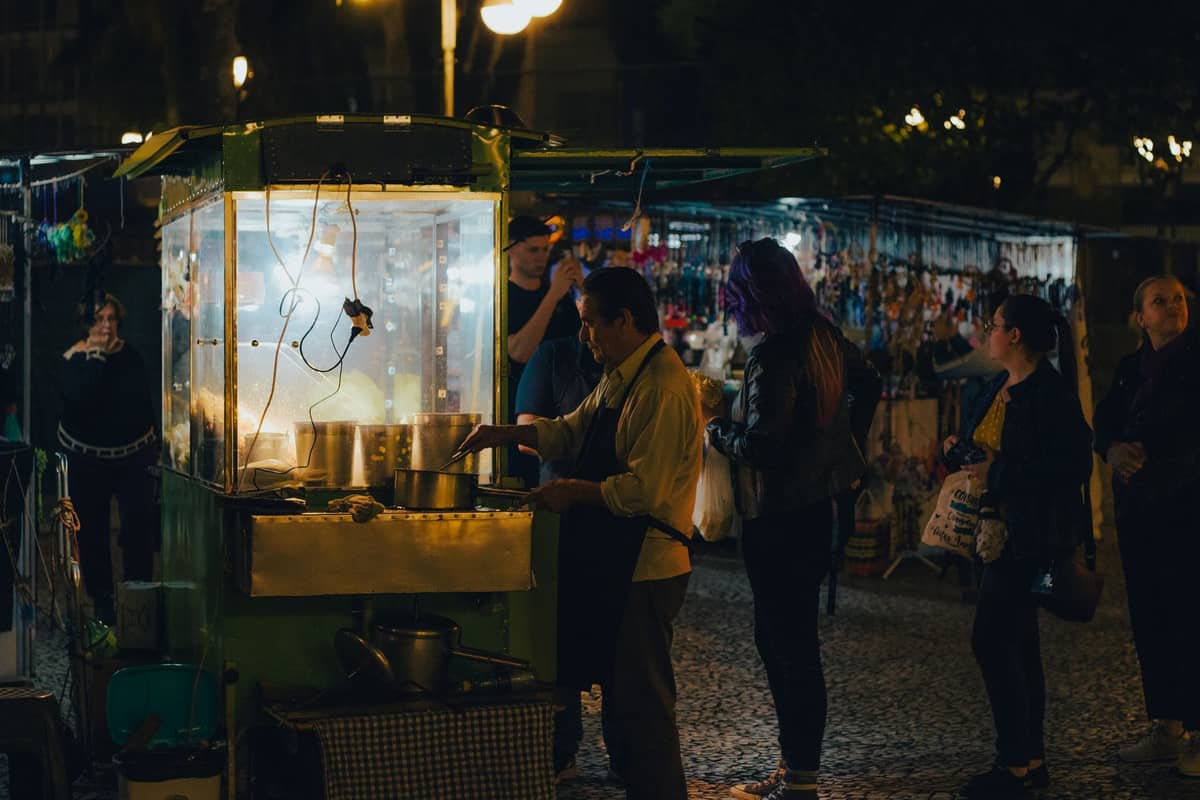
Macau is a Special Administrative Region with a food culture that exists nowhere else on earth. Portuguese colonial history, Cantonese cooking traditions, and decades of trade with India and Southeast Asia produced a cuisine that is genuinely distinct from both mainland China and Portugal. That fusion shows up most clearly not in hotel restaurants, but in the bakeries, stalls, and dai pai dong-style eateries tucked into the historic districts. The best things to do in Macau almost always involve food, and street snacks are the fastest, cheapest way to understand what makes this city different.
The common assumption that Macau's food scene is just casino buffets is wrong. Iconic snacks like pork chop buns, curry beef offal, fish balls, and the city's famous egg tarts are sold by small bakeries and independent vendors concentrated in the historic peninsula and Taipa Village. You don't need a reservation, and you rarely need to spend more than MOP 50 to eat well. That said, prices have crept up. Budget-conscious eaters should note that many signature items and modern dessert shops now charge MOP 30–60 per item, and full sit-down meals easily exceed MOP 180 per person.
ℹ️ Good to know
Macau uses the Macanese pataca (MOP) as its official currency. Hong Kong dollars (HKD) are widely accepted at roughly 1 HKD to 1.03 MOP, so the two are nearly interchangeable for small purchases. Most street stalls don't accept credit cards — carry cash.
The Four Main Street Food Zones
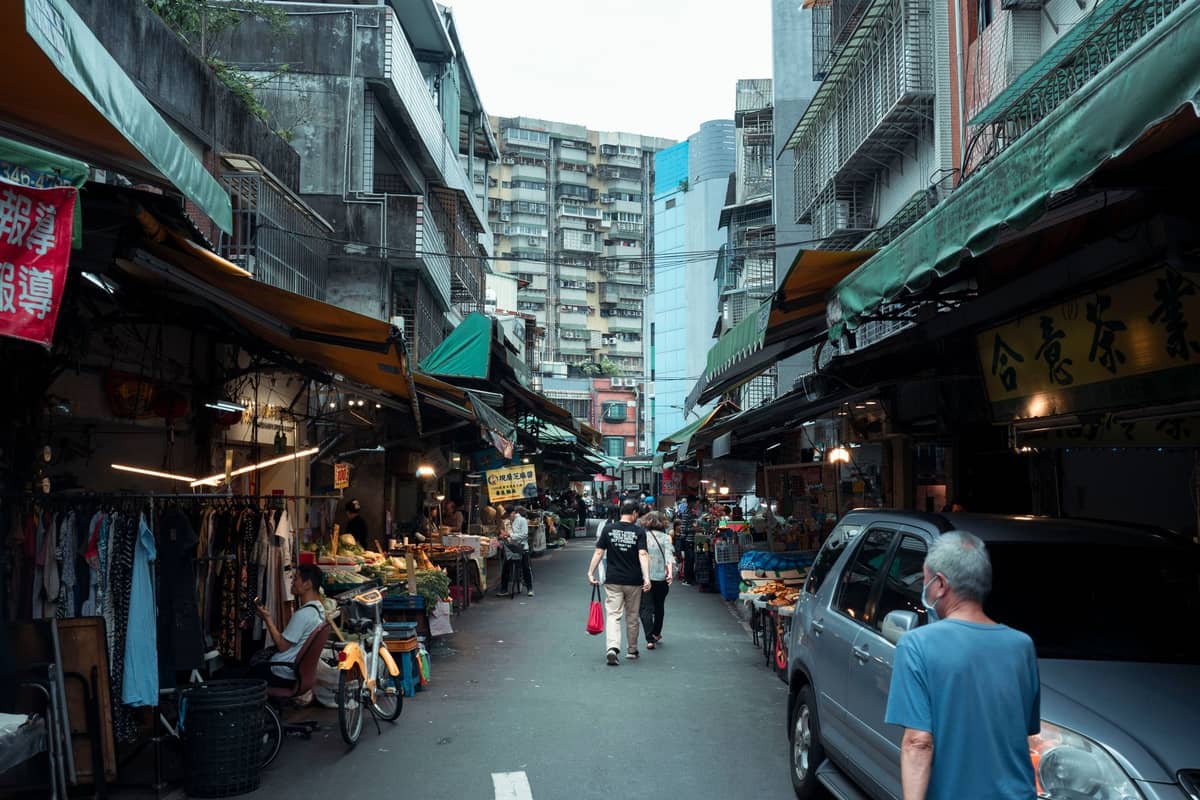
Street food in Macau is not evenly distributed. It concentrates in four distinct areas, each with different food types, hours, and atmospheres. Knowing which zone suits what you're looking for saves a lot of walking.
- Rua do Cunha, Taipa Village The most tourist-friendly food street in Macau, lined with bakeries, snack stalls, and small restaurants. Open roughly 10:00–22:00 daily. Expect pork chop buns, egg tarts, almond cookies, peanut candy, durian desserts, and serradura (Macanese cream pudding). Weekends are significantly more crowded — arrive before noon or after 20:00 to avoid the worst queues.
- Senado Square and surroundings The historic peninsula hub where local Cantonese street food dominates. Curry beef offal cups, fish ball skewers, wonton noodles, and congee are all within a few minutes' walk. The cha chaan teng (Hong Kong-style cafes) here serve all-day breakfasts and milk tea. Most vendors operate from morning through late evening.
- Red Market Area (Mercado Almirante Lacerda) Less visited by tourists but more authentic in terms of daily Cantonese eating habits. Local stalls near the Red Market serve wonton noodles at around MOP 35–45 per bowl, congee, and traditional breakfasts. Best visited in the morning when produce is fresh and stalls are at full operation.
- New Port Night Market (Song Yu Sheng Square) Open daily 15:00–02:00, this is Macau's best late-night street food option. Snacks range from MOP 10–35 and main dishes from MOP 50–150. Note that some stalls close on Sundays. The atmosphere is more local than Taipa Village and the variety is broad — grilled meats, noodles, seafood, and sweets.
💡 Local tip
If your time in Macau is limited to one day, prioritize Taipa Village in the late morning for snacks, then head to Senado Square in the afternoon. The New Port Night Market is the natural end point for an evening food crawl. This route also works well as part of a structured itinerary — the one-day plan in the Macau one-day itinerary guide covers logistics between these zones.
The Essential Snacks: What to Eat and What to Pay
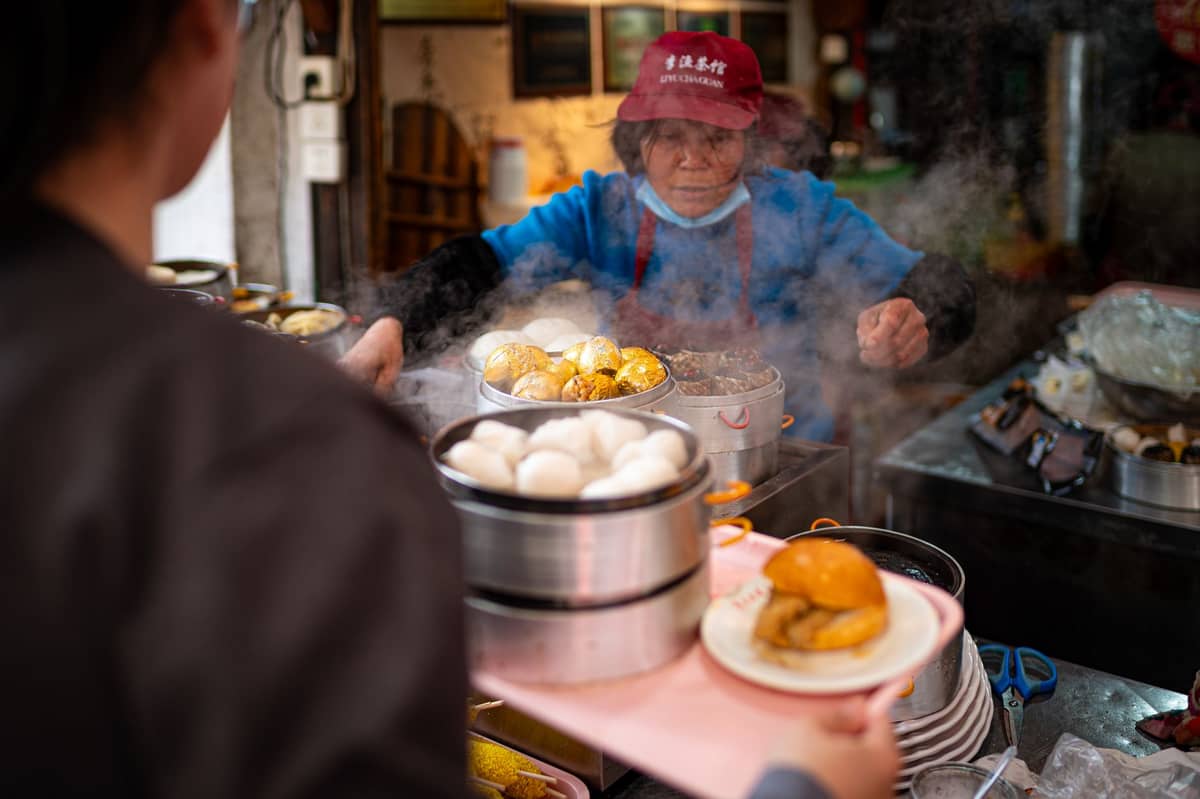
Macau's street food canon is relatively small but highly specific. Each item has a backstory rooted in the city's Portuguese-Chinese history, and the difference in quality between a good version and a mediocre one is noticeable. Here's what to prioritize.
- Portuguese Egg Tart (Pastel de Nata) The single most famous Macau food export. Lord Stow's Bakery in Coloane Village (open 07:00–21:00 daily) created the local version in the 1980s — a flaky pastry shell with a lightly charred, creamy custard filling. Costs around MOP 13 per tart, MOP 70–75 for a box of six. Margaret's Café e Nata near Senado Square is a separate operation with a slightly different, less flaky recipe. Both have loyal followers and both are worth trying. Margaret's is typically open Mon–Fri 08:30–16:30, Sat–Sun 10:00–18:00, closed Wednesdays.
- Pork Chop Bun (Pão com Costeleta de Porco) A bone-in grilled pork chop stuffed into a fluffy Portuguese-style roll. Tai Lei Loi Kei in Taipa Village is the most famous vendor. Prices typically range from MOP 35–55 depending on the style and size. The bun is soft and slightly sweet, the pork is fatty and well-seasoned — it's a genuinely satisfying snack rather than a tourist novelty.
- Curry Beef Offal (Caril de Miudezas) Cups of slow-cooked beef tendon, tripe, and intestines in a mild, slightly spicy curry broth. Widely sold around Senado Square. Expect MOP 40–60 per cup. This is one of Macau's most distinctly Macanese preparations — the Indian spice influence is clear. It's not for everyone, but it's one of the most honest representations of the city's food identity.
- Fish Ball Skewers Bouncy, chewy fish balls on skewers, served plain or with curry or spicy sauce. Found throughout Senado Square and Taipa Village. Prices around MOP 10–20 per skewer — one of the few genuinely cheap street options remaining.
- Wonton Noodles Thin egg noodles in a clear broth with shrimp wontons. Wong Chi Kei near Senado Square is the most-cited specialist, typically open 08:30–23:00. Red Market area stalls offer similar quality at MOP 35–45 per bowl in a more local setting.
- Almond Cookies and Peanut Candy Dry, crumbly almond cookies are a Macau souvenir staple sold in bulk along Rua do Cunha. Quality varies significantly between shops — buy a single piece to test before committing to a box. Peanut candy (made with sesame and peanuts) is similarly packaged for gifts but works well as a snack.
- Serradura (Sawdust Pudding) A Portuguese-origin layered dessert made with crushed Marie biscuits and sweetened cream. More of a sit-down item than a walk-and-eat snack, but widely available in cafes along Rua do Cunha. Light, not too sweet, and a good palate cleanser after heavier savory snacks.
For a full breakdown of Macau's egg tart culture including the history of Lord Stow's and how the recipe differs from Portuguese originals, the Macau egg tarts guide goes into considerably more depth. If you're approaching the food scene on a tight budget, cross-reference with the Macau on a budget guide for the cheapest places to eat across all districts.
⚠️ What to skip
The pork chop bun queue at Tai Lei Loi Kei in Taipa Village can stretch on weekend afternoons. Go before 11:00 or after 20:00 to avoid the worst of it. Similarly, Lord Stow's Bakery in Coloane sees the longest lines on weekends between 11:00 and 15:00.
Seasonal Patterns and the Best Time to Eat Your Way Through Macau
Street food is available year-round in Macau, but when and how you eat it changes depending on the season. Macau has a humid subtropical climate: winters (December–February) are mild and dry with temperatures around 15–18°C, while summers (June–September) are hot and humid with temperatures pushing into the low 30s°C. Typhoon risk peaks July–September, when outdoor stalls can close at short notice.
October through December is widely regarded as the best period for outdoor eating in Macau. Temperatures drop to a comfortable 22–26°C, humidity falls, and the light is good. This is also when hot, broth-heavy dishes like curry beef offal and crab porridge are at their most popular. In summer, cold and semi-frozen options like durian ice cream and serradura cups sold from refrigerated counters dominate the walk-and-eat category. Night markets and open-air stalls extend their hours and draw larger crowds during public holidays including Golden Week and Lunar New Year — which also means longer queues and higher prices at some vendors.
If you're planning a trip around food specifically, the best time to visit Macau aligns well with the street food calendar: autumn offers the best combination of weather, crowd levels, and seasonal dishes. The Chinese New Year period brings special seasonal snacks and a lively atmosphere, but queues at popular spots become significantly longer.
Navigating Between Food Zones: Practical Logistics
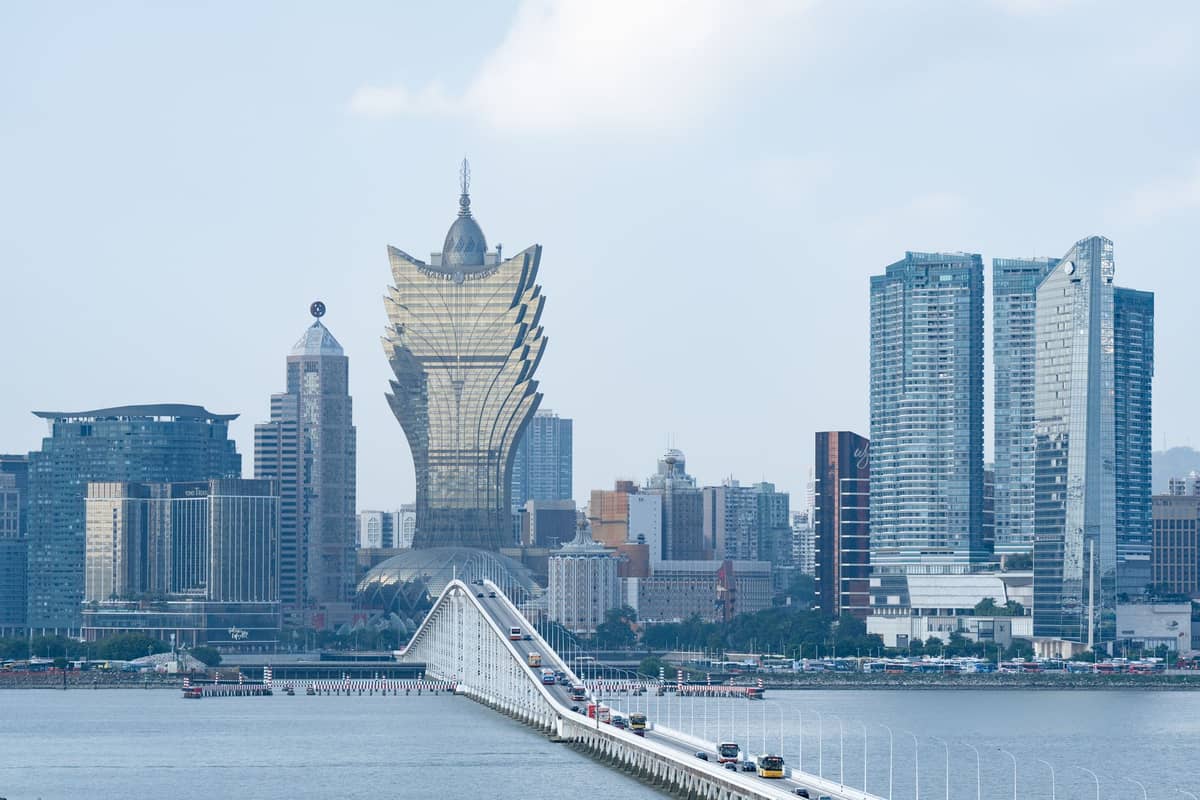
Macau is compact — the entire territory covers only about 32.9 km² — but the main street food zones are spread across the peninsula and Taipa island. Taipa Village is connected to the Macau Peninsula by bridge and is around 15–20 minutes by bus or taxi from Senado Square. Coloane, where Lord Stow's main bakery is located, is a further 10–15 minutes south of Taipa.
Public buses are cheap and cover all main food areas. Many casino hotels also run complimentary shuttle buses between key points — useful for getting between the Cotai Strip and Taipa Village without paying for a taxi. The getting around Macau guide has current route and fare information. For those arriving from Hong Kong, the ferry to the Taipa Ferry Terminal puts you within easy reach of Rua do Cunha before you even check in.
✨ Pro tip
If you're doing a dedicated food crawl, start in Coloane for egg tarts at Lord Stow's, move north through Taipa Village for the pork chop bun and almond cookies mid-morning, then hit Senado Square for a wonton noodle lunch and afternoon offal cup. End at the New Port Night Market for dinner. This route runs south to north and works well using a combination of buses and short taxi rides. Total cost for a full day of eating: roughly MOP 200–300 per person.
Common Myths and Honest Caveats
A few persistent myths about Macau's street food scene are worth addressing directly. First: the idea that street food here is uniformly cheap. While fish ball skewers at MOP 10–20 remain accessible, pork chop buns now run MOP 35–55, egg tarts are MOP 13 each, and curry offal cups hit MOP 40–60. A full day of snacking across multiple zones can easily reach MOP 200–300 per person — not expensive by international standards, but not the bargain many visitors expect.
Second: the assumption that Lord Stow's and Margaret's sell the same egg tart. They do not. Lord Stow's uses a puff pastry shell with a richer, more custard-forward filling that is slightly charred on top. Margaret's has a shorter, less flaky pastry and a smoother custard. Neither is objectively better — they represent genuinely different interpretations — but they are specific destinations with specific queues, not interchangeable street carts. If you only have time for one, Lord Stow's in Coloane is the original and the one most food writers reference.
Third: the sense that Taipa Village is the only place worth visiting. It's the most convenient concentration of snacks, but the Red Market area gives a more accurate picture of how locals actually eat. The Red Market itself is worth a quick walk-through even if you're just after the surrounding breakfast stalls — the produce floors give context to what ends up in the city's kitchens.
FAQ
What is the most famous street food in Macau?
The Portuguese egg tart is Macau's most internationally recognized street food. Lord Stow's Bakery in Coloane Village (open 07:00–21:00 daily) created the local style and remains the benchmark. Pork chop buns from Tai Lei Loi Kei in Taipa Village and curry beef offal cups near Senado Square are considered equally iconic by locals.
How much should I budget for street food in Macau?
Budget around MOP 150–250 for a day of snacking across multiple zones if you're sticking to walk-and-eat items. Fish ball skewers cost MOP 10–20, egg tarts around MOP 13 each, pork chop buns MOP 35–55, and curry offal cups MOP 40–60. Wonton noodles at a sit-down stall run MOP 35–45. Full sit-down meals in Taipa Village restaurants typically cost MOP 180–380 per person.
What is the best area for street food in Macau?
Rua do Cunha in Taipa Village is the most concentrated and convenient food street, open roughly 10:00–22:00 daily. For a more local experience, the area around the Red Market is better for breakfasts, and the New Port Night Market (15:00–02:00 daily) is the top option for late-night eating.
Is Macau street food safe to eat?
Yes. Macau has strict food safety regulations as a developed SAR with robust public health infrastructure. Vendor hygiene at established spots like Lord Stow's, Tai Lei Loi Kei, and Wong Chi Kei is consistently high. At busy markets, use common sense: choose stalls with high turnover and food cooked fresh to order. Drink bottled or filtered water rather than tap water.
Can I do a food tour in Macau?
Organized food tours are available and useful for navigating the street food zones efficiently, particularly if your time is limited. They typically cover Taipa Village, Senado Square, and a few local bakeries in 2–3 hours. That said, the zones are compact enough that an independent self-guided food crawl works well if you use the routing logic above. The Macau food guide covers restaurant options and broader culinary context for those who want to go beyond street snacks.