Zhongshan District sits at the geographical and cultural heart of Taipei, mixing green riverside parks, historic shrines, world-class museums, and a compact shopping corridor that runs between two metro stations. It draws a broad mix of visitors and locals, from business travelers and temple devotees to design-conscious shoppers and café-hoppers.
Zhongshan District is central Taipei at its most layered: a place where a Qing-era riverside neighborhood, a postwar business district, and a contemporary gallery and café scene exist within a short walk of each other. It lacks the flash of Xinyi or the gritty history of Wanhua, but it rewards travelers who like their cities dense with texture rather than defined by a single landmark.
Orientation
Zhongshan District occupies a roughly rectangular strip of central-northern Taipei, sandwiched between the Keelung River to the north and Jianguo North Road to the east. To the south it borders Zhongzheng District and to the north it transitions into Shilin District around the Jiantan area. Its western fringe runs directly alongside Datong District, which means the old commercial streets of Dihua Street are just across the district line and effectively walkable from Zhongshan's lower end.
The district's internal geography is easier to read than its administrative boundaries suggest. Think of it in three loose horizontal bands. The southern band, around Zhongshan and Shuanglian MRT stations, is dense urban commercial territory: the Miniatures Museum of Taiwan, the underground Zhongshan Metro Mall, and the tree-lined Xinzhongshan Linear Park all sit here. The middle band, centered roughly on Minquan Road, is where Xingtian Temple anchors a working residential and office district. The northern band, around Yuanshan MRT station, opens up toward the Keelung River, the Taipei Fine Arts Museum, and the stately grounds of the National Revolutionary Martyrs' Shrine.
Zhongshan also has direct pedestrian access to the historic Dadaocheng district and Dihua Street to the southwest, making it a practical base for anyone wanting to cover both the older merchant quarter and the contemporary city without constant metro transfers.
Character & Atmosphere
Zhongshan does not announce itself the way some Taipei districts do. There is no single enormous landmark that defines it from a distance. Instead, the district's character accumulates through details: the canopy of plane trees along Xinzhongshan Linear Park filtering afternoon light onto café terraces, the quiet of Xingtian Temple's incense-free forecourt at any hour, the mix of luxury hotel lobbies and narrow alleys lined with decades-old noodle shops.
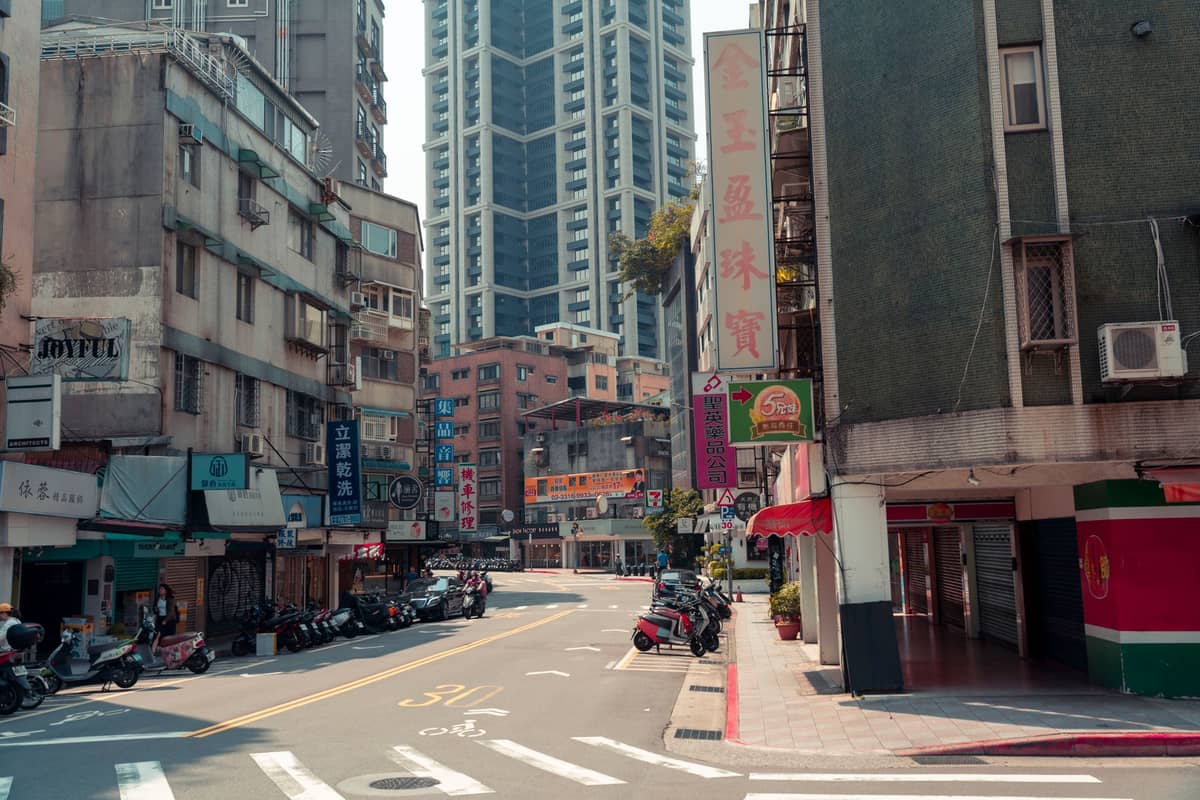
Mornings in the Shuanglian area carry the particular energy of a Taipei food market at full pace. The Shuanglian Morning Market on Chongqing North Road is one of the city's most active, with vendors selling wet goods, produce, and prepared breakfast foods to locals doing their daily shopping before nine. The streets here are narrow and crowded by 7am, and the air combines the sharp tang of fresh tofu with the sweetness of guabao steam. By mid-morning, the tempo eases and the area settles into its weekday rhythm of office workers and shopkeepers.
The Xinzhongshan Linear Park corridor between Shuanglian and Zhongshan stations is where the district shows its more curated, design-forward side. Concept stores, independent bookshops, and Japanese-style dessert cafés cluster along and just off the park's spine. On weekday afternoons this strip is relatively calm. On weekend afternoons it fills with younger Taipei residents browsing slowly and photographing the park's sculpture installations. The pace is leisurely in a way that makes it easy to forget you are two minutes' walk from the city's largest underground shopping arcade.
After dark the district splits in character depending on which part you are in. The blocks east of Zhongshan North Road around the Nanjing and Minquan corridors become a hotel and bar district with a recognizable international business-travel atmosphere: cocktail bars, Japanese izakaya, and late-night ramen shops. The Shuanglian area, meanwhile, stays quieter, with locals eating at neighborhood restaurants rather than the curated venues catering to visitors. Neither feels unsafe at any hour. Zhongshan is not a district with a notable nightlife problem or rough pockets; the main inconveniences are traffic noise near the larger arterials and the crowds at Xingtian Temple on weekends.
ℹ️ Good to know
Xingtian Temple operates around the clock and sees its highest footfall on weekend mornings and on the 1st and 15th of each lunar month. If you want to observe the temple without navigating large crowds, a weekday late afternoon visit is ideal.
What to See & Do
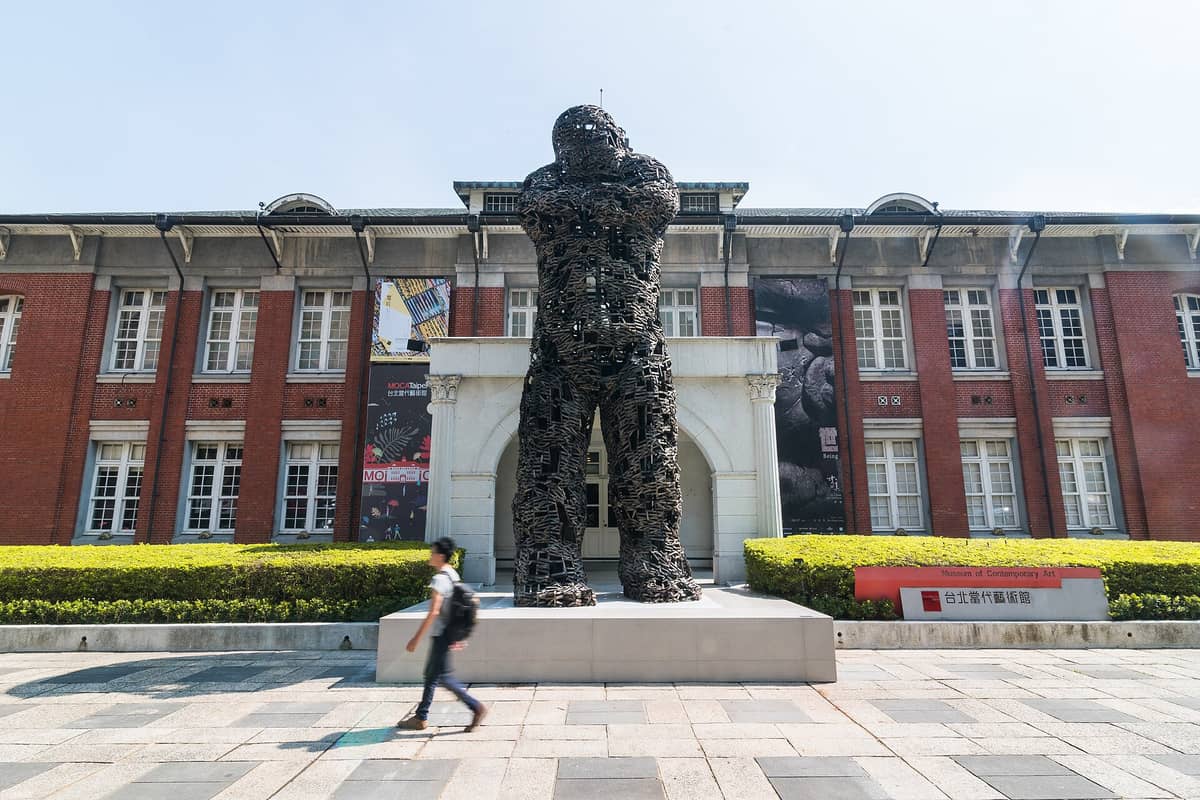
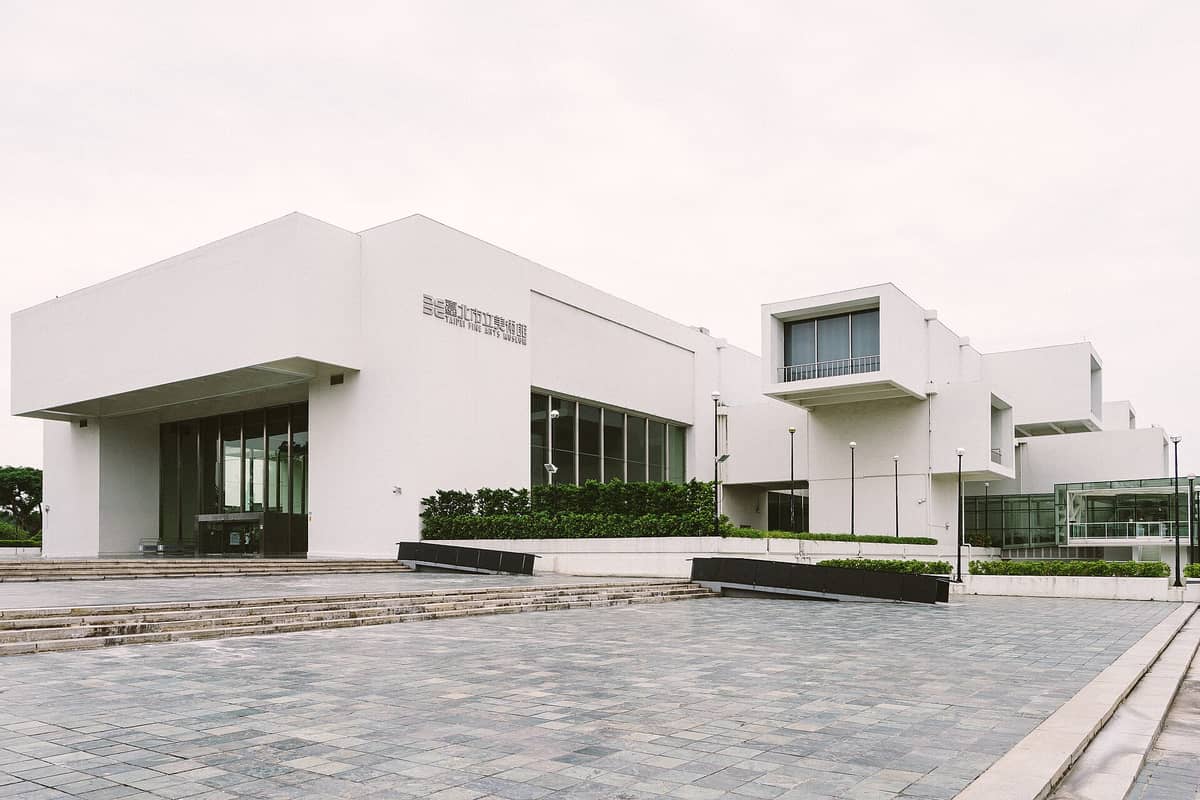
The Taipei Fine Arts Museum on Zhongshan North Road Section 3 is one of Taiwan's premier contemporary art institutions. The building itself, a grid of intersecting white cubes, is worth pausing to look at from the riverside park in front of it. Inside, the permanent collection covers Taiwanese and international modern art, and the temporary exhibitions regularly draw international loans. It is closed on Mondays.
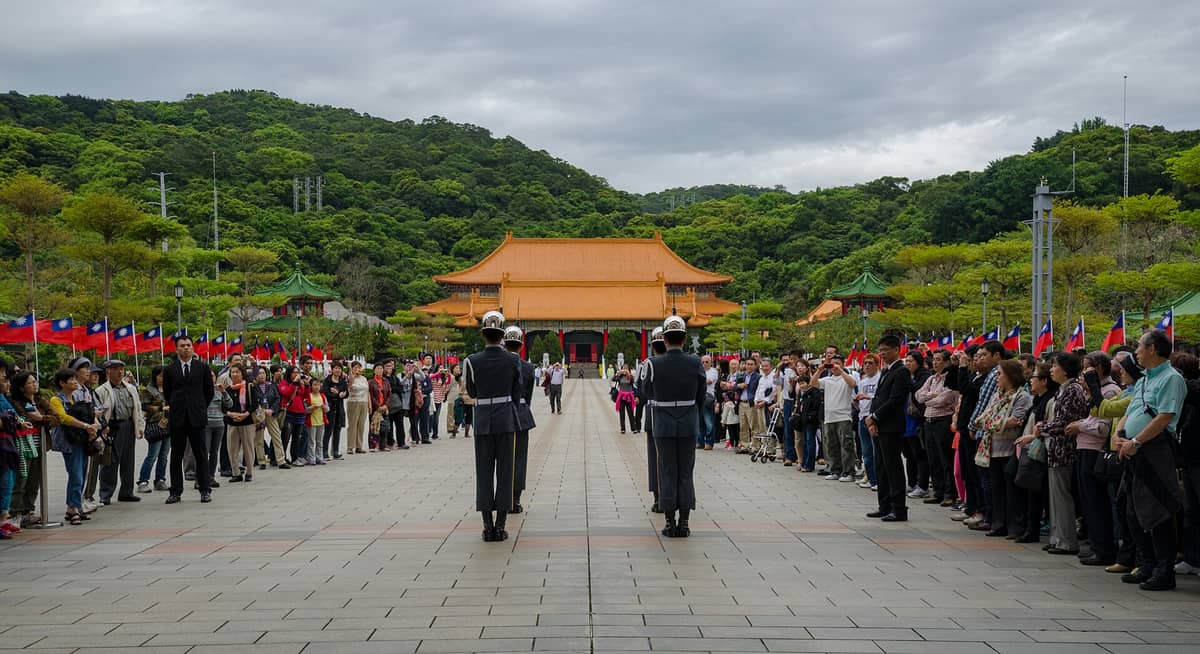
Just south of the Fine Arts Museum, the National Revolutionary Martyrs' Shrine sits on a low wooded hillside overlooking the Keelung River. The complex is modeled on the Hall of Supreme Harmony in Beijing's Forbidden City and is guarded by ceremonially dressed soldiers whose hourly changing-of-the-guard draws visitors who might otherwise overlook this part of the district. The grounds are free to enter and significantly less crowded than the Chiang Kai-shek Memorial.
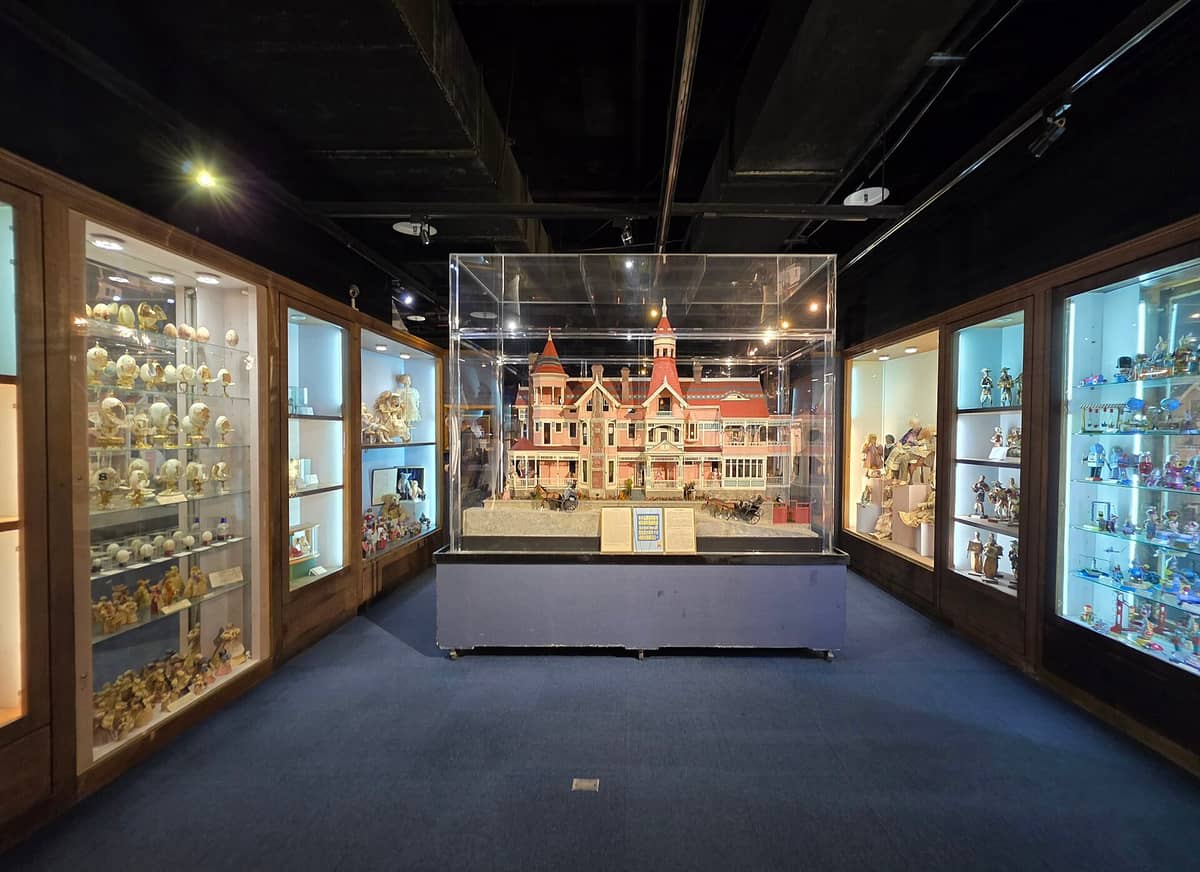
The Miniatures Museum of Taiwan on Jianguo North Road is one of Taipei's more unexpected cultural stops. The collection of miniature room sets and dioramas, some constructed at 1:12 scale with extraordinary detail, appeals to adults as much as children and takes about 90 minutes to see properly. It is rarely overrun and makes a good option on a rainy afternoon.
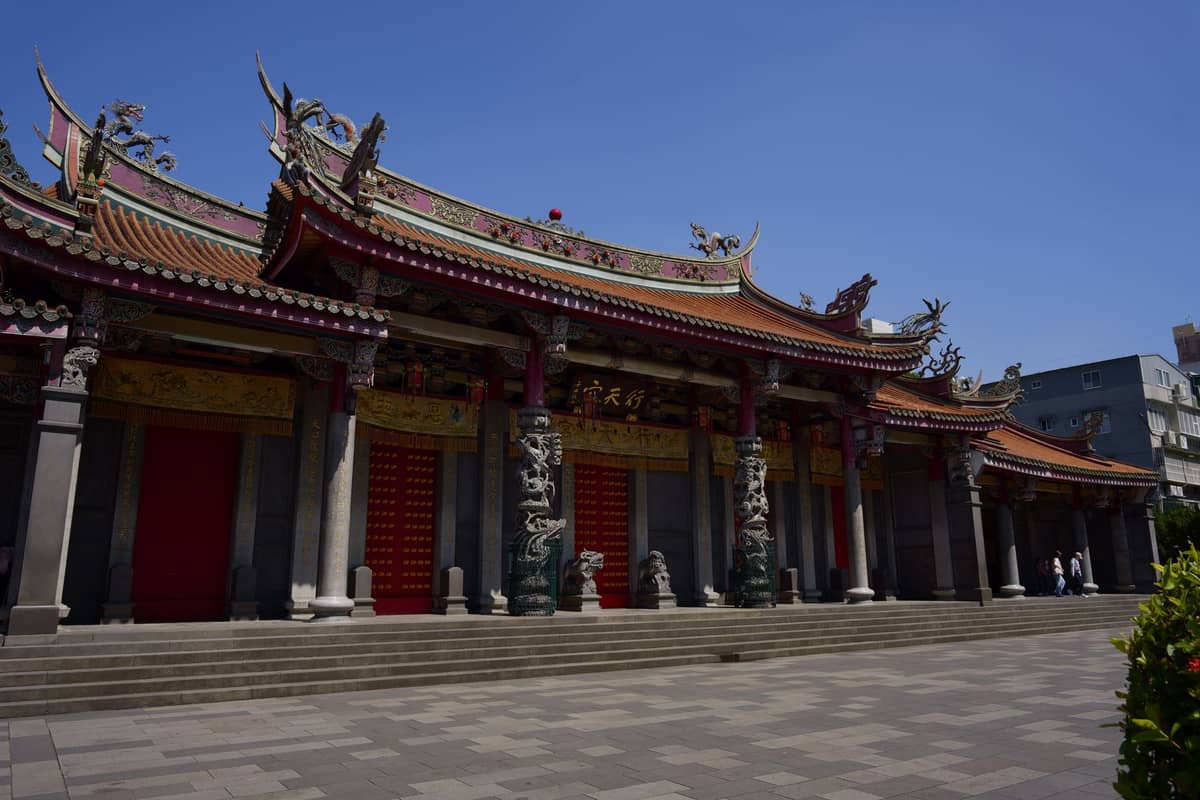
Xingtian Temple, at the intersection of Minquan East Road and Songjiang Road, is dedicated to Guan Di, the deity of commerce and righteousness. It draws a genuinely diverse crowd of businesspeople seeking blessings before deals, families fulfilling vows, and tourists observing the ritual of joss paper offering. The Xingtian Temple experience is distinctly different from the tourist-facing atmosphere of Longshan Temple in Wanhua: this is a working devotional site where locals outnumber visitors, and the atmosphere is correspondingly more immediate.
Xinzhongshan Linear Park: the green corridor linking Shuanglian and Zhongshan MRT stations, lined with public art, cafés, and independent stores
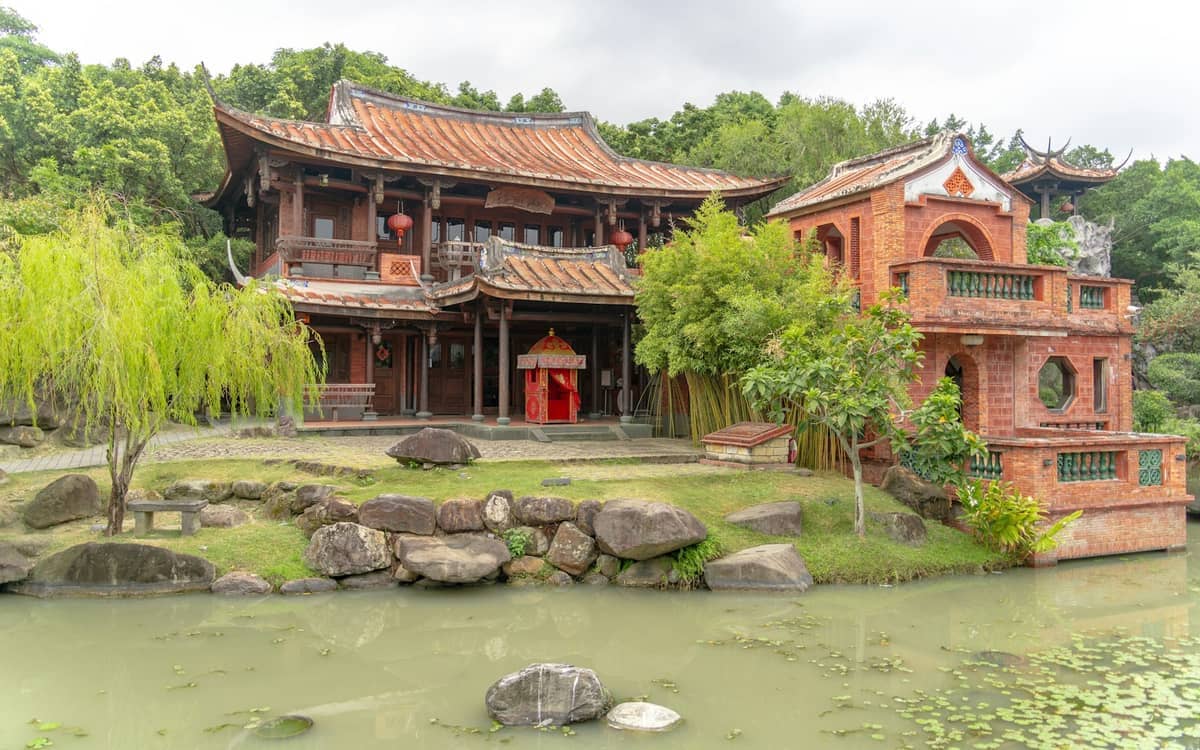
Lin An Tai Historical House: a preserved Qing-dynasty merchant residence relocated to the riverside park near Dajia, one of the best examples of traditional Fujian architecture in the city
Zhongshan Fine Arts Park: a smaller park between the Fine Arts Museum and the riverside with exhibition pavilions and open lawns
Dajia Riverside Park: a broad riverside green space popular for cycling, jogging, and weekend picnics along the Keelung River
SPOT Taipei (Taipei Film House): a converted Japanese colonial-era residence now operating as an arthouse cinema and café near Zhongshan North Road
💡 Local tip
The Lin An Tai Historical House is free to enter and rarely crowded. Combine it with a walk along Dajia Riverside Park for a quiet hour away from the commercial core of Zhongshan.
Eating & Drinking
Zhongshan's food scene is wide in range but uneven in the way most central city districts tend to be. You will find excellent meals here at every price point, but the district rewards those who leave the main Zhongshan North Road corridor and look for the smaller side streets where local restaurants have been serving the same dishes for decades.
The Shuanglian area concentrates some of the district's best casual eating. The morning market on Chongqing North Road gives way by late morning to noodle shops and beef soup restaurants that serve through the lunch rush. This stretch is almost entirely local in orientation: menus may not have English, prices are low, and the dishes are the kind of straightforward Taiwanese comfort food that rarely makes it onto international travel lists but represents the city's actual daily diet.
The Xinzhongshan Linear Park corridor pulls in a different demographic and a different food style. Cafés with third-wave coffee programs, Japanese-influenced dessert shops, and small-plate restaurants catering to the neighborhood's design-conscious residents cluster here. Prices are higher than the Shuanglian end, portions are smaller, and the spaces are frequently photographed. It is good food, genuinely, but the atmosphere is self-consciously curated in a way that not every traveler will find appealing.
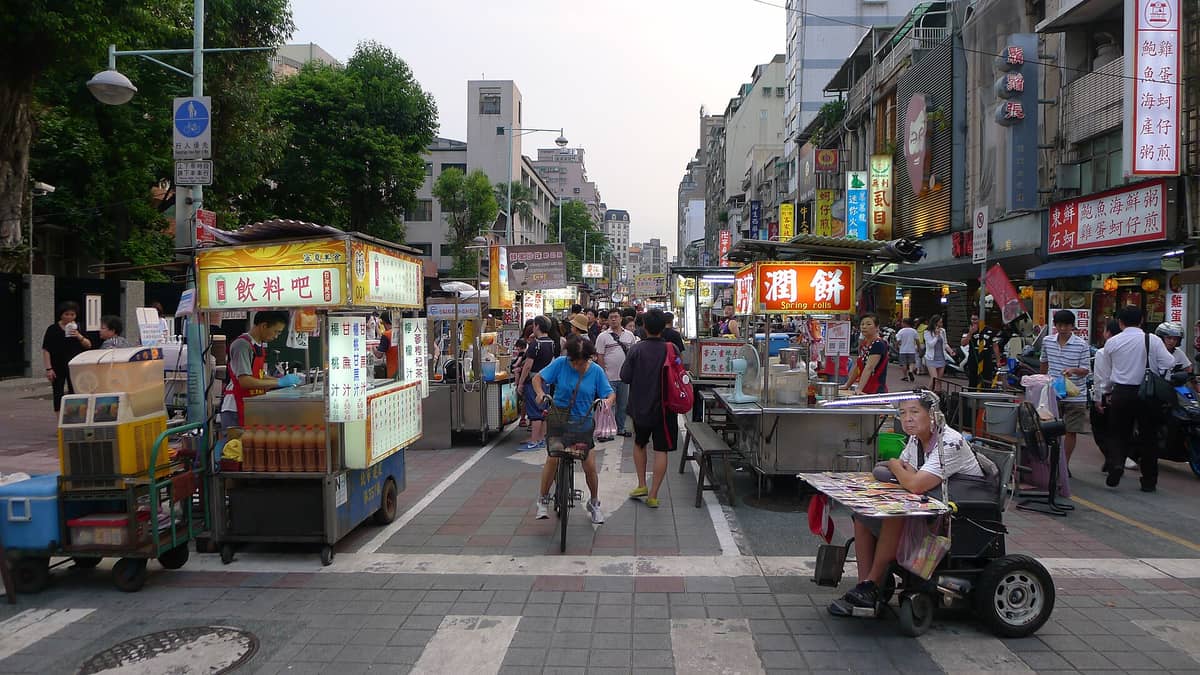
East of Songjiang Road, the blocks around Nanjing and Minquan roads serve the hotel district and its international business clientele. This is where you find Japanese izakaya, Korean barbecue restaurants, and cocktail bars with long whisky lists. The Shuangcheng Street Night Market, in the northern part of the district, is a smaller and less tourist-oriented night market than Shilin or Raohe, worth visiting if you are already in the northern part of Zhongshan.
For a broader overview of where Zhongshan fits into Taipei's food geography, the Taipei food guide covers the city's major eating districts and street food traditions in detail.
Getting There & Around
Zhongshan District is exceptionally well-served by the Taipei Metro. The Tamsui-Xinyi Line (Red Line) runs directly through the district's commercial spine with stops at Yuanshan, Shuanglian, and Zhongshan stations. Yuanshan sits at the northern end of the district near the Fine Arts Museum and the riverside parks. Shuanglian serves the morning market area and the northern end of the linear park. Zhongshan station, near the intersection of Zhongshan North Road and Nanjing West Road, is a Red Line and Green Line interchange. For the Blue Line (Bannan Line) toward Xinyi or Banqiao, transfer at Taipei Main Station, one stop south.
The Songshan-Xindian Line (Green Line) provides additional coverage on the eastern edge of the district. Xingtian Temple station on this line puts you directly at the temple entrance. Songjiang Nanjing station, where the Green and Orange lines intersect, is a useful hub for the central-east part of Zhongshan around the hotel and business district.
Walking is practical for most movements within the district's commercial core. Shuanglian to Zhongshan stations along the linear park is a pleasant ten to twelve minute walk. Zhongshan station to Xingtian Temple takes about twenty minutes on foot along Songjiang Road. The Taipei Fine Arts Museum is roughly fifteen minutes' walk north from Shuanglian station along Zhongshan North Road.
Youbike, Taipei's public bike-share system, has docking stations throughout the district and is a practical option for the riverside park paths and the broader grid of the middle district. For transit across the city, the Taipei transit guide covers the EasyCard system, MRT lines, and bus options in full detail.
💡 Local tip
Taipei Songshan Airport is just east of Zhongshan District's boundary in Songshan District, roughly 10 to 15 minutes by taxi or MRT depending on your exact starting point. If you are arriving at Songshan rather than Taoyuan, Zhongshan is one of the most convenient districts in the city for your accommodation.
Where to Stay
Zhongshan District has one of the highest concentrations of hotels in Taipei, ranging from international business chains on the main Zhongshan North Road corridor to smaller boutique properties tucked into the side streets around the linear park. The district suits a broad range of traveler types, but it works especially well as a base for first-time visitors who want central access to multiple parts of the city without being in the commercial intensity of the Xinyi or Ximending areas.
The blocks immediately west of Zhongshan North Road between Shuanglian and Zhongshan stations combine reasonable noise levels with walkability to the park, the morning market, and direct metro access. This is probably the most practical part of the district for leisure travelers. The Nanjing and Minquan corridor to the east has a higher density of business hotels and is slightly noisier at street level due to traffic, but puts you close to Xingtian Temple and the eastern Green Line stations.
The northern end of the district around Yuanshan station offers a quieter environment near the riverside parks and the Fine Arts Museum, with a handful of larger resort-style hotels including the Grand Hotel, which occupies a dramatic Chinese palace-style building on the hill above the Keelung River. This area is less convenient for the southern and western parts of the city but is a reasonable choice for those prioritizing the museum cluster and riverside access.
For a full breakdown of how Zhongshan compares to other Taipei districts for accommodation, see the where to stay in Taipei guide.
⚠️ What to skip
Several streets directly adjacent to the Nanjing West Road and the elevated highway sections carry significant nighttime traffic noise. If you are a light sleeper, ask specifically about upper-floor rooms or street-facing windows when booking hotels on the major arterials.
Practical Notes
Zhongshan is a year-round destination within a year-round city, but like all of Taipei it is at its most comfortable between October and April, when temperatures are mild and rainfall is lower. The best time to visit Taipei guide covers seasonal patterns across the city in more detail. Summer visits are entirely viable but expect heat, humidity, and the occasional typhoon-related disruption between July and September.
The district is generally safe at all hours. Like any central urban area it warrants normal city awareness, particularly around the busier nightlife blocks in the late evening, but major travel resources do not flag any specific safety concerns for Zhongshan. The main practical irritation is navigating the district during heavy rain without an umbrella: the side streets lack the arcade coverage that some other central Taipei areas provide, so the Zhongshan Metro Mall underground walkway becomes genuinely useful on wet days.
Tipping is not customary in Taiwan. Mandarin is the main language of daily life, though English signage is good throughout the tourist-facing parts of the district and most hotel and museum staff speak functional English. Emergency numbers in Taiwan are 110 for police and 119 for fire and ambulance.
TL;DR
Zhongshan District is the most balanced central base in Taipei: close to the old city, well-connected by multiple MRT lines, and dense with parks, museums, temples, and food at every price point.
Best for: first-time Taipei visitors, business travelers, museum-goers, and anyone wanting walkable access to both the historic Dadaocheng area and the contemporary café and design scene along the linear park.
The Taipei Fine Arts Museum, Xingtian Temple, Lin An Tai Historical House, and the Xinzhongshan Linear Park corridor are the district's four strongest draws.
Not ideal for travelers who prioritize Taipei's nightlife core (Xinyi is better), budget hostel culture (Ximending has more options), or deep immersion in traditional temple streets (Wanhua is the right choice for that).
Transit access is excellent: multiple Red, Green, and Orange Line stations make the rest of the city easy to reach, and Songshan Airport is within 15 minutes of most of the district.
Taipei's humid subtropical climate means the difference between a miserable typhoon-soaked August and a crisp, sunny November can be dramatic. This guide breaks down every month's weather, crowd levels, and key events so you can pick the ideal window for your trip.
Taipei sits within easy reach of mountains, coastlines, hot spring valleys, and historic mining towns. These are the day trips that reward the effort, whether you have a few hours or a full day to spare.
Taipei is one of Asia's most budget-friendly capitals, with an impressive number of world-class attractions that are completely free. From grand ceremonial plazas and centuries-old temples to volcanic national parks and lively night markets, here's how to see the best of Taipei without spending a cent on entry fees.
Taipei has one of the most efficient urban transport networks in Asia. This guide covers everything you need to navigate the city confidently: the MRT system, city buses, Taoyuan Airport connections, EasyCard setup, and the common mistakes that trip up first-time visitors.
Taipei is served by two airports with very different roles. Taiwan Taoyuan International Airport handles nearly all international traffic, while Taipei Songshan Airport serves domestic and select regional routes. This guide breaks down every transport option, with fares, journey times, and clear guidance on which route suits your trip.
Taipei is a strong remote-work base: fast fiber internet, coworking spaces at every budget, a world-class food scene, and a cost of living that still undercuts Tokyo or Singapore. This guide covers what you need to know before you land.
Taipei's food culture runs deep, from neighborhood beef noodle shops and temple-front snack stalls to dumpling houses with decades of history. This guide covers the essential dishes to try, where to find them, what to pay, and how to navigate the city's famous night markets without the rookie mistakes.
Taipei is one of Asia's most walkable cities, and its hiking scene is just as impressive as its food and temples. From quick city-fringe scrambles with skyline payoffs to full-day volcanic summit routes, these are the best trails in and around Taipei, organized by type and difficulty.
Taipei is one of Asia's great hot spring cities, with soaking options ranging from NT$60 public baths to hillside resort ryokans. This guide covers the best hot spring areas, scenic hikes through volcanic terrain, and nearby attractions to round out a full day trip.
Spring in Taipei runs from February through April and delivers cherry blossoms, flower festivals, and some of the most comfortable weather of the year. This guide breaks down exactly when things bloom, which events are worth your time, and what practical realities to plan around.
Taipei's winter is cooler and damper than most visitors expect, but rarely cold enough to slow you down. This guide covers month-by-month weather, what to wear, the best seasonal activities, Lunar New Year logistics, and straightforward notes on crowds and costs.
Three days is enough time to get a genuine feel for Taipei — its historic temples, modern skyline, legendary food scene, and surprisingly accessible nature. This itinerary is structured by neighborhood logic, not wishful thinking, so you spend less time commuting and more time eating.
Everything you need to plan a DIY day trip from Taipei to Jiufen Old Street, Jinguashi's Gold Museum, and the dramatic Gold Coast. Covers transport routes, fares, opening hours, seasonal conditions, and a realistic itinerary to get the most out of your Taiwan trip.
The Taipei Lantern Festival, the Pingxi Sky Lantern Festival, and daily lantern releases at Shifen are three separate events that confuse even experienced Taiwan travelers. This guide breaks down the differences, dates, logistics, and crowd realities so you can plan the right experience for your trip.
Taipei is a serious museum city. From one of the world's great repositories of Chinese art to intimate colonial-era buildings turned into creative spaces, these are the best museums in Taipei across history, art, science, and culture.
Taipei's night markets are the city's social and culinary heartbeat. This guide covers the best markets for food, atmosphere, and local culture, from the city's largest to its most intimate neighborhood spots.
Taipei after dark offers far more than club music and cocktails. From steaming night market stalls to underground DJ sets and rooftop bars with views of Taipei 101, this guide covers every layer of the city's after-hours scene — with specific districts, realistic timing, and a frank take on what's worth your night.
The Taipei north coast loop — Yehliu Geopark, Shifen on the Pingxi Line, and Keelung's Miaokou Night Market — is one of Taiwan's most rewarding full-day excursions. This guide covers transport logistics, admission prices, realistic timing, and what to skip.
Taipei is one of Asia's most wallet-friendly capitals, but only if you know where the savings actually are. This guide breaks down transport passes, free attractions, budget eats, and the seasonal pricing patterns that most travelers miss.
Seven days is enough time to see Taipei's historic core, explore its best neighborhoods, take a day trip or two, and still slow down enough to actually enjoy it. This itinerary is built around the MRT, real opening hours, and clear priorities — not a checklist of every attraction in the city.
For a dense capital, Taipei keeps a surprising amount of green space within easy reach: volcanic national parks, botanical gardens, and 112 kilometers of riverside cycling trails. This guide covers the best parks and outdoor spaces for every pace.
Taipei Pride draws over 150,000 people to the streets of Taipei, Taiwan every October, making it the largest LGBTQ+ pride event in Asia. This guide covers everything: parade dates, routes, costs, accommodation tips, and how to make the most of the full weekend.
Taipei consistently ranks among the safest major cities in Asia, with major Western governments advising only normal precautions. That said, scams, weather risks, and a few specific situations are worth knowing about before you arrive. This guide covers everything honestly.
Taipei rewards shoppers at every budget, from street-food stalls and vintage clothing lanes to flagship department stores stacked around Taipei 101. This guide breaks down where to shop, when to go, and what's actually worth your time.
Taipei sits at the heart of one of the world's great tea cultures. This guide covers everything from riding the Maokong Gondola to the hilltop teahouses of Wenshan District, the correct gongfu cha brewing ritual, and where to find Taiwan's finest Tieguanyin and Baozhong oolong. Practical, specific, and free of fluff.
Taipei's temple culture runs deep. This guide covers the city's most rewarding temples, from the incense-thick halls of Longshan to the serene courtyards of the Confucius Temple, with practical advice on when to go and how to get there.
Taipei rewards those who look up and climb high. From the world-famous observatory at Taipei 101 to free sunset hikes on Elephant Mountain, this guide covers every angle of the city's skyline, from polished paid decks to wild volcanic summits.
Taipei rewards walkers more than almost any other Asian capital. This guide breaks down the best self-guided walking routes by district, with realistic distances, timing advice, where to pick up free maps, and frank notes on what to skip.
Two days in Taipei is enough to see the city's iconic skyline, explore its best temples and night markets, and eat very well. This guide lays out a practical, district-by-district itinerary with real logistics, current prices, and frank notes on what's worth your limited time.
Taipei is one of Asia's most underrated family destinations. Affordable attractions, an easy metro system, and a culture that genuinely welcomes children make it a smooth trip for families of all ages. This guide covers the best things to do in Taipei with kids, with current pricing, practical logistics, and seasonal advice built in.
Taipei packs an extraordinary range of experiences into 271 km²: world-class museums, mountain hikes accessible by MRT, some of Asia's best street food, and century-old temples sitting next to glass skyscrapers. This guide cuts through the noise with specific prices, clear assessments, and practical logistics so you can spend less time planning and more time exploring.
Choosing where to stay in Taipei shapes your entire trip. This guide breaks down the city's key neighborhoods by budget, vibe, and MRT access, with candid trade-offs for every type of traveler.