Miniatures Museum of Taiwan: A World Built at 1:12 Scale
Tucked one floor below street level in Taipei's Zhongshan District, the Miniatures Museum of Taiwan houses an extraordinary collection of hand-crafted scale models, from Victorian manor houses to ornate European theaters, each built with obsessive precision. It is a quiet, unhurried attraction that rewards careful looking and suits travelers who want something genuinely different from the usual temple-and-night-market circuit.
Quick Facts
- Location
- B1, No. 96, Sec. 1, Jianguo N. Rd., Zhongshan District, Taipei
- Getting There
- Songjiang Nanjing Station (Songshan-Xindian / Zhonghe-Xinlu lines), exits 4 or 5, approx. 8-min walk
- Time Needed
- 1 to 2 hours
- Cost
- Approx. NT$250 adult; discounts for children, seniors, and students (verify at venue or online)
- Best for
- Families with older children, architecture enthusiasts, slow-travel days, rainy afternoons
- Official website
- www.mmot.com.tw
What the Miniatures Museum of Taiwan Actually Is
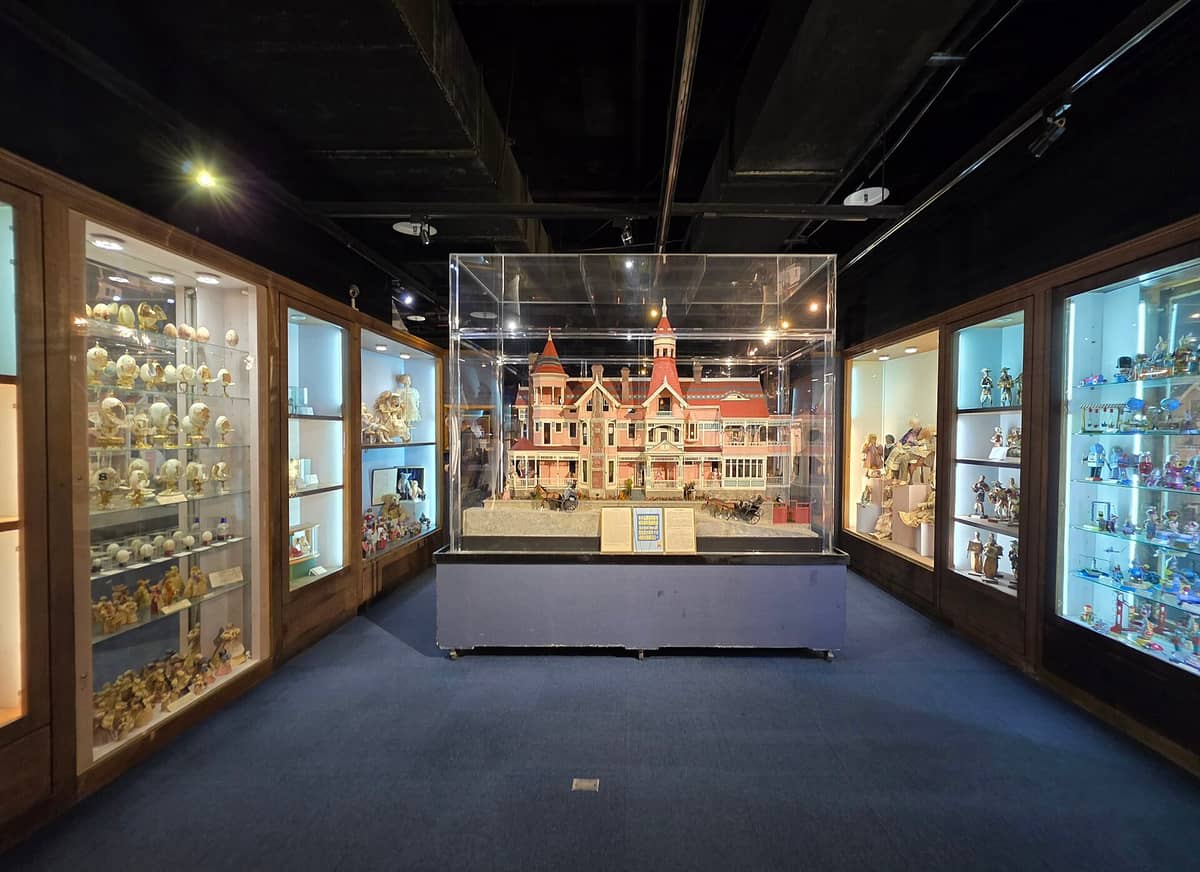
The Miniatures Museum of Taiwan, known locally as 袖珍博物館, opened in 1997 and remains the only dedicated miniatures museum in Taiwan. It occupies a basement-level space in a commercial building on Jianguo North Road, which means you descend from the ordinary Zhongshan streetscape into something that feels completely removed from the city above.
The collection focuses on scale models built at approximately 1:12 ratio, meaning one inch in the model equals one foot in real life. What fills the display cases is not the toy-store kind of dollhouse. These are hand-crafted environments with working lights, period-accurate furniture, fabric upholstery sewn by hand, and details so fine they require the magnifying lenses provided at some exhibits. Rooms replicate European salons, English country estates, American colonial interiors, and East Asian spaces with equal care.
💡 Local tip
Bring reading glasses or use the magnifying lenses available at exhibits. The finest details, such as miniature books with legible spines and hand-stitched rugs, are easy to miss at a glance.
The Experience Room by Room
The layout guides visitors through a series of climate-controlled galleries, each with low ambient lighting and individual display cases lit from within. The lighting choice is deliberate: it draws the eye into each scene and suppresses the surrounding world. The effect is closer to looking through a theater proscenium than browsing a conventional museum.
Some displays are purely architectural, showing facades and cross-sections of manor houses or cathedrals. Others are fully furnished interior scenes, staged as if a tiny household has just stepped out. You might see a breakfast table set with miniature silverware, a study with an open book on the desk, or a kitchen with copper pots hanging above a working fireplace model. The cumulative effect of passing from room to room is of traveling through periods and continents without moving more than a few steps.
One of the most frequently photographed sections features large-scale diorama builds, where entire building exteriors are reproduced with carved stone textures and period signage. The detail at ground level, things like weathered doorsteps and window boxes with individual flowers, is where the craftsmanship becomes undeniable.
How the Visit Changes by Time of Day
The museum opens Tuesday through Sunday at 10:00 and closes at 18:00, with Mondays closed. Because the space is underground and artificially lit throughout, the time of day outside does not affect the interior atmosphere. What does change is crowd density.
Weekday mornings between 10:00 and 12:00 are reliably quiet. School groups occasionally visit mid-morning on weekdays, which can temporarily crowd the narrower gallery corridors. Weekend afternoons from roughly 13:00 onward bring families with younger children, and the audio environment shifts from near-silent to a low hum of conversation. For anyone who wants to linger at each case without feeling rushed, a Tuesday or Wednesday morning visit is the cleanest option.
Rainy days in Taipei drive more visitors indoors, and the Miniatures Museum benefits disproportionately from bad weather: it is one of the few Zhongshan attractions where rain makes no difference whatsoever to the experience. If you are caught in a downpour near the Songjiang Nanjing area, this is one of the better places to wait it out productively.
ℹ️ Good to know
The museum is fully wheelchair accessible. An accessible elevator is available. The basement layout is level throughout, with no steps between gallery sections.
Getting There and the Surrounding Area
The museum sits at B1, No. 96, Sec. 1, Jianguo North Road in Zhongshan District. The most practical approach is via Songjiang Nanjing MRT Station, served by both the Songshan-Xindian Line and the Zhonghe-Xinlu Line, making it reachable from most of central Taipei with at most one transfer. Exits 4 or 5 put you on the correct side of the intersection, and the walk is roughly eight minutes along a straightforward route.
Zhongshan District surrounds the museum with a mix of business hotels, mid-range restaurants, and quiet side streets. It lacks the concentrated tourist density of Ximending or the landmark scale of Taipei 101, which works in the museum's favor: the neighborhood does not generate large foot traffic toward this particular block, so the entrance rarely has a queue.
If you are combining this visit with other Zhongshan-area stops, the Museum of Contemporary Art Taipei is a reasonable pairing: it covers a different register entirely but shares the neighborhood and keeps the day centered on indoor, air-conditioned spaces, which matters during Taipei's hot and humid summers.
Practical Details and What to Bring
Admission is approximately NT$250 for adults, with reduced rates for children, seniors, and students. Prices should be confirmed at the venue or on the official website before visiting, as rates are subject to change. The museum's official site is mmot.com.tw.
Photography is generally permitted throughout the galleries for personal use, though flash photography is typically restricted around the more delicate exhibits. A smartphone with a decent low-light camera will serve you well here: the internal case lighting creates an even, warm exposure that suits close-up photography without additional gear. A small tripod or grip is worth considering if you want sharp macro shots, since the ambient light, while atmospheric, is not bright.
The basement space maintains a steady cool temperature regardless of the season, so a light layer is practical in summer when the contrast between street heat and the cooled interior is significant. There is no specific dress code requirement. The floor surfaces are smooth and comfortable for extended standing, though the experience involves a lot of slow movement and bending to see details at different heights.
⚠️ What to skip
The museum is closed every Monday. If you are planning a tight itinerary, double-check before building your schedule around a Monday visit.
Honest Assessment: Who This Suits and Who It Does Not
The Miniatures Museum of Taiwan is a genuine niche attraction. It does not aim for the scale or thematic breadth of the National Palace Museum or the social energy of a Shilin Night Market. What it offers is precision, quiet, and a type of wonder that comes specifically from realizing how much human attention went into objects most people would struggle to see without leaning close.
Travelers who are skeptical of scale models or who feel they need constant narrative context to engage with a museum will likely find the visit underwhelming. There is no overarching historical story being told; the collection is organized around craftsmanship and aesthetic variety rather than chronology or cultural argument. If you need a museum to take a position or teach you something, this one may frustrate.
Families with children under six or seven should consider carefully. The exhibits are behind glass, nothing is interactive in a hands-on sense, and the instruction to look without touching applies rigorously. Older children who have an interest in construction, architecture, or detail-oriented hobbies often respond with genuine enthusiasm. Adults traveling without children, particularly those with interests in architecture, interior design, or historical craft traditions, tend to find the pacing exactly right.
For travelers building a broader Taipei itinerary, this museum slots naturally into a half-day that also covers Zhongshan's walkable stretches. The Taipei museums guide covers how it compares to other indoor options across the city if you are weighing alternatives.
Insider Tips
- Arrive within the first 30 minutes of opening on a weekday. The galleries are genuinely silent at that hour, and you can spend as long as you want at each case before any other visitors arrive.
- Ask staff about the temporary exhibitions, which rotate and sometimes feature Taiwan-based miniature artists whose work does not appear in the permanent collection.
- The gift shop near the exit sells small kits and tools related to miniature-making. If you have any interest in the craft itself, this is one of the more unusual souvenir options in Taipei.
- Use your phone's portrait mode or macro setting rather than the standard camera mode. The case glass is clean and close-up shooting through it works better than stepping back for wide shots.
- Combine the visit with a walk south along Jianguo North Road toward the weekend jade and flower markets under the Jianguo Freeway overpass, which operate on Saturdays and Sundays.
Who Is Miniatures Museum of Taiwan For?
- Architecture and interior design enthusiasts who appreciate scale and craft
- Families with children aged 8 and older who enjoy detail-oriented exploration
- Travelers seeking a calm, unhurried museum on a rainy Taipei afternoon
- Photographers interested in close-up and low-light composition challenges
- Slow travelers who want something outside the main tourist circuit in central Taipei
Nearby Attractions
Other things to see while in Zhongshan District:
- Lin An Tai Historical House
Lin An Tai Historical House is a meticulously preserved Minnan-style courtyard residence dating back roughly 200 years, relocated to Binjiang Park beside the Keelung River in Zhongshan District. Admission is free, the setting is calm, and the architecture offers a rare window into the domestic life of a prosperous Qing-era Taiwanese family.
- Museum of Contemporary Art Taipei (MOCA)
The Museum of Contemporary Art Taipei (MoCA Taipei) is Taiwan's first museum dedicated solely to contemporary art, set inside a beautifully repurposed Japanese colonial-era building in central Zhongshan. With a remarkably low entry fee and a program that rotates frequently, it rewards both a quick afternoon stop and a deliberate deep dive.
- National Revolutionary Martyrs' Shrine
Modeled on Beijing's Hall of Supreme Harmony and completed in 1969, the National Revolutionary Martyrs' Shrine in Zhongshan District honors approximately 390,000 individuals recognized as national martyrs. Entry is free, the changing of the guard happens on the hour, and the ceremonial scale of the complex makes it one of Taipei's most architecturally striking institutions.
- Ningxia Night Market
One of Taipei's oldest and most food-focused night markets, Ningxia Night Market runs along a pedestrian-only stretch of Ningxia Road in Datong District. Compact, local, and unpretentious, it rewards visitors who want classic Taiwanese street food without the tourist-oriented carnival atmosphere of larger markets.