Ningxia Night Market: Taipei's Best Traditional Food Street
One of Taipei's oldest and most food-focused night markets, Ningxia Night Market runs along a pedestrian-only stretch of Ningxia Road in Datong District. Compact, local, and unpretentious, it rewards visitors who want classic Taiwanese street food without the tourist-oriented carnival atmosphere of larger markets.
Quick Facts
- Location
- Ningxia Rd., Datong District, Taipei (between Minsheng W. Rd. and Nanjing W. Rd.)
- Getting There
- Shuanglian Station (Exit 1) or Zhongshan Station (Exit 1), Tamsui–Xinyi Red Line — 8–10 min walk each
- Time Needed
- 1–2 hours for a thorough eat-through
- Cost
- Free entry; food prices vary by stall (paid in TWD)
- Best for
- Traditional Taiwanese street food, local atmosphere, weeknight dining
- Official website
- www.travel.taipei/en/attraction/details/1689
What Is Ningxia Night Market?
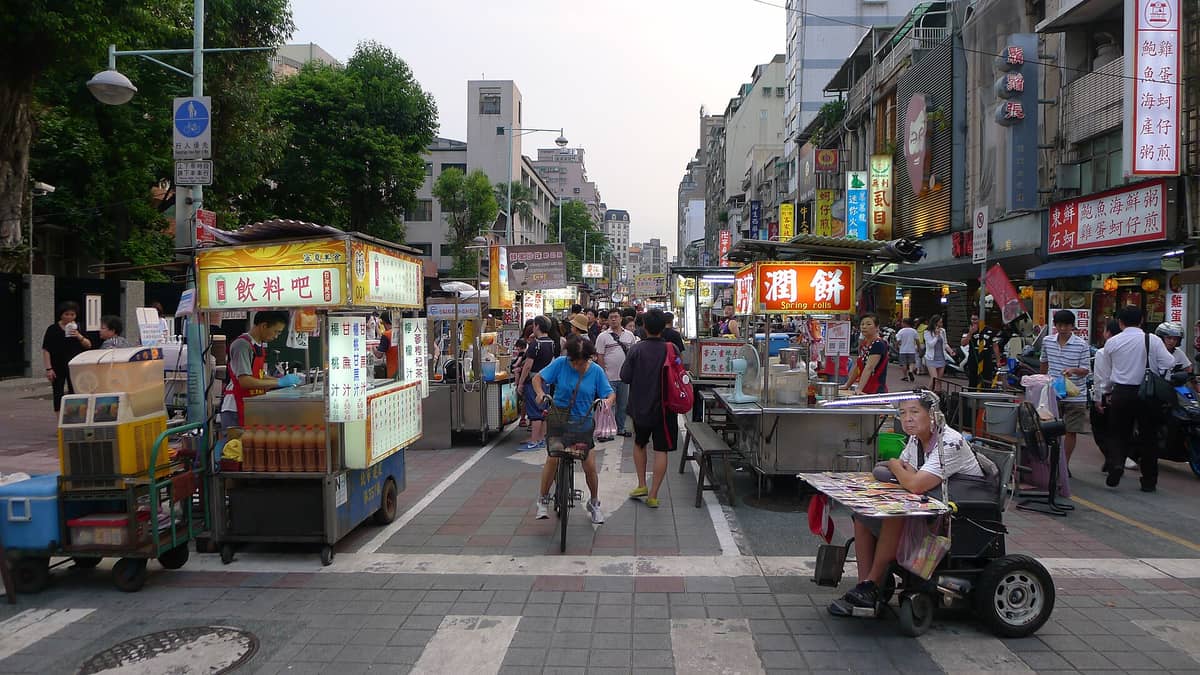
Ningxia Night Market, officially 寧夏觀光夜市 (Níngxià Guānguāng Yèshì), is a traditional street market that opens every evening along a closed-off section of Ningxia Road in Taipei's Datong District. Unlike the sprawling, neon-heavy markets that dominate travel brochures, this one is compact, roughly 300 meters of food stalls occupying the center lane of a road shut to cars from late afternoon onward.
The market's reputation is built on Taiwanese classics done well: oyster vermicelli, pork liver soup, taro balls, scallion pancakes, and braised pork rice. You won't find deep-fried Oreos or novelty carnival games taking up prime real estate here. The vendor mix skews toward stalls that have been feeding the same neighborhood for decades, which explains both the loyalty of repeat customers and the relative lack of flashy signage.
For context on how Ningxia fits into Taipei's wider night market scene, the Taipei night markets guide covers the main options across the city, from Shilin to Raohe, and helps calibrate expectations before you go.
The Experience: What You'll See, Smell, and Hear
Arriving at Ningxia around 18:00 on a weekday, the road is already fully set up but the crowds are manageable. The smell hits first: a mix of sizzling scallion oil, sweet potato starch thickening in broth, and the faint char of grilled corn. Stalls are arranged in two parallel rows down the middle of the road, leaving narrow walking lanes on each side. The ground is slick with cooking runoff near the busier stations, so solid footwear matters.
Overhead lighting is functional rather than decorative. Fluorescent strips and bare LED panels illuminate laminated menus, many of which include prices in Chinese only. The noise level sits somewhere between a busy canteen and a low-key street fair: vendors calling out orders, the percussion of metal ladles against woks, and the low hum of conversation from plastic stools pulled up to folding tables at the market's edges.
By 20:00 on weekends, the corridor fills considerably and moving through requires patience. Weeknight crowds thin out faster, and if you arrive close to 22:00, some stalls begin packing up. The window between 18:30 and 21:00 on weeknights represents the best balance of activity and comfort.
💡 Local tip
Arrive hungry and bring cash. Most stalls at Ningxia are cash-only, and ATMs within immediate walking distance are limited. TWD 500–800 per person covers a thorough sampling.
The Food: What to Order and Why
Oyster vermicelli (蚵仔麵線, ô-á mī-suànn) is the dish most associated with this market. The combination of thin noodles, fresh oysters, and a starchy, slightly sweet broth thickened with sweet potato starch sits in a category of its own among Taiwanese street foods. It's served in small bowls, eaten quickly at a standing ledge or on a stool, and costs roughly TWD 60–80 per portion depending on the stall.
Pork liver soup (豬肝湯) is another staple that Ningxia vendors are known for executing well. Thinly sliced liver cooked precisely to the point of tenderness without toughening is harder than it sounds, and the best stalls here serve it in a clean ginger-based broth with minimal fuss. Beyond these, look for taro balls in a warm syrup broth, scallion egg pancakes pressed on a flat iron, and braised pork rice (滷肉飯) served in small portions designed for mixing with other dishes rather than eating as a standalone meal.
There is no single definitive stall to identify by name with certainty; vendor turnover and signage inconsistencies mean that the best approach is to scan for the longest queues of locals, watch what's being ordered at tables around you, and follow that lead. The market's compact size makes it easy to walk the full length twice before committing.
ℹ️ Good to know
Vegetarian and vegan options are limited at Ningxia. The broth bases at many stalls are pork or seafood-derived. Visitors with dietary restrictions should plan accordingly or check with vendors directly.
Historical Context and Neighborhood Character
Ningxia Night Market sits in Datong District, one of Taipei's older commercial quarters, positioned in the west-central part of the city near what was historically a major trading corridor. The market's reputation as one of Taipei's more traditional food markets reflects the neighborhood's general character: less gentrified than Daan or Xinyi, more rooted in everyday commerce.
Near the southern end of the market, Jiancheng Circle (建成圓環) marks a historically significant site in this part of the city. The circular plaza was itself once home to a night market, making the Ningxia stretch a continuation of a much older eating culture in this quarter of Taipei. The area around Datong also contains several of Taipei's notable heritage sites, including traditional commercial streets that predate the post-war economic boom.
The broader Datong and Zhongshan corridor contains more than just food. Dihua Street is a short walk or taxi ride away and offers a complementary afternoon itinerary before the market opens, with its preserved Qing-era shophouse architecture and dried goods vendors.
Getting There: Transit and Navigation
The most straightforward approach is from Shuanglian Station on the Tamsui–Xinyi (Red) Line. Take Exit 1 and walk west along Minsheng West Road until you reach Ningxia Road, roughly 8 to 10 minutes on foot. The intersection is easy to identify once the market is open: the road closure and the cluster of yellow awnings are visible from Minsheng West Road.
Alternatively, Zhongshan Station (Exit 1) on the same Red Line puts you on Nanjing West Road heading west, which meets the southern end of the market at approximately the same walking distance. Neither option is dramatically better; choose based on which other parts of Zhongshan District you're coming from.
If you're planning a full evening in the area, the guide to getting around Taipei explains how to use the EasyCard for seamless transfers between MRT, buses, and YouBike stations, which can be useful if you're combining Ningxia with stops further west toward Wanhua or north toward Shilin.
💡 Local tip
The MRT stations at Shuanglian and Zhongshan both have accessible exits with elevators, making this one of the more wheelchair-friendly markets to reach by transit. The market surface itself is flat asphalt, though it gets congested during peak hours.
Practical Details and What to Expect
Ningxia Night Market opens daily at 17:00. Official sources list closing times between 23:30 and 01:00 depending on whether you reference the Taipei tourism listing or the national Tourism Administration, and in practice many vendors close around 23:30 even if some stay later, especially on weekends. The market is most active between 18:00 and 22:00, and individual stalls begin closing down at different times. If there's a specific dish you're targeting, arriving before 21:00 reduces the risk of the stall being sold out or packed up.
There is no entrance fee. The road is pedestrianized during market hours, which means the main corridor is fully walkable without traffic concerns. Seating is informal: folding stools at vendor fronts, shared tables at the edges of the market, and occasional standing ledges. It's not a sit-down dining experience by default.
Rain affects the experience meaningfully. Most stalls have basic overhead cover, but the space between stalls does not. A light jacket or compact umbrella is practical from May through September, when Taipei's humid subtropical climate makes afternoon showers the norm. The market typically stays open in light rain; heavy rain reduces both vendor presence and crowd size.
For those incorporating Ningxia into a wider Taipei itinerary, the 3-day Taipei itinerary includes practical evening scheduling options that pair well with the market's hours.
Who This Market Is Not For
Travelers who need air conditioning, full English menus, or structured seating will find Ningxia less accommodating than a restaurant in Xinyi or Daan. The market is compact and delivers its best value for people who are comfortable eating standing up, pointing at what looks good, and navigating without much English signage.
Visitors expecting the scale and entertainment variety of Shilin Night Market will also be disappointed. Ningxia has no game stalls to speak of, no themed food trucks, and limited visual spectacle. That's a feature for those who want genuine local eating, not a drawback. But if atmosphere and scale are the priority, other markets serve that purpose better.
If you're specifically chasing scale and variety, Shilin Night Market is the appropriate comparison point, though it trades the neighborhood intimacy of Ningxia for broader entertainment options.
Insider Tips
- Walk the full length of the market once before buying anything. The northern end near Minsheng West Road tends to have more seating options, while the southern end near Jiancheng Circle has some of the older-established stalls.
- Bring exact or small change where possible. Many vendors prefer it, particularly for single-bowl orders priced at TWD 60–80.
- Weeknight visits between 18:30 and 20:00 are noticeably less congested than weekend evenings, when the corridor can become slow-moving at peak hours.
- Look for stalls with hand-written pricing boards and no English translation. These typically cater to repeat local customers rather than tourists, which is often a reliable quality signal in this kind of market.
- Pair the visit with an afternoon walk along Dihua Street, which is a 10–15 minute walk southwest and makes for a logical cultural contrast before the market opens at 17:00.
Who Is Ningxia Night Market For?
- Food-focused travelers who want classic Taiwanese street food in a local setting
- Visitors who've already done Shilin and want a quieter, more traditional market experience
- Budget travelers: a filling meal costs well under TWD 500
- Weeknight itineraries where larger markets feel like too much
- Travelers staying in Zhongshan or Datong who want a walkable evening option
Nearby Attractions
Other things to see while in Zhongshan District:
- Lin An Tai Historical House
Lin An Tai Historical House is a meticulously preserved Minnan-style courtyard residence dating back roughly 200 years, relocated to Binjiang Park beside the Keelung River in Zhongshan District. Admission is free, the setting is calm, and the architecture offers a rare window into the domestic life of a prosperous Qing-era Taiwanese family.
- Miniatures Museum of Taiwan
Tucked one floor below street level in Taipei's Zhongshan District, the Miniatures Museum of Taiwan houses an extraordinary collection of hand-crafted scale models, from Victorian manor houses to ornate European theaters, each built with obsessive precision. It is a quiet, unhurried attraction that rewards careful looking and suits travelers who want something genuinely different from the usual temple-and-night-market circuit.
- Museum of Contemporary Art Taipei (MOCA)
The Museum of Contemporary Art Taipei (MoCA Taipei) is Taiwan's first museum dedicated solely to contemporary art, set inside a beautifully repurposed Japanese colonial-era building in central Zhongshan. With a remarkably low entry fee and a program that rotates frequently, it rewards both a quick afternoon stop and a deliberate deep dive.
- National Revolutionary Martyrs' Shrine
Modeled on Beijing's Hall of Supreme Harmony and completed in 1969, the National Revolutionary Martyrs' Shrine in Zhongshan District honors approximately 390,000 individuals recognized as national martyrs. Entry is free, the changing of the guard happens on the hour, and the ceremonial scale of the complex makes it one of Taipei's most architecturally striking institutions.