Taipei 101: The Complete Visitor Guide to Taipei's Iconic Tower
Standing 508 metres above the Xinyi District, Taipei 101 remains the defining landmark of Taiwan's capital. This guide covers the 89th-floor observatory, the mall below, best visiting times, and everything a traveller needs to make the most of the experience.
Quick Facts
- Location
- No. 45, Shifu Rd., Xinyi District, Taipei City 110, Taiwan
- Getting There
- Taipei 101/World Trade Center Station, Tamsui–Xinyi Line (exit directly to the tower)
- Time Needed
- 1.5–3 hours (observatory + mall)
- Cost
- Observatory from approx. NT$600 (adults); mall is free to enter. Verify current prices at the official site.
- Best for
- Panoramic city views, architecture enthusiasts, first-time visitors to Taipei
- Official website
- www.taipei-101.com.tw/en
What Taipei 101 Actually Is
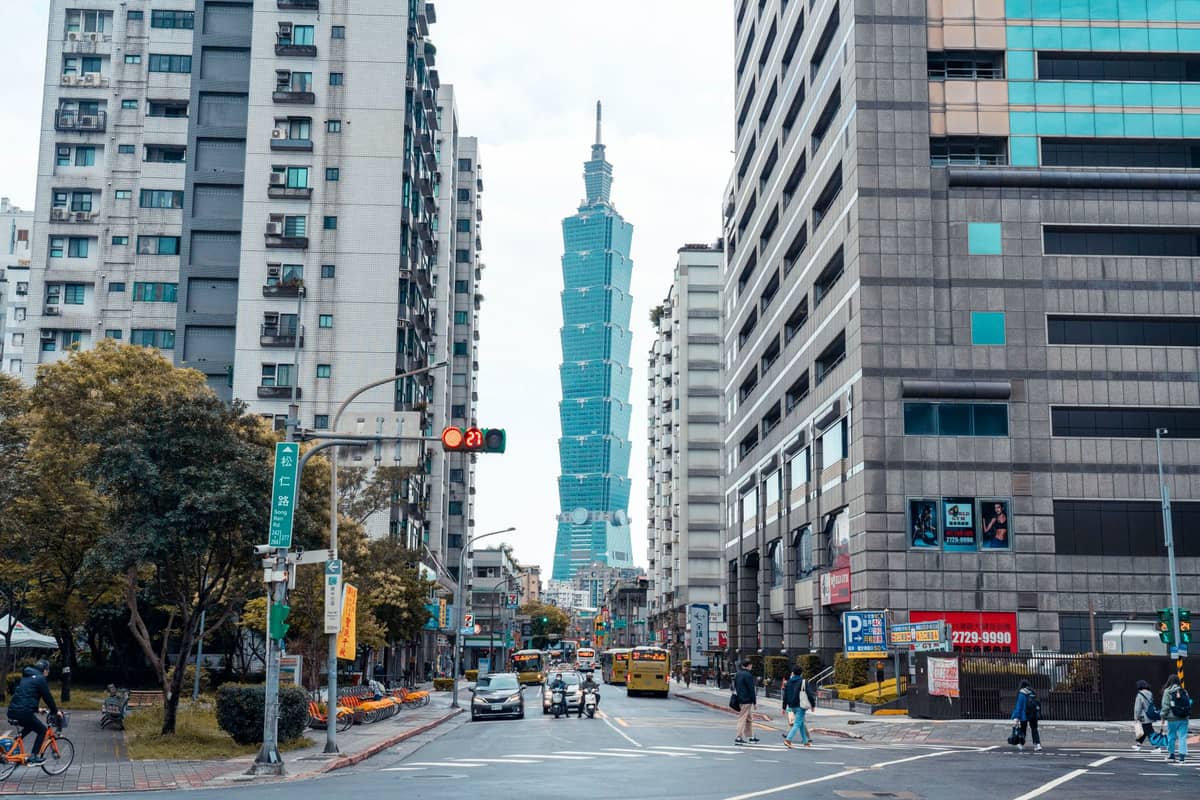
Taipei 101 is a 508-metre skyscraper with 101 floors above ground and 5 basement levels in the heart of Xinyi District that held the title of world's tallest building from its completion in 2004 until 2010. Its design draws on classical Chinese motifs: the pagoda-like segmentation, the octagonal cross-sections, and the upturned eaves at each segment are deliberate references to traditional East Asian architecture rendered in glass, steel, and high-strength concrete. The number 101 carries symbolic weight too. One beyond 100, it suggests surpassing perfection, while the repeated stacking of eight-floor segments references the Chinese association of eight with prosperity.
The building is not simply a viewing platform. It houses a high-end shopping mall across its lower floors, a full range of restaurants from street-food-style noodles to fine dining, and the 89th-floor Main Deck observatory that most visitors come for, with additional observatory spaces on 88F and an outdoor area on 91F, weather permitting. Understanding the layout in advance saves a lot of wandering: the mall and its food halls occupy B2 through 5F, while the primary observatory ticket counter is on 1F and access routes are clearly signed inside the mall.
💡 Local tip
Book your observatory ticket online in advance. On-site queues during weekends, public holidays, and the New Year period can stretch to 45 minutes or more. Third-party sellers often offer timed entry, which is worth the small convenience fee.
The Observatory Experience: Floor 89 and Beyond
The high-speed elevator from the observatory lobby to the upper floors takes under a minute, reaching speeds of around 60 km/h, and it is one of the fastest in the world. The pressure change is noticeable but managed by the pressurised cabin. When the doors open, you step into a circular observation deck enclosed by floor-to-ceiling glass. The layout allows you to walk a full circuit around the tower, taking in every compass direction.
To the north, the Taipei Basin unfolds toward Yangmingshan's volcanic ridgeline. To the east, Elephant Mountain sits close enough that you can trace the hiking trail leading to its rocky outcrops. On a clear day, the grid of the city's road network is legible far into the distance, broken by the occasional park or river bend. The Tamsui River glints to the northwest on sunny afternoons.
The 91st floor outdoor deck adds wind and unfiltered air to the equation. Access is weather-dependent, and staff will close it during storms or high winds. If it is open when you visit, it is worth the extra moments up there. The physical sensation of standing at that altitude with no glass between you and the city is qualitatively different from the indoor deck below.
Photography from the observatory is straightforward during daylight, but reflections on the glass panels can be tricky. Pressing your lens against the glass, or using a rubber lens hood, eliminates most glare. For a different perspective on the tower itself rather than the view from it, the Elephant Mountain trail offers a classic face-on shot of Taipei 101 rising above the Xinyi skyline, particularly rewarding at blue hour.
Best Time to Visit: How the Experience Changes Hour by Hour
Taipei 101's observatory is generally open from late morning to late evening (often around 11:00 to 22:00, with last admission roughly an hour before closing), and hours can vary slightly by day and event, so always confirm current times before you visit. That window creates meaningfully different experiences depending on when you arrive. Midday visits offer the clearest air on sunny days, but the harsh overhead light flattens the cityscape and the crowds peak between 11:00 and 14:00, especially on weekends.
The most rewarding window is the 75 minutes before sunset, continuing into early evening. As the light drops, the city transitions from a grey-and-green grid to a warm amber wash, then to a spreading carpet of white and orange lights. The mountain ridges to the north hold colour long after the streets below go dark. Arriving around 17:30 to 18:00 in autumn and winter, or 18:30 to 19:00 in summer, lets you catch the full transition in a single visit.
Weather is the variable most likely to disappoint. Taipei sits in a basin with a humid subtropical climate, and low cloud cover or haze is common, especially from May through September. The clearer months run from October through April. If you are planning your trip around visibility, the cooler autumn and winter months consistently deliver sharper views than summer, when afternoon thunderstorms and humidity regularly shroud the upper floors.
⚠️ What to skip
If the tower top is wrapped in cloud when you arrive, ask staff whether it is expected to clear. Sometimes cloud burns off within an hour; other times it settles for the day. The tower's own social media accounts occasionally post current visibility conditions.
The Damper: Engineering Spectacle Inside the Building
Between the 87th and 92nd floors, Taipei 101 houses one of the most visible tuned mass dampers of any skyscraper in the world. The damper is a steel pendulum ball weighing approximately 660 metric tonnes, suspended by cables and designed to counteract building sway caused by wind and seismic activity. Taiwan sits on a geologically active zone and is regularly affected by typhoons, so this engineering solution is practical as much as it is impressive.
The damper is visible from the observatory, set behind a railing with informational panels in English and Mandarin. It is genuinely worth a few minutes of attention. Watching a 660-tonne steel sphere held in near-stillness by physics is an unexpectedly compelling sight, and the engineering explanation on the panels is accessible to anyone, not just those with a technical background. Two smaller auxiliary dampers on floors 92 and higher are less visible but form part of the same system.
The Mall and Surrounding Xinyi District
The shopping floors of Taipei 101 run from B2 to 5F and cater to a broad range of spending levels, though the upper retail floors lean toward luxury brands. The basement food hall is the practical highlight for most travellers: a mix of Taiwanese staples, Japanese imports, and bakeries that gets busy at lunchtime but moves quickly. Prices here are higher than the surrounding street-level options but lower than the sit-down restaurants above.
Outside the tower, Xinyi District itself rewards some walking. The area is Taipei's most modern commercial district, with wide pedestrian-friendly streets, several competing malls, and good public space between buildings. It feels different from the older, denser districts like Wanhua or Dadaocheng — cleaner lines, less street food, more international brands. Whether that appeals depends on what you are looking for.
If you want to extend the evening, Xinyi has a concentrated nightlife corridor close to City Hall Station, covered in the Taipei nightlife guide. Alternatively, the Sun Yat-sen Memorial Hall is a short walk west and makes a quieter counterpoint to the commercial intensity of the 101 complex.
Getting There and Practical Logistics
Taipei 101/World Trade Center Station on the Tamsui–Xinyi Line (Red Line) connects directly into the Taipei 101 mall via Exit 4, with the overall MRT journey from Taipei Main Station taking around 15 minutes including walking and transfers. The MRT is the clearest choice for most visitors: straightforward, fast, and not subject to the traffic congestion that affects taxis and rideshares around the Xinyi area during peak hours.
If you are carrying bags or travelling with young children, the lobby is spacious and climate-controlled. Strollers move easily through the mall. The observatory itself is fully accessible, with barrier-free elevator access from the 5F entry point. Visitors with accessibility needs are directed to the on-site service counter at B1/1F for assistance with specific ticket categories.
Observatory hours are typically from around 11:00 to 22:00, with last admission roughly an hour before closing, though exact times may be adjusted on major Taiwanese public holidays, particularly around the New Year period when the building hosts a large ticketed fireworks event visible across the city. Hours may be adjusted on major Taiwanese public holidays, particularly around the New Year period when the building hosts a large ticketed fireworks event visible across the city. Check the official website close to your visit if timing is tight.
ℹ️ Good to know
The New Year's Eve fireworks display launched from Taipei 101 is one of the largest in Asia. If you plan to be in Taipei for New Year, be aware that observatory access changes significantly that night and the surrounding streets become extremely congested. Book any accommodation, tickets, or restaurant reservations months in advance.
Is It Worth It? An Honest Assessment
At roughly NT$600 for an adult ticket, the observatory is one of the more expensive single attractions in Taipei by local standards, though competitive with comparable observatories in other major Asian cities. Whether it justifies the cost depends largely on visibility conditions on your specific day and how much weight you put on the symbolic experience of standing in Taiwan's most recognised building.
For first-time visitors to Taipei, the view from the 89th floor is one of the clearest ways to understand the city's geography: the basin, the surrounding mountains, the river system, and the density of the urban fabric. That spatial orientation is genuinely useful if you are spending several days here. For return visitors who have already made the trip, it is harder to argue for a repeat visit unless the New Year fireworks or a special event is the draw. Those looking for free panoramic views might find that Elephant Mountain delivers a comparable sense of the city at no cost, with the added bonus of Taipei 101 itself in the frame.
Travellers with limited interest in architecture, city views, or the engineering story of the building itself will likely feel the experience is over quickly. The observatory circuit takes 20 to 40 minutes depending on how long you linger. If that is your only reason for visiting, the ticket cost may feel steep. On the other hand, combining the observatory with lunch in the food hall, a walk through Xinyi District, and an evening visit to the Sun Yat-sen Memorial makes for a full and varied half-day.
Insider Tips
- If you buy your ticket online but arrive to find heavy cloud cover, go up anyway if the clouds are high and broken. The floor-level view of the city grid is still impressive, and cloud shadow patterns across the basin can make for unusual photographs.
- The observatory circuit is one-directional, so pick your position on the north-facing side early. At sunset, the northern view toward Yangmingshan draws a crowd while the eastern and southern windows stay comparatively clear.
- The 5F entry point for the observatory is also home to a small souvenir shop. Items here are officially licensed and priced accordingly. If you want branded Taipei 101 merchandise without the premium, the B1 food hall level has a modest selection at lower prices.
- On weekday mornings, especially Tuesday to Thursday between 10:00 and 12:00, the observatory is noticeably quieter than at any other time. If your schedule allows, this is the easiest window for unhurried viewing and photography without strangers walking into frame.
- The tower hosts a wind speed display near the damper that shows real-time measurements. On typhoon-adjacent days when the building is still open, watching that number climb while standing at 89 floors adds a certain charged quality to the experience.
Who Is Taipei 101 For?
- First-time visitors to Taipei who want geographic orientation and a clear sense of the city's layout
- Architecture and engineering enthusiasts drawn to the tuned mass damper and the pagoda-inspired structural design
- Families with children, who respond well to the elevator speed, the damper spectacle, and the food hall options
- Photographers working the blue-hour window between late afternoon and early evening
- Travellers visiting during New Year who want to be near the fireworks, even if not on the observatory itself
Nearby Attractions
Other things to see while in Xinyi District:
- Elephant Mountain (Xiangshan) Trail
Elephant Mountain, known in Mandarin as Xiangshan, delivers one of the most photographed skyline views in Asia from just a short walk off the MRT. At 183 meters above Xinyi District, the reward-to-effort ratio is genuinely hard to beat. Here is everything you need to decide if it belongs on your Taipei itinerary.
- Songshan Cultural and Creative Park
Once a Japanese-era tobacco factory, Songshan Cultural and Creative Park is now a thoughtfully preserved creative district. Free to enter and open daily until 10pm, the park blends heritage industrial buildings with contemporary design galleries, independent shops, and a quietly beautiful garden that most visitors walk right past.
- Sun Yat-sen Memorial Hall
The National Dr. Sun Yat-sen Memorial Hall is one of Taipei's most recognizable civic landmarks, combining a sweeping classical Chinese-influenced building with open plazas and gardens in the heart of Xinyi District. Admission to the grounds and exhibitions is free, making it a genuinely accessible stop for any itinerary.