Elephant Mountain (Xiangshan) Trail: Taipei's Most Rewarding Urban Hike
Elephant Mountain, known in Mandarin as Xiangshan, delivers one of the most photographed skyline views in Asia from just a short walk off the MRT. At 183 meters above Xinyi District, the reward-to-effort ratio is genuinely hard to beat. Here is everything you need to decide if it belongs on your Taipei itinerary.
Quick Facts
- Location
- Xinyi District, Taipei City, Taiwan 110
- Getting There
- MRT Xiangshan Station (Red Line), Exit 2 — approx. 7–10 min walk to trailhead
- Time Needed
- 1.5–2.5 hours round trip (trail length approx. 1.5–2.3 km; official estimate 1 hr 40 min)
- Cost
- Free — no tickets, no permits required
- Best for
- City views, sunset photography, casual hikers, first-time visitors to Taipei
- Official website
- www.travel.taipei/en/attraction/details/564
What Elephant Mountain Actually Is
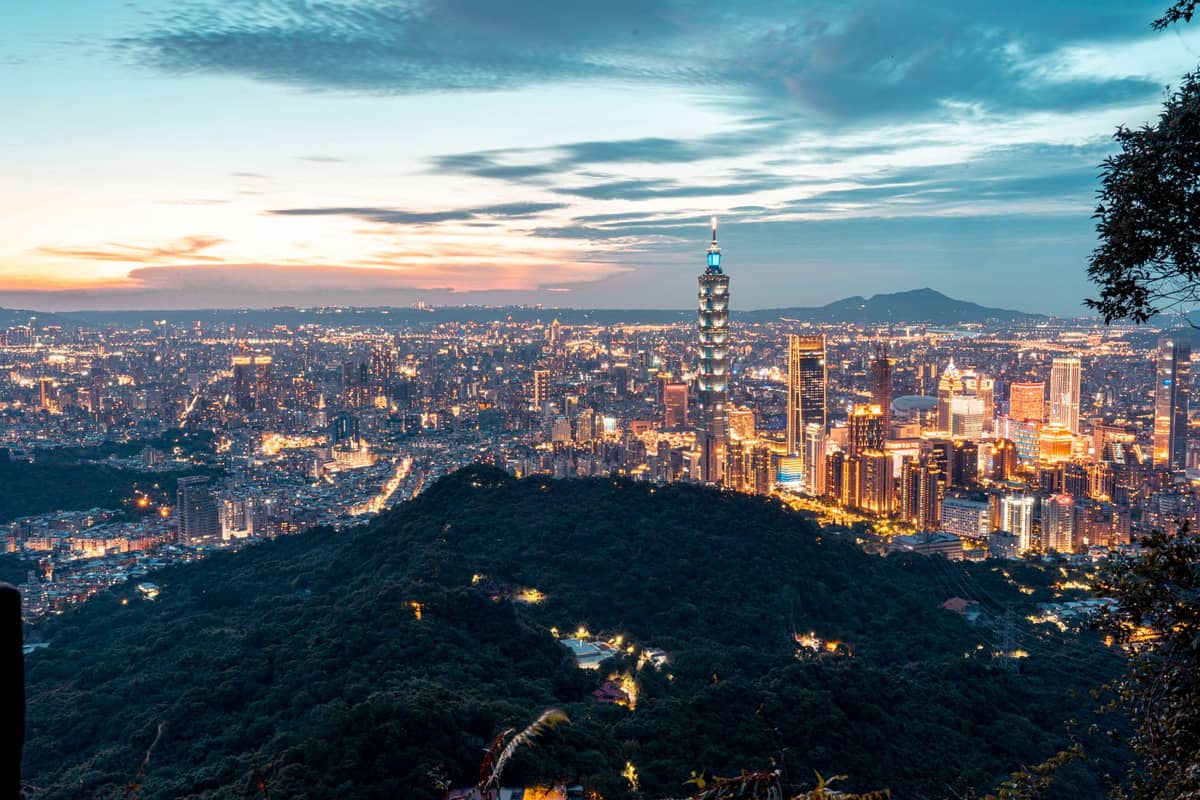
The Xiangshan (Mt. Elephant) Hiking Trail is a short but steep urban trail in Taipei's Xinyi District that climbs to 183 meters above one of the city's most modern neighborhoods. It is part of the Four Beasts Mountain range (四獸山), a ridge of low peaks that forms a green boundary along the eastern edge of central Taipei. Of the four, Xiangshan is by far the most visited, for one simple reason: the main viewing platforms face directly west toward Taipei 101, putting the tower in perfect frame against the city grid below.
The trail itself is roughly 1.5 km on the main route, with a full circuit of about 2.3 km if you continue beyond the primary lookout points. The path is almost entirely granite steps — hundreds of them, worn smooth and occasionally steep enough that you will use your hands on some of the rock faces. This is not a wilderness trek. You are never far from the city, and the sound of traffic hums below even near the summit. What makes it worthwhile is the contrast: you step off a gleaming subway line, walk through a municipal park, climb through subtropical forest, and arrive at a platform where Taipei 101 rises directly in front of you, close enough to feel monumental.
ℹ️ Good to know
The trail is open 24 hours a day, every day of the year, with no admission fee. The main viewing platforms have lighting, so evening and early morning visits are genuinely feasible.
Getting to the Trailhead
The most straightforward approach is the Taipei Metro Red Line (Tamsui-Xinyi Line) to Xiangshan Station, which is the terminal station on that line — you simply ride to the end. From Exit 2, follow the signs for Xiangshan Park (象山公園) through a residential laneway. The walk to the trailhead takes about 7–10 minutes and is flat. You will pass a small pavilion and some fitness equipment before the steps begin in earnest.
If you prefer bus, lines 20, 32, 33, 37, 46, 88, 207, 612, and Red 10 serve the Xiangshan Station area, from where the walking route to the trailhead is the same as from the MRT exit. Taxis and ride-hailing apps like Uber can drop you at the park entrance, which is useful if you are arriving from a hotel further away or carrying a bag.
💡 Local tip
Tell your driver or type into your app: 象山公園 (Xiangshan Park) in Xinyi District. Dropping at the MRT station exit and walking is usually faster during evening peak hours when traffic around Xinyi backs up.
The Climb: What to Expect Step by Step
The first section of the trail rises through dense secondary forest. The canopy closes overhead quickly, and even on warm days the shade provides some relief. The air carries the smell of damp earth and, after rain, the sharp green scent of tropical vegetation. Butterflies are common in the late morning, and you may hear the mechanical buzz of cicadas in the warmer months from May through September.
About 15–20 minutes in, the path opens onto the first major viewing ledge, sometimes called the Six Giant Rocks (六巨石). This is where most photographers stop. The rocks themselves are large, rounded granite boulders that jut out from the hillside, and the sight line to Taipei 101 is unobstructed. The tower appears close enough that you can see its individual floors clearly, with the Xinyi commercial district spread behind it and, on clear days, the hills of Beitou visible on the far northern horizon.
Beyond the rocks, the trail continues upward to a ridgeline path with additional platforms and rest benches. The vegetation thickens again and the crowds thin out noticeably. This upper section offers different angles on the city, including views looking north and east toward Songshan and the distant mountains. If you have the time and energy, continuing the full circuit adds another 30–40 minutes and gives you a much quieter experience than the main rock platform.
⚠️ What to skip
The steps are steep and can be slippery after rain. Wear shoes with grip — sandals and flip-flops are a common regret. The trail is not wheelchair-accessible and involves significant elevation change.
How the Experience Changes by Time of Day
Sunrise draws early risers who want the viewing rocks to themselves. Before 7am, the path is largely quiet, the light is soft and horizontal, and Taipei 101 catches the first glow from the east with the rest of the skyline still in cool shadow. The air is noticeably cooler and fresher than it will be by mid-morning. This is the best time for clean photography without other visitors in the frame.
Weekday mornings between 8am and 11am bring local hikers, mostly older residents doing their regular fitness route. The atmosphere is relaxed and social. You will hear Taiwanese Hokkien and Mandarin, see people stopping to stretch at the trailside fitness stations near the base, and occasionally encounter groups doing breathing exercises on the lower platforms. It feels like a neighborhood park that happens to have a spectacular backdrop.
Sunset is when Elephant Mountain transforms entirely. The trail gets genuinely crowded from around 5pm on weekends, with queues forming at the Six Giant Rocks as dozens of visitors wait to take the same shot of Taipei 101 turning gold in the fading light. The energy is high but the logistics can be frustrating if you want a clean composition. Plan to arrive by 4:30pm to secure a position on the rocks before the main wave. After dark, the city lights below are striking and the fully lit Taipei 101 is impressive, but the climb down in low light requires care even with trail lighting.
For a broader view of when to visit Taipei to combine this hike with good weather, the best time to visit Taipei guide covers seasonal temperatures and rain patterns in detail. The October to April window is generally more comfortable for hiking, as summer combines high humidity with temperatures that make the exposed sections of the trail genuinely tiring.
Photography on Elephant Mountain
The standard shot from the Six Giant Rocks has been reproduced in millions of travel photos: Taipei 101 framed by hillside foliage, centered in the frame, with the city below. To get it cleanly, you need a clear day and either early morning or golden hour light. Midday in summer produces a hazy, washed-out result due to humidity and heat shimmer. Winter and autumn produce the sharpest, clearest views.
A wide-angle lens or a smartphone with a standard camera is sufficient for the main view. For a more interesting composition, move off the main rock platform to the upper ridge trail, where you can find angles that include the surrounding hills and frame Taipei 101 within a wider landscape. The ridgeline also offers views looking east toward less-photographed areas of the city, which can make for more unusual shots.
If Elephant Mountain is part of a broader strategy for capturing Taipei from above, the Taipei viewpoints guide covers other options including indoor observation decks that work better on overcast days when the outdoor hike would be unrewarding.
Practical Details: What to Bring and Who Should Think Twice
The hike is short enough that you do not need serious gear, but a few things make a real difference. Water is essential, especially from April through October when temperatures and humidity are high. There are no water fountains or vendors on the trail itself, so carry at least 500ml. A small towel is useful. Sunscreen matters on the exposed upper sections. The trail is mostly in shade but the viewing platforms are open.
Footwear with grip is the single most important practical consideration. The granite steps become slick when wet, and the rocks at the main viewing platform require some scrambling. Sneakers or light hiking shoes work well. Many visitors arrive in casual shoes and manage fine on dry days, but it is worth planning for the possibility of afternoon rain, which arrives quickly in Taipei's climate.
Travelers who want a longer, more serious hiking experience in the area should consider Yangmingshan National Park, which offers full-day routes through volcanic terrain to the north of the city. Elephant Mountain is best understood as a 2-hour excursion, not a day hike.
The trail is not suitable for wheelchairs or mobility aids. It will be challenging for anyone with knee problems, as the descent on steep granite steps puts significant pressure on joints. Young children can manage the main route with adult supervision, but the rocks at the viewing platform require care. Visitors who are not comfortable with heights may find the exposed ledge at the Six Giant Rocks uncomfortable, as the drop is immediate and there is no fence.
Combining Elephant Mountain with the Xinyi District
The trailhead sits at the eastern edge of Xinyi, Taipei's most modern commercial district. After the hike, it is a short walk or one MRT stop back to the base of Taipei 101, whose observation deck offers an entirely different perspective. Looking down on the city from inside the tower after looking up at it from the mountain ridge is a satisfying contrast, and the two experiences complement each other well as a half-day combination.
The broader Xinyi area also has good options for food after the hike. The night markets and food streets nearby are covered in the Taipei food guide. For a full itinerary that incorporates Elephant Mountain alongside other Taipei priorities, the 3-day Taipei itinerary suggests pairing it with a Xinyi afternoon.
Insider Tips
- Arrive at the Six Giant Rocks before 4:30pm on weekends if you want space to photograph without waiting. The platform gets genuinely crowded during the 30 minutes before sunset and this is the one part of the trail where the crowd density actually detracts from the experience.
- The upper ridgeline section past the main viewing rocks is walked by far fewer visitors and offers different, less replicated angles on the city. If you have an extra 30–40 minutes, keep going past the first platform.
- Rain in the previous 12 hours makes the granite steps significantly more dangerous. If it has rained recently, take your time on the descent and consider using the metal handrails even if you do not normally need them.
- Weekday mornings between 7am and 9am are when local residents use the trail as part of their daily exercise routine. The atmosphere is noticeably more local and relaxed than weekend afternoons, and the trail is much less crowded.
- There are no food or drink vendors on the trail. Stock up at the 7-Eleven or Family Mart near Xiangshan MRT Station before you begin. Both are within a few minutes of Exit 2.
Who Is Elephant Mountain (Xiangshan) Trail For?
- First-time visitors to Taipei who want an accessible, free experience with a high visual payoff
- Photographers targeting the classic Taipei 101 skyline shot from a natural vantage point
- Travelers on a budget looking for meaningful activity at no cost
- Early risers who want a quiet morning activity before the city gets busy
- Anyone combining a half-day itinerary in Xinyi who wants to add physical activity
Nearby Attractions
Other things to see while in Xinyi District:
- Songshan Cultural and Creative Park
Once a Japanese-era tobacco factory, Songshan Cultural and Creative Park is now a thoughtfully preserved creative district. Free to enter and open daily until 10pm, the park blends heritage industrial buildings with contemporary design galleries, independent shops, and a quietly beautiful garden that most visitors walk right past.
- Taipei 101
Standing 508 metres above the Xinyi District, Taipei 101 remains the defining landmark of Taiwan's capital. This guide covers the 89th-floor observatory, the mall below, best visiting times, and everything a traveller needs to make the most of the experience.
- Sun Yat-sen Memorial Hall
The National Dr. Sun Yat-sen Memorial Hall is one of Taipei's most recognizable civic landmarks, combining a sweeping classical Chinese-influenced building with open plazas and gardens in the heart of Xinyi District. Admission to the grounds and exhibitions is free, making it a genuinely accessible stop for any itinerary.