What to Eat in Taipei: Essential Dishes & Food Culture
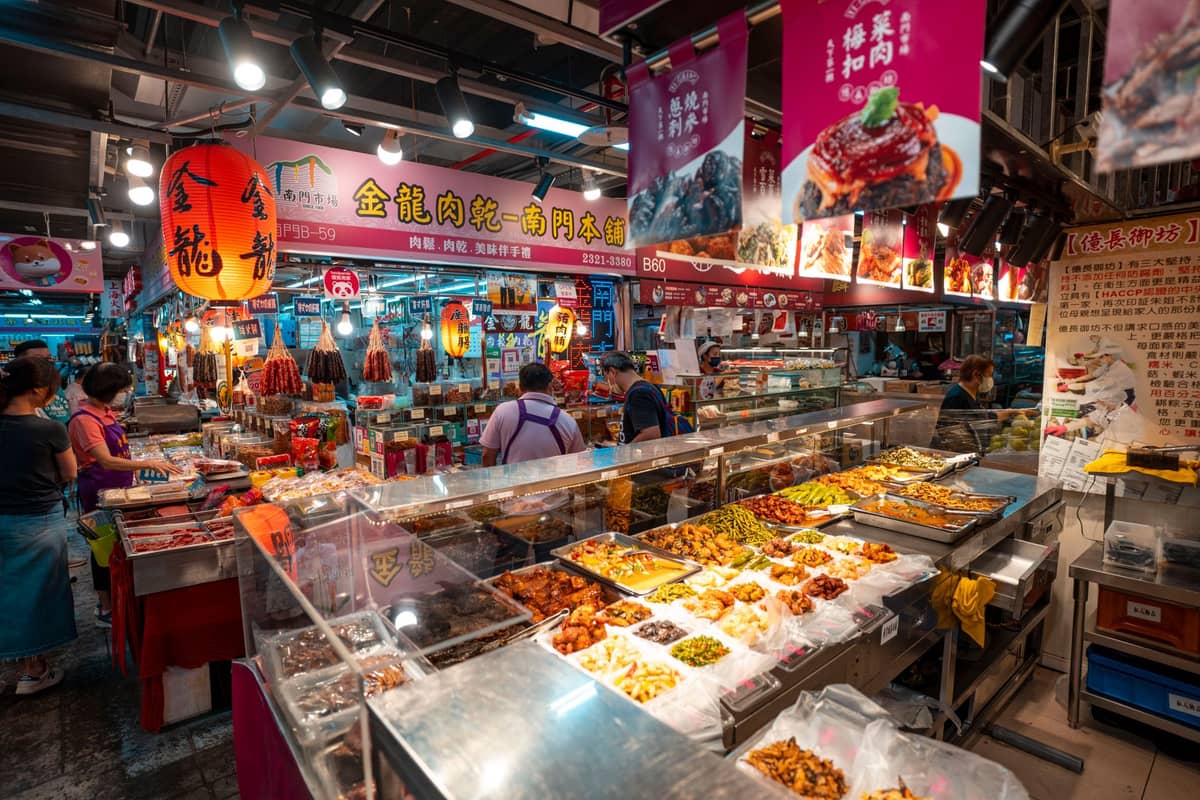
Taipei's food culture runs deep, from neighborhood beef noodle shops and temple-front snack stalls to dumpling houses with decades of history. This guide covers the essential dishes to try, where to find them, what to pay, and how to navigate the city's famous night markets without the rookie mistakes.
TL;DR
- Taipei's food identity is built on Taiwanese cuisine, Hokkien-influenced street food, and the legacy of mainland Chinese regional cooking brought over after 1949.
- Night markets like Shilin Night Market and Raohe Street Night Market run until midnight most nights. A filling dinner costs NT$200–400 per person.
- Beef noodle soup and xiao long bao are the two dishes most worth seeking out at a dedicated restaurant, not just a market stall.
- Tipping is not customary in Taiwan. Prices are in New Taiwan Dollar (TWD/NT$). At time of writing, NT$100 is roughly around US$3.
- For a broader orientation to the city before diving into food, see the things to do in Taipei guide.
Why Taipei Has One of Asia's Most Interesting Food Scenes
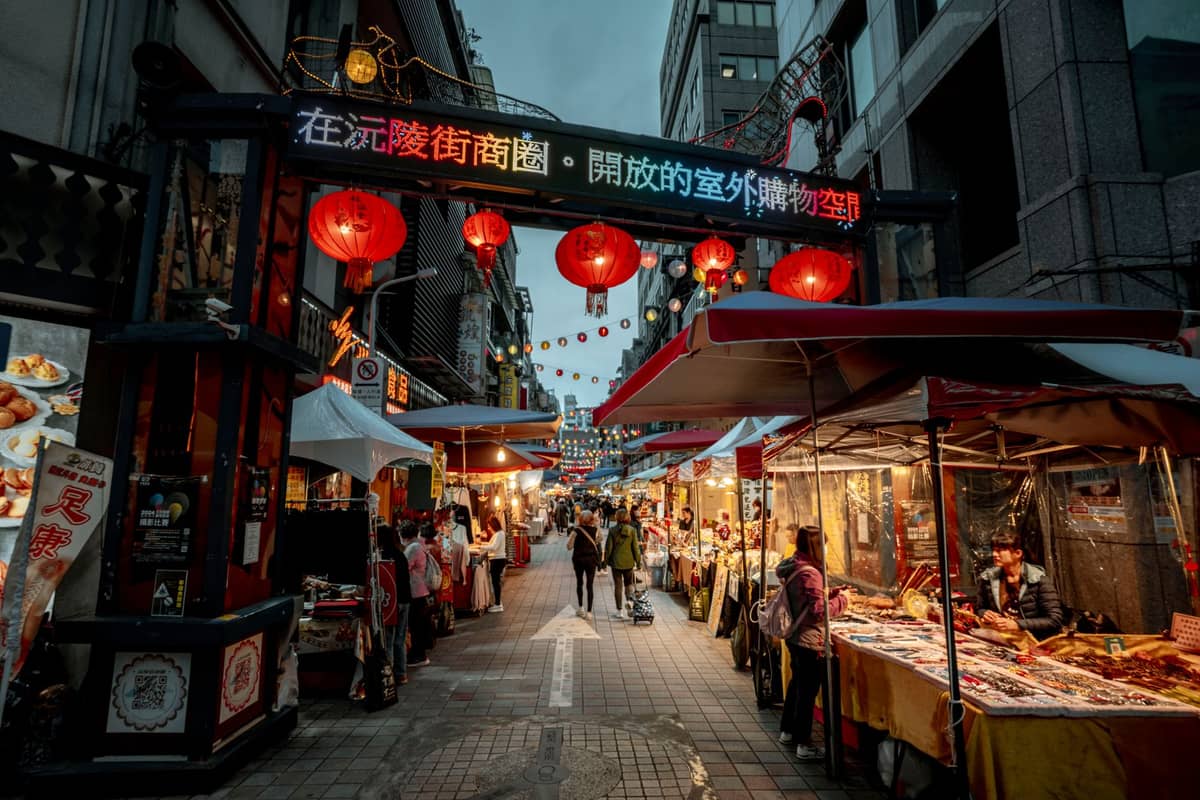
Taipei's cuisine is genuinely layered in a way that takes a few days to appreciate. The city sits at the intersection of indigenous Taiwanese cooking, centuries-old Hokkien and Hakka foodways brought by migrants from Fujian and Guangdong, and the full spectrum of Chinese regional cuisines introduced by the mainlanders who arrived after 1949. That last wave is why you can eat excellent Shanghainese soup dumplings, Sichuan dan dan noodles, Hunanese pork belly, and Cantonese roast duck all within a few MRT stops of each other.
On top of that, Taiwan developed its own street food culture, much of it codified through the night market system, where Taiwanese-specific dishes like oyster vermicelli (o-a-mi-sua), stinky tofu (chou doufu), and scallion pancakes (cong you bing) have been refined over generations. This is not fusion or novelty food. These are working-class staples that locals eat multiple times a week.
ℹ️ Good to know
The official language in Taipei is Mandarin Chinese, but Taiwanese Hokkien is widely spoken in markets and older neighborhoods. Menus in local eateries are often in Chinese only. Pointing at dishes or using a translation app works well in practice.
The Essential Dishes: What to Actually Order
Before getting into where to eat, it helps to know what you're ordering. Taipei's taipei food scene can be overwhelming if you arrive without a shortlist. These are the dishes that genuinely define the city's culinary identity, and the ones where the quality gap between a mediocre version and a great one is most noticeable.
- Beef Noodle Soup (Niú Ròu Miàn) Arguably Taipei's signature dish. A braised beef broth, typically red-cooked (hong shao) with spicy bean paste and star anise, served over thick wheat noodles with fall-apart beef shank. At local noodle shops it costs NT$130–180. At well-known beef noodle institutions in the Yongkang area or Daan district, expect NT$220–380 for a premium bowl. The broth should be deeply savory and faintly spiced, not just salty.
- Xiao Long Bao (Soup Dumplings) The Shanghainese soup dumpling that has become a Taipei staple. Din Tai Fung is the international brand, but there are dozens of strong local competitors. Eight pieces at a casual spot costs NT$80–120; a restaurant portion of ten runs around NT$280. The test of quality is thin skin, abundant soup, and a filling that isn't mostly pork fat.
- Oyster Vermicelli (O-A-Mi-Sua) Distinctly Taiwanese. Thin wheat vermicelli in a thick, slightly gelatinous sweet potato starch broth, topped with fresh oysters and offal (usually intestine). Served with black vinegar. A night market bowl costs around NT$50–70. It sounds challenging but tastes mild and slightly sweet.
- Scallion Pancake (Cong You Bing) Flaky, layered flatbread made by rolling dough with sesame oil and chopped scallions, then pan-frying. Often served with an egg and hoisin or chili sauce inside. One of the best cheap breakfasts in Taipei at NT$30–50. Find them at breakfast shops (dou jiang dian) or night markets.
- Lu Rou Fan (Braised Pork Rice) Minced pork belly braised in soy sauce, rice wine, and spices, spooned over white rice. Small portions cost NT$40–70. It is comfort food and a reliable filler between bigger meals. Quality varies enormously. The best versions have a glossy, slightly sweet glaze and visible pork skin.
- Stinky Tofu (Chou Doufu) Fermented tofu fried until crispy outside and custardy inside, served with pickled cabbage. The smell is aggressive. The taste is not as extreme as the smell suggests — closer to a pungent soft cheese once fried. Night market staple at NT$50–80 per serving.
- Bubble Tea (Zhen Zhu Nai Cha) Pearl milk tea was invented in Taiwan. In Taipei you can get it everywhere from NT$40 at a chain to NT$120 at a craft tea shop. The standard order is black tea with milk and tapioca pearls, sweetness and ice adjustable. Try it at a local chain like Chun Shui Tang or Tiger Sugar rather than the global chains.
Night Markets: How They Work and When to Go
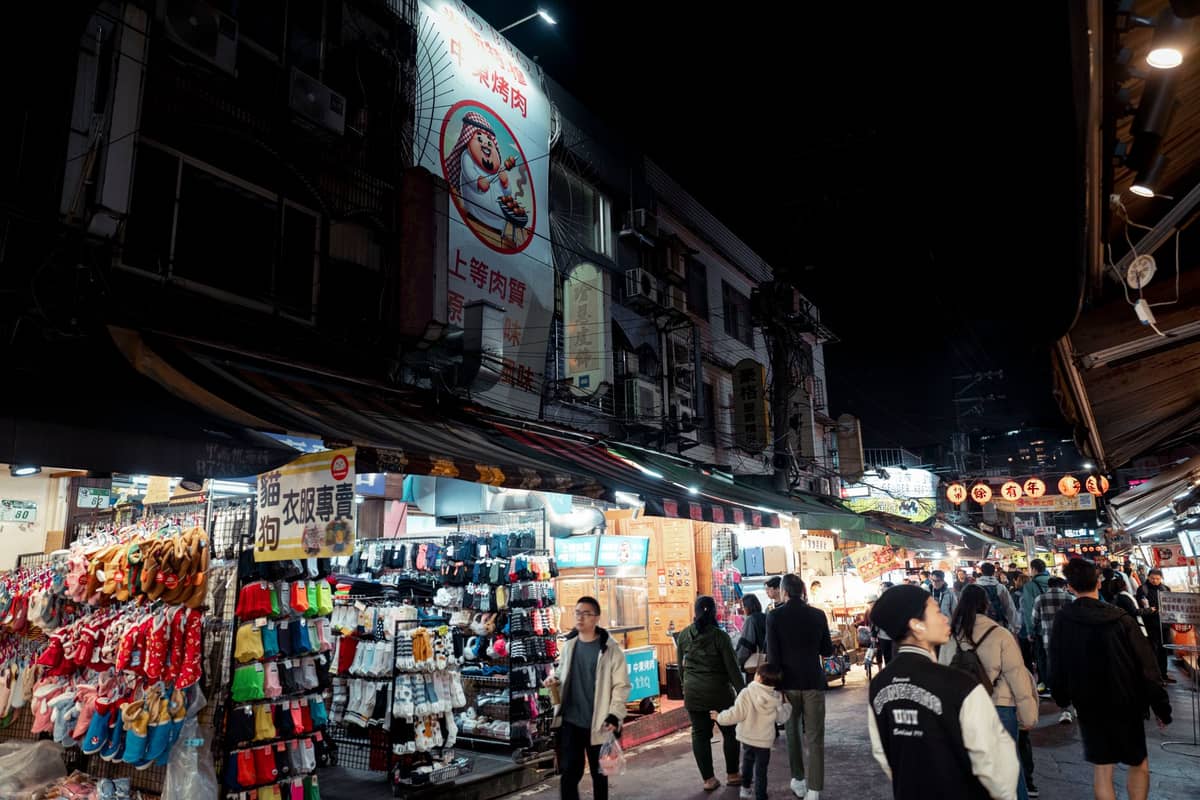
Night markets are central to Taipei food culture, but they require some navigation strategy to get the most out of them. The two most visited are Shilin Night Market in the north and Raohe Street Night Market in Songshan District. Shilin is the largest in Taipei and operates roughly 16:00–24:00 daily. Raohe is smaller, more linear, and runs 17:00–midnight (officially listed as 17:00–00:00 on the Taipei City tourism portal). Both operate year-round.
The crowd pattern matters. Peak hours are 7pm to 10pm, when locals arrive after work and the atmosphere is genuinely electric but the queues at popular stalls can stretch 20–30 minutes. If you want to eat efficiently, aim for 6:30–8pm when most stalls are open but not yet at full capacity, or arrive after 10pm when crowds thin but some stalls start wrapping up. Before 6pm, many stalls haven't opened yet.
💡 Local tip
Shilin Night Market's underground food court reopened in April 2025 after renovation. The street food stalls around Jiantan Station (not Shilin Station) are the heart of the market. Exit 1 at MRT Jiantan Station (Red Line) puts you directly at the entrance — Shilin Station is actually farther from the main food area.
For a deeper comparison of Taipei's market options, the Taipei night markets guide covers Tonghua (Linjiang), Ningxia, and Huazhou in addition to the big two. Ningxia Night Market in Datong District is worth knowing about specifically for Taiwanese classics — the stalls there are more focused on food than the souvenir and clothing mix you get at Shilin.
- Budget NT$200–400 per person for a full night market dinner in 2026. This covers 3–4 dishes and a drink.
- Most stalls are cash only. Bring small bills (NT$100 and NT$50 coins are useful).
- Individual stalls often take one day off per week, usually Monday or Tuesday. No single stall is guaranteed to be open every night.
- Shilin's most famous stall is the Pepper Bun (Hu Jiao Bing) at the north end of Raohe, baked in a clay oven. The queue is real but moves. Plan 15–20 minutes.
- Don't eat before you go. Night market eating requires arriving hungry enough to graze across 6–8 items in small portions.
Sit-Down Restaurants Worth Knowing About
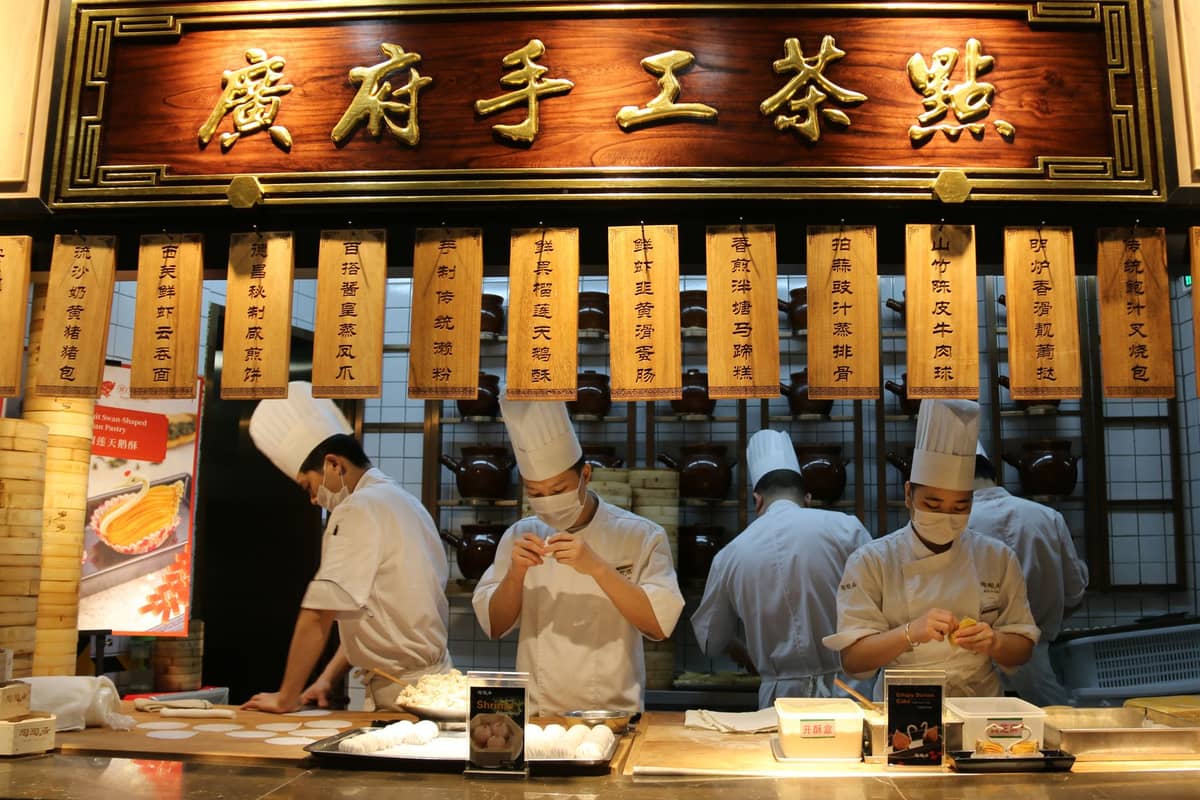
Night markets handle snacking and street food, but some dishes are genuinely better in a proper restaurant setting. Beef noodle soup and xiao long bao in particular benefit from a kitchen with a controlled environment and quality ingredients, not a market stall churning out volume.
The Daan District is the most reliable area for sit-down restaurants across a range of cuisines and budgets. Yongkang Street, a short walk from MRT Dongmen Station, has a high concentration of Taiwanese and Chinese regional restaurants, including several beef noodle specialists. The street also has good options for vegetarian Taiwanese food, which is more widely available in Taipei than in most Asian capitals — Buddhist-influenced vegetarian cooking (素食) has a long history in Taiwan.
For a broader food crawl in the city's older commercial districts, Dihua Street in Datong District is lined with dried goods vendors, traditional snack shops, and tea houses. It skews toward ingredients and preserved foods rather than ready-to-eat meals, but it is one of the best places to understand the pantry side of Taiwanese cuisine.
⚠️ What to skip
Din Tai Fung is genuinely good, but the branches in Xinyi District near Taipei 101 have waits of 45–90 minutes on weekends. If you want xiao long bao without the queue, ask a local to recommend a neighborhood dumpling house (shui jiao guan) in Daan or Zhongshan instead. Quality is often comparable at a fraction of the wait.
Breakfast Culture and Morning Food in Taipei
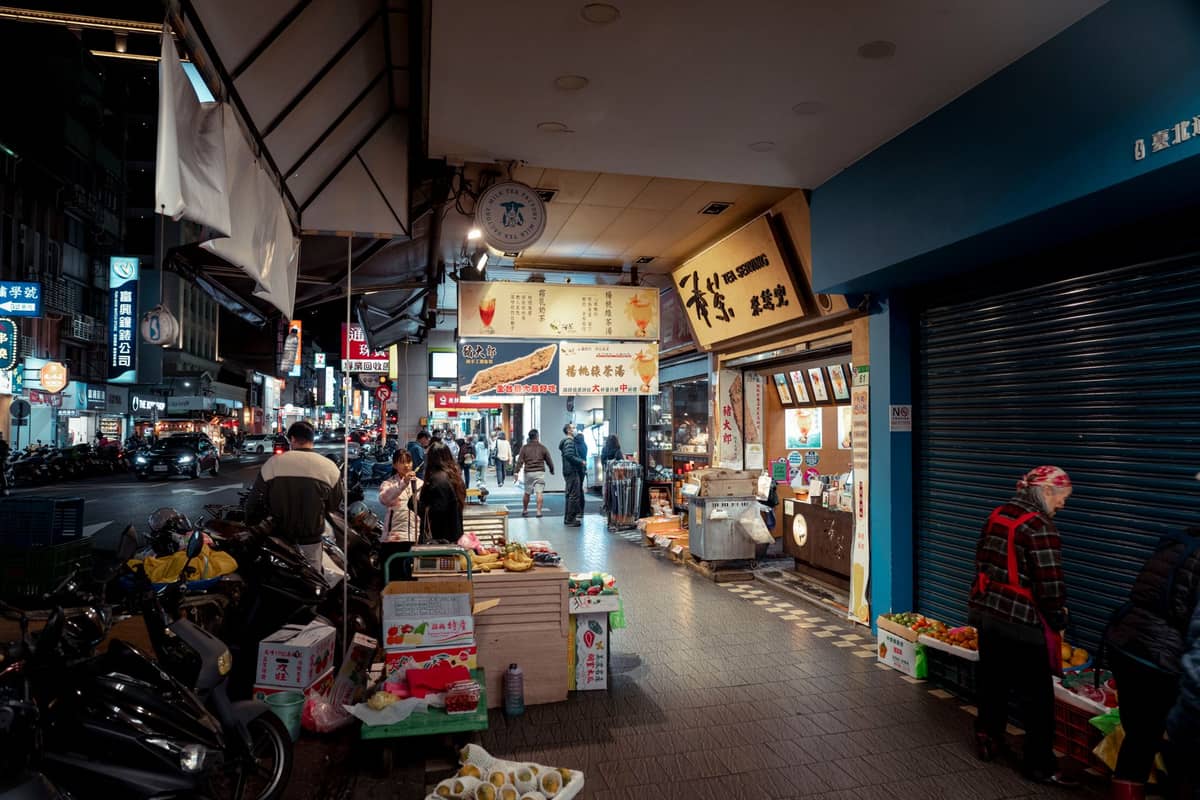
Taipei has a distinct breakfast culture that most visitors miss by sleeping in. The traditional Taiwanese breakfast (zao can) centers on warm soy milk (dou jiang), fried dough sticks (you tiao), egg pancakes (dan bing), and scallion pancakes. Dedicated breakfast shops open from around 6am and often close by 11am. They are cheap (a full breakfast with a drink costs NT$50–100), fast, and eaten standing or on a low stool.
Western-style breakfast cafes have proliferated in recent years in Daan and Zhongshan, serving eggs, toast, and coffee from around 8am. These are pleasant but not culturally distinct. If you only have time for one traditional breakfast, go to a dou jiang dian (soy milk shop) early in the morning. Yonghe Soy Milk (the original near Zhonghe, or its Taipei branches) is the benchmark most locals reference.
Practical Tips: Budgeting, Ordering, and Food Safety
Taipei is an affordable city for food by any measure. A realistic daily food budget for someone eating well, mixing street food with one sit-down restaurant meal, is NT$500–800 (roughly around US$16–25). If you stick entirely to night markets and breakfast shops, NT$300–400 per day is manageable. For context on overall budget planning, the Taipei on a budget guide breaks down costs across accommodation, transport, and food.
Ordering at local restaurants without English menus is straightforward with a translation app. Google Translate's camera function works well on printed Chinese menus. Pointing at dishes on neighboring tables is universally understood. Most market vendors are accustomed to foreign visitors and patient with non-Mandarin speakers. Tipping is not practiced in Taiwan and is not expected in any food setting.
Food safety at Taipei night markets is generally high. Taiwan has strict food hygiene regulations and a culture of accountability in the food industry. Avoid stalls with no customers mid-evening (a practical rather than hygiene signal — it usually means the food isn't worth queuing for). The Taipei safety tips guide covers health and practical precautions in more detail.
✨ Pro tip
Many of Taipei's best food streets are easiest to reach by MRT. Load an EasyCard (stored-value transit card) before you start eating your way across the city — it works on the metro, buses, and even some convenience stores and food stalls. Buy and load it at any MRT station.
FAQ
What is the most famous food in Taipei?
Beef noodle soup (niu rou mian) is the dish most closely associated with Taipei. The city even hosts an annual Beef Noodle Soup Festival. Xiao long bao (soup dumplings) and lu rou fan (braised pork rice) are close runners-up and eaten far more frequently by locals on a daily basis.
How much does food cost at Taipei night markets?
Individual dishes at night markets typically cost NT$50–120. A full dinner across 3–4 items plus a drink usually comes to NT$200–400 per person. Specialty stalls with long queues (like the Raohe pepper buns) may charge slightly more, but nothing approaches the price of a restaurant meal.
What time do Taipei night markets close?
Major markets run until midnight. Shilin Night Market operates roughly 16:00–24:00, and Raohe Street Night Market runs 17:00–00:00 (per the Taipei City tourism portal). Individual stalls may close earlier. There is no true off-season — both markets operate 365 days a year.
Is Taipei food good for vegetarians?
Better than most Asian cities. Taiwan has a strong Buddhist vegetarian tradition, and dedicated vegetarian restaurants (marked with a green sign, often showing a leaf or the character 素) are common across Taipei. Many traditional Taiwanese dishes can also be ordered without meat. Night markets are harder for strict vegetarians, but not impossible.
Where should I eat in Taipei beyond night markets?
Yongkang Street in Daan District is the most reliable restaurant strip for Taiwanese and Chinese regional food. Dihua Street in Datong is best for traditional snacks and preserved goods. Zhongshan District has a good mix of Japanese-influenced Taiwanese food and modern cafes. For a neighborhood-by-neighborhood breakdown, the Taipei district guides cover each area in detail.