National Dr. Sun Yat-sen Memorial Hall: What to Expect Before You Go
The National Dr. Sun Yat-sen Memorial Hall is one of Taipei's most recognizable civic landmarks, combining a sweeping classical Chinese-influenced building with open plazas and gardens in the heart of Xinyi District. Admission to the grounds and exhibitions is free, making it a genuinely accessible stop for any itinerary.
Quick Facts
- Location
- No. 505, Sec. 4, Ren'ai Rd., Xinyi District, Taipei City
- Getting There
- Sun Yat-sen Memorial Hall Station (Blue/Bannan Line, Exit 4)
- Time Needed
- 1–2 hours for grounds and exhibitions; longer if attending a performance
- Cost
- Free general admission; select special exhibitions may charge separately
- Best for
- Architecture lovers, history enthusiasts, families, and travelers combining with Taipei 101
- Official website
- www.yatsen.gov.tw/en
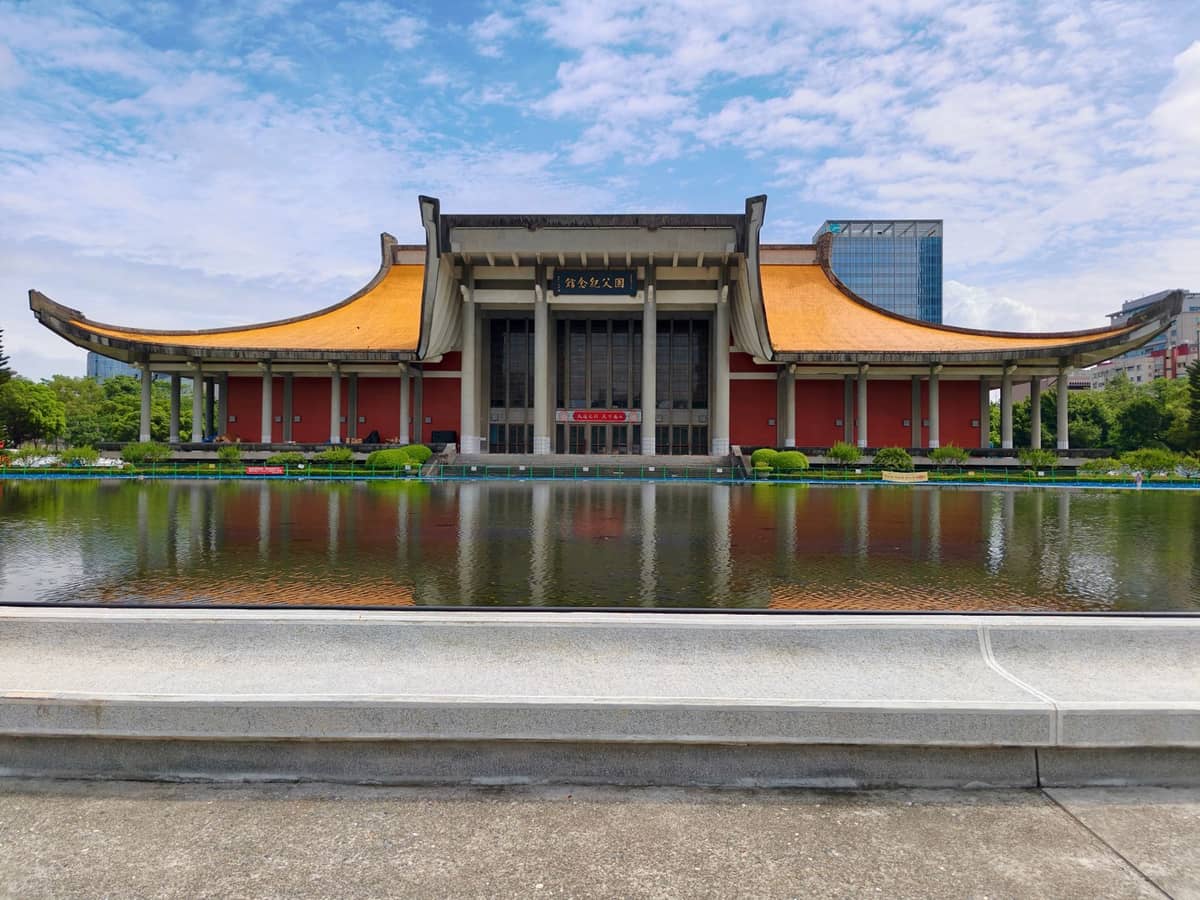
What the National Dr. Sun Yat-sen Memorial Hall Actually Is
The National Dr. Sun Yat-sen Memorial Hall is a large government-administered cultural complex built to honor Dr. Sun Yat-sen, the founding father of the Republic of China. Completed in 1972, the hall was later designated a Taipei City historic site in May 2019, sits on expansive grounds in Xinyi District, and functions simultaneously as a monument, an art and exhibition space, and a public park.
This is not a quiet, contemplative memorial in the way of a small temple. The complex is large and intentionally civic in character. Expect wide stone plazas, deliberate symmetry, and sightlines that feel designed for official occasions. On any given weekday, you will find school groups, tai chi practitioners using the surrounding lawns in the early morning, and office workers cutting through the grounds at lunchtime. On weekends, families spread across the grass and street performers occasionally occupy the outer perimeter.
ℹ️ Good to know
The main auditorium and interior halls have been undergoing a multi-year renovation and are currently closed to the public. Before planning your visit around a specific performance or event, check the official website at yatsen.gov.tw/en for current closure status and event schedules.
The Architecture: Scale, Style, and Context
The building itself is the first thing that demands attention. The memorial hall uses a classical Chinese palace roof form, with sweeping upturned eaves in yellow-gold glaze tile set over white granite walls. It is large enough that photographs rarely capture its full scale. Standing at the main plaza and looking toward the entrance, the proportions feel genuinely monumental rather than merely big.
The design drew from traditional Chinese imperial architecture while being constructed in the early 1970s, creating a deliberate visual statement about cultural continuity and national identity. For travelers with an interest in how modernist civic buildings negotiate historical form, this is a serious example worth examining. The proportional relationship between the building's base, walls, and roof is carefully controlled, and the stone detailing at close range rewards slow observation.
For broader architectural and historical context in Taipei, the Chiang Kai-shek Memorial Hall in Zhongzheng District was built in a comparable commemorative style and makes for an interesting comparison visit on the same day.
The Honor Guard Ceremony
Inside the main hall, a large bronze statue of Dr. Sun Yat-sen is flanked by honor guards who traditionally stood in complete stillness at their posts. The changing of the guard normally takes place every hour on the hour during opening hours, but this ceremony is currently suspended during the ongoing renovation period.
This is one of the most-photographed moments at the memorial. Arrive a few minutes before the hour if you want a clear position without jostling. The ceremony draws consistent crowds but the space inside the hall is large enough that latecomers can still see from the sides and upper-level viewing areas if the ground floor is packed. Early morning hours on weekdays see significantly smaller crowds than weekend afternoons.
💡 Local tip
When the honor guard ceremony is operating, arrive 5–10 minutes before the hour to secure a good position. Weekday mornings (from 09:00) usually offer the calmest experience with noticeably fewer visitors.
Exhibitions, Galleries, and Indoor Spaces
The lower levels of the memorial hall contain permanent exhibitions focused on the life and legacy of Dr. Sun Yat-sen, including documents, photographs, personal effects, and displays that trace his role in the 1911 Revolution and the founding of the Republic of China. The text panels are available in English, making these galleries accessible to non-Chinese-reading visitors.
Additional gallery spaces around the complex host rotating exhibitions covering Taiwanese art, calligraphy, and cultural history. Admission to these is typically included in the free general entry, though some ticketed special exhibitions run throughout the year. The quality and subject of these rotating shows varies considerably, so checking the current program before visiting is worthwhile if contemporary art or cultural exhibitions are a priority for you.
If museum-going is a significant part of your Taipei itinerary, the Taipei museums guide covers the full landscape of the city's institutions, including how to sequence visits efficiently.
The Surrounding Grounds and Gardens
The grounds extending around the memorial hall are a genuine public park, maintained by the city and freely accessible from early morning until late evening. There are lotus ponds, planted walkways, open lawns, and shaded areas with benches. The space is used heavily by locals: early mornings bring groups practicing tai chi and badminton players on the open plaza; evenings in summer attract families and couples walking after dinner.
Photographers will find that the exterior of the building photographs best in the golden hour after sunrise or in the hour before sunset, when the yellow roof tiles pick up warm light and the long shadows emphasize the plaza's geometry. Midday light in summer is harsh and tends to wash out the building's stone surfaces. Overcast days, which are common in Taipei from October through March, produce soft, even tones that work well for architectural shots.
The memorial sits within easy walking distance of Taipei 101 and the surrounding Xinyi commercial district. Combining both in a half-day is straightforward and a logical use of time in this part of the city.
Getting There, Opening Hours, and Practical Notes
The memorial hall is directly served by Sun Yat-sen Memorial Hall Station on the MRT Blue (Bannan) Line. Exit 4 brings you to the main plaza approach in about a one-minute walk. This makes it one of the most transit-accessible major attractions in Taipei, and there is no need to take a taxi or bus for most visitors staying in central districts.
Opening hours for the indoor halls are 09:00 to 18:00 daily. The complex is closed on Lunar New Year's Eve and Lunar New Year's Day, and occasional maintenance closures apply. The surrounding park grounds have no ticketed closing time and are used by locals throughout the evening. Bring a layer in winter months as Taipei's damp cool air in December through February can make outdoor time uncomfortable without a jacket.
General admission to the memorial hall, permanent exhibitions, and park grounds is free of charge. Special exhibitions and performances may carry a separate fee. The complex is equipped with ramps, elevators, and accessible restrooms. Ongoing renovation work may affect specific access routes, so visitors with mobility needs should confirm the current layout via the official site before visiting.
⚠️ What to skip
The main auditorium and interior hall spaces have been closed for a comprehensive upgrade project from February 26, 2024 and are expected to remain closed until the end of 2026. If you are planning specifically to attend a performance at the hall, confirm current schedules and alternative venues on the official website before your trip.
Honest Assessment: Is It Worth Your Time?
The National Dr. Sun Yat-sen Memorial Hall rewards visitors who engage with it on its own terms. If you approach it as a civic and architectural monument with genuine historical significance, there is real substance here: the building is impressive, the honor guard ceremony is well worth watching once, and the permanent exhibitions provide useful context for understanding Taiwan's political history and national identity.
It is a less compelling stop if you are looking for intimate or atmospheric experiences. The scale is deliberately grand and impersonal, and the plaza can feel stark in the middle of the day without crowds to animate it. Visitors who are primarily interested in food culture, night markets, or Taipei's contemporary creative scene may find this easy to skip without missing something essential.
If you are working out how much time to spend in this part of the city, the 3-day Taipei itinerary pairs the memorial hall logically with Taipei 101 and the Xinyi District shopping area into a single cohesive half-day.
Insider Tips
- When in operation, the honor guard traditionally changes on the hour from 09:00 to 17:00. Position yourself near the statue base rather than at the back of the hall — the acoustics and sight lines are much better from close range.
- The park grounds are open after dark and are popular with locals on summer evenings. The lit exterior of the building at night looks substantially different from its daytime appearance and is worth seeing if you are in the area.
- Early weekday mornings (09:00–10:00) are when the grounds see tai chi groups and almost no tourist crowds. If you want unobstructed exterior photos, this is the window.
- The rotating gallery exhibitions on the lower floors change several times a year and sometimes feature high-quality contemporary Taiwanese art. Check the program on the official website if this interests you — it is easy to overlook and often completely uncrowded.
- The MRT station shares the memorial hall's name, which makes navigation unusually straightforward. Exit 4 is the correct exit for the main entrance plaza.
Who Is Sun Yat-sen Memorial Hall For?
- Travelers interested in Chinese architectural history and civic monument design
- First-time visitors to Taipei wanting essential cultural context for Taiwan's modern history
- Families with children who will respond well to the scale of the grounds and the drama of the honor guard ceremony
- Photographers looking for structured geometric subjects with a large open plaza and quality morning light
- Anyone combining a half-day in Xinyi District with Taipei 101 and the surrounding shopping area
Nearby Attractions
Other things to see while in Xinyi District:
- Elephant Mountain (Xiangshan) Trail
Elephant Mountain, known in Mandarin as Xiangshan, delivers one of the most photographed skyline views in Asia from just a short walk off the MRT. At 183 meters above Xinyi District, the reward-to-effort ratio is genuinely hard to beat. Here is everything you need to decide if it belongs on your Taipei itinerary.
- Songshan Cultural and Creative Park
Once a Japanese-era tobacco factory, Songshan Cultural and Creative Park is now a thoughtfully preserved creative district. Free to enter and open daily until 10pm, the park blends heritage industrial buildings with contemporary design galleries, independent shops, and a quietly beautiful garden that most visitors walk right past.
- Taipei 101
Standing 508 metres above the Xinyi District, Taipei 101 remains the defining landmark of Taiwan's capital. This guide covers the 89th-floor observatory, the mall below, best visiting times, and everything a traveller needs to make the most of the experience.