Chiang Kai-shek Memorial Hall: Taipei's Most Politically Charged Landmark
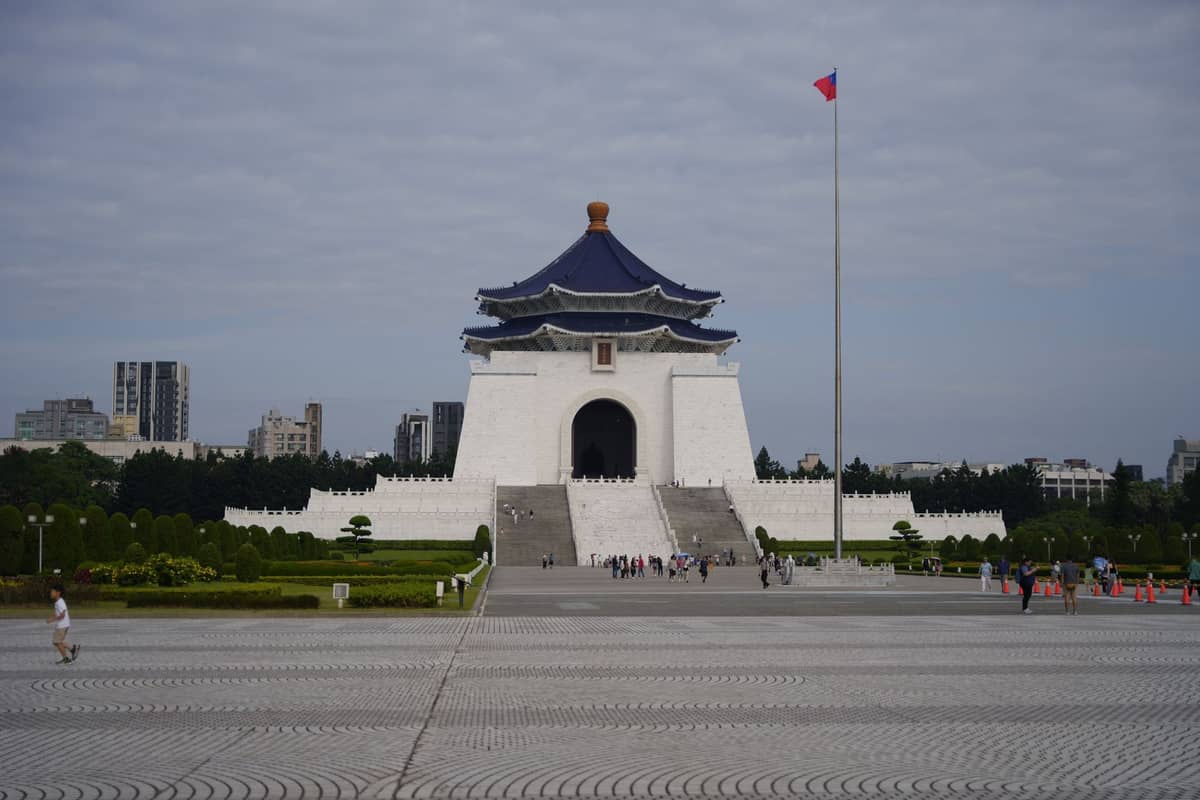
Standing 70 metres tall at the heart of Zhongzheng District, the National Chiang Kai-shek Memorial Hall is one of Taipei's most recognizable structures. Free to enter and open daily from 9:00 AM to 6:00 PM (with the surrounding park open 5:00 AM–midnight), it draws history seekers, architecture admirers, and locals who use the surrounding park as their morning exercise ground.
Quick Facts
- Location
- No. 21, Zhongshan S. Rd., Zhongzheng Dist., Taipei City 100012, Taiwan
- Getting There
- Chiang Kai-shek Memorial Hall Station (Red Line 2 / Green Line 5)
- Time Needed
- 1–2 hours for hall and park; allow half a day if visiting nearby attractions
- Cost
- Free general admission; special exhibitions may charge separately
- Best for
- History, architecture, photography, morning walks, cultural context
- Official website
- www.cksmh.gov.tw/en
What Is the Chiang Kai-shek Memorial Hall?
The National Chiang Kai-shek Memorial Hall, known locally as 中正紀念堂 (Zhongzheng Jinianting), is a state memorial dedicated to Chiang Kai-shek, the military and political leader who governed the Republic of China from the mainland and then Taiwan until his death in 1975. Construction began on October 31, 1976, and the hall opened to the public on April 5, 1980, five years after Chiang's death. At 70 metres high, it is the dominant vertical element in a symmetrical complex that also includes the National Theater and the National Concert Hall, both arranged across a 250,000-square-metre park.
The complex sits squarely in Zhongzheng District, Taipei's administrative core, and it is impossible to separate the site from Taiwan's complicated political history. Opinions on Chiang Kai-shek himself remain divided across generations and political affiliations in Taiwan. The memorial has been a focal point for protest, national ceremony, and ongoing democratic debate. Visiting it with that context in mind makes the experience significantly richer than treating it purely as a sightseeing stop.
ℹ️ Good to know
The Memorial Hall building is open 9:00 AM–6:00 PM daily. The surrounding Liberty Square park (Memorial Park) is open 5:00 AM–midnight. The hall is closed on Lunar New Year's Eve, Lunar New Year's Day, 228 Peace Memorial Day, and scheduled maintenance or natural-disaster days.
The Architecture: Scale, Symbolism, and Detail
The main hall is built on an octagonal plan and clad almost entirely in white marble. The steep blue-tiled roof, rising in a multi-tiered form, draws directly from classical Chinese palatial architecture, particularly the style associated with the Temple of Heaven in Beijing and traditional imperial structures. The roof tiles are a specific shade of cobalt blue chosen to echo the blue sky and white sun in the Republic of China flag. These are not incidental design choices; every element carries symbolic intent.
Approaching from the main Zhongshan South Road entrance, you pass through the Daqing Gate, a large ceremonial archway, and enter Liberty Square. The scale here is deliberately imposing. The plaza can feel overwhelming on a hot afternoon, with long stretches of white stone radiating heat. The 89 steps leading up to the main hall entrance are said to represent Chiang's age at death. Whatever your politics, the architecture is doing something specific and worth noticing.
The broader complex, including the flanking National Theater and National Concert Hall, is often called Liberty Square. For more on the open plaza itself, see the dedicated page on Liberty Square, which covers the public space and its civic significance in more depth.
Inside the Hall: The Bronze Statue and the Guard Ceremony
The interior of the main hall is a single, high-ceilinged chamber. At the far end sits a large bronze statue of Chiang Kai-shek, seated and facing the entrance. The statue is 6.3 metres tall and flanked by Republic of China flags. The chamber is quiet and air-conditioned, and even on days when the park is crowded, the interior tends to feel more hushed. Light filters through in limited ways, giving the space a formal, institutional gravity.
The main draw for most visitors is the changing of the guard ceremony. Since 15 July 2024 it has been held outdoors on Democracy Boulevard in front of the hall rather than inside the statue chamber. A synchronized drill is performed by soldiers of the Republic of China Armed Forces. The full change takes around 15 minutes, on the hour during opening hours, and is cancelled in rain. Arrive a few minutes before the hour to position yourself.
💡 Local tip
Guard changes happen at the top of every hour from 9:00 AM to 5:00 PM. The last full ceremony begins at 5:00 PM. Arrive 5 minutes early to get a clear sightline — the hall fills quickly just before each change.
Beneath the main hall, a lower level houses a permanent exhibition on Chiang Kai-shek's life and the history of the Republic of China. The displays include personal effects, uniforms, vehicles, and archival photographs. The content is presented from a perspective favorable to Chiang, which itself tells you something about where Taiwan's institutional memory currently stands. It is informative, even if it reads more as commemoration than critical history.
The Park at Different Times of Day
The park surrounding the memorial is genuinely used by locals throughout the day, and the experience changes considerably depending on when you arrive. Early mornings, between 6:00 and 8:00 AM, the plaza fills with older residents practicing tai chi, stretching, or walking laps around the perimeter. There are sometimes small outdoor exercise groups, badminton games on the side paths, and occasional practitioners of traditional Chinese instruments under the trees. This version of the park feels lived-in and has little to do with the monument at its center.
By mid-morning, tourist groups begin arriving and the scale of the plaza becomes apparent. Midday in summer is harsh. The white stone reflects heat intensely, temperatures can climb above 35°C from June through September, and shade is limited in the main approaches. If you are visiting in summer, early morning or after 4:00 PM is a noticeably more comfortable window. Bring water regardless.
Evenings bring a different atmosphere again. After around 7:00 PM, the crowds thin, the light turns golden and then purple across the white marble, and the hall is illuminated. The park becomes a place for couples, joggers, and people walking dogs. It stays open until midnight, which makes it one of the few large public spaces in central Taipei accessible late at night.
⚠️ What to skip
Summer visits (June–September) require planning around heat. The main approach to the hall is exposed stone with no shade. Go early, carry water, and consider visiting the underground exhibition level during peak midday heat.
Photography and Practical Walkthrough
The hall photographs best in the early morning when light comes from the east and hits the white marble directly. The symmetry of the complex, with the National Theater and National Concert Hall framing the sides, gives you strong compositional options from the main plaza. The reflection pools near the side buildings add another element on still days. A wide-angle lens or a phone in panorama mode handles the scale better than a standard focal length.
Photography inside the main hall during the guard change is permitted. The guards do not interact with visitors, so you can move around the chamber somewhat freely to find angles, though the room fills during ceremonies and movement becomes more limited. Flash photography is generally discouraged out of basic respect, and tripods are not permitted inside.
The memorial is a ten-minute walk from the 228 Peace Memorial Park, which provides a historically contrasting counterpoint: it commemorates the victims of the February 28, 1947 massacre that occurred under Nationalist rule. Visiting both on the same morning gives you a fuller picture of the period.
Accessibility at the site is good. The official visitor information lists accessible parking, wheelchair access throughout the complex, wheelchair rentals, accessible elevators, and accessible toilets. Visitors with a disability card may enter special exhibitions free of charge, with companion admission depending on the nature of the exhibition.
Getting There and Nearby
The most direct option is the MRT Chiang Kai-shek Memorial Hall Station, served by both the Red Line (Tamsui-Xinyi Line, Line 2) and the Green Line (Songshan-Xindian Line, Line 5). From the station, Exit 5 deposits you directly at the park entrance via a short passage. Journey time from Taipei Main Station is around ten minutes door to door.
Zhongzheng District has a high concentration of significant sites within walking distance. The National Taiwan Museum is about a kilometre north. The Presidential Office Building is roughly a fifteen-minute walk toward the west-northwest. If you are building a half-day itinerary around this district, the Zhongzheng neighborhood guide outlines the most efficient walking routes between key sites.
For those wanting broader context before visiting, the 3-day Taipei itinerary includes this area alongside the major sites and suggests a logical sequence for first-time visitors.
Who Should Skip This
Travelers who have limited time and little interest in political history or formal architecture may find the park pleasant but the hall interior less engaging. The permanent exhibition is content-heavy and text-dense, and without background knowledge the displays can feel flat. The changing of the guard is a procedural spectacle rather than a theatrical one; if you have seen similar ceremonies at comparable memorials elsewhere, the novelty is reduced.
Visitors traveling with young children may find the 89-step ascent manageable but the interior too quiet and formal to hold a child's attention for long. The open park space is excellent for children, but the hall itself is not designed for younger audiences.
Insider Tips
- The first morning slot typically draws the smallest crowd of the day. If you want a clear view without jostling, arrive at opening and head to Democracy Boulevard in front of the hall — the ceremony is now held outdoors and is cancelled in rain.
- The lower-level exhibition includes Chiang Kai-shek's preserved limousines, which tend to draw less attention than the main hall but are genuinely interesting objects. Allow 20 extra minutes for this section.
- The side paths along the tree-lined perimeter of the park are shaded and quieter than the main plaza. In summer, walking in from the side gates rather than the main ceremonial approach makes a noticeable difference in comfort.
- The complex is a major venue for Taiwan's national holidays, including National Day on October 10. Crowds on those dates are extremely large, and security perimeters change. Worth checking the official site before visiting around public holidays.
- The National Theater and National Concert Hall flanking the plaza regularly host world-class performances. Check the schedule at the time of your visit — attending an evening event here makes the nighttime illumination of the complex part of your experience, not just a photo backdrop.
Who Is Chiang Kai-shek Memorial Hall For?
- First-time visitors to Taipei building a foundational understanding of modern Taiwanese history
- Architecture and photography enthusiasts drawn to monumental classical Chinese design
- Early risers who want to see local morning exercise culture in a grand setting
- Travelers with an interest in the political complexity of twentieth-century East Asia
- Anyone building a Zhongzheng half-day walk combining multiple civic landmarks
Nearby Attractions
Other things to see while in Zhongzheng District:
- 228 Peace Memorial Park
228 Peace Memorial Park is one of Taipei's oldest and most significant public spaces, blending formal gardens with a powerful memorial to Taiwan's defining political tragedy. Free to enter and open around the clock, it rewards visitors who come prepared to read the landscape carefully.
- Huashan 1914 Creative Park
A former Japanese-era winery turned open-air cultural campus, Huashan 1914 Creative Park draws a steady stream of Taipei's artists, designers, film lovers, and weekend wanderers. Admission to the grounds is free, but the real pull is what fills the space: independent exhibitions, pop-up markets, live performances, and some of the most interesting cafes in central Taipei.
- Liberty Square
Liberty Square is one of the largest public plazas in Taiwan, anchoring the Chiang Kai-shek Memorial Hall complex in central Taipei. Free to enter at any hour, it draws joggers at dawn, school groups by mid-morning, and photographers chasing the golden-hour glow on its white marble archway by evening. This guide covers what to see, when to go, and what most visitors overlook.
- National Taiwan Museum
The National Taiwan Museum is Taiwan's oldest public museum, housed in a striking Baroque-style stone building completed in 1915 during the Japanese colonial period. Located in Zhongzheng District steps from Taipei Main Station, it covers Taiwan's natural history, geology, indigenous cultures, and ecology — all for NT$30 entry. A single ticket also covers the Land Bank Exhibition Hall across the street, where a full dinosaur skeleton greets visitors at the door.