Huashan 1914 Creative Park: Inside Taipei's Best Creative District
A former Japanese-era winery turned open-air cultural campus, Huashan 1914 Creative Park draws a steady stream of Taipei's artists, designers, film lovers, and weekend wanderers. Admission to the grounds is free, but the real pull is what fills the space: independent exhibitions, pop-up markets, live performances, and some of the most interesting cafes in central Taipei.
Quick Facts
- Location
- No. 1, Section 1, Bade Road, Zhongzheng District, Taipei City 100, Taiwan
- Getting There
- Zhongxiao Xinsheng Station (Blue Line), Exit 1 — approx. 3–4-min walk; or Shandao Temple Station (Blue Line), Exit 6 — approx. 8–10-min walk
- Time Needed
- 1.5 to 3 hours depending on events
- Cost
- Free to enter grounds; individual exhibitions and events charge separately (prices set by organizer, in NTD)
- Best for
- Design and art lovers, cafe-hoppers, weekend explorers, indie film fans
- Official website
- www.huashan1914.com/w/huashan1914_en/index
What Is Huashan 1914 Creative Park?
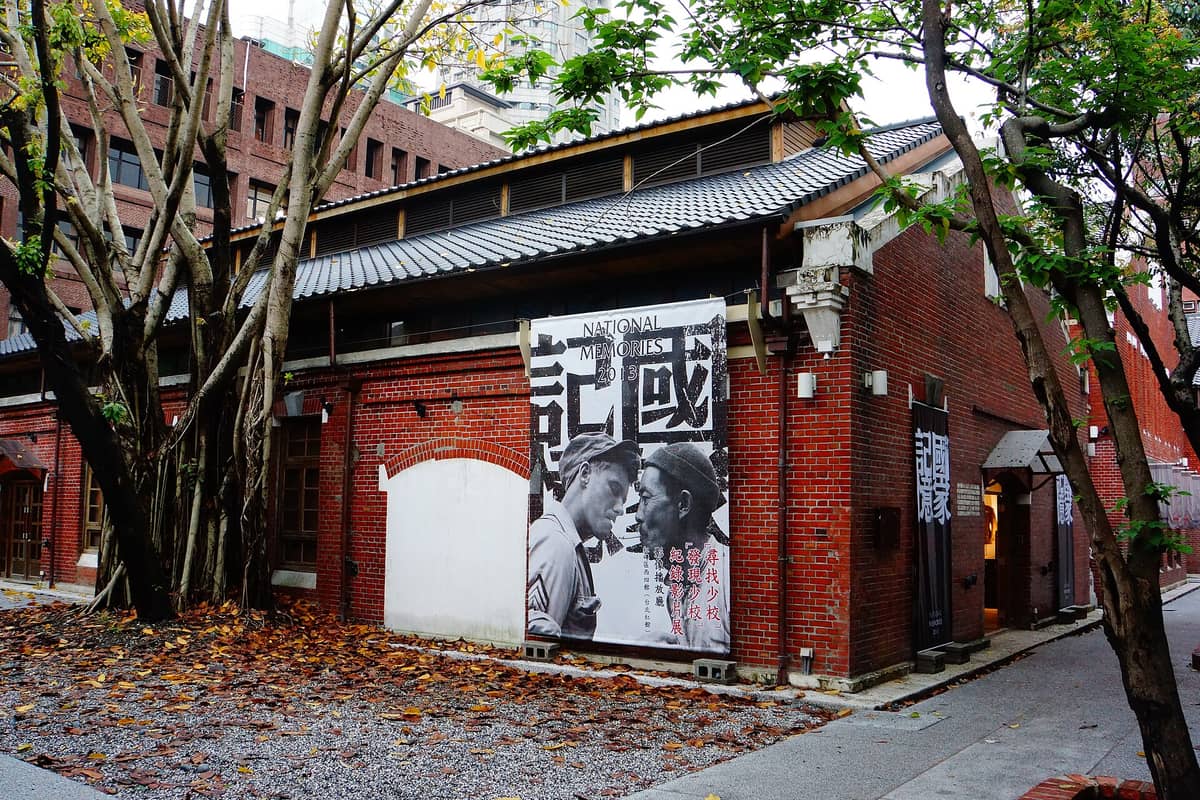
Huashan 1914 Creative Park occupies a low-rise campus of brick warehouses, timber-framed halls, and open courtyards on Bade Road, roughly a 15–20-minute walk east of Taipei Main Station. The entire complex sits on land that was once an industrial winery, and the architecture still carries that weight: thick masonry walls, wide loading-bay doors, vaulted brick ceilings, and the occasional rusting hinge that nobody has bothered to replace. That industrial rawness is precisely what the space trades on.
The park operates year-round, with outdoor areas open 24 hours and most indoor spaces generally accessible between 09:30 and 21:00. Walking through the main gate from Bade Road costs nothing. What changes daily is what fills the buildings: rotating art exhibitions, design pop-ups, independent film screenings, theatrical productions, weekend craft markets, and photography shows. On any given visit, you might find a Korean illustrator's solo show in one hall and a Taiwanese designer collective selling handmade ceramics in the courtyard next door.
💡 Local tip
Check the official events calendar at huashan1914.com before your visit. The park's schedule changes weekly and some of the best events sell out in advance. A blank weekday visit and a packed-program weekend visit are completely different experiences.
From Winery to Cultural Campus: The History
The site dates to 1914, when it was established as the Taipei Winery during Japan's colonial administration of Taiwan. For decades, it operated as an industrial production facility, a fact that explains why the buildings are so generously proportioned: fermentation halls need height and volume that ordinary commercial architecture does not. After Taiwan's return to the Republic of China government following World War II, the facility continued operating but eventually fell dormant.
The park's transformation into a cultural space began in the late 1990s and early 2000s, when artists and performers started using the abandoned complex for independent events. Official recognition and redevelopment followed, and by the time the site was formally established as a creative park under its current management, the bones of the original winery had been carefully preserved rather than erased. The result is a cultural space that reads as genuinely old, not as a simulation of age.
For travelers interested in the broader picture of how Taipei has repurposed its industrial and historical infrastructure, Huashan fits a pattern worth understanding. Songshan Cultural Creative Park in the city's Xinyi direction followed a similar adaptive-reuse model, though with a different character. Huashan is generally considered the older and slightly scrappier of the two.
How the Space Feels at Different Times of Day
On weekday mornings, the park is quiet enough that you can hear pigeons on the rooftiles. The open courtyards fill with soft light, and the brick surfaces look their best before the afternoon heat flattens everything. A few cafe operators are setting up, and the smell of coffee from the converted warehouse buildings drifts into the lanes. This is the best time to study the architecture without distraction, to walk the perimeter, and to get a feel for how the industrial layout was originally organized.
By midday on weekends, the dynamic shifts noticeably. The courtyard stages attract small audiences, and the lanes between buildings fill with people browsing vendor stalls. The demographic is a mix of local university students, young couples, visiting families from other parts of Taiwan, and international travelers. The noise level rises considerably; if you are hoping for quiet contemplation, a Sunday afternoon is not the time to find it.
Evenings are their own category. Most indoor venues keep regular hours until around 21:00 (later on some weekends), and in the final two hours, the mood softens. The restaurants and cafes inside the complex draw a crowd that is less interested in browsing and more interested in lingering. The lighting on the brick exteriors is warm and considered, and if an outdoor performance is scheduled, the courtyard seating fills up fast. Arriving for an evening event without checking the program in advance is a gamble, since some of the best ones are announced only on social media.
ℹ️ Good to know
The park is divided into several named zones including the Red Brick Zone, the Forest Zone, and the Fruit Warehouse area. Each has a slightly different character. The Red Brick Zone buildings are the most architecturally striking and anchor the main exhibition spaces.
What to See and Do
Galleries and Exhibitions
The exhibition spaces inside Huashan's warehouse buildings host both free shows and ticketed events. The free-access shows are usually smaller, sometimes student-run or community-organized, and quality varies accordingly. The ticketed exhibitions tend to be larger commercial productions: immersive light installations, retrospectives of well-known illustrators, or traveling international art shows that stop in Taipei. These charge separate admission set by the event organizer, and prices vary significantly. Check the website to know what requires a ticket before you arrive.
Markets and Retail
On weekends, pop-up markets appear in the central courtyard and along the interior lanes. These range from straightforward handcraft and design goods markets to more specialized themed fairs covering vintage clothing, independent publishing, or local food producers. The quality of goods is generally higher than standard night market fare, and prices reflect that. Weekday visitors will find a smaller selection of permanent shops and concept stores occupying some of the ground-floor spaces.
Food, Coffee, and Cafes
The food and drink scene inside the park is one of its strongest points. Several well-regarded Taipei cafes have opened outposts or permanent locations here, taking advantage of the high ceilings and brick interiors. Expect specialty coffee, Taiwanese fusion food, and the occasional craft beer option. Weekend lunch queues at the more popular spots can be long; if you want to eat inside the park without waiting, arriving before noon or after 14:00 gives better odds.
Cinema and Performances
Huashan has hosted indie film screenings and theatrical productions since its earliest days as a cultural space. The cinema venue inside the complex screens independent Taiwanese and international films on a rotating schedule. Live performance events use both indoor stages and the outdoor courtyard. These require advance tickets purchased through the official site or local ticketing platforms.
Getting There and Getting Around
The most straightforward route is the Bannan (Blue) Line of the Taipei Metro to Zhongxiao Xinsheng Station, Exit 1. From there, the walk to the main entrance on Bade Road takes about three minutes. Alternatively, Shandao Temple Station on the same line, Exit 6, is a five-minute walk. Getting around Taipei by MRT is efficient and inexpensive; a single-trip fare to either station from most central locations is typically around NT$20–30.
Several bus routes also stop nearby, including commonly used routes such as 205, 257, 276, 672, 212, and 605 at the Taipei Tech University stop on Bade Road, and the Taipei double-decker sightseeing bus stops at the Huashan Creative Park stop on Zhongxiao East Road. If you are using a YouBike, the city bike-share system, there are docking stations within a short distance of the main entrance.
Within the park, navigation is intuitive: the complex is compact enough that most visitors discover the full layout by walking through it once. Internal lanes are pedestrian-only, and the paved courtyard areas are generally level and manageable for strollers. Some of the historic building interiors have steps or uneven flooring, so visitors with mobility considerations should check the specific exhibition space before entering. Accessible toilet and elevator details are best confirmed onsite or through the official contact.
⚠️ What to skip
Taipei's summer heat, from June through September, makes extended midday visits in the outdoor areas genuinely uncomfortable. The park has shaded areas and indoor spaces, but plan around the weather. The most pleasant visiting conditions fall between October and April.
Honest Assessment: Is It Worth Your Time?
Huashan 1914 Creative Park earns its place on a Taipei itinerary, but the degree to which it impresses depends almost entirely on timing. If you arrive on a weekend with an active program, it delivers a genuinely good afternoon. If you arrive on a quiet weekday with no events running, what you get is an attractive cluster of industrial-era buildings with some shops and cafes. That is pleasant, but it may not justify a special trip for travelers on tight schedules. For those trying to make the most of limited time in the city, the 3-day Taipei itinerary puts Huashan in the context of nearby attractions that can be combined efficiently.
Travelers who follow Taiwanese design culture, independent film, or contemporary art will find it consistently worthwhile regardless of what is on. For everyone else, check the events calendar first. The park is also a straightforward coffee or lunch stop if you are already moving through the Zhongzheng district, given how close it is to the MRT.
Who might want to skip it: travelers focused exclusively on historic temples and traditional culture will find more substance at sites like Longshan Temple in Wanhua or the Taipei Confucius Temple in Datong. Huashan is a product of contemporary creative culture, not traditional heritage.
Photography Tips
The architecture photographs well in the early morning and in the hour before sunset, when the light catches the brick surfaces at an angle. Overcast days actually work well here too, since the diffused light eliminates the harsh shadows that form in the narrow lanes between buildings during midday. The interior spaces vary: some are well-lit naturally through large windows, others are dim and require adjusting exposure settings. Flash photography is restricted in most gallery spaces.
If you are building a Taipei photography itinerary, pairing Huashan with the nearby Taipei Botanical Garden makes geographic sense, though the two subjects are very different in character.
Insider Tips
- The park's official LINE account and Instagram profile announce pop-up events and markets earlier than the website calendar. Follow them if you want to know what is happening during your visit window.
- The entrance from the side streets parallel to Bade Road, particularly from the Civic Boulevard side, deposits you into the quieter Forest Zone first, which is a better introduction to the space than the busier main gate.
- Some of the park's best permanent cafes are tucked into the back sections of the complex that first-time visitors miss. Walk the full perimeter before settling on where to sit.
- If you are visiting for a specific ticketed exhibition or performance, buy tickets through the official platform in advance. Walk-up availability for popular events is not reliable, especially on weekends.
- The park is close enough to Zhongxiao Xinsheng Station that it works well as a first or last stop when exploring the Zhongzheng and Daan districts on the same day. The MRT connection makes it easy to combine with other nearby stops without backtracking.
Who Is Huashan 1914 Creative Park For?
- Design and contemporary art enthusiasts who want to see what Taipei's creative scene looks like right now
- Travelers who want a break from the conventional temple and night market circuit
- Cafe-hoppers and specialty coffee drinkers looking for somewhere with actual atmosphere
- Independent film fans, particularly those interested in Taiwanese and Asian independent cinema
- Weekend visitors who enjoy browsing design markets and independent goods without the noise of a traditional market
Nearby Attractions
Other things to see while in Zhongzheng District:
- 228 Peace Memorial Park
228 Peace Memorial Park is one of Taipei's oldest and most significant public spaces, blending formal gardens with a powerful memorial to Taiwan's defining political tragedy. Free to enter and open around the clock, it rewards visitors who come prepared to read the landscape carefully.
- Chiang Kai-shek Memorial Hall
Standing 70 metres tall at the heart of Zhongzheng District, the National Chiang Kai-shek Memorial Hall is one of Taipei's most recognizable structures. Free to enter and open daily from 9:00 AM to 6:00 PM (with the surrounding park open 5:00 AM–midnight), it draws history seekers, architecture admirers, and locals who use the surrounding park as their morning exercise ground.
- Liberty Square
Liberty Square is one of the largest public plazas in Taiwan, anchoring the Chiang Kai-shek Memorial Hall complex in central Taipei. Free to enter at any hour, it draws joggers at dawn, school groups by mid-morning, and photographers chasing the golden-hour glow on its white marble archway by evening. This guide covers what to see, when to go, and what most visitors overlook.
- National Taiwan Museum
The National Taiwan Museum is Taiwan's oldest public museum, housed in a striking Baroque-style stone building completed in 1915 during the Japanese colonial period. Located in Zhongzheng District steps from Taipei Main Station, it covers Taiwan's natural history, geology, indigenous cultures, and ecology — all for NT$30 entry. A single ticket also covers the Land Bank Exhibition Hall across the street, where a full dinosaur skeleton greets visitors at the door.