Yangmingshan National Park: Taipei's Wild, Volcanic Backyard
Just north of the city, Yangmingshan National Park offers one of the most accessible escapes from urban Taipei: volcanic ridgelines, sulfur-scented hot springs, seasonal cherry and calla lily blooms, and hiking trails ranging from short strolls to serious summit climbs. Entry is free, the scenery is genuinely dramatic, and the contrast with downtown Taipei is immediate.
Quick Facts
- Location
- Shilin District / Beitou District border, northern Taipei. Park HQ: No. 1–20 Zhuzihu Road, Beitou District, Taipei City 11292
- Getting There
- Bus 260 from Taipei Main Station; Bus R5 from Jiantan or Shilin MRT to Yangmingshan bus station; Bus S8 from Shipai MRT to Zhuzihu. Transfer to Leisure Bus 108 inside the park from Yangmingshan bus station.
- Time Needed
- 2–3 hours for a single trail or scenic area; full day for multiple spots
- Cost
- Free general entry. Public hot springs at Lengshuikeng are free; private resorts around Xinbeitou and the lower Yangmingshan approaches typically charge from around NT$500 up to NT$2,000 per session. Guided tours at Yangmingshuwu cost NT$50 per person, with NT$30 discount tickets available at set tour times.
- Best for
- Hikers, nature seekers, day-trippers, photography, spring flower season
- Official website
- www.ymsnp.gov.tw
What Yangmingshan National Park Actually Is
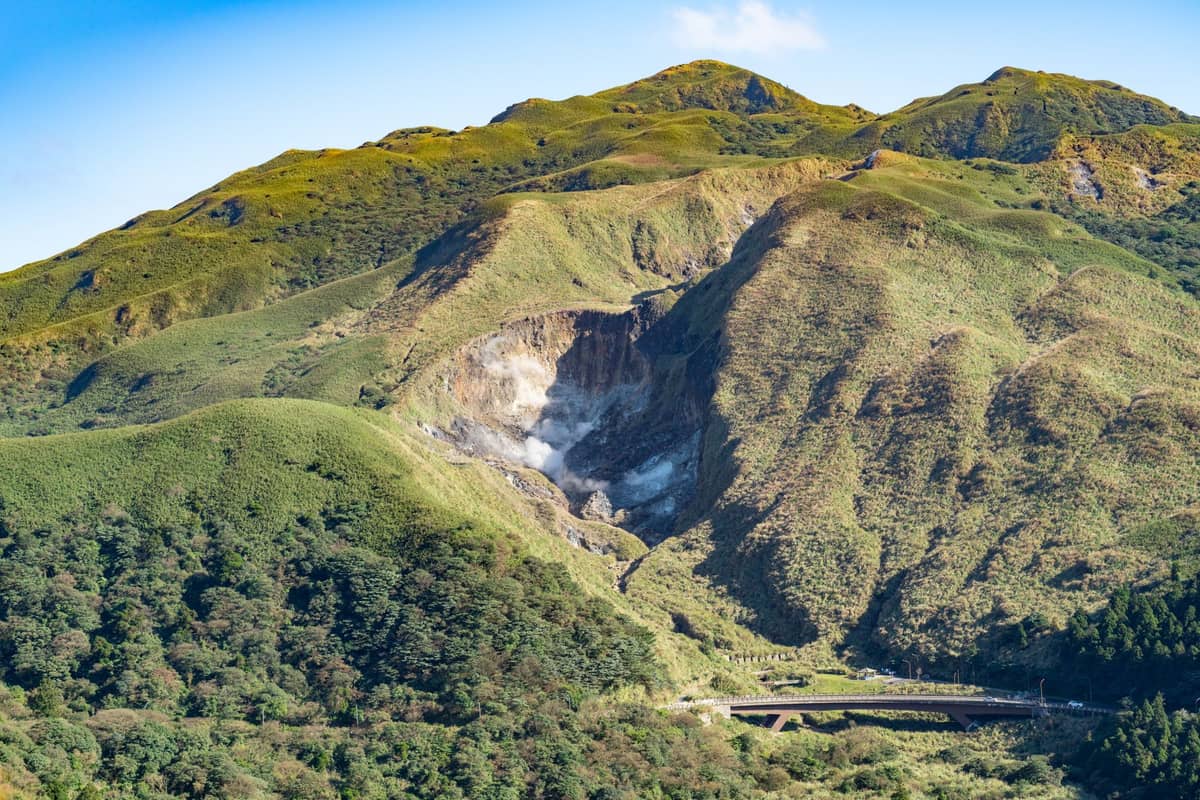
Yangmingshan National Park (陽明山國家公園) is a volcanic mountain park that forms the natural northern boundary of Taipei. It is one of Taiwan's nine national parks, officially designated in 1985, and the only one directly adjacent to a major city. The park covers a broad ridge of mountains shaped by ancient volcanic activity: craters, fumaroles, sulfur vents, and geothermal hot springs are all part of the landscape. These are not merely background details. Walking near the active fumaroles at Xiaoyoukeng, you can hear the hiss and smell the sharp sulfur before you see the steam columns. The ground itself feels warm underfoot in places.
The park's elevation gives it a noticeably different climate from downtown Taipei. On days when the city swelters in summer humidity, the ridgeline at Qixing Mountain can be 4–6 degrees cooler with genuine mountain wind. In winter, when lowland Taipei stays mild and drizzly, the upper slopes sometimes receive frost, and on rare occasions, a thin layer of snow. Clouds frequently roll in from the north, wrapping the peaks in mist that shifts quickly, sometimes clearing for panoramic views of Taipei Basin and sometimes reducing visibility to a few hundred meters.
ℹ️ Good to know
The park itself is open at all times. The Headquarters Visitor Center operates roughly 08:30–16:30 daily (closed Lunar New Year's Eve and the last Monday of each month), but individual attractions, hot spring facilities, and shuttle buses operate on separate schedules. Check each before planning your route.
Seasons and What They Change
Spring, roughly late February through April, is when Yangmingshan draws the most visitors. Cherry blossoms appear across the park, most densely around Yangming Park near the main bus terminus, and the calla lily fields at Zhuzihu turn the terraced hillsides a striking white, with peak bloom from late February to early April. The Zhuzihu farms are privately operated and typically charge a small entry fee in the range of NT$50–100 per plot. Weekends during peak bloom see serious crowds on the approach road, and the city sometimes restricts private vehicle access entirely, making the bus from Jiantan or Shilin MRT the only practical option.
Late October through December brings cooler temperatures, clearer skies, and autumn grass colors across the open volcanic slopes. This is arguably the most comfortable season for walking the longer trails. Summer is genuinely hot on the lower paths but tolerable at altitude; the main hazard is afternoon thunderstorms that develop quickly, so morning starts are strongly advised. Typhoon season in Taiwan runs roughly May through November, with peak risk between July and September, and can close trails and cause landslides on approach roads.
For a broader look at how seasons shape the whole city experience, the best time to visit Taipei guide covers the tradeoffs in detail. Yangmingshan is one of the clearest cases where season genuinely determines what you get from a visit.
The Landscape: Volcanoes, Trails, and Hot Springs
The park's terrain divides loosely into three zones: the gentler, cultivated lower slopes around Yangming Park and Zhuzihu; the mid-elevation volcanic landscape around Xiaoyoukeng and the Datun volcanic group; and the higher ridgeline culminating at Qixing Mountain, the park's highest point at 1,120 meters above sea level. Most casual visitors see only the first zone, which is perfectly valid. But the volcanic middle zone, with its billowing fumaroles, sulfur-crusted rock formations, and exposed crater geometry, is the part of the park that has no equivalent anywhere near Taipei.
Qixing Mountain itself is the subject of a dedicated trail guide. The Qixing Mountain trail is the most popular serious hike in the park, and on a clear day the summit view covers Taipei Basin, the northern coast, and on good days, Guishan Island offshore. The round trip from the main trailhead takes approximately 2.5–3.5 hours depending on pace and route choice.
Hot springs are available both within and just outside the park boundary. Lengshuikeng, inside the park, has public gender-segregated bathing pools that are free of charge, plus an outdoor foot-soaking pool. Private hot spring resorts cluster around Xinbeitou and the lower Yangmingshan approaches, with a wider range of facilities and significantly higher pricing that typically starts from several hundred NT dollars per person or session. The distinction matters: the public pools are basic but authentic; the private resorts are more comfortable but a different kind of experience entirely.
💡 Local tip
The Leisure Bus 108 shuttle loops between the main scenic spots inside the park and is the easiest way to move between Xiaoyoukeng, Zhuzihu, and the visitor center without backtracking on foot. It departs from Yangmingshan bus station at the park entrance.
Getting There: Buses Are the Right Answer
Yangmingshan has no MRT stop, and driving during peak weekends is genuinely frustrating: the single-lane mountain road backs up badly, and parking lots fill before 9:00 on spring weekends. The bus network is better than many visitors expect. Bus 260 from Taipei Main Station runs directly to Yangmingshan bus station. Bus R5 connects from both Jiantan and Shilin MRT stations to Yangmingshan bus station, which is the most common approach if you are staying north of central Taipei. Bus S8 from Shipai MRT stops at Yangming Park, the Headquarters Visitor Center, Yangmingshuwu, and Zhuzihu, making it the most useful single route if you want to cover multiple spots.
Driving takes roughly 40 minutes from central Taipei via Highway 2A (the Yangjin Highway), assuming normal traffic. On weekday mornings outside peak season, it is a relaxed drive with straightforward parking. On spring weekends, it is not recommended unless you start before 8:00.
For full detail on navigating Taipei's transit system before and after your visit, the getting around Taipei guide covers MRT, bus, and taxi options across the city.
Yangmingshuwu: The Historic Residence
Yangmingshuwu is a preserved former presidential residence within the park area, set in a garden that reflects the formal landscaping conventions of the mid-20th century. Guided tours last approximately one hour and cost NT$50 for adults, with NT$30 discount tickets available; admission is free for children under 6, seniors 65 and over, and visitors with disabilities. The architecture is modest compared to what the name implies: a low, well-maintained compound surrounded by trees, with interpretive material explaining its historical use. It is worth the short detour if you are already at the park, though it should not be the primary reason for the trip.
Practical Walkthrough: How a Day Here Actually Works
A practical structure for a day visit: arrive by bus before 9:00, start at Xiaoyoukeng for the fumarole landscape while the morning light is good and crowds are thin, then catch the 108 shuttle to Zhuzihu (during calla lily season) or continue to the Qixing trailhead. The Headquarters Visitor Center is worth a quick stop for trail maps and current conditions, especially if weather looks uncertain. Finish at Yangming Park near the main bus station, where there are cafes and benches, before taking the return bus to Jiantan or Shilin MRT.
Photography note: the fumarole vents at Xiaoyoukeng photograph well in the morning when backlit steam columns are most visible. The calla lily terraces at Zhuzihu read best with overcast light, which Yangmingshan delivers frequently. Summit views from Qixing require clear weather, which is less common in the morning and most likely between 10:00 and 14:00 on clear days.
⚠️ What to skip
Trail conditions change after rain. The volcanic soil on steeper paths becomes slippery fast. Wear shoes with grip, not sandals or flat sneakers. Afternoon thunderstorms in summer develop quickly; if you are above the treeline after noon in July–August, watch the sky and descend early.
Accessibility varies significantly across the park. Buses are low-floor and accessible from most departure points. The Headquarters Visitor Center and Yangming Park lower areas have paved, relatively level paths suitable for wheelchairs. Trail access above Xiaoyoukeng is uneven and steep in sections. Visitors with limited mobility should confirm specific route conditions directly with the visitor center before making plans.
Is It Worth Your Time? An Honest Assessment
Yangmingshan is not overhyped for the right type of visitor. If you want to spend a half-day outside of Taipei proper, it is the most dramatic and diverse natural landscape within easy reach of the city. No other day trip from Taipei combines volcanic terrain, city views, forest trails, and hot springs in a single location. The free entry and straightforward bus access make the logistics low-friction.
That said, visitors expecting polished infrastructure throughout will find parts of the park rough and unmarked. Some trails require map reading. For those who want a structured, guided nature experience, the Taipei hiking guide outlines which trails have clearer signage and easier logistics.
Who should consider skipping: travelers with only one or two days in Taipei and a long cultural sightseeing list. The park is a genuine time commitment and works best as its own day, not as a short detour between other attractions. Visitors who are averse to uneven terrain, uncertain weather, and the absence of convenient food stops inside the park should also think carefully before committing.
Insider Tips
- Bus R5 from Jiantan MRT is often less crowded than Bus 260 from Taipei Main Station and deposits you at the same Yangmingshan bus terminal. In normal conditions it is a slightly shorter, faster ride.
- The calla lily fields at Zhuzihu peak from late February through March and into early April. If you arrive after early April, most farms will have finished their season and charging days will be over, but there will also be almost no crowds.
- Xiaoyoukeng's fumaroles are most dramatic after rain, when the ground moisture intensifies the steam output. A day after a wet night is often better for photography than a dry sunny morning.
- The Leisure Bus 108 runs a circuit and does not always return to the starting point directly. Check the full route map at Yangmingshan bus station before boarding so you know whether to ride forward or reverse around the loop.
- Bring a light windproof layer even in summer. The ridgeline at Qixing Mountain can be surprisingly cold and exposed when clouds roll in, regardless of how warm it was at the bus stop below.
Who Is Yangmingshan National Park For?
- Hikers wanting a serious half-day or full-day trail above Taipei
- Photographers chasing the calla lily fields or volcanic fumarole landscapes
- Hot spring seekers wanting public, affordable bathing without heading all the way to Beitou
- Families with older children looking for accessible nature outside the city
- Repeat visitors to Taipei who have already covered the main urban attractions
Nearby Attractions
Other things to see while in Shilin District:
- National Palace Museum
The National Palace Museum in Shilin houses one of the largest and most significant collections of Chinese imperial art in the world. From jade carvings to ancient bronzes and delicate ceramics, a visit here offers a depth of history few museums anywhere can match.
- Qixing Mountain (Seven Star Mountain) Trail
The Qixing Mountain Trail (七星山步道) leads to the highest point in Taipei City at 1,120 metres, passing volcanic fumaroles, alpine meadows, and stone-paved ridges inside Yangmingshan National Park. The 4.5 km route is free, well-marked, and achievable in a half-day, making it one of the most rewarding hikes accessible by public bus from central Taipei.
- Shilin Night Market
Shilin Night Market is the largest and most visited night market in Taiwan, with over 500 stalls spread across several streets in Taipei's Shilin District. Free to enter and officially open every day from around 4 PM to midnight, it draws visitors with iconic street food, games, and an atmosphere that builds from early evening to full intensity after 8 PM.
- Shung Ye Museum of Formosan Aborigines
Located steps from the National Palace Museum in Shilin, the Shung Ye Museum of Formosan Aborigines is Taipei's most focused institution for understanding Taiwan's Indigenous peoples. Opened on June 9, 1994, it covers the traditions, material culture, and histories of Taiwan's 16 recognized Indigenous groups across four floors of carefully curated displays.